Looking for More Seating?
Try These Dining Table with Bench Ideas
The dining table is one of the most social pieces of furniture in any home, and yet seating is almost always the limiting factor when guests arrive. Chairs take up considerable space, each one claiming its own footprint and leaving little room for extras. A bench solves this problem in a way that feels natural and even elegant, sliding neatly under the table when not in use, accommodating children and adults alike, and introducing a relaxed quality to the dining room that a full set of matching chairs rarely achieves on its own. Whether your home is contemporary or traditional, compact or spacious, there is a bench and table configuration on this list that will make your dining room both more functional and more beautiful.
Idea 01
The Classic Farmhouse Bench Pairing
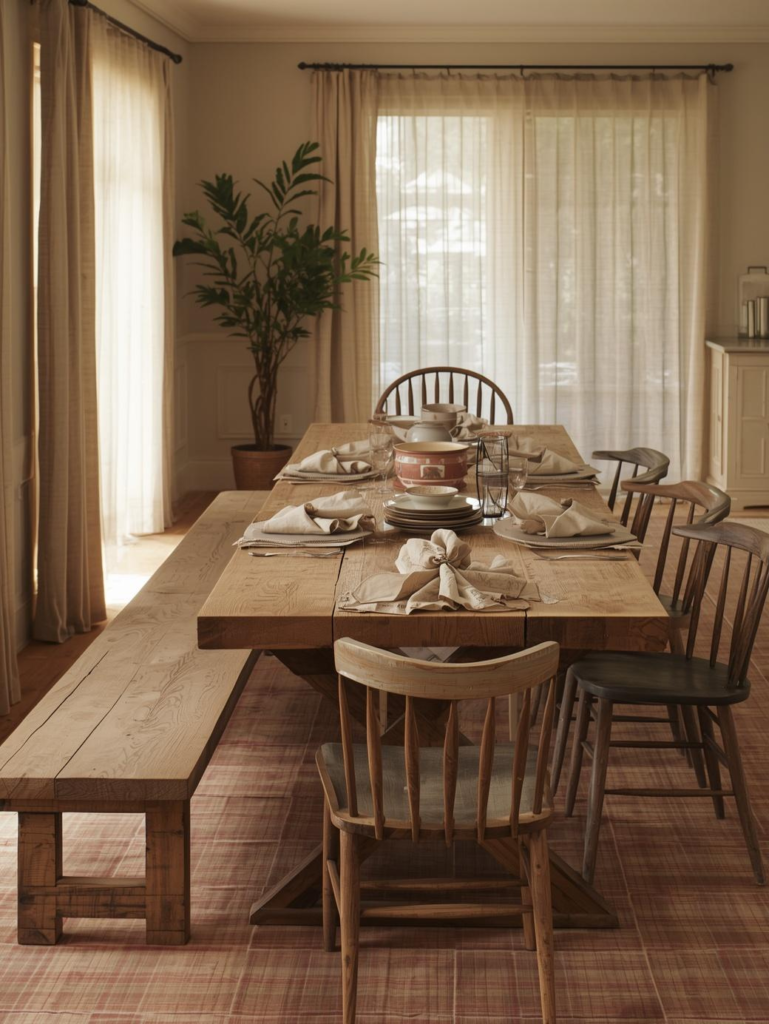
The farmhouse bench pairing is the most enduring and recognizable version of this seating style, and its popularity shows no sign of fading because it works so effortlessly in a wide range of homes. A long solid-wood bench placed on one side of a matching plank table creates an immediately cohesive look that feels rooted and warm without requiring any decorating expertise to pull off. The natural grain of the wood, whether pine, oak, or reclaimed timber, ties the two pieces together visually while the bench itself adds a relaxed informality that invites people to linger at the table longer than a formal chair arrangement typically encourages.
The practical advantage of this pairing is that the bench can seat three or four people in the space that two chairs would normally occupy, making it one of the most space-efficient solutions for family dining rooms and homes that host frequently. Keeping the opposite side of the table furnished with a mix of wooden chairs in complementary tones adds visual interest and preserves the social quality of the table, as chairs face the bench and encourage conversation across the full width of the surface. A simple linen runner and a few ceramic pieces on the table complete the look without overcomplicating it.
Idea 02
Upholstered Bench for Added Comfort
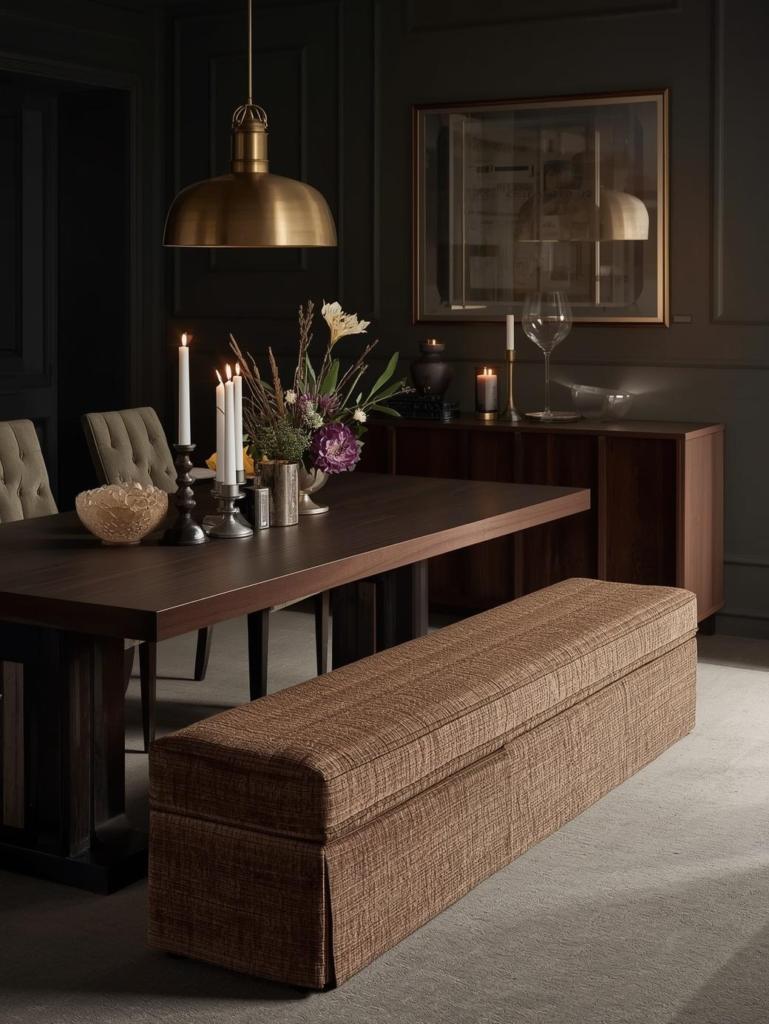
One of the most common hesitations about dining benches is comfort, and an upholstered bench answers that concern completely. A bench padded with foam and wrapped in fabric, whether linen, bouclé, velvet, or leather, provides genuine seating comfort that rivals a fully upholstered dining chair while still delivering all the spatial benefits that make bench seating desirable in the first place. The addition of fabric also introduces a softer, more refined material into the dining room that elevates the overall look of the space, making the table setting feel more considered and intentional than a plain wood bench typically achieves on its own.
Choosing the right fabric for an upholstered dining bench requires balancing aesthetics with practicality. In homes with young children, performance fabrics that resist staining and can be wiped clean are the sensible choice, and many of these are now available in beautiful textures that are difficult to distinguish from natural fibers at a glance. For adult-only dining rooms or more formal spaces, velvet and bouclé add a luxurious quality that pairs beautifully with dark wood tables and brass or aged bronze hardware. A bench with neat piped edges and tapered legs in a contrasting finish sits at the intersection of practical and genuinely elegant.
Idea 03
Built-in Corner Banquette Bench
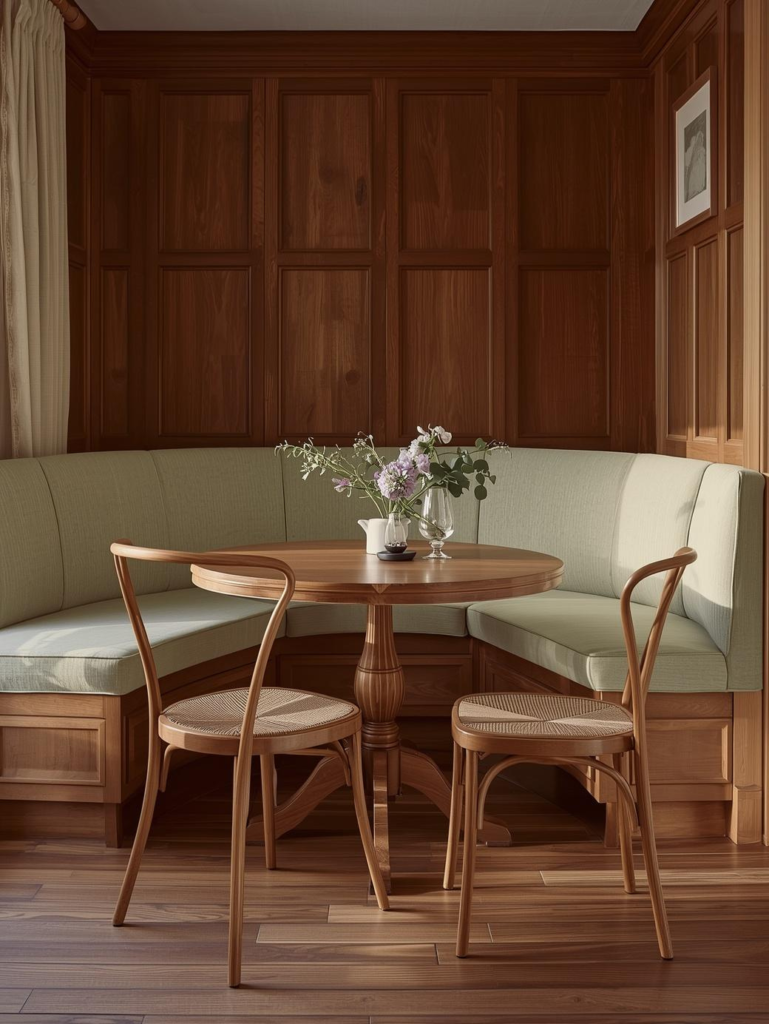
A built-in corner banquette transforms a previously underused corner of the kitchen or dining room into the most desirable seat in the house, creating a defined dining nook that feels private, cozy, and entirely purposeful. The L-shaped or U-shaped bench configuration wraps around a round or square table, maximizing the number of people who can be seated within a compact footprint while also making full use of wall space that would otherwise remain empty. The built-in quality of this bench type gives the room an architectural permanence that freestanding furniture simply cannot replicate, making the dining area feel like a considered part of the home’s design rather than an afterthought.
The most practical built-in banquettes incorporate storage beneath the seat, with lift-up panels or drawers that provide space for table linens, seasonal tableware, or anything else that would otherwise crowd a small dining area. Upholstering the bench in a wipeable performance fabric and topping it with a removable cushion in a complementary pattern ensures that the banquette serves beautifully for everyday family meals as well as more formal gatherings. Painting the built-in structure in a tone that matches or closely relates to the wall color makes the nook feel seamlessly integrated into the room rather than added on, which is the hallmark of genuinely well-designed built-in seating.
Idea 04
Mix Bench and Chairs on Opposite Sides
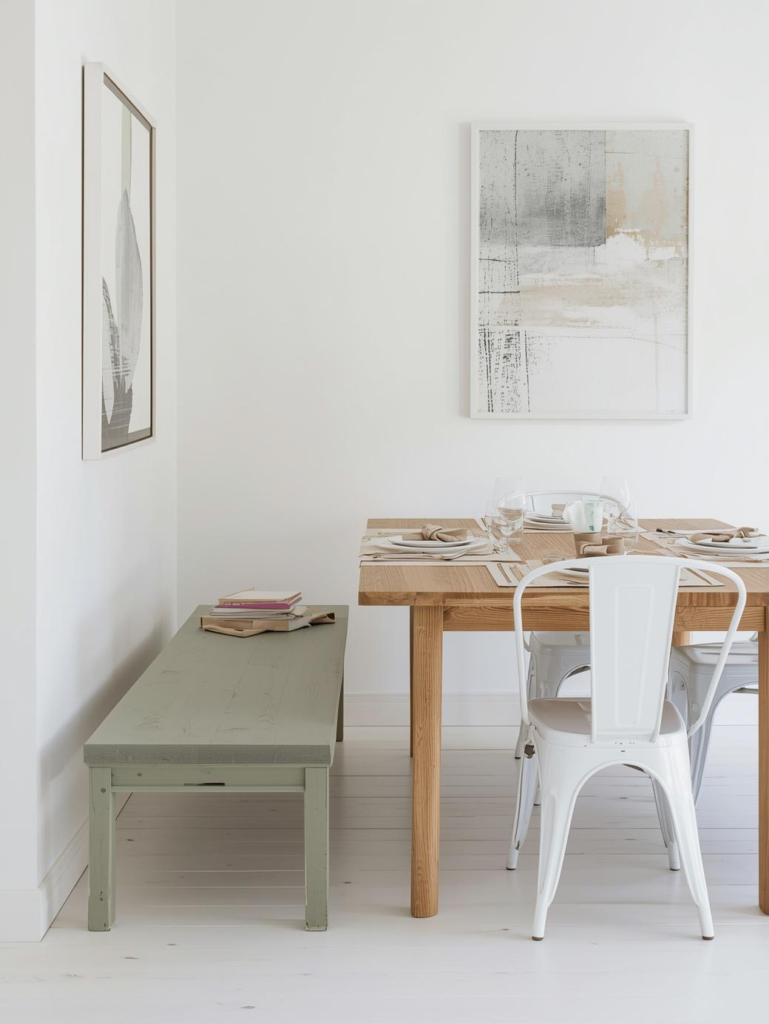
Mixing a bench on one side of the table with chairs on the other is one of the most versatile and visually interesting dining arrangements available because it combines the spatial efficiency of bench seating with the individual comfort and variety of standalone chairs. This configuration has become a signature of Scandinavian and contemporary interior design precisely because it looks effortlessly styled without requiring any particular decorating skill. The bench handles the high-capacity side of the table, often the side against a wall or facing a view, while chairs on the opposite side offer flexibility for guests with different seating preferences.
The mix-and-match approach also opens up opportunities to introduce color, material, or texture variation that a matched set of chairs and a bench would not provide. A wooden bench paired with rattan-seat chairs, or a plain bench paired with velvet accent chairs at the heads of the table, creates the kind of considered eclecticism that reads as genuinely designed rather than simply purchased as a set. The key to making this work cohesively is to establish at least one common element, whether a shared wood tone, a repeated metal finish, or a coordinating color palette, that ties the bench and chairs together as a family of pieces rather than a random assortment.
Idea 05
Backless Bench with a Pedestal Table
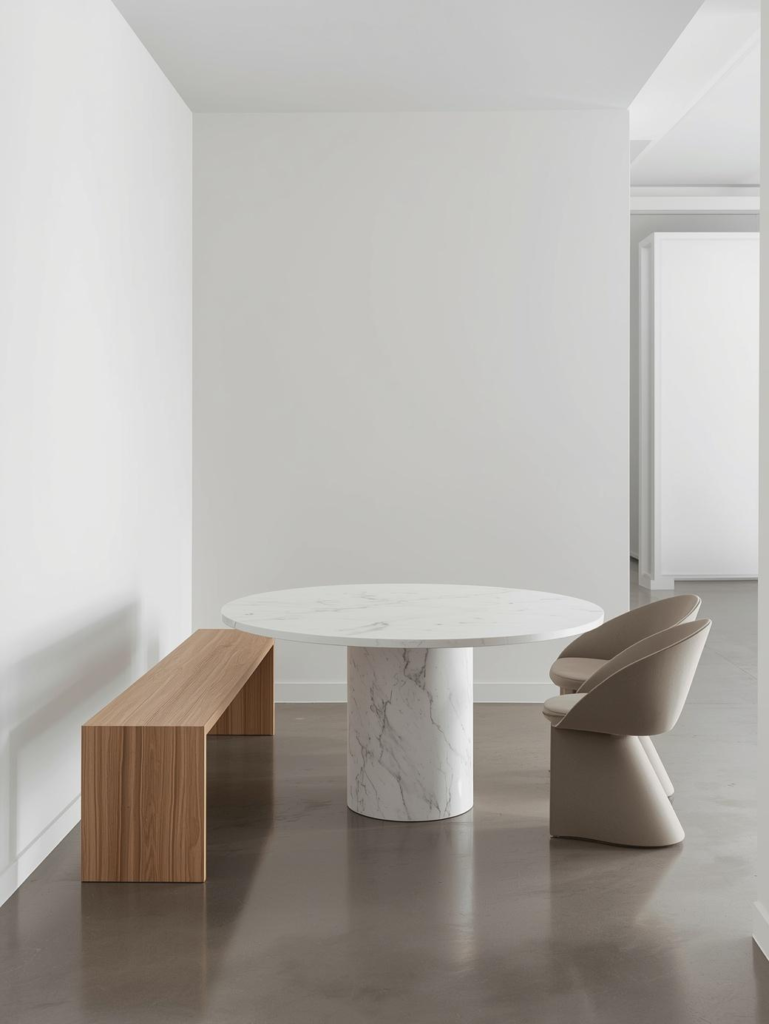
A backless bench paired with a pedestal table creates one of the cleanest and most spatially generous dining configurations possible because both pieces share a commitment to visual lightness. The pedestal base eliminates the visual clutter of four table legs, opening up the floor plane and making the room feel larger than it is, while the backless bench contributes no vertical visual weight beyond its own seat height. Together, these two pieces allow the eye to travel unobstructed through the lower half of the room, which is particularly valuable in smaller dining spaces where any reduction in perceived bulk makes a meaningful difference to how the room feels.
The backless bench is also the most flexible seating option in terms of accessibility, as it can be approached and exited from any direction without the constraint of a backrest guiding or limiting movement. This makes it especially practical for families with young children who need to be helped in and out of seats, and for dining rooms where the table is used for activities beyond eating, such as homework, crafts, or working from home. A backless bench in natural wood or painted to match the wall behind it sits quietly in the room as a functional support rather than a dominant design statement, allowing the table and other elements to take the visual lead.
Idea 06
Storage Bench for Small Dining Rooms
I
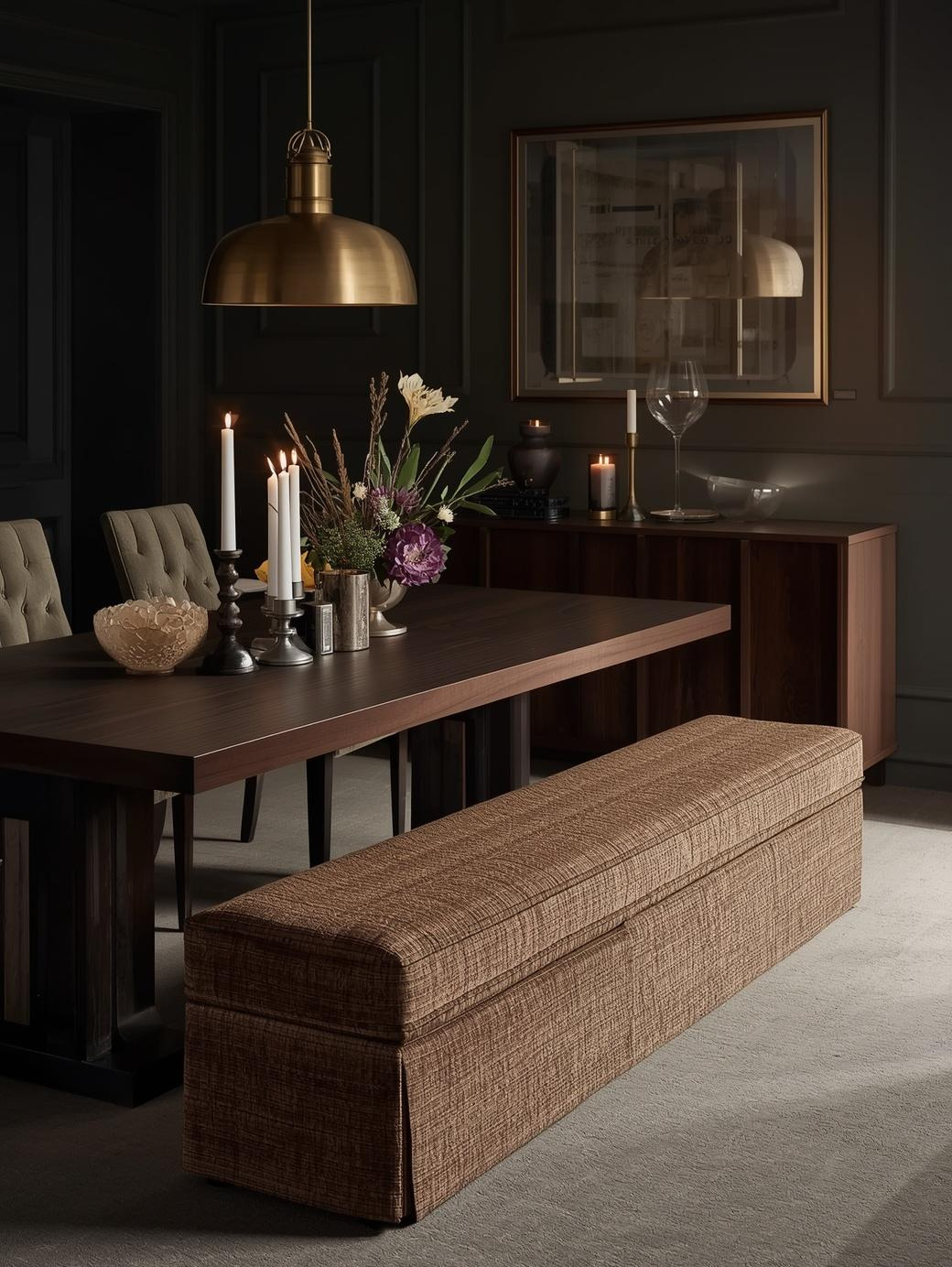
In a small dining room or open-plan apartment where storage is always in short supply, a bench with concealed storage beneath the seat solves two problems simultaneously without adding a single extra piece of furniture to the room. A lift-top bench, or one fitted with side-opening drawers, provides a practical home for extra table linens, placemats, candles, serving pieces, and anything else related to the dining experience that would otherwise need to be stored in a separate cupboard or sideboard. The visual footprint of the bench remains unchanged while its functional contribution to the room doubles, which is exactly the kind of efficiency that small-space living demands.
Storage benches are available in a wide range of styles, from simple painted pine with a hinged lid to fully upholstered designs with button-tufting and concealed drawers that look entirely at home in a more formal dining room. Placing the bench along the wall on the long side of the table and leaving the opposite side open with chairs allows the room to function normally while keeping the storage accessible without disrupting the table arrangement. A cushion placed on top of the bench adds comfort and signals that the piece is intended as seating rather than simply a decorative storage box, making the dining room feel both practical and genuinely welcoming.
Idea 07
Outdoor-Style Bench Brought Indoors
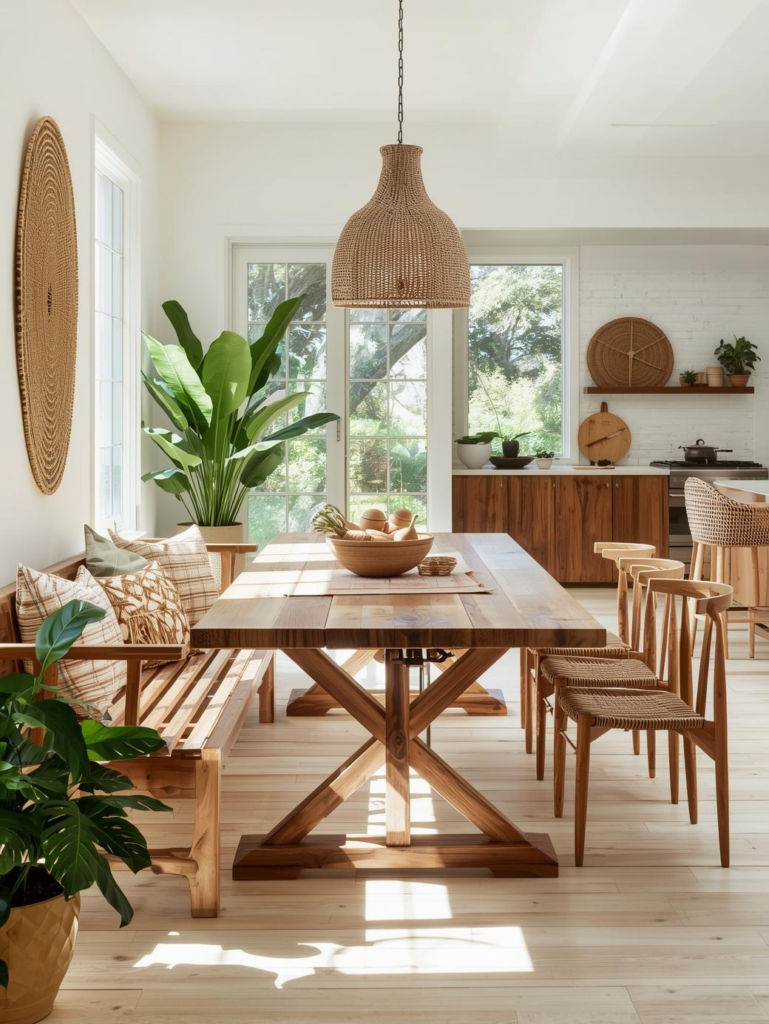
Using an outdoor-style bench inside the dining room is a design move that communicates ease, confidence, and a relaxed attitude toward conventional interior rules, all of which are qualities that make a dining space feel genuinely inviting rather than stiff. Slatted teak or eucalyptus garden benches, folding picnic-style benches, and powder-coated metal outdoor seating all translate beautifully into the interior when paired with the right table and surrounded by complementary natural materials. The slightly utilitarian quality of outdoor bench designs adds texture and interest to a dining room that might otherwise rely entirely on polished or upholstered furniture for its character.
The key to making an outdoor bench work inside is context. Pairing it with a trestle-leg table, natural wood accessories, abundant plants, and earthy textiles creates an indoor-outdoor continuum that makes the bench feel deliberate rather than improvised. A dining room styled around the principles of biophilic design, with natural materials, warm tones, and living greenery throughout, is the ideal environment for this approach. Adding a long cushion in a weather-resistant outdoor fabric to the bench seat provides comfort without disrupting the casual outdoor aesthetic that gives this configuration its distinctive and appealing character.
Idea 08
Metal Bench with an Industrial Table
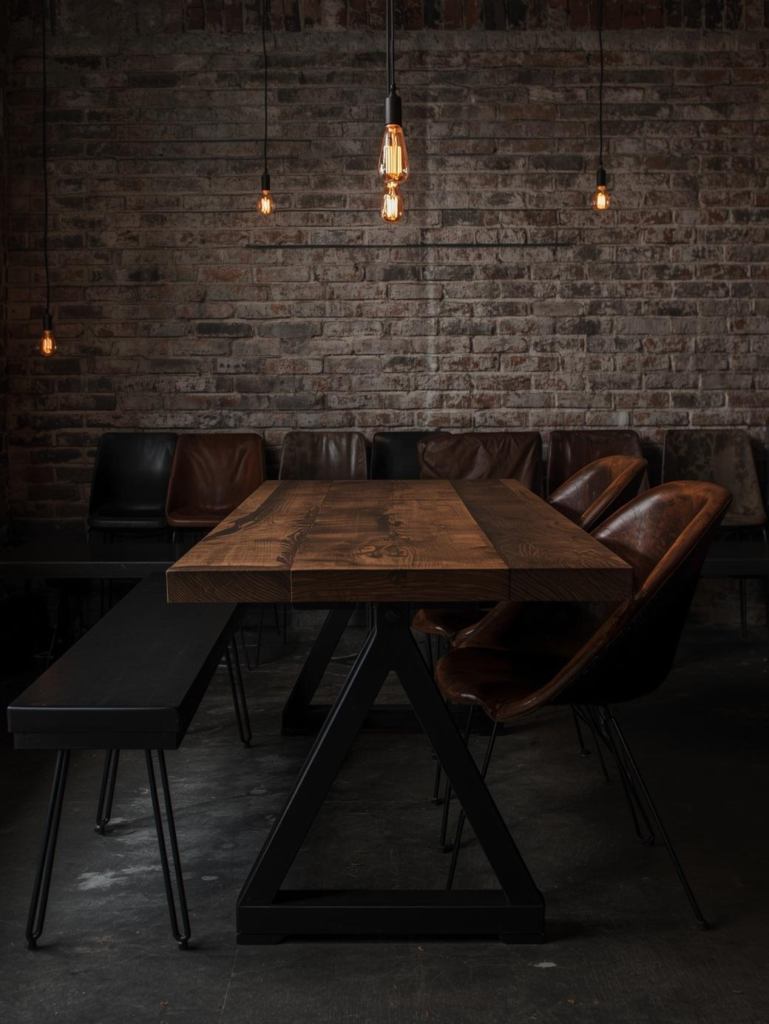
A metal bench with slender hairpin or box-section steel legs paired with a reclaimed wood and metal trestle table is one of the most cohesive expressions of industrial interior design in a dining room, and it works because every element in the combination shares the same language of raw, honest materials. The metal bench introduces a structural rigor that grounds the arrangement while remaining visually light enough not to overpower the room. In open-plan loft apartments, warehouse conversions, or any home that embraces exposed materials and utilitarian aesthetics, this pairing feels genuinely at home rather than like a style decision imported from another context entirely.
Industrial metal benches are among the most durable dining seating options available because powder-coated or raw steel frames are almost impossible to damage through ordinary use, making them a sound investment for high-traffic family dining rooms as well as more design-conscious spaces. Adding leather or canvas seat pads softens the inherent hardness of the metal without diluting the industrial aesthetic, and introduces a material warmth that prevents the dining area from feeling cold or unwelcoming. Mismatched vintage chairs at the opposite end of the table and the heads of the bench add a curated, edited quality that distinguishes a thoughtfully designed industrial dining room from one that simply contains industrial pieces.
Idea 09
Rattan or Woven Bench for a Natural Look
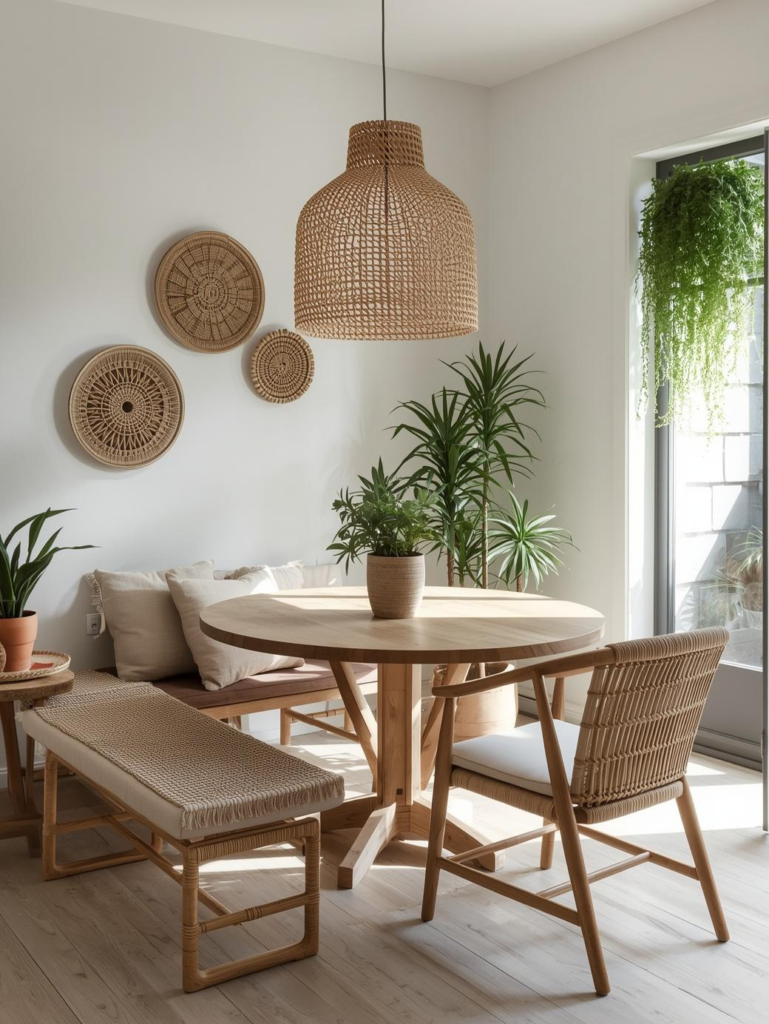
A rattan or woven bench brings a tactile richness to the dining room that few other materials can match, its natural variation in color and texture giving the piece an organic, handcrafted quality that reads as genuinely luxurious in the context of a naturally styled interior. Rattan bench designs range from fully woven seat surfaces over curved wood frames to tightly wrapped rattan panels on a straight structural base, and all of them share the same quality of warmth and lightness that makes this material so consistently popular in contemporary interior design. Against white or warm-toned walls with natural wood furniture, a rattan bench looks completely at home without requiring any additional styling effort.
The natural aesthetic of a rattan bench pairs most harmoniously with round or oval dining tables because the curves of the table echo the curved qualities inherent in most woven designs, creating a visual agreement between the pieces that rectangular pairings rarely achieve with the same ease. Pairing the bench with a matching rattan pendant light above the table and a few woven accessories elsewhere in the room ties the natural material theme together without overloading the space with texture. Linen cushions in undyed or earth-tone fabrics placed along the bench seat complete the composition and add the comfort that makes guests genuinely reluctant to leave the table at the end of a meal.
Idea 10
Long Bench Shared Across Two Tables
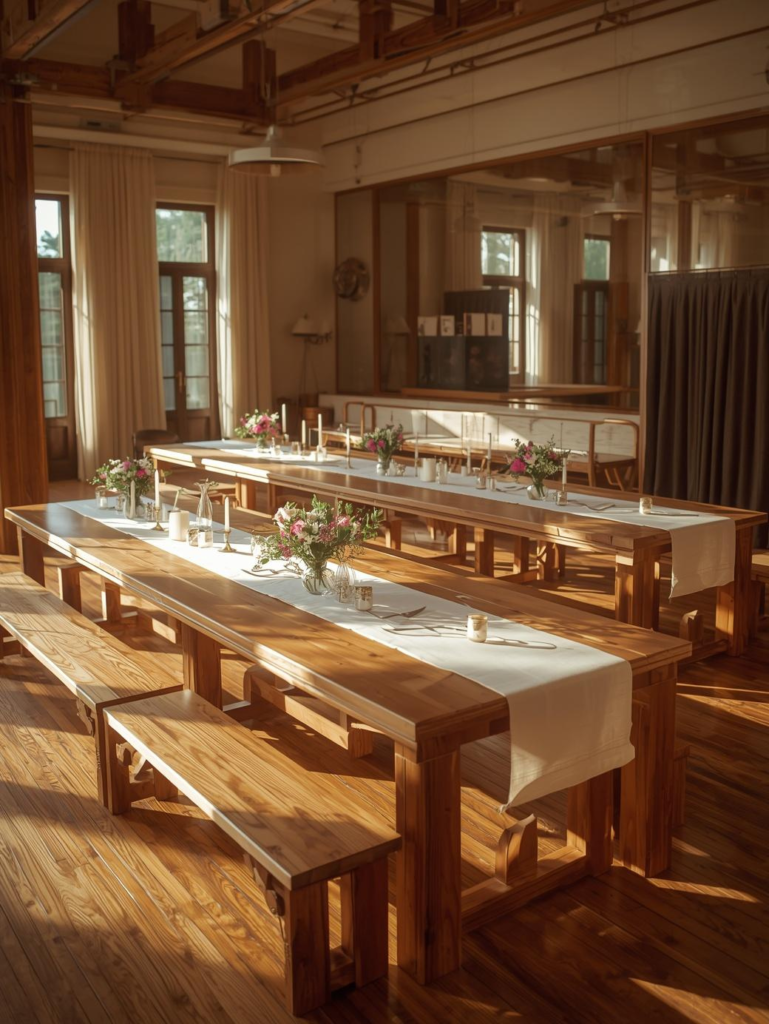
For homes that entertain on a generous scale or families that regularly need to seat large groups, placing a single extra-long bench along the combined length of two adjacent tables creates a communal dining configuration that is both highly practical and visually distinctive. This approach works particularly well in open-plan kitchen and dining spaces where the dining area is large enough to accommodate two tables pushed together for occasions when maximum seating is needed, and pulled apart for everyday use when only one table is required. The single long bench connecting the two tables visually unifies the arrangement and signals that the combined setup is intentional rather than improvised.
The communal bench format has deep roots in dining history, from monastery refectory tables to traditional harvest celebrations, and it carries with it an inherently generous and welcoming quality that matched chairs arranged around individual tables rarely achieve. In a contemporary home, an extra-long bench in reclaimed or solid hardwood running the length of a double-table arrangement anchors the dining space with a sense of substance and permanence. Paired with simple chairs on the opposite side and kept free of clutter along its length, this configuration communicates that the home is genuinely organized around the pleasure of gathering people together around food, which is the highest compliment any dining room can receive.
Idea 11
Painted Bench as a Color Accent
A painted bench is one of the most cost-effective and reversible ways to introduce a deliberate color accent into an otherwise neutral dining room, and the impact of this single decision on the overall character of the space is consistently greater than its modest scale would suggest. A bench painted in sage green, deep navy, terracotta, or warm mustard against a white or light-toned wall and table becomes the visual anchor of the dining room, drawing the eye and giving the space a sense of intentionality that neutral furniture alone rarely provides. The bench is also the perfect candidate for a paint accent because its horizontal low profile means the color enriches the room without overwhelming it.
Choosing a bench color is most effective when it relates to at least one other element already present in the room, whether a tone picked from a piece of artwork on the wall, a color repeated in cushions or a rug, or a shade that complements the existing wood tones of the table and floor. This connection between the painted bench and the rest of the room prevents the color from reading as arbitrary and instead positions it as a considered part of a coherent color story. Repainting a plain wooden bench is an achievable weekend project that costs very little but transforms the dining room’s personality completely, which makes it one of the highest-return decorating decisions available to anyone looking to refresh their space without significant expenditure.
Idea 12
Bench with Throw Cushions and Pillows
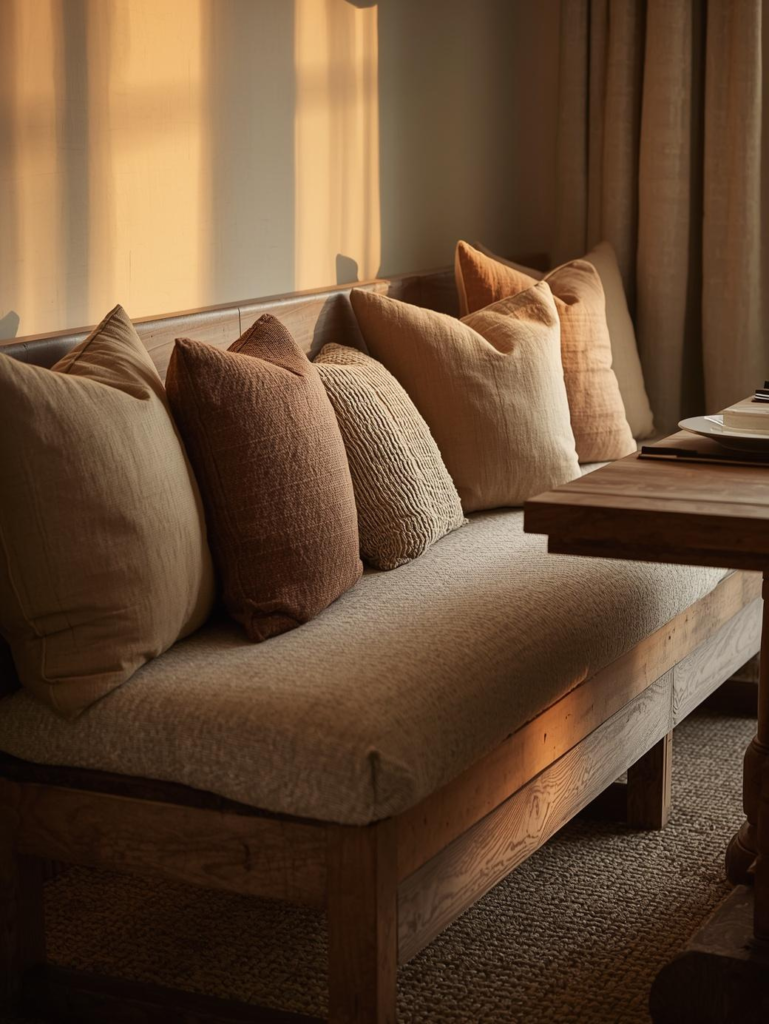
Adding cushions and throw pillows to a dining bench is the simplest possible transformation that turns a purely functional piece of seating into something that looks genuinely styled and feels meaningfully more comfortable for extended meals and leisurely gatherings. A long seat cushion in a natural fiber fabric addresses the comfort concern that bare wood or metal bench seats often raise, while scatter cushions propped against the wall or stacked at each end of the bench introduce the layered, relaxed quality that makes a dining room feel lived-in and welcoming rather than formally arranged. This approach works with any bench style and requires no permanent modifications to achieve a significant visual improvement.
The cushion covers chosen for a dining bench benefit from being both visually appealing and genuinely practical, since dining involves food and spills are inevitable. Removable, washable covers in linen blends, outdoor performance fabric, or tightly woven cotton allow the bench to be styled beautifully while remaining entirely manageable in real-world family use. Mixing cushion sizes, textures, and tonal variations within a coordinated color palette creates the kind of effortless layering that looks styled without appearing contrived. A bench loaded with cushions at the end of a long dining table set for a relaxed family dinner is one of the most inviting sights a dining room can offer, communicating warmth, comfort, and a genuine pleasure in the act of gathering together.
Final Thoughts
The Bench That Changes Everything
The twelve ideas in this guide share a common belief: that the dining room works best when it prioritizes people over convention. Chairs have their place, and they are not going anywhere, but the bench offers something that no individual chair can match, which is the ability to accommodate whoever arrives at the table without advance planning, without counting seats, and without asking anyone to move. That quality of ease and generosity is what distinguishes a dining room that people genuinely want to spend time in from one they simply pass through on the way to the kitchen.
Each of these twelve configurations delivers the same core benefit through a different aesthetic lens, meaning that whether your home is a rustic farmhouse, a contemporary apartment, an industrial loft, or a traditionally decorated family house, at least one of these ideas will translate into your specific space without requiring significant compromise on style or comfort. The bench is not a lesser choice than a full set of chairs but a deliberate and considered one, and the homes that embrace it tend to look and feel more confident and more welcoming as a result.
Begin with the idea that resonates most immediately with your existing dining room and your lifestyle, and resist the temptation to overthink the decision. A simple wooden bench from a furniture store, a storage bench ordered online, or an existing outdoor bench brought in from the garden all have the potential to transform how your dining room functions and how it feels. The best dining rooms are the ones that invite people to stay at the table after the meal is finished, and a well-chosen bench is one of the most effective tools available for creating exactly that kind of space.