How to Style a Round Dining Table: 20 Centerpiece Ideas That Look Effortlessly Beautiful
Twenty distinct centerpiece approaches for the round dining table, from everyday minimal arrangements to seasonally dressed tablescapes, each designed to work with the circular form rather than against it
The round dining table presents a styling opportunity that its rectangular counterpart simply cannot offer. Its shape is inherently democratic, gathering everyone at equal distance from the center and creating a conversation dynamic that long tables interrupt with their hierarchy of ends and sides. But that same circular form poses a specific and interesting challenge to the person who wants to dress it well: there is no head, no foot, no directional axis to anchor a centerpiece against. Everything placed at the center of a round table must work in the round, reading with equal beauty from every seat at every angle, which is a very different design problem from styling a rectangular surface with a clear front and back.
The twenty centerpiece ideas in this article address this challenge across the full range of styles, seasons, budgets, and occasions that a dining table is asked to accommodate. Some are designed for everyday use, when the table needs to look considered without requiring daily maintenance. Others are occasion-specific, when the act of dressing the table is itself part of the hospitality being offered. All of them work with the particular geometry of the round table, using its shape as a strength rather than a limitation, and all of them are designed to produce the effortlessly beautiful quality that is the highest aspiration of any dining table arrangement, the impression that the table styled itself and you simply provided the objects.
Idea 01Everyday
A Single Large Statement Vase With One or Two Stem Types
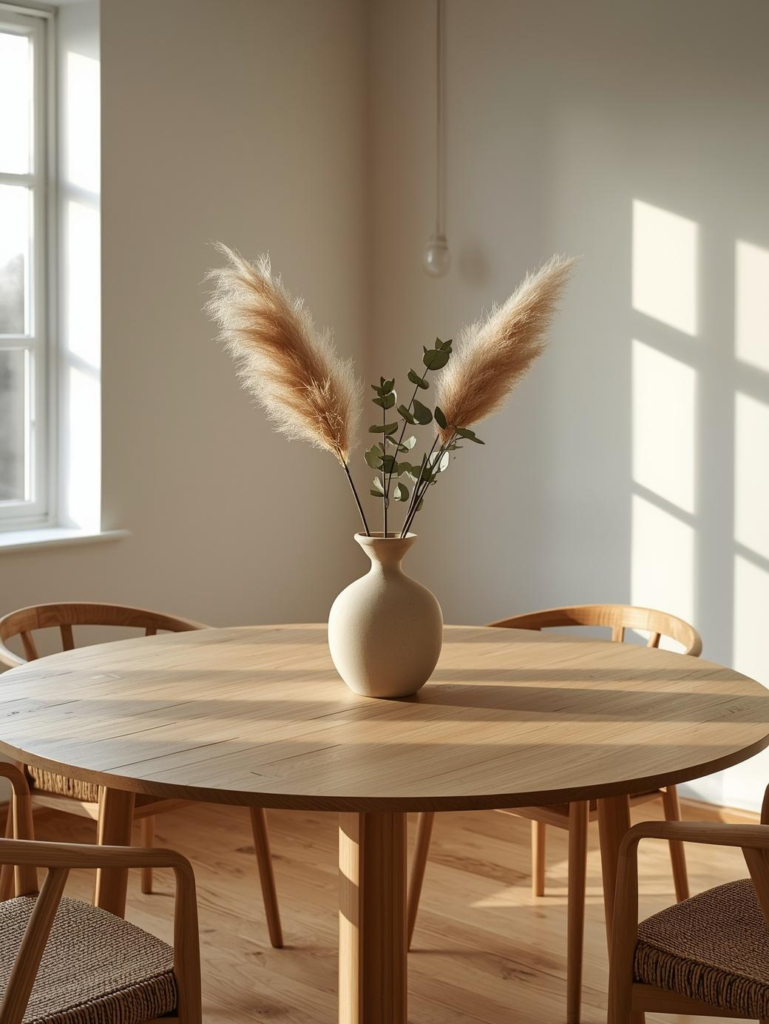
The most restrained and most reliably beautiful centerpiece for a round dining table is a single large vase holding one or two stem varieties in a combination that is either monochromatic or simply tonal. This approach works because it respects the geometry of the table: a single centered object reads as intentional on a round surface in a way that a cluster of small objects requires more skill to achieve. The vase itself carries significant visual weight and should be chosen carefully for its proportion relative to the table diameter, with taller, slimmer vessels suiting smaller tables and wider, more substantial forms suiting larger ones.
Dried stems are the most practical choice for an everyday centerpiece because they require no water, no maintenance, and no replacement on any regular schedule. Dried pampas grass paired with eucalyptus, dried wheat with cotton stems, or a single dramatic dried palm leaf in a tall cylindrical vase all produce arrangements of genuine elegance with minimal effort. For those who prefer fresh flowers, a single variety used in abundance, all white tulips, all garden roses, all ranunculus, creates a more striking and more sophisticated result than a mixed bouquet and keeps the composition clean enough to suit the round table’s inherently geometric form.
Idea 02Candle Cluster
Cluster Candles of Varying Heights in the Same Wax Color Family
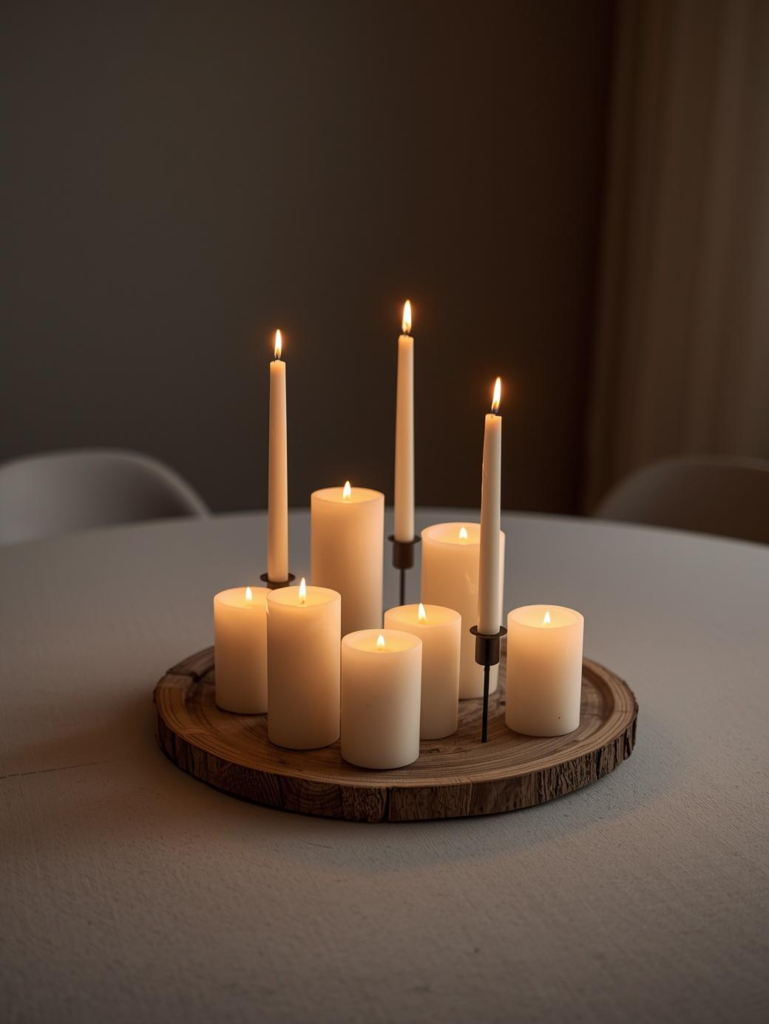
A cluster of pillar candles grouped at the center of a round dining table creates a centerpiece that is as beautiful unlit during the day as it is dramatically atmospheric after dark, which makes it one of the most versatile and seasonally appropriate options available across the full year. The key to making a candle cluster read as a designed centerpiece rather than a casual grouping is height variation and color consistency. Three to five pillar candles at different heights, all in the same wax color family, ivory, cream, warm white, or a single deep tone like black or forest green, create a composition with vertical interest and tonal unity that reads as intentional from every seat.
Placing the candle cluster on a wooden board, a marble slab, a mirrored tray, or a woven rattan tray elevates it from a floor-level arrangement to a proper tabletop composition and protects the table surface from wax drips simultaneously. The tray or board also defines the footprint of the arrangement, giving it a clear boundary that makes it feel more considered. Surrounding the base of the candles with a loose scattering of seasonal elements, dried rose petals, small stones, eucalyptus sprigs, or coffee beans, adds a ground layer that anchors the vertical candles without competing with their light or adding visual complexity that the simple composition does not need.
Idea 03Fruit Display
Arrange Seasonal Fruit in a Wide, Shallow Bowl as a Living Centerpiece
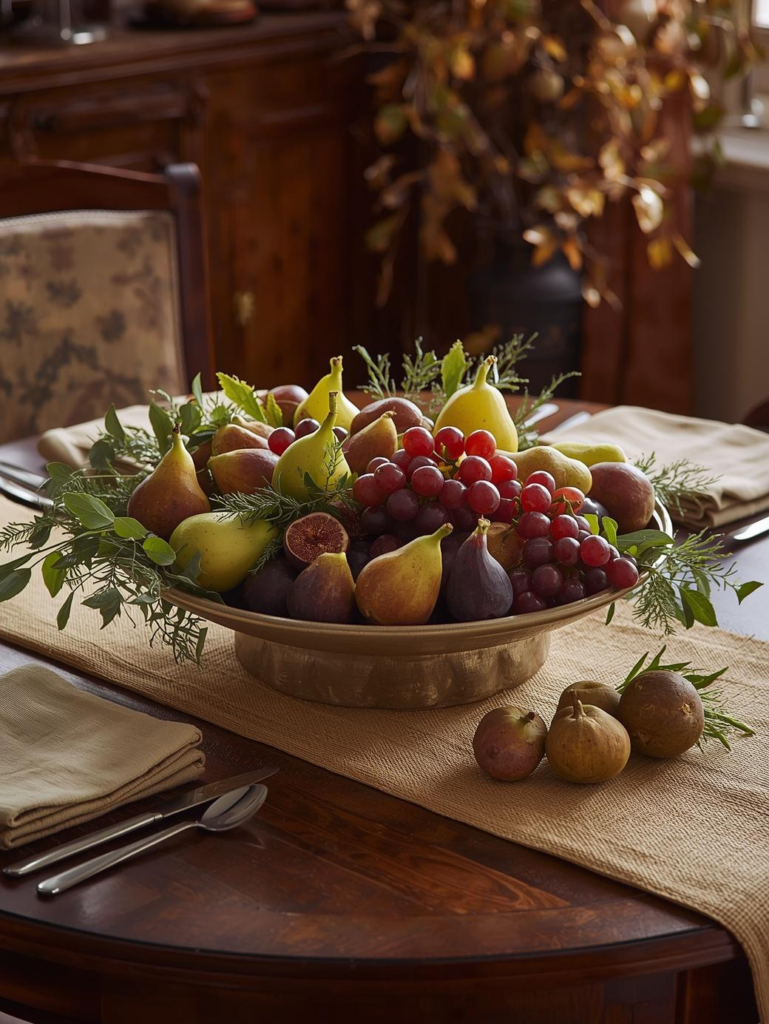
A wide, shallow bowl generously filled with seasonal fruit is one of the oldest and most naturally beautiful centerpiece approaches available for any dining table and it suits the round form particularly well because the circular bowl mirrors the circular table, creating a visual harmony between the centerpiece and the surface it sits on. The fruit arrangement requires no floral knowledge, no particular skill, and no maintenance beyond replacing individual pieces as they are eaten or as they age. It is simultaneously decorative and functional, contributing to the meal when needed and to the aesthetics of the room at all other times.
The seasonal dimension of a fruit centerpiece is one of its greatest assets, changing the dining room’s color story and mood automatically with the progression of the year. Summer arrangements of peaches, figs, and plums in deep purples and warm oranges give way to autumn piles of pears, persimmons, and small pomegranates in russet and gold, which transition into winter citrus arrangements of blood oranges and clementines in their vivid warm tones. Tucking sprigs of fresh herbs, small branches of foliage, or flowers between the fruit pieces adds a botanical dimension that elevates the arrangement from a bowl of grocery produce to a genuinely composed table centerpiece.
Idea 04Low Floral
Design a Low, Wide Floral Arrangement That Does Not Block Eye Contact
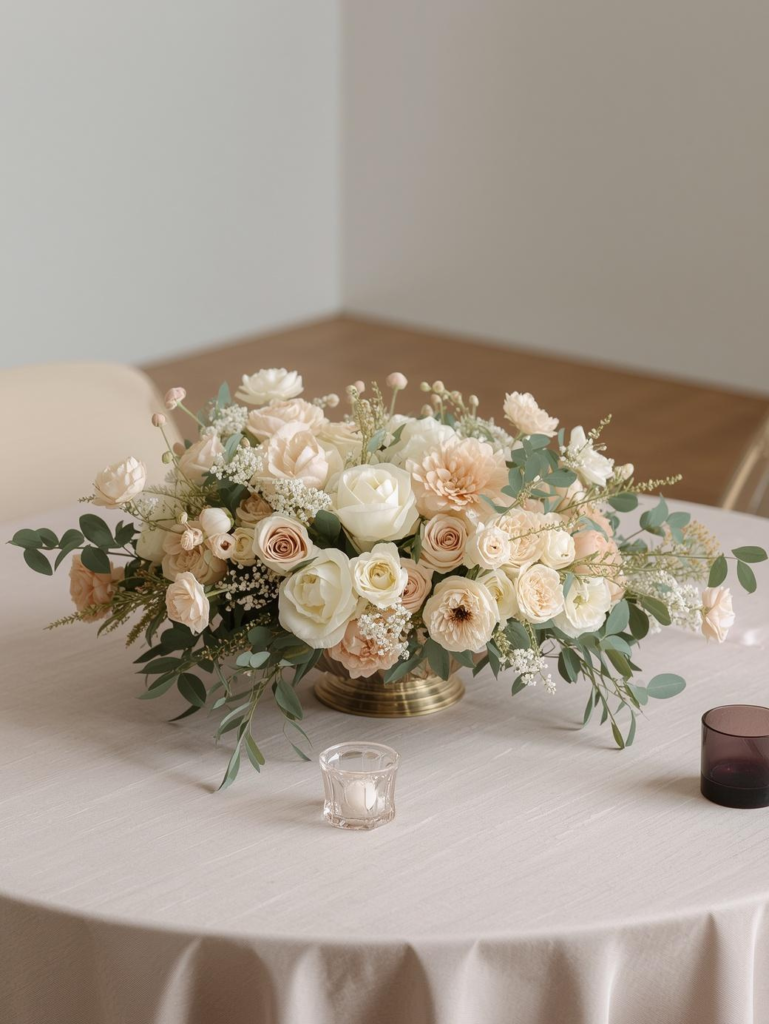
The most common centerpiece mistake on a round dining table is an arrangement that sits at eye level or above, blocking the view between guests seated across from each other and transforming the table’s most generous social quality, its ability to include everyone in one conversation, into a partitioned dining experience where people can only easily speak to their immediate neighbors. A low, wide floral arrangement, sitting no more than twenty-five to thirty centimeters above the table surface, solves this problem entirely while filling the center of the table with color, texture, and fragrance in a way that tall arrangements achieve only at the cost of visibility.
The construction of a low, wide arrangement requires a shallow vessel, a wide ceramic bowl, a low compote dish, or a flat-based bud vase cluster, and stems cut short enough that the flower heads sit just above the rim of the vessel. Packing the vessel densely with flower heads of similar sizes creates the lush, abundant quality that makes these arrangements look so beautiful in dining room photography. Garden roses, ranunculus, dahlias, and peonies are all naturally cup-shaped flowers that nest together well in this format. Choosing a palette of two to three closely related tones, cream to blush to soft dusty rose, creates a composition that reads as sophisticated rather than random from every seat at the table.
Idea 05Natural Objects
Style With a Curated Collection of Natural Objects on a Tray or Board
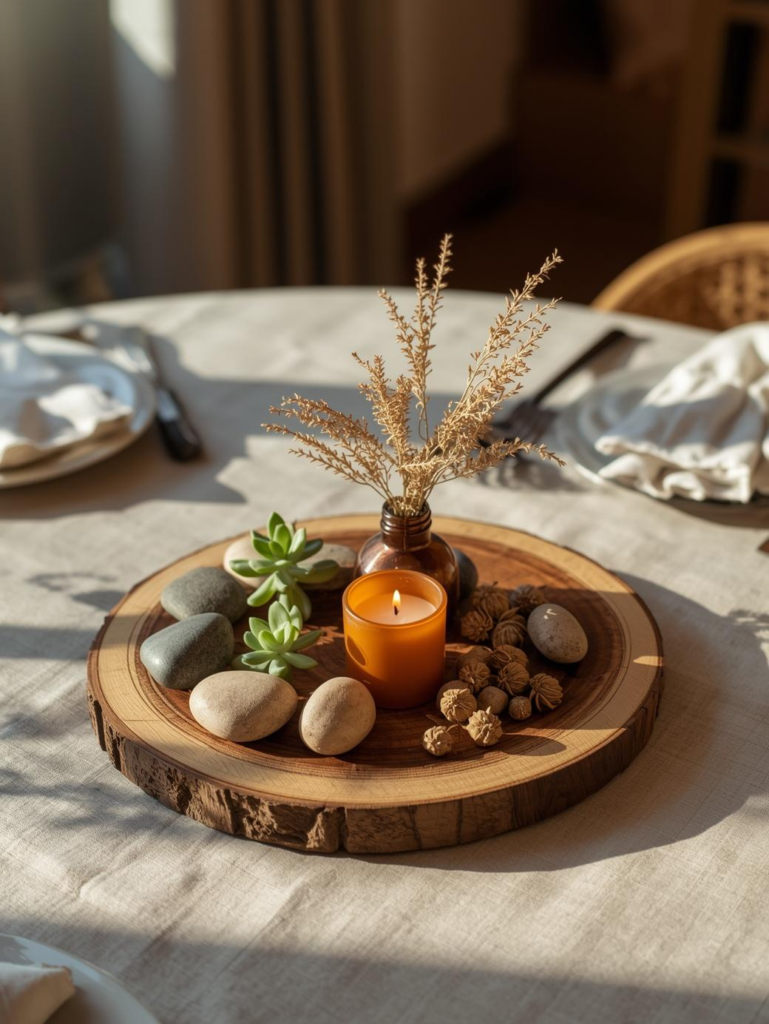
A curated collection of natural objects arranged on a wooden board or a shallow tray creates a centerpiece that has the quiet, meditative quality of a well-arranged still life and requires almost no expenditure beyond the time and attention invested in its composition. Smooth river stones gathered from a walk, small succulents or air plants in terracotta pots, dried seed pods, a piece of driftwood, a single beeswax candle, and a small ceramic dish holding a pinch of sea salt are all objects that cost nothing or almost nothing and that together create a composition of genuine beauty when placed with care and intention on the center of a round dining table.
The principle governing this type of centerpiece is the same one that makes Japanese ikebana and wabi-sabi aesthetics so enduringly beautiful: the deliberate use of asymmetry, natural imperfection, and the relationship between objects of different textures and scales to create a composition that rewards looking at over time rather than offering its entire visual interest in a single glance. Arranging the objects at slightly different heights using stacked stones or small wooden risers, and leaving generous space between them rather than crowding them together, allows each piece to be seen individually and as part of the whole simultaneously. This is the centerpiece approach most associated with the Japandi and organic minimalist dining aesthetics currently dominating design platforms in 2026.
Idea 06Runner Style
Use a Circular Table Runner to Frame the Center Before Adding Objects
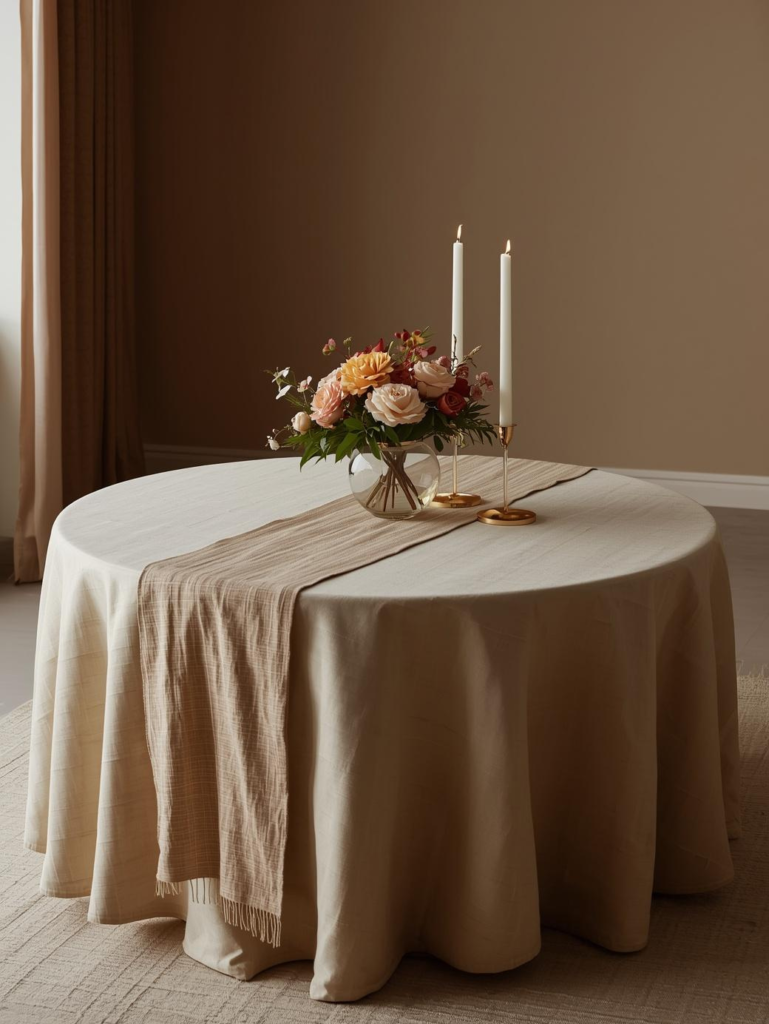
A circular table runner, cut or purchased in a round format that fits the diameter of the dining table’s center zone, does for the round table what a standard rectangular runner does for a long one: it defines the centerpiece area as a distinct zone within the table surface and gives every object placed on it a unified ground that makes the overall arrangement feel more composed and intentional. A circular runner in linen, cotton, or a woven natural fiber placed at the center of a round table immediately creates a framed surface on which even very simple objects, a single candle, one small vase, a ceramic dish, read as a designed centerpiece rather than a random placement.
The runner itself contributes significantly to the aesthetic of the table and should be chosen with the same care as any other textile in the room. A raw-edged linen circle in a warm neutral suits the organic, Scandinavian-influenced dining room. A printed cotton circle in a botanical or geometric pattern suits a more decorative aesthetic. A round runner in a deep, rich tone, forest green, terracotta, or midnight blue, creates a color anchor at the center of the table that influences the entire dining room palette. Circular runners can be made from any fabric with a simple circular cut and no hemming required if a raw, organic edge is appropriate for the aesthetic.
Idea 07Bud Vase Trio
Group Three Bud Vases of Different Heights With Single Stem Flowers
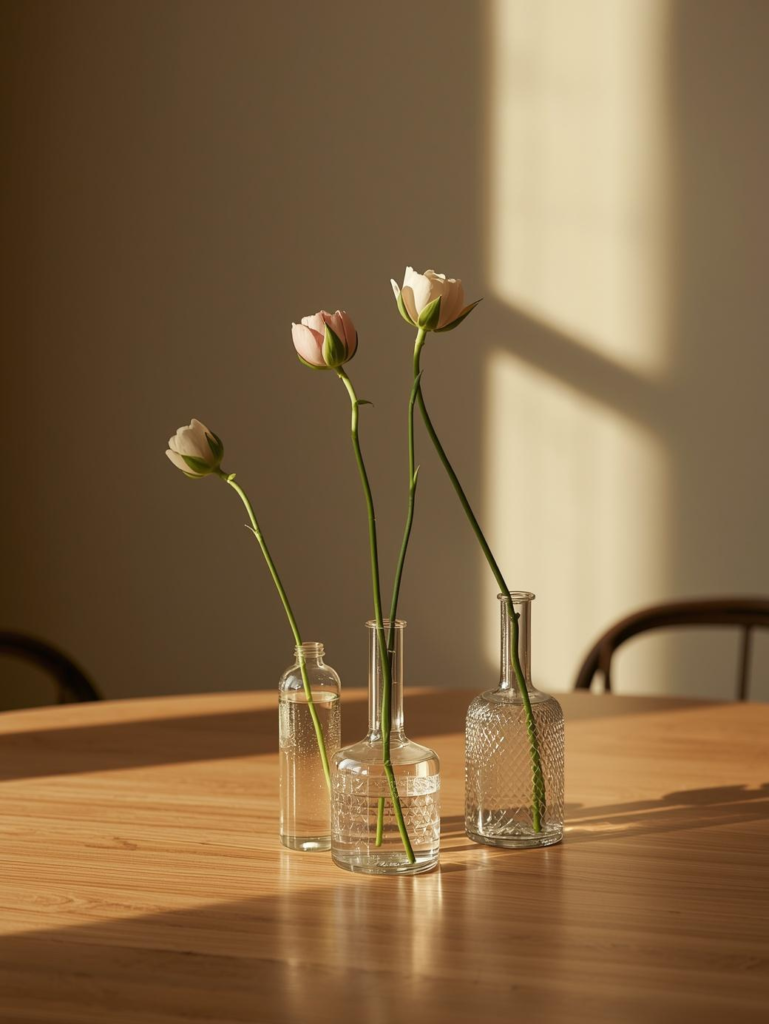
Three bud vases of different heights grouped together at the center of a round dining table create a centerpiece that has the visual rhythm and gentle asymmetry of a considered composition without requiring any floral arrangement skill beyond selecting stems and placing them in water. The three-vase grouping works on the round table because its odd number and varied heights create a naturally organic cluster that reads as designed rather than symmetrical in a way that would feel forced on a round surface. The vases should be related in material or color, three ceramic pieces in similar tonal glazes, three glass vessels of different silhouettes, without being identical sets.
Single stem flowers in each vase, chosen from the same variety or from two complementary varieties in a shared color palette, keeps the arrangement legible and elegant. A stem of garden rose in one vase, a sprig of sweet peas in the second, and a single bloom of anemone in the third, all in cream and soft blush, creates a cohesive composition from three independent elements. Varying the stem heights within the vases so that the flower heads sit at three different levels above the table surface reinforces the visual rhythm established by the varying vase heights and prevents the arrangement from settling into the flatness that same-height groupings produce.
Idea 08Seasonal
Build a Seasonal Foliage Wreath Laid Flat as a Natural Table Crown
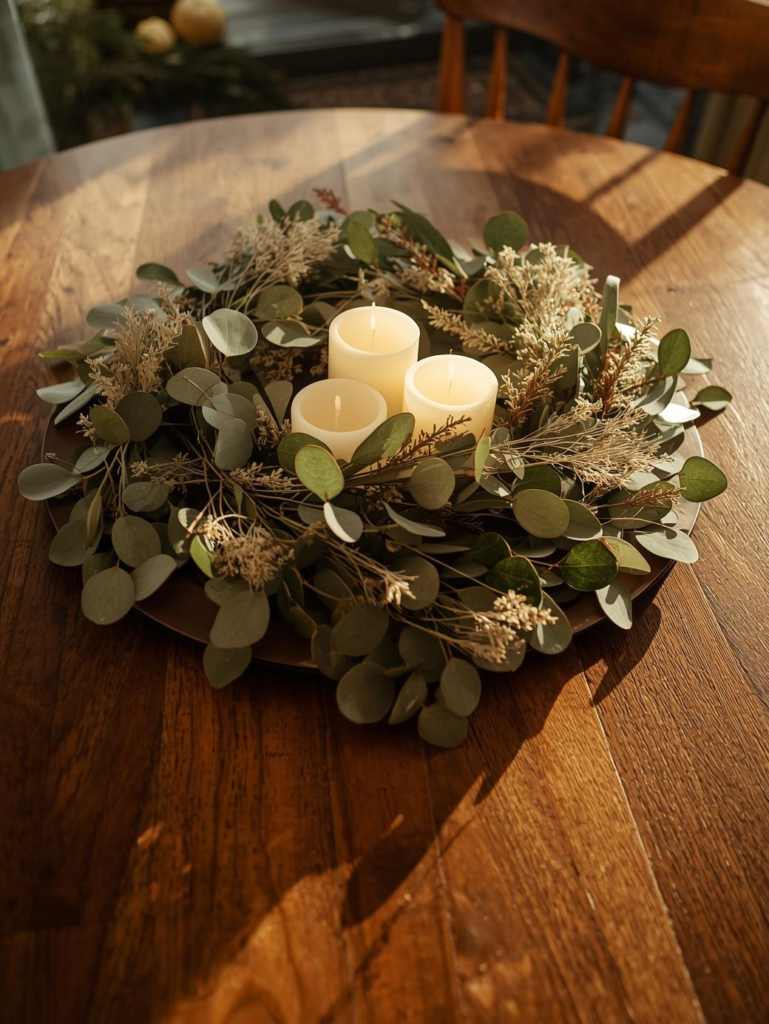
A foliage wreath laid flat on the center of a round dining table rather than hung on a wall is one of the most seasonally evocative and most naturally suited centerpiece approaches for the circular form. The ring shape of the wreath mirrors the circle of the table in a way that creates an almost architectural relationship between the two forms, as though the wreath was made specifically for this table rather than adapted from a wall-hanging tradition. Eucalyptus wreaths, available from florists and craft suppliers year-round, provide a fragrant and visually lush base into which candles, small flowers, or seasonal objects can be nestled at intervals around the ring.
The interior of the laid wreath becomes a natural framing device for a candle cluster, a small vase, or a collection of seasonal objects placed at the center of the ring. In autumn, small gourds, dried seed heads, and cinnamon sticks woven into the foliage and a cluster of pillar candles at the center creates a harvest tablescape of genuine warmth and abundance. In winter, the same wreath base decorated with dried citrus slices, cloves, and white candles transitions seamlessly into a festive centerpiece. In spring and summer, fresh garden flowers threaded through a greenery ring create something that looks as though it grew directly onto the table surface.
Idea 09Sculptural
Place a Single Sculptural Object as a Permanent Everyday Centerpiece
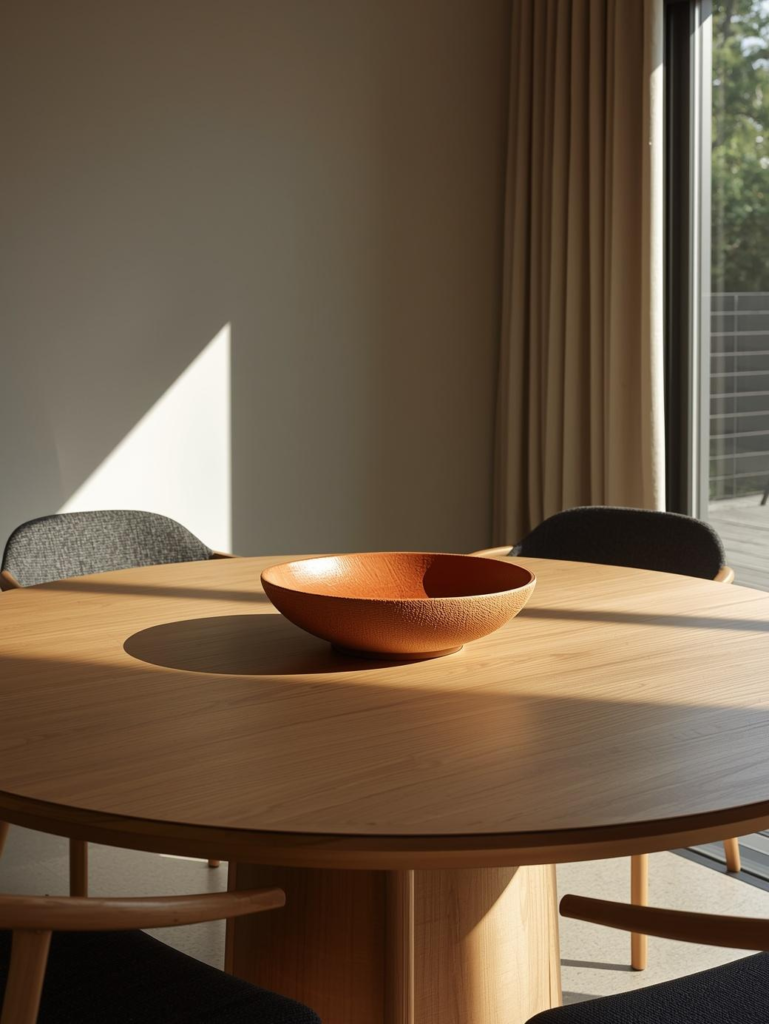
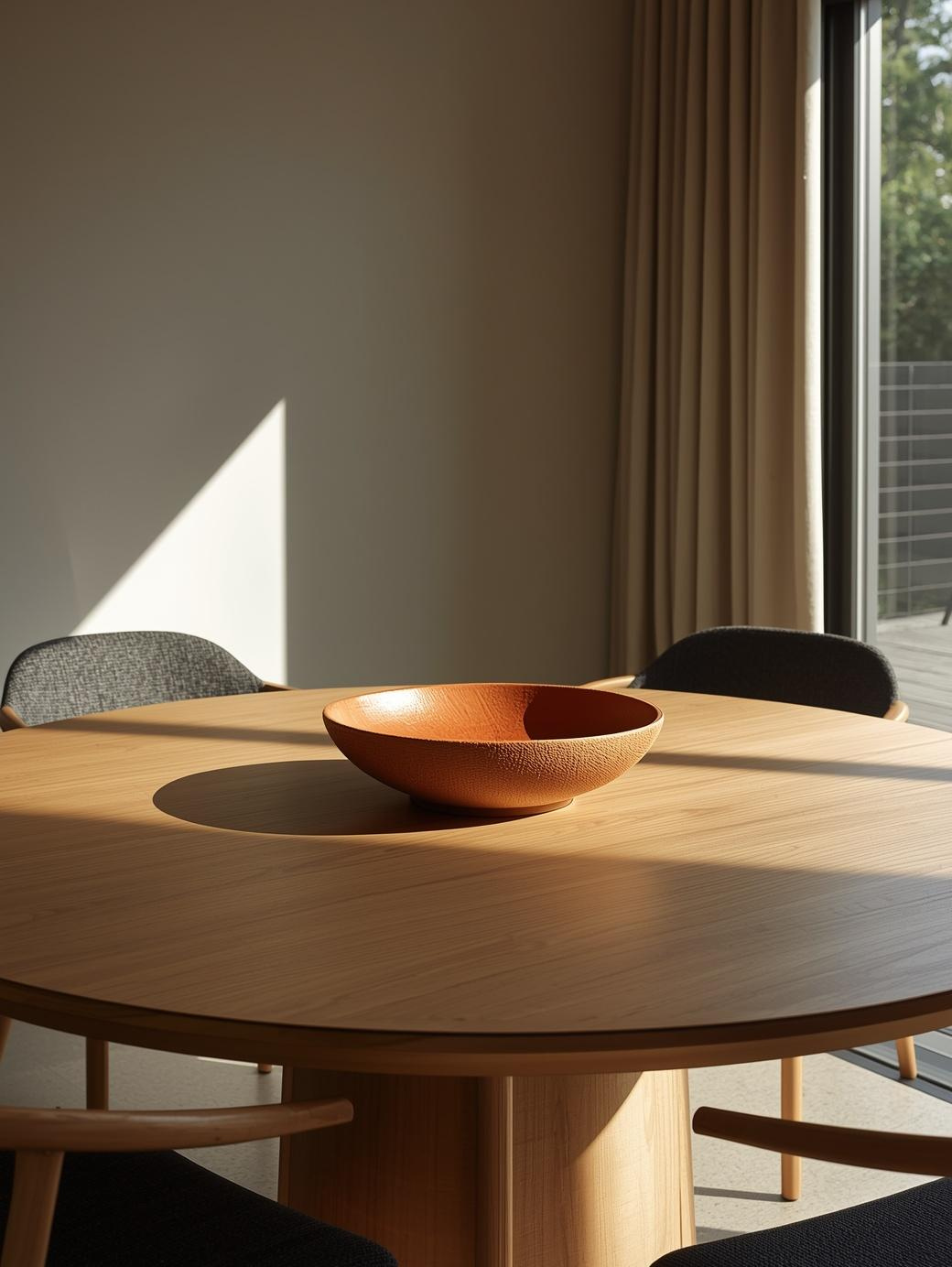
The most confident and most quietly sophisticated approach to the round dining table centerpiece is to place a single sculptural object at the center and allow it to carry the entire visual weight of the arrangement without any supporting elements. This approach requires the most careful object selection of any centerpiece strategy because the object must be beautiful enough, and substantial enough in form, to hold the visual attention of the table surface on its own. A large hand-thrown ceramic bowl with an interesting glaze, a piece of organic sculpture in wood or stone, a wide ceramic platter in a deep tonal glaze, or a single oversized candle in an artisanal form all have the quality and the visual weight to serve this purpose.
The single sculptural object approach to table centerpiece styling is strongly associated with the Japandi and quiet luxury aesthetics that continue to dominate interior design in 2026, both of which prize restraint and the quality of individual objects over accumulation. Its particular advantage for everyday use is that it requires no maintenance, no daily adjustment, and no seasonal replacement. The object simply sits at the center of the table and does its work of making the space feel considered and beautiful regardless of what is happening in the rest of the room. This is the centerpiece for people who want their table to always look designed without ever having to think about it.
Idea 10Layered Tray
Style a Round Tray With Layered Objects at Three Different Heights
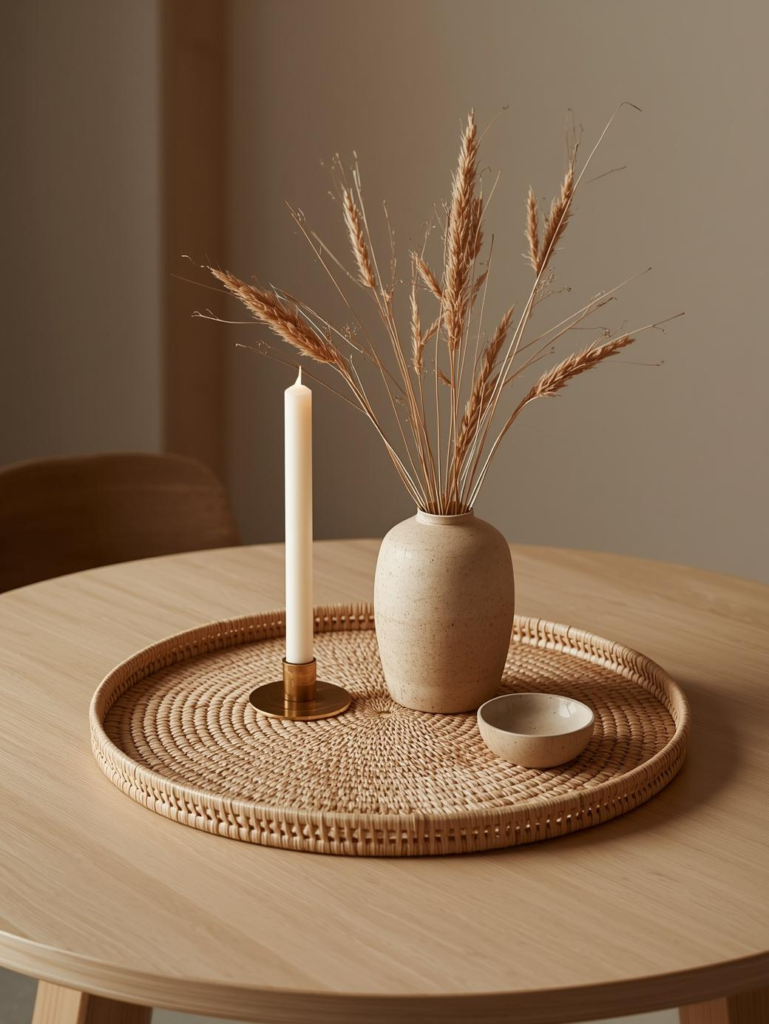
A round tray centered on a round table creates a centerpiece composition that works on two levels simultaneously: the tray itself defines the centerpiece zone and contributes its own material texture and color to the arrangement, while the objects placed on the tray create the height variation and visual interest of the centerpiece proper. This layered approach, where the tray is considered as the base layer and the objects on it as the second layer, produces a more architecturally considered result than placing objects directly on the table surface, and it has the practical advantage of allowing the entire centerpiece to be moved as a single unit when the table is needed for a meal.
The three-height rule for tray styling on a round table is the most reliable compositional guide: one tall element such as a candle or a bud vase with stems, one medium element such as a small ceramic object or a low succulent planter, and one low element such as a dish of pebbles or a cluster of small votives. Placing these three elements in a triangular arrangement within the tray, with the tallest at the back and the two lower elements toward the front, creates a composition with depth and visual interest that reads clearly from any seat at the round table. The tray should be large enough relative to the table diameter to feel generous rather than insignificant at the center of the surface.
Idea 11Occasion
Create a Dinner Party Centerpiece With Tapers, Flowers, and Scattered Petals
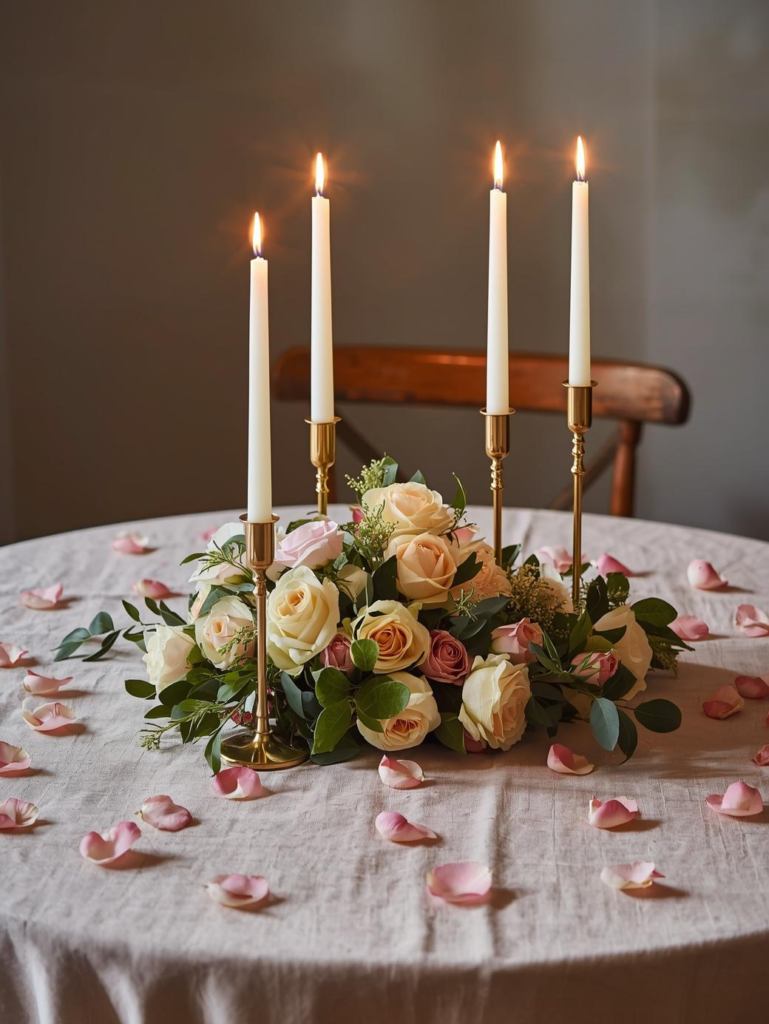
A dinner party centerpiece for a round table has the specific task of being beautiful enough to set the mood of the evening without being so elaborate that it consumes the table’s social function. The combination of tall taper candles in slim brass or ceramic holders, a low floral arrangement at the center, and a loose scattering of individual flower petals across the tablecloth creates a centerpiece that is genuinely romantic and celebratory without requiring any professional floristry skill to produce. The taper candles provide the height and the candlelight atmosphere that define a dinner party table, while the low flowers keep the visual sightlines open between guests.
Scattered petals on a linen tablecloth are one of the simplest and most effective dinner party styling details available and they cost almost nothing when using petals from garden flowers or inexpensive grocery store blooms. Rose petals, ranunculus petals, and cosmos petals all scatter beautifully and hold their color for the duration of a dinner without wilting or browning. Distributing the scattered petals loosely across the entire tablecloth rather than confining them to the center creates the impression of a table that has been dressed with abundance rather than constraint, which is the exact quality that makes a dinner party table feel genuinely welcoming rather than merely correctly set.
Idea 12Herb Garden
Pot Fresh Herbs in Matching Vessels for a Fragrant Living Centerpiece
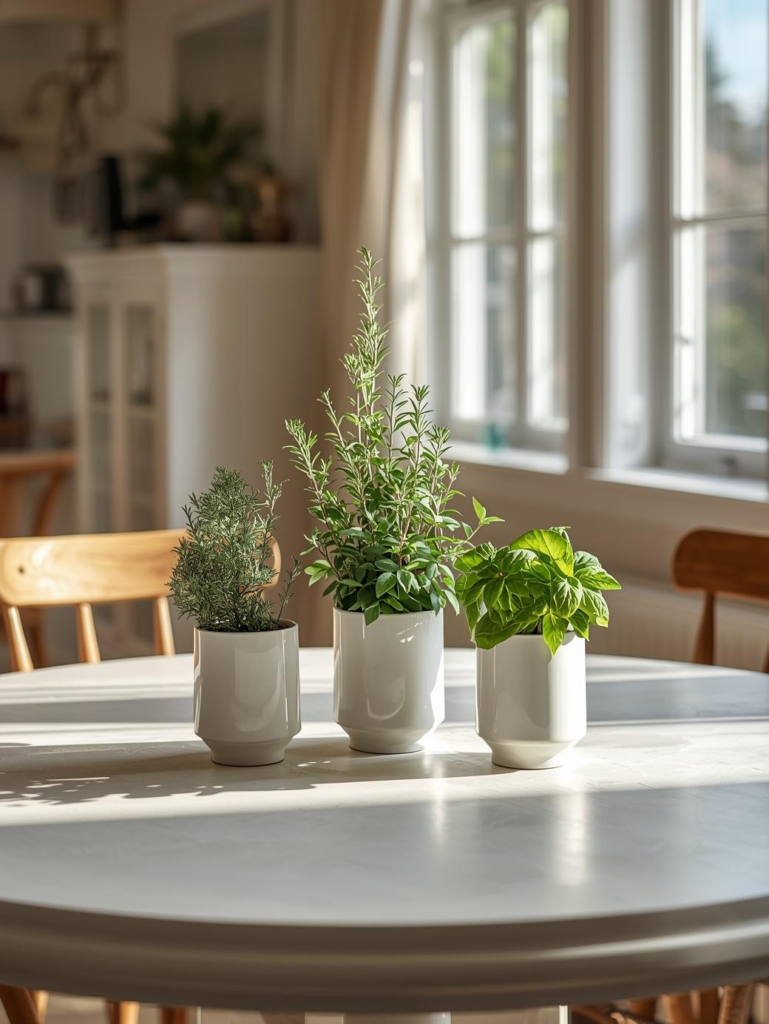
A cluster of potted fresh herbs in matching ceramic vessels is a living centerpiece that brings fragrance, organic greenery, and a gentle culinary reference into the dining room without the upkeep demands of a cut flower arrangement. Rosemary, thyme, and basil in three identical white or terracotta pots grouped at the center of a round dining table create a centerpiece that is symmetrical enough to suit the circular form, fragrant enough to enhance the dining experience, and practical enough to be clipped for use in cooking between meals. The matching vessel requirement is essential to preventing the grouping from reading as a collection of windowsill herbs moved temporarily to the table.
The arrangement works best when the herbs are in genuinely good condition, freshly watered and recently trimmed to a neat, full shape that reads as a considered plant form rather than a kitchen herb that has been stretched toward a window. A small amount of floral foam or decorative moss pressed around the base of each plant in its pot conceals any visible potting soil and gives the arrangement a cleaner, more finished appearance. This centerpiece suits the farmhouse, cottagecore, and Mediterranean-influenced dining room aesthetics particularly well, where the relationship between the table and the food that will be served on it is a conscious and valued part of the room’s identity.
Idea 13Metallic
Use Brass and Gold Objects to Create a Warm Metallic Centerpiece
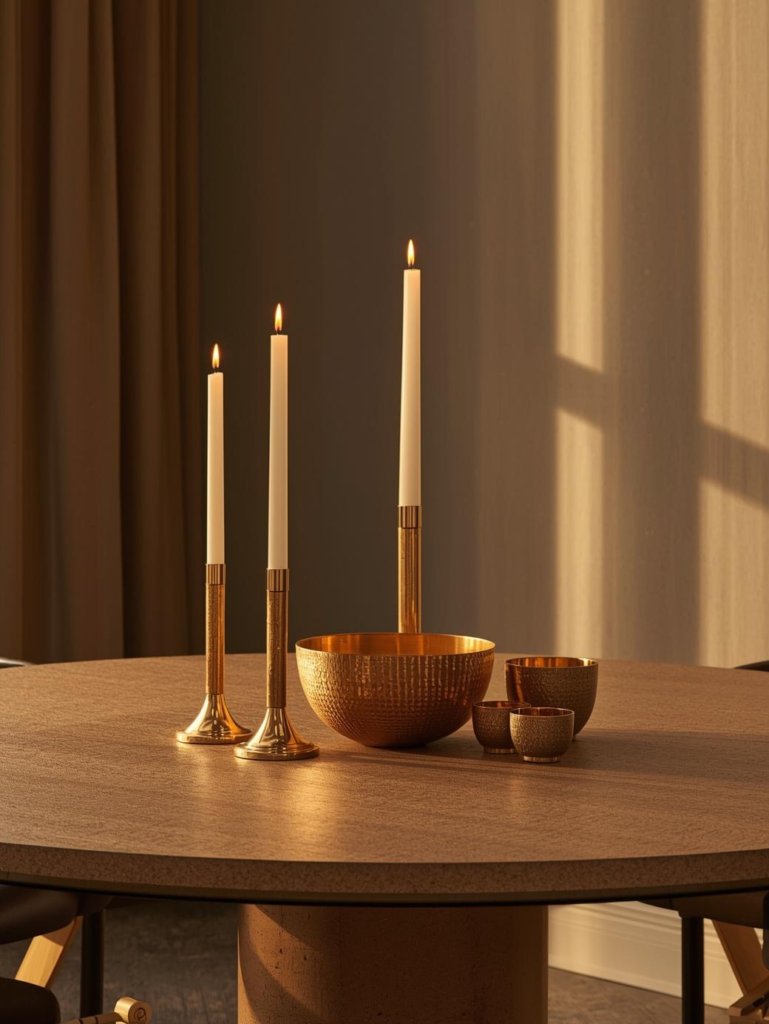
A grouping of brass and warm gold objects at the center of a round dining table creates a centerpiece that performs differently at different times of day and in different lighting conditions, which gives it an unusual versatility among table styling approaches. In natural daylight, the warm metallic surfaces of brass candlesticks, a gold-glazed ceramic bowl, and small brass objects reflect soft highlights that add warmth and visual interest to the table without demanding attention. After dark, when candles are lit and the surrounding room lighting is dimmed, the same brass objects glow and catch the candlelight in a way that makes the entire table feel theatrical and celebratory.
The key to making a metallic centerpiece read as sophisticated rather than overdone is maintaining consistency in the metal family and restraint in the total number of objects. All brass or all warm gold, never mixing with chrome or silver, and a maximum of three to five objects of varying heights and forms, is the right compositional boundary for this approach. A pair of tall brass taper holders, one medium brass bowl holding dried seed pods or small stones, and one low brass tray holding a votive candle produces a composition of genuine elegance that suits the quiet luxury, maximalist, and dark feminine dining room aesthetics equally well depending on the surrounding decor it is placed within.
Idea 14Minimalist
Leave the Center Intentionally Empty With Only a Textured Linen Tablecloth
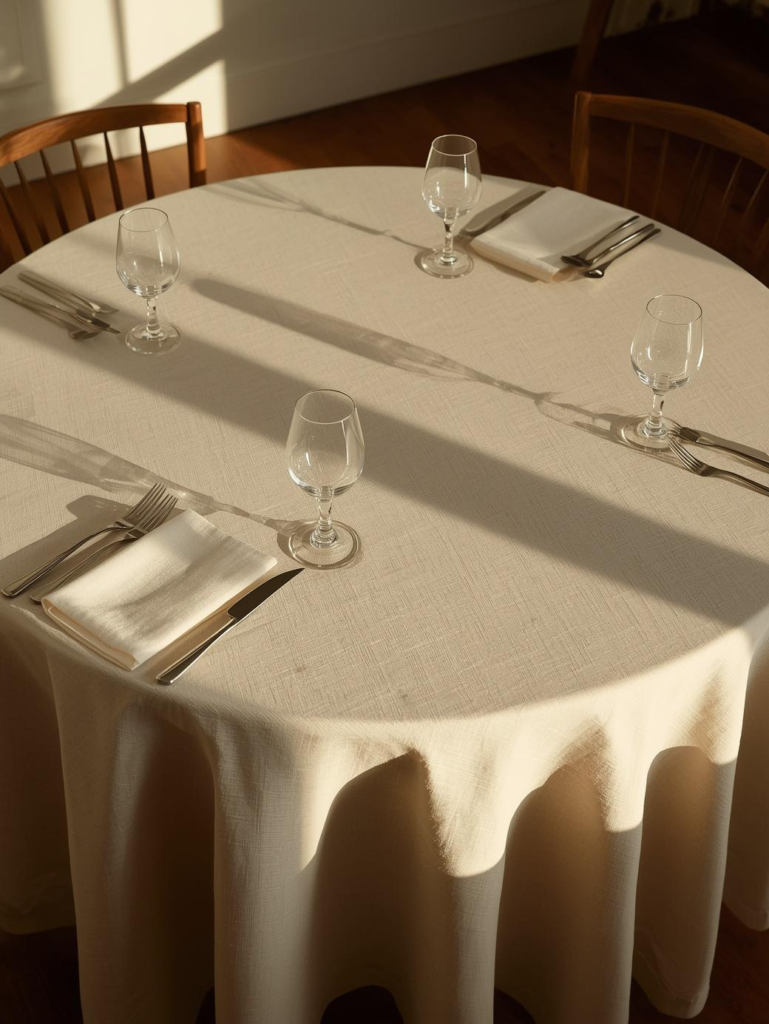
The most confident and most misunderstood approach to round table styling is the deliberate absence of a centerpiece, allowing the table surface itself, dressed only in a beautiful tablecloth or left bare to show the material of the table, to be the visual statement. This approach requires more conviction than any other on this list because it runs counter to the instinct that a table without a centerpiece is an unfinished table. But a round dining table in beautiful wood or marble, or dressed in a perfectly pressed linen cloth with a raw, natural edge, makes a visual statement through material quality and restraint that no amount of added objects can improve upon.
The intentionally empty table works best when the surrounding dining room is strong enough to carry the visual interest that the table declines to provide: a beautiful pendant light overhead, chairs with interesting form or upholstery, walls with art or texture, a view through a window. In these contexts, the empty table becomes a breathing space within the room rather than a missed decorating opportunity, and the meals served on it benefit from the visual clarity and generous surface space that a centerpiece-free table provides. This is the approach most associated with high-end restaurant table styling, where the food itself is allowed to be the table’s most important visual and sensory event.
Idea 15Terrarium
Place a Glass Terrarium or Cloche as a Living Botanical Centerpiece
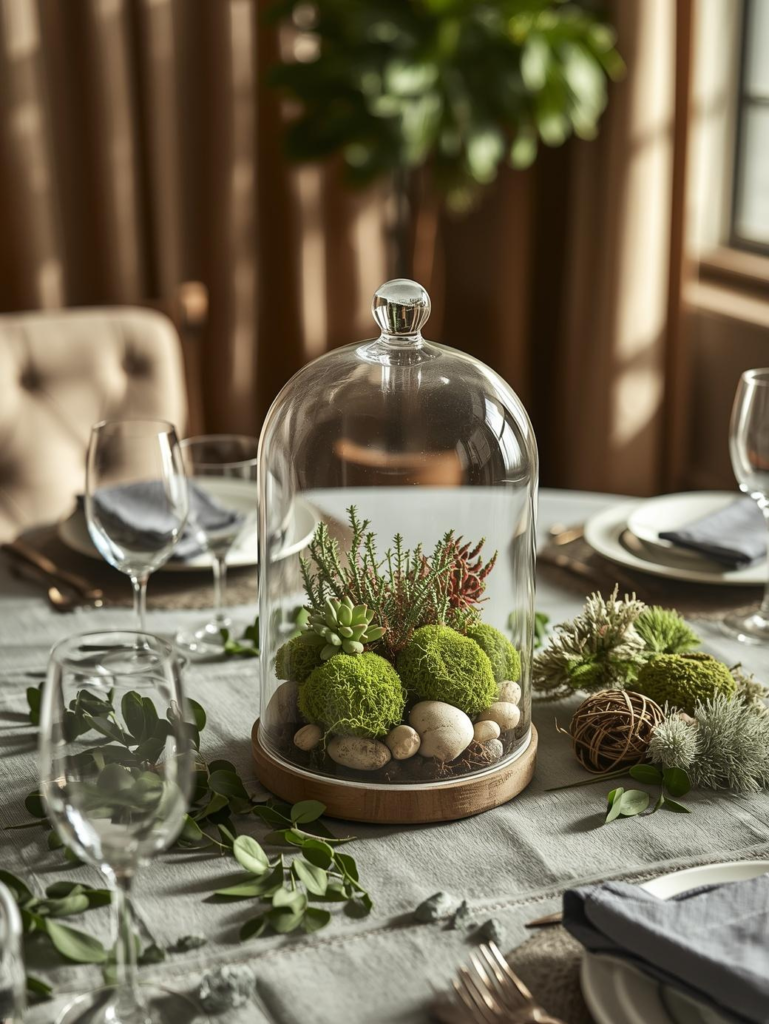
A glass terrarium or a bell cloche enclosing a small botanical world at the center of a round dining table creates a centerpiece with an element of wonder and visual curiosity that few other approaches achieve. The transparency of the glass allows the plants and materials inside to be seen from every angle around the table, which suits the round form perfectly, and the enclosed quality of a terrarium gives the arrangement a sense of being a miniature self-contained landscape rather than a conventional floral display. Moss, small succulents, air plants, pebbles, and a piece of driftwood or a small stone figure can all be composed inside a terrarium to create something genuinely beautiful and essentially self-maintaining.
A glass bell cloche, placed over a single plant specimen, a sculptural succulent, a small orchid, or a moss arrangement, creates a more refined and architectural version of the same principle. The cloche elevates whatever is beneath it into an object of specific display significance, communicating that this plant has been chosen with care and deserves individual attention. Both terrariums and cloches are available across a wide price range and their low-maintenance requirements make them ideal for everyday centerpiece use. They suit the botanical, cottagecore, and whimsical interior aesthetics particularly strongly but integrate into contemporary and minimal dining rooms equally well when the forms chosen are clean and the materials inside are kept restrained.
Idea 16Maximalist
Create an Abundant Overflowing Floral Arrangement in Jewel Tones
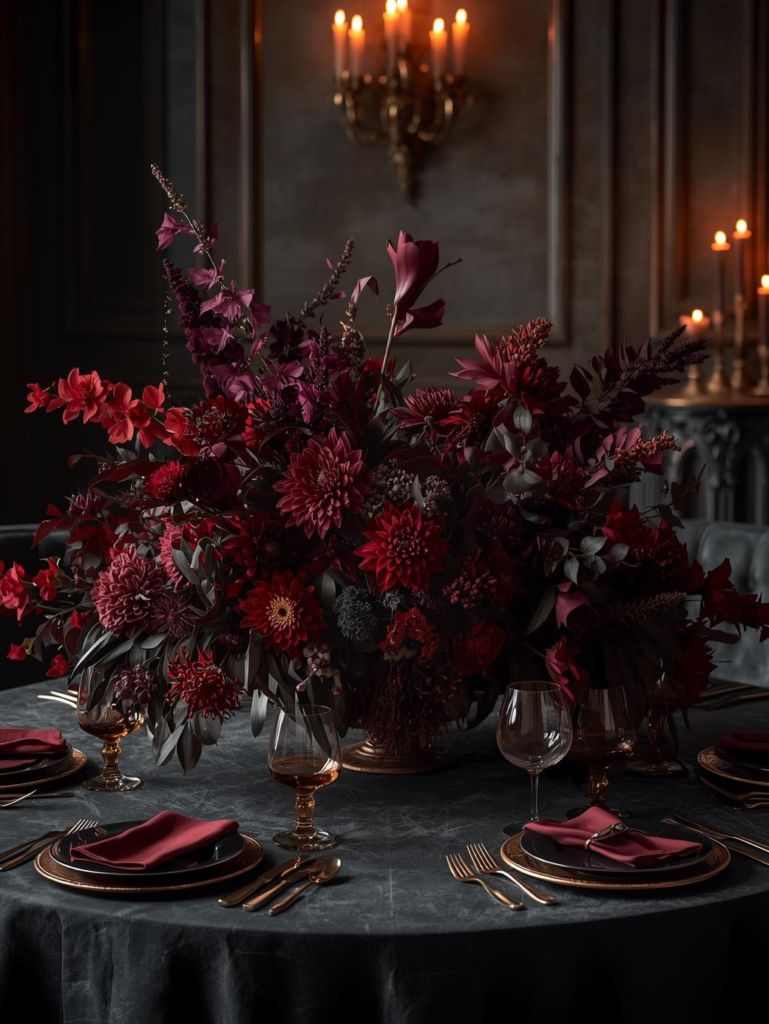
The maximalist approach to the round dining table centerpiece embraces abundance as both a design principle and a hospitality gesture, filling a wide vessel with flowers until the arrangement overflows its boundaries and spills outward across the table surface in a way that makes the table feel genuinely generous and celebratory. Jewel-toned flowers, deep burgundy dahlias, plum sweet peas, inky anemones, dark foliage, and trailing vines, create an arrangement that photographs with a dramatic, almost painterly beauty and transforms the dining room atmosphere into something that feels special regardless of the occasion that prompted the table setting.
The wide, low vessel is essential to making an overflowing arrangement work on a round table without blocking eye contact between guests. A wide ceramic bowl, a copper vessel, or a shallow compote dish gives the arrangement a generous base from which to spread outward while keeping the peak height of the composition below the eye level of seated guests. Trailing stems of ivy, jasmine, or sweet pea allowed to extend outward from the vessel and across the tablecloth reinforce the overflowing quality and create a table that looks as though it has been dressed by the garden itself. This approach requires the most investment of any centerpiece on this list but produces the most dramatically beautiful result for a special occasion table setting.
Idea 17Coastal
Arrange a Coastal Vignette With Shells, Driftwood, and Sea Glass
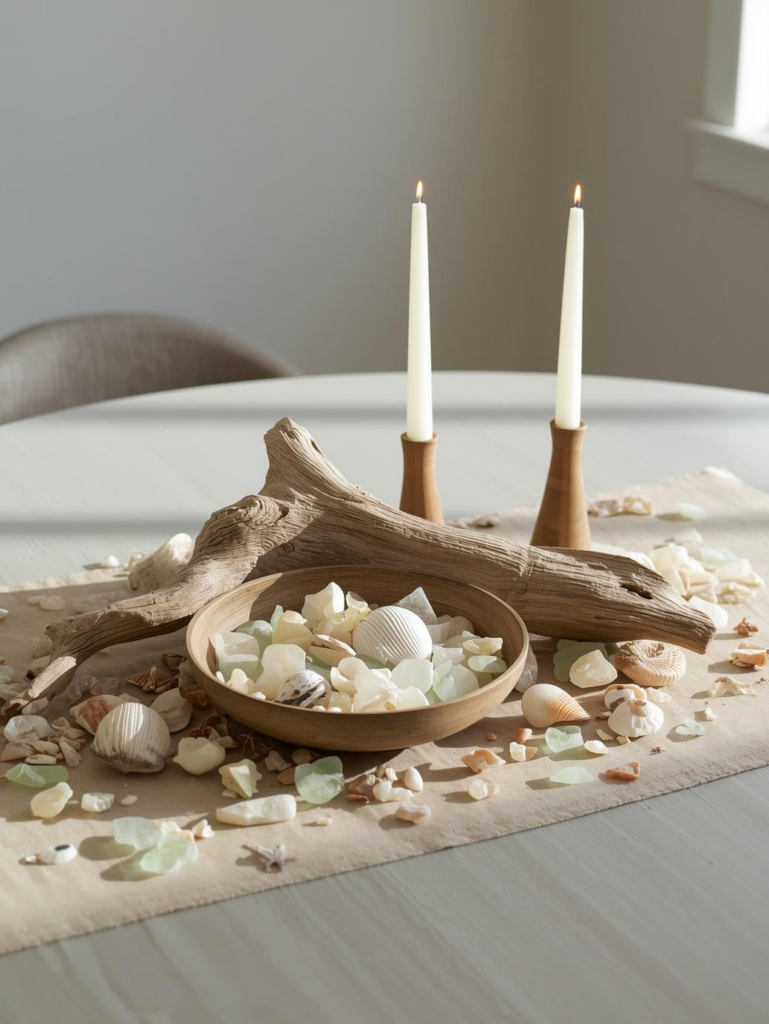
A coastal centerpiece built from collected natural objects, driftwood, sea glass, shells, smooth river stones, and simple white candles, creates a table arrangement that is as appropriate for a beach house dining room as it is for a city apartment where the owner wants to bring the feeling of the sea to the table. The beauty of this approach is that its primary materials cost nothing to acquire for those with access to a beach or a natural water source, and cost very little for those who source them from craft stores. The arrangement has an inherently organic, asymmetric quality that suits the round table’s geometry naturally.
A piece of smooth driftwood placed horizontally across the center of the table, with shells arranged in a shallow dish beside it and a cluster of white taper candles in simple glass holders completing the composition, creates a coastal centerpiece of genuine simplicity and quiet beauty. Sea glass scattered loosely between the objects adds color, catching the light in soft translucent greens, blues, and whites that reference the sea without being literal. This centerpiece requires no flowers, no maintenance beyond replacing the candles when they burn down, and no particular styling skill beyond placing natural objects together with enough space between them to let each one be seen individually.
Idea 18Citrus Display
Stack Citrus Fruits in a Footed Compote Dish for Vibrant Year-Round Color
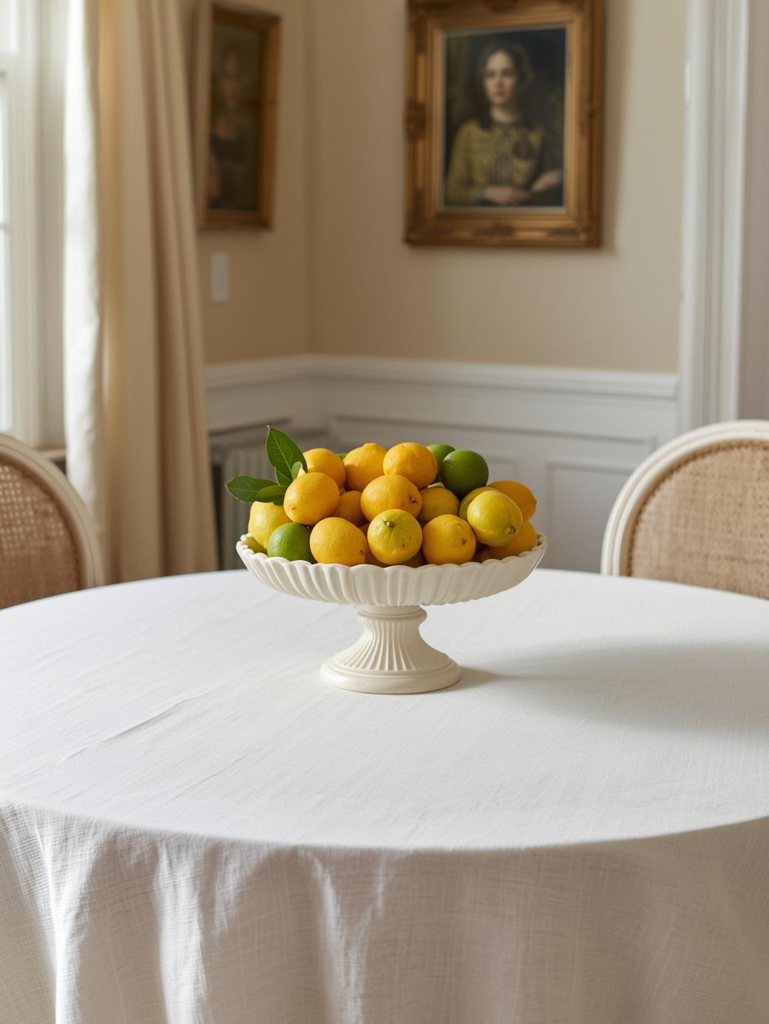
A footed compote dish filled with citrus fruit is one of the most timelessly beautiful everyday dining table centerpieces available and it suits the round table with particular elegance because the footed form raises the fruit above the table surface and creates a pedestal quality that references the classical still life tradition in a completely contemporary way. Lemons and limes piled generously in a white ceramic compote, or blood oranges and clementines heaped in a dark glazed pedestal bowl, create a centerpiece of vivid natural color that changes the mood and the light quality of the dining room around it without requiring any floral knowledge or any care beyond replacing fruit as it is used.
The footed compote dish is the vessel that elevates this approach from a bowl of fruit on a table to a genuine centerpiece, and it is worth investing in a single beautiful piece specifically for this purpose. A wide ceramic compote in warm white, matte black, or a deep terracotta glaze suits almost every dining room aesthetic and can be repurposed seasonally, holding citrus in summer and spring, small gourds and pomegranates in autumn, and clementines with cloves and a cinnamon stick tucked between them in winter. The visual generosity of a heaped compote, fruit rising above the rim of the vessel and slightly overflowing, is one of the most reliably beautiful and most enduringly popular dining room styling images across every design platform.
Idea 19Books and Objects
Stack Beautiful Books With a Single Object on Top as an Intellectual Centerpiece
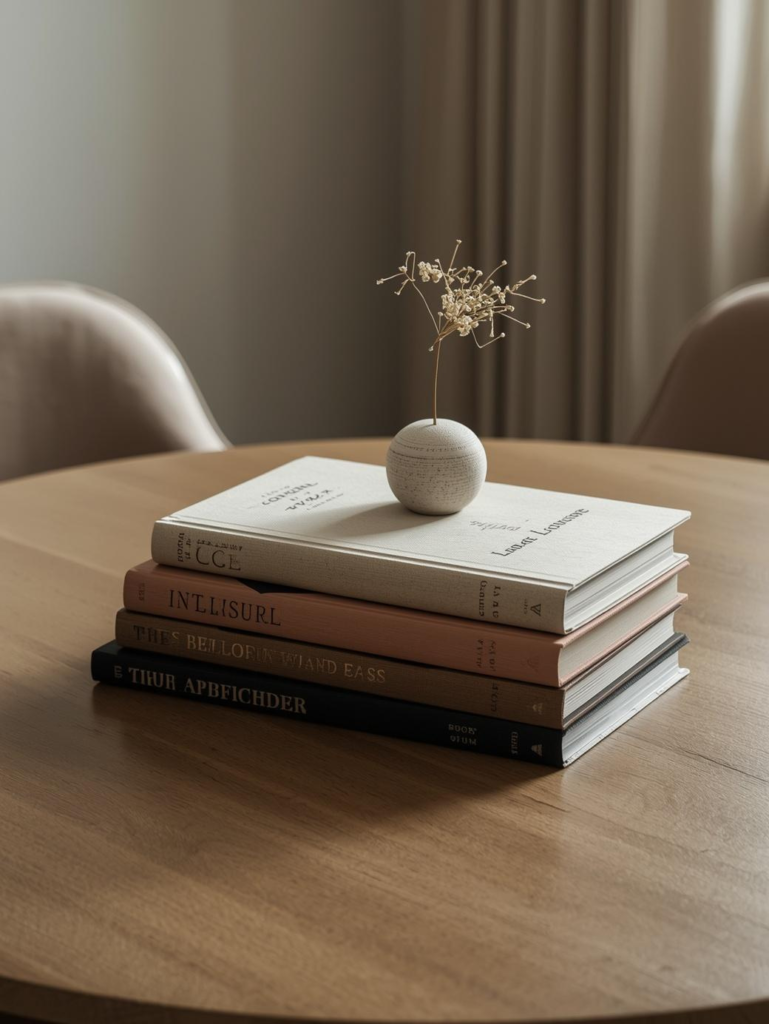
A stack of two or three beautiful coffee table books placed at the center of a round dining table with a single considered object balanced on top creates a centerpiece that communicates intellectual curiosity, personal taste, and the same effortless quality that makes the best bookcases beautiful to look at. The books should be chosen for their cover design, their spine typography, or their subject matter as much as for their height contribution to the arrangement. Art books, photography monographs, and books on botany, architecture, or travel all make beautiful centerpiece foundations when their covers are visually interesting enough to carry the composition on their own.
The single object placed on top of the book stack completes the composition and provides the height and visual punctuation that the books alone, being essentially flat, cannot offer. A small ceramic figurine, a smooth stone with interesting form, a single dried flower in a tiny bud vase, or a miniature plant in a beautiful pot all work well in this position. The book stack centerpiece suits the dark academia, maximalist, and intellectual home aesthetic most naturally but adapts to contemporary and minimal dining rooms when the books chosen have clean, graphic covers and the object on top is simple and well-formed. It is one of the few centerpiece approaches that changes seasonally without any deliberate restyling simply by swapping the books on the stack for new ones.
Idea 20Seasonal Harvest
Dress the Table for the Season With Foraged and Market-Found Botanicals
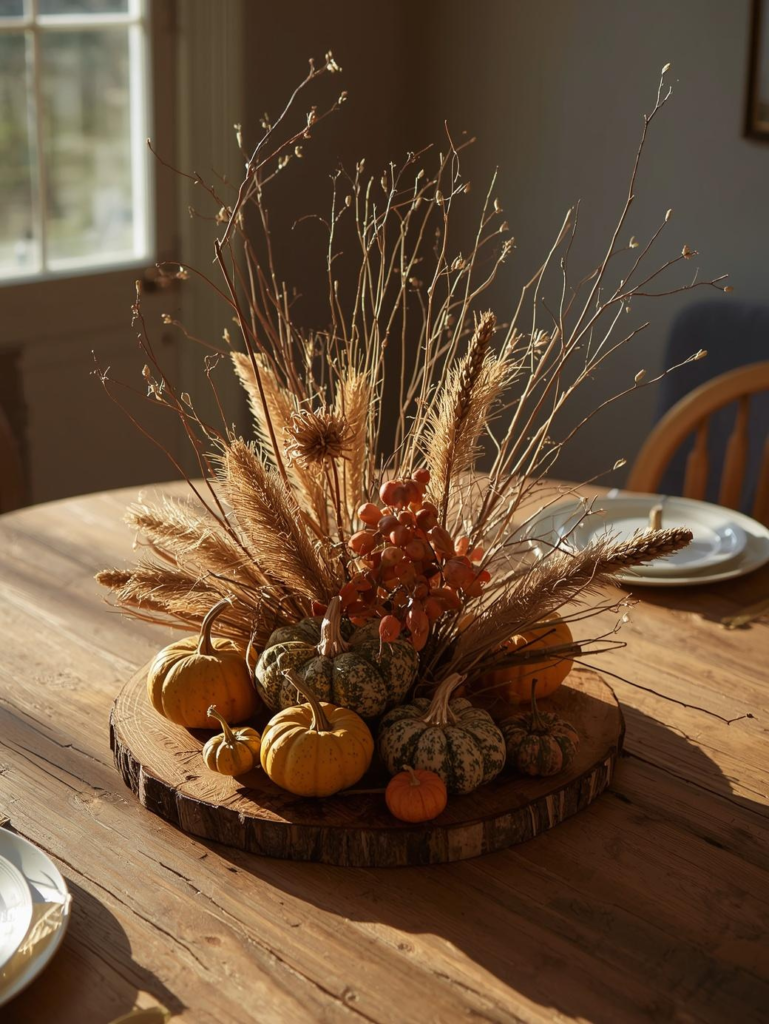
A seasonal centerpiece built entirely from foraged or market-found natural materials is both the most economical and the most authentically connected to the natural world of all the approaches on this list. In autumn, branches in turning color, dried seed heads, small gourds, and mushrooms from a farmers market arranged on a wooden board create a harvest tablescape that photographs with the rich, warm tones of the season. In spring, branches of blossom, bundles of daffodils from a market stall, and the first garden herbs create an entirely different composition from the same surface area, both equally beautiful and equally specific to their moment in the year.
Foraged materials, collected from a walk in parks, woodland, or countryside, carry a quality of direct relationship to place and season that purchased floristry cannot replicate. A branch of seed-bearing plant material, a cluster of dried grasses, a handful of fallen leaves pressed flat and arranged deliberately, a few mushrooms placed beside a candle on a wooden board: these materials communicate the specific time of year and the specific landscape they came from in a way that is deeply satisfying to sit down to at a dining table. This approach to centerpiece styling treats the act of setting the table as a seasonal ritual rather than a decorating task and produces results of genuinely moving beauty precisely because of the directness of the relationship between the materials and the natural world they represent.
Conclusion
Twenty approaches to the same surface and not one of them identical, which is the point. The round dining table is generous enough in its form and its social function to accommodate every aesthetic, every season, every occasion, and every budget, provided the centerpiece placed on it is chosen with some understanding of why the circular form works differently from every other table shape. The center of a round table is a position of equal visibility from every seat and equal distance from every person at the table, which means it deserves a centerpiece that earns that position through quality, appropriateness, and genuine beauty rather than simply filling the space because an empty center feels unfinished.
Begin with the everyday approach that suits the dining room’s existing aesthetic and the household’s practical requirements, since the best centerpiece is the one that looks beautiful consistently rather than the one that performs best for a single photograph. Allow the occasional and seasonal approaches to introduce variety and celebration when the table calls for them. And remember that the effortless quality that the most beautiful table centerpieces share is not actually effortlessness: it is the result of understanding the principles well enough that the execution feels natural, which is a skill that every one of the twenty ideas in this article gives you a clearer foundation to develop.
nd deeply characterful ideas that bring the warmth, color, and artisan soul of Mexican kitchen design into any home without touching a single tile or cabinet