What Makes an Open Concept Living Room Feel Bigger? 15 Ideas to Try
An open concept living room holds extraordinary potential, yet many homeowners find that removing walls alone does not guarantee a sense of spaciousness. The way you arrange furniture, choose colors, and control light plays just as powerful a role as the architecture itself. Whether you are working with a modest footprint or a generous floor plan, the following fifteen ideas will help you unlock every square foot and create a living room that truly breathes. Each strategy is rooted in design principles that work in real homes, not just in staged photographs, making them practical choices for anyone ready Idea 01
Use a Neutral Color Palette
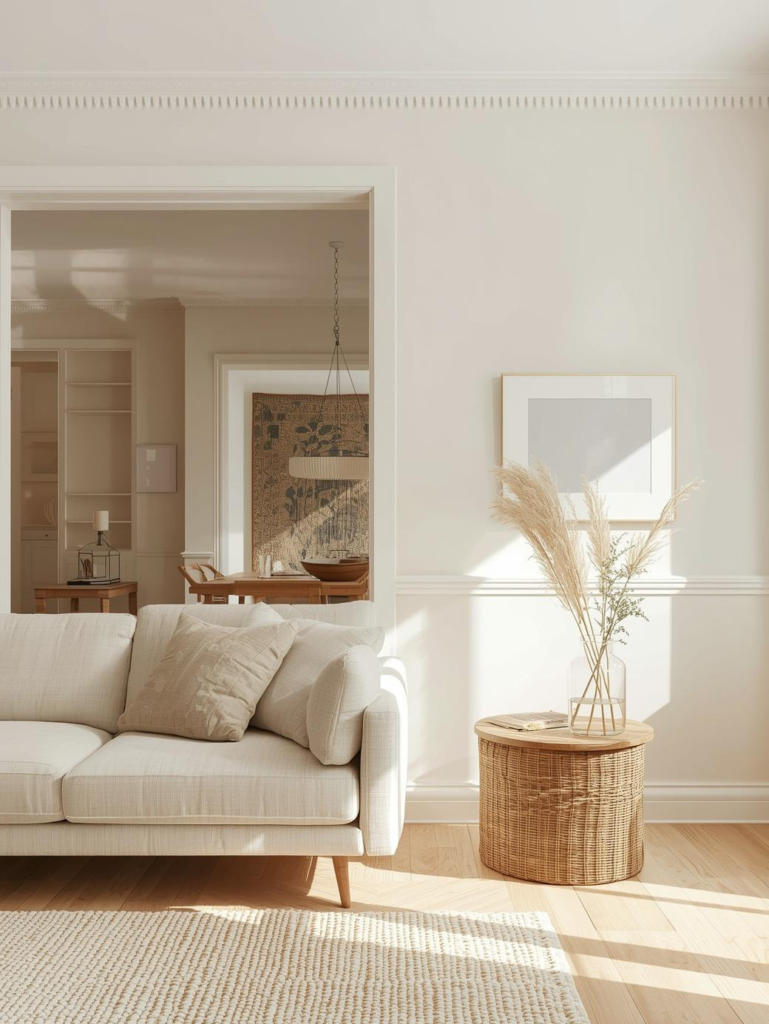
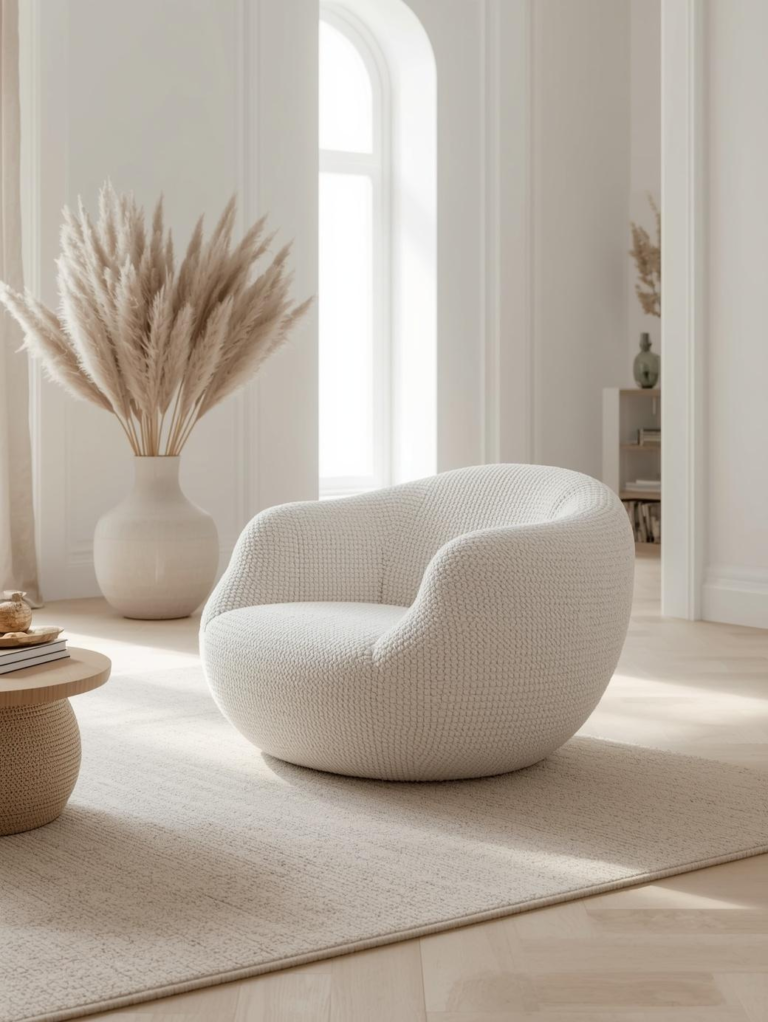
A neutral color palette is one of the simplest and most reliable tools for making any room feel larger than it actually is. Shades of white, cream, warm beige, and soft gray reflect light rather than absorbing it, which gives walls a quality of receding gently into the background. When the boundaries of a room appear less defined, the eye reads the space as more expansive, even if the square footage has not changed at all. Choosing one dominant neutral and two supporting tones keeps the palette cohesive without feeling sterile.
The key to preventing a neutral scheme from feeling flat is variation in texture. A linen sofa, a woven wool rug, a rough plaster wall, and a smooth marble coffee table all read as neutral while adding tactile richness that holds visual interest. Layering these materials ensures the room feels warm and curated rather than washed out. When every surface belongs to the same calm family of color, the space flows effortlessly from one zone to the next, which is exactly what an open concept layout demands.
Idea 02
Maximize Natural Light
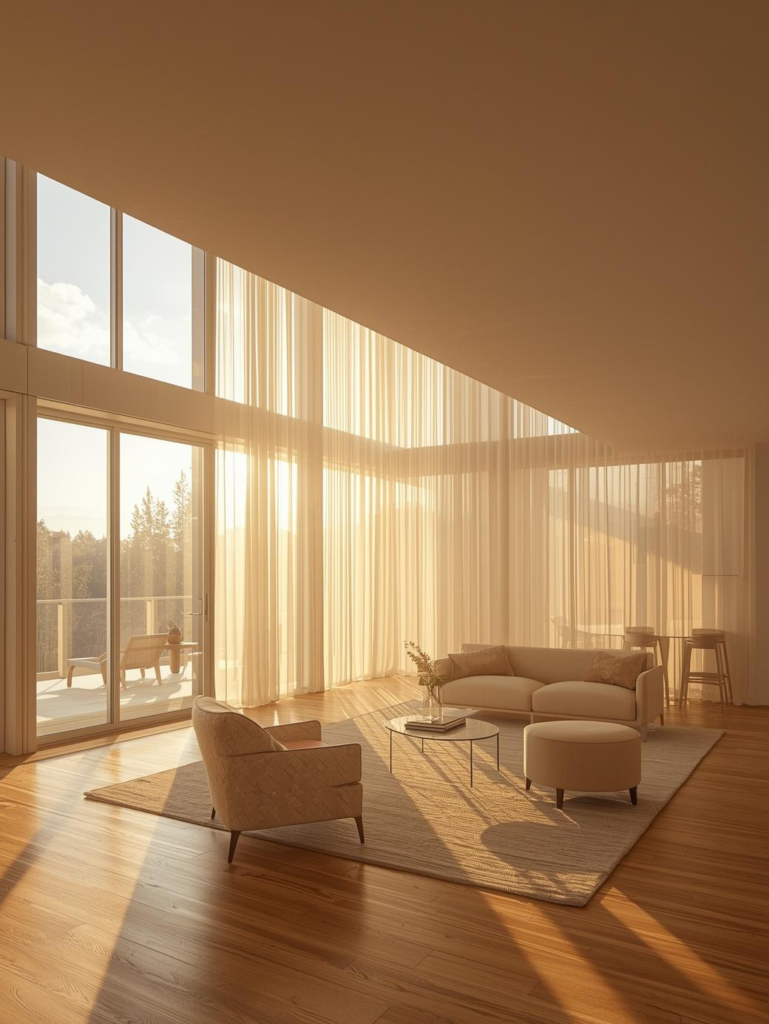
Natural light is the single greatest ally of a spacious-feeling room. When sunlight pours into a space, it erases shadows that visually compress corners and shrinks perceived boundaries between wall and floor. Maximizing the amount of daylight that enters your living room means reassessing window treatments, removing heavy drapes, and considering whether any interior walls or furniture pieces are blocking light paths. Even cleaning windows thoroughly can make a measurable difference to how bright and open a space feels throughout the day.
Strategic placement of reflective surfaces near windows amplifies the effect of natural light without adding a single extra source. A polished coffee table, a light-toned glossy floor, or a well-placed mirror all bounce daylight deeper into the room, reaching corners that would otherwise stay dim. For rooms that lack generous windows, skylights or solar tubes are worthwhile investments. In the interim, warm-toned LED daylight bulbs positioned to mimic the angle of natural light can create a convincing substitute that keeps the room feeling fresh and open after sundown.
Idea 03
Choose Low-Profile Furniture
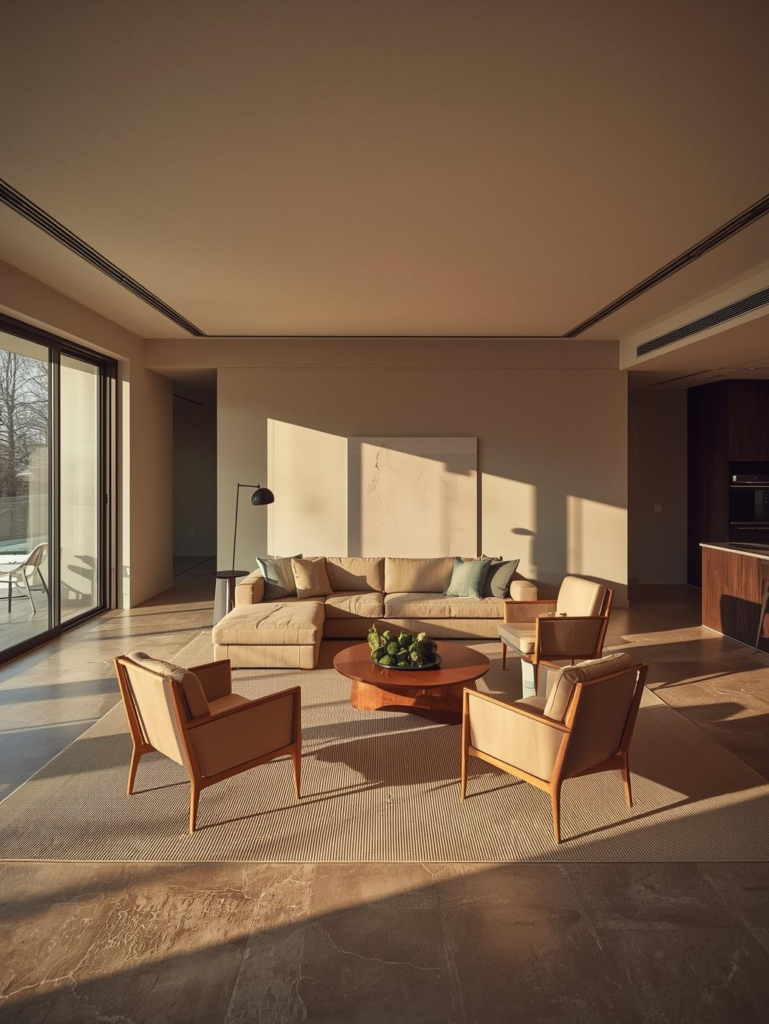
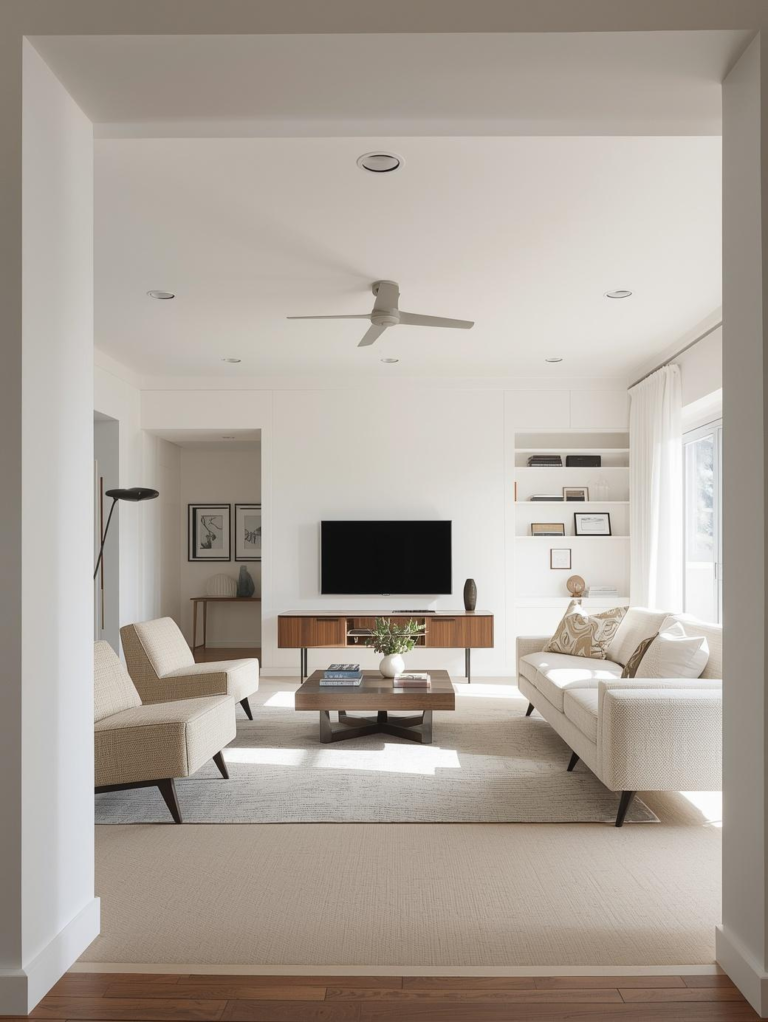
The height of your furniture has a direct and dramatic effect on how expansive a room feels. Tall sofas, bulky armchairs, and oversized sideboards interrupt the horizontal sightlines that give open concept rooms their sense of freedom. Low-profile furniture, by contrast, keeps the eye traveling across the room rather than being stopped and redirected upward. A sofa with a seat height of around sixteen inches, paired with a streamlined coffee table, creates a silhouette that feels light and deliberate rather than heavy and space-consuming.
When selecting low-profile pieces, also consider the depth and scale of each item relative to the room. A generously proportioned sectional placed low to the ground still reads as grounded and spacious, while a tall but narrow armchair can feel awkward and cramped. Legs on furniture are another detail worth considering: pieces raised off the floor on slim metal or tapered wooden legs allow light and sight to pass beneath them, which prevents the visual weight from anchoring the room too heavily. Exposed floor space, even just a few inches, genuinely makes a room feel larger.
Idea 04
Define Zones with Area Rugs
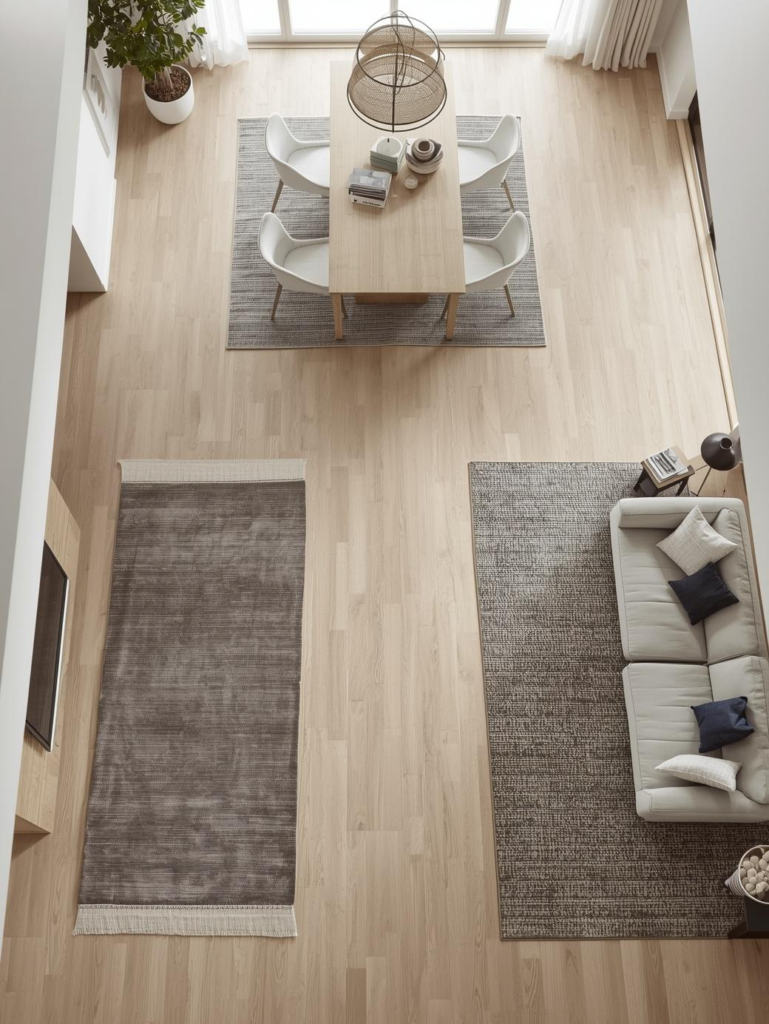
One of the challenges of an open concept layout is that without walls to separate functions, a room can feel visually chaotic and undefined. Area rugs solve this problem elegantly by creating soft boundaries between the living zone, dining zone, and any transitional spaces in between. A well-chosen rug anchors a furniture grouping and signals to the eye that this is a distinct area with a specific purpose, which paradoxically makes the overall room feel more ordered and therefore more spacious. The key is choosing a rug large enough to sit properly beneath all the main furniture legs.
For maximum spatial impact, keep the rugs within the same color family as the flooring and walls. A rug that contrasts sharply with its surroundings creates a visual break that can make the floor plan feel chopped and smaller. Instead, opt for tonal variations, such as a warm ivory rug on a light oak floor, that define zones through texture and pattern rather than bold color contrast. Keeping consistent flooring visible around and between rugs reinforces the sense of continuous, uninterrupted space that is the hallmark of a well-executed open concept design.
Idea 05
Image Hang Curtains High and Wide
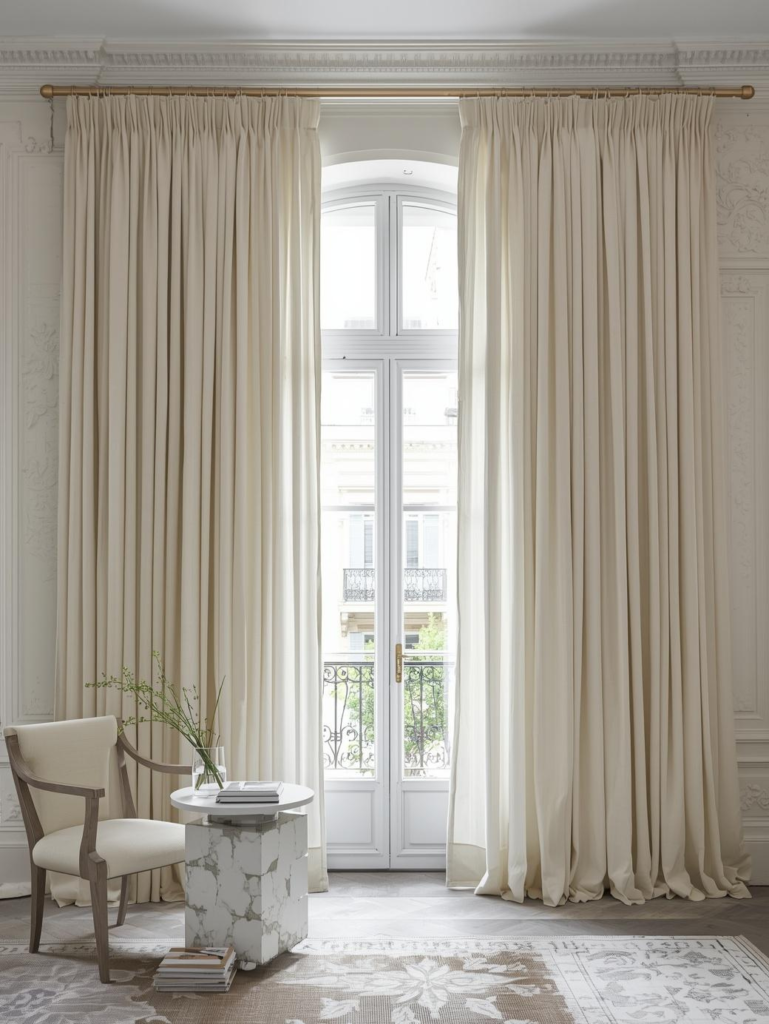
The position of a curtain rod reveals more about ceiling height than almost any other single decision in a room. When curtains are mounted just above the window frame, they highlight how low the ceiling is and cut the wall into smaller visual sections. Mounting the rod as close to the ceiling line as possible, and allowing curtains to pool or just graze the floor, draws the eye upward in a single uninterrupted sweep. This technique is one of the most widely recommended by professional interior designers precisely because it works so reliably in rooms of all sizes and styles.
Extending the curtain rod well beyond the window frame on both sides is an equally important part of the strategy. Wide rods allow the curtain panels to stack almost entirely off the glass when open, which keeps the window itself unobstructed and floods the room with as much light as possible. From a distance, this treatment makes windows appear dramatically larger than they are, which in turn makes walls seem taller and the room more generous. Sheer fabrics in white or natural linen are ideal for open concept rooms because they filter light without blocking it, maintaining the bright and airy quality that makes the space feel expansive.
Idea 06
Add Mirrors Strategically
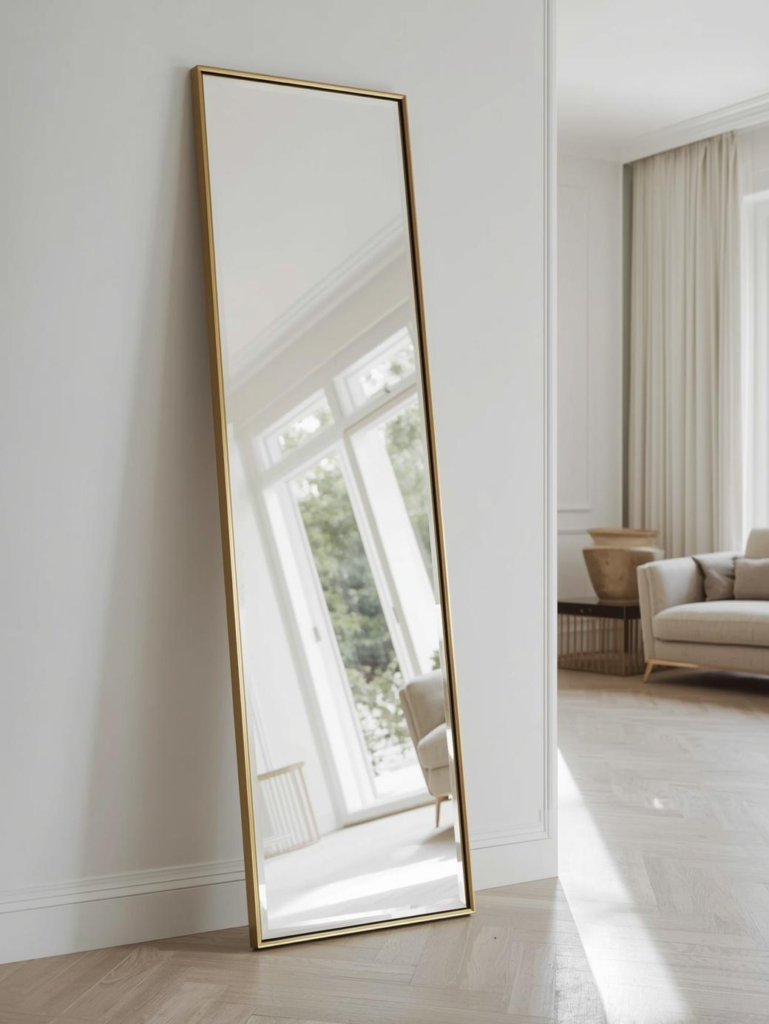
Mirrors are among the oldest tricks in the interior design playbook, and their effectiveness at creating the illusion of space has never diminished. A large mirror placed on a wall opposite a window reflects the outdoor view and floods the room with a sense of depth that tricks the eye into perceiving twice the actual square footage. The effect is most convincing when the mirror reflects something beautiful, such as a garden, a tree line, or a well-lit part of the room itself, rather than a blank wall or a cluttered corner. Size matters significantly: a small mirror creates a decorative moment, but a large one transforms a room.
Beyond the classic wall-mounted option, leaning an oversized mirror against a wall adds a relaxed, editorial quality while still delivering the spatial benefits. Groupings of smaller mirrors can also work, provided they are arranged tightly enough to read as a single cohesive surface. Placing a mirror adjacent to a light source, whether a window or a lamp, maximizes its reflective potential and sends light bouncing across the room in multiple directions. In an open concept space, this amplification of light and depth is especially welcome because it reinforces the sense of continuous, flowing space that defines the layout.
Idea 07
Embrace Vertical Space
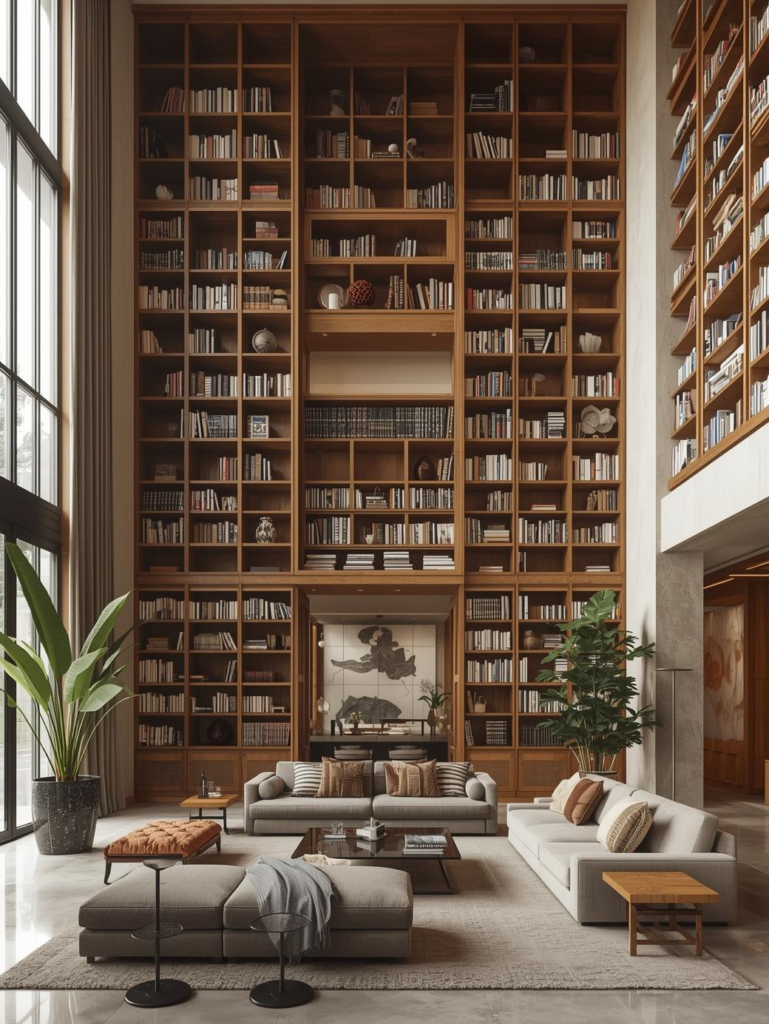
In many open concept homes, the ceiling height is one of the most underutilized assets in the entire room. Drawing the eye upward through vertical design elements makes any room feel more generous and grand. Floor-to-ceiling bookshelves, tall indoor plants, vertically oriented artwork, and pendant lights with long drop cords all encourage the gaze to travel upward, expanding the perceived volume of the space. This vertical emphasis also serves a practical function in open concept rooms, where the absence of walls means height becomes the primary architectural feature available for dramatic effect.
Wall paneling, painted in the same tone as the surrounding walls but adding dimension through shadow, is another way to celebrate vertical space without adding visual noise. Even a tall, slender floor lamp placed in a corner can guide the eye upward and make the ceiling feel higher than it is. When selecting furniture and decor for a vertically oriented strategy, it is important to balance the tall elements with lower horizontal ones. A high bookshelf paired with a low sofa creates a pleasing tension that makes both the height and the length of the room feel more pronounced, resulting in a space that reads as genuinely expansive.
Idea 08
Reduce Visual Clutter
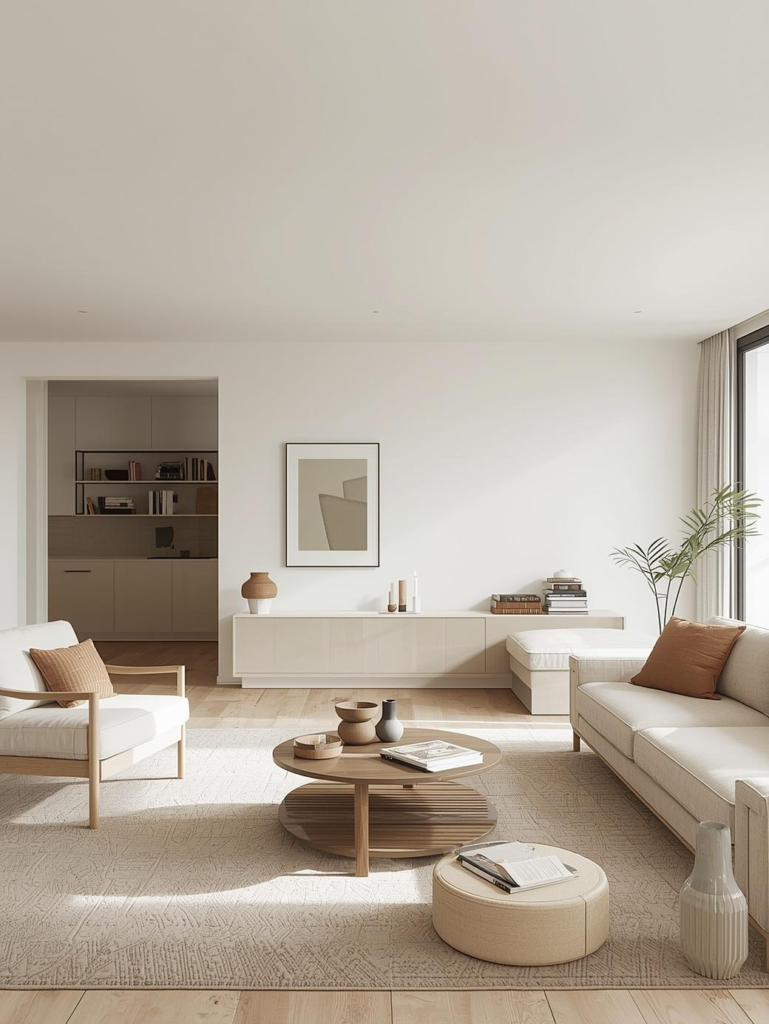
Clutter is the enemy of perceived space. Even in a generously sized open concept room, an excess of objects, surfaces covered with small items, and furniture pushed against every wall will make the space feel crowded and anxious. The discipline of reducing visual clutter is less about owning fewer things and more about being intentional about what is visible at any given time. Built-in storage, baskets with lids, and furniture with concealed compartments all help manage the everyday accumulation of objects that inevitably fills a lived-in home without allowing them to overwhelm the visual field.
A useful design principle for open concept spaces is the rule of three: group objects on surfaces in odd-numbered clusters and leave generous breathing room between groupings. A coffee table with one sculptural object, one small tray, and one trailing plant feels curated and deliberate rather than sparse. Styling shelves with a mix of books, objects, and empty space prevents the dense, busy quality that makes rooms feel smaller. The goal is not sterility but intentionality: every visible object should earn its place, and the space between objects should feel as considered as the objects themselves.
Idea 09
Use Multi-Functional Furniture
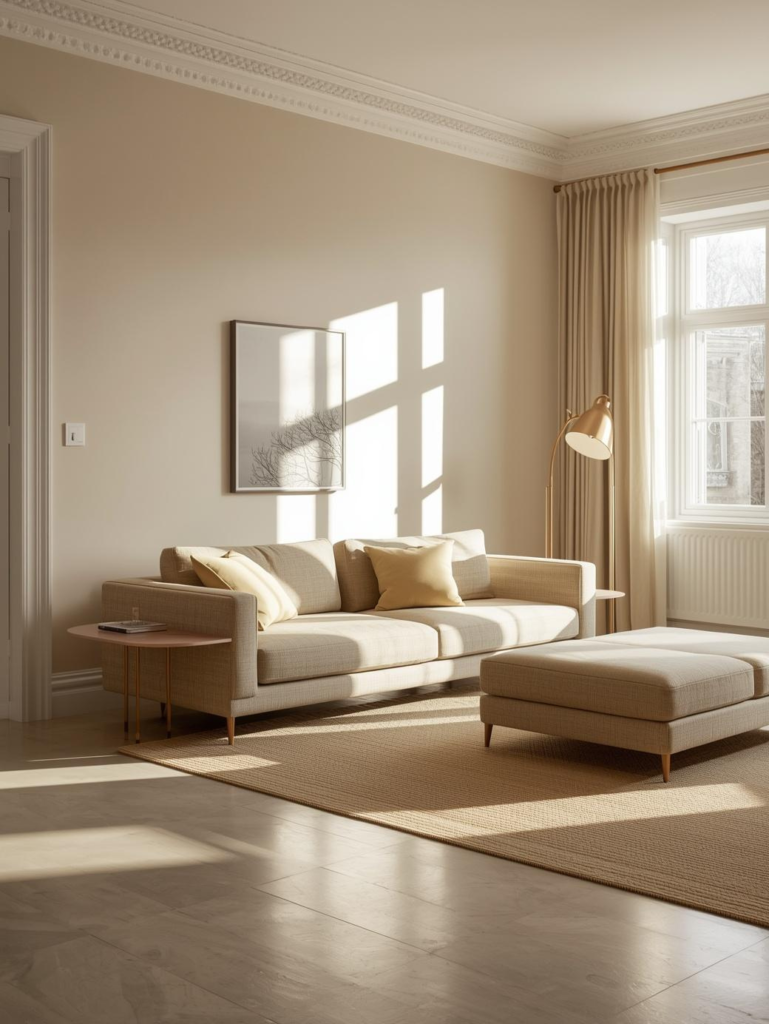
Multi-functional furniture is one of the smartest investments you can make in an open concept living room, particularly in homes where space is genuinely limited. A storage ottoman that doubles as a coffee table and extra seating replaces three separate pieces of furniture with one. A sofa with a built-in chaise and concealed storage under the seat cushions handles lounging, sleeping, and organization simultaneously. Each piece that performs multiple roles reduces the total number of items in the room, which in turn opens up floor space and allows the architecture of the room to be seen and appreciated rather than obscured by furniture.
Beyond the obvious storage-ottoman example, consider nesting tables instead of a fixed coffee table set, a console that converts into a dining table when needed, or a shelving unit that incorporates a media console and a bar in a single vertical footprint. The visual payoff of choosing multi-functional pieces goes beyond practicality: furniture designed to be flexible tends to have a cleaner, more architectural silhouette than pieces designed to do only one thing. That lean, purposeful quality reads beautifully in an open concept space where the eye travels across the full room in a single glance.
Idea 10
Float Your Furniture Away from Walls
The instinct to push furniture against every wall in an attempt to clear the center of a room actually has the opposite effect. When sofas and chairs are lined up against walls, the center of the room becomes a void that feels awkward and unresolved, while the perimeter feels crowded. Floating furniture, meaning pulling it away from the walls so that space exists behind as well as in front of each piece, creates a more intentional and balanced layout. The visible wall behind a sofa makes both the sofa and the wall appear to recede, which contributes to the sense of depth that makes a room feel larger.
A floated furniture arrangement also encourages better traffic flow through an open concept space. When pathways exist naturally between zones, movement through the room feels easy and unconstricted, which registers subconsciously as spaciousness. The gap between the back of a sofa and the wall need not be dramatic: even twelve to eighteen inches creates a perceptible difference in how the room breathes. A narrow console table or a row of low plants placed in that gap gives the space purpose and prevents it from feeling like a design oversight, turning a practical decision into a deliberate and polished feature of the room.
Idea 11
Incorporate Glass and Lucite Elements
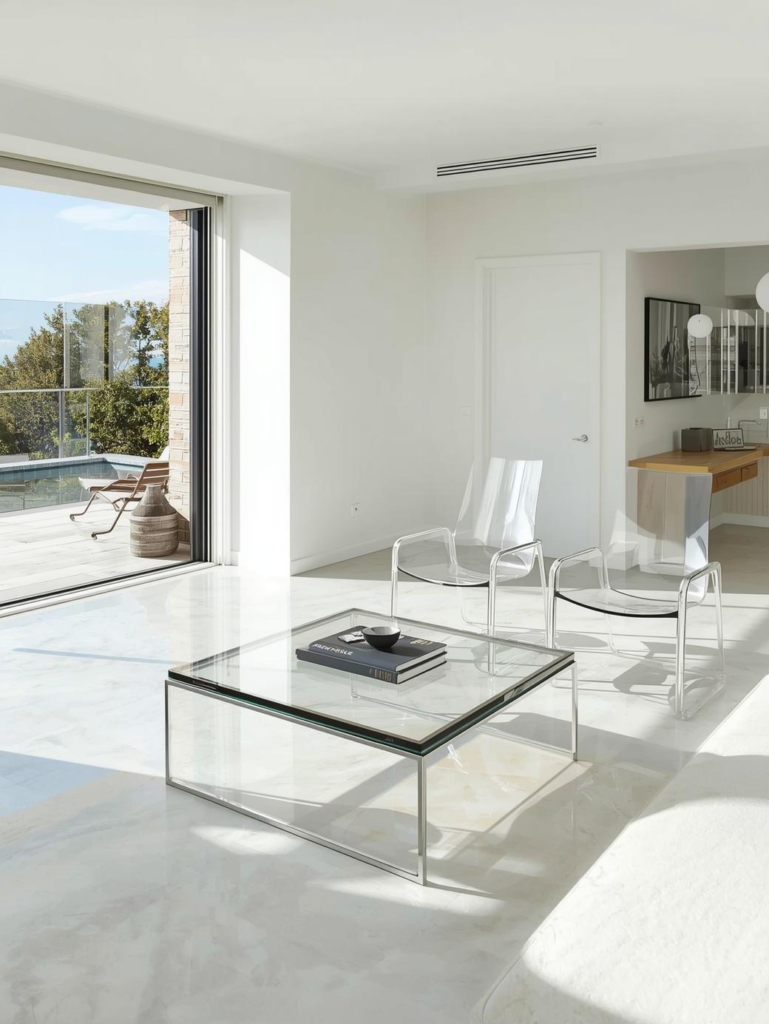
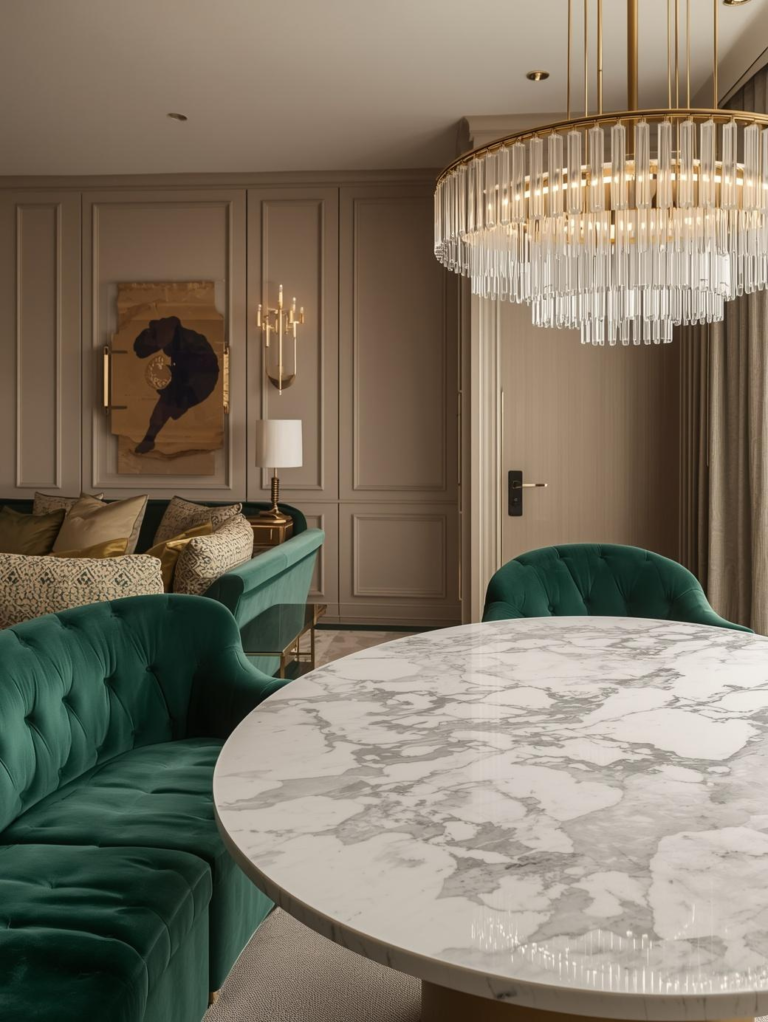
Glass and Lucite, the clear acrylic material often used for furniture, have a unique spatial quality that no other material can replicate: they are present without being visually present. A glass coffee table allows the eye to travel straight through to the floor, the rug, and the furniture beyond, which means it contributes its function without adding visual weight to the room. In an open concept space where every object is visible from multiple vantage points and distances, this transparency is extraordinarily valuable. The room reads as less furnished even when it is fully and comfortably equipped.
Lucite or acrylic side tables, dining chairs, and even console tables carry the same benefit in a slightly more contemporary package. Unlike glass, which can feel formal or traditional, Lucite reads as modern and effortless, making it particularly well-suited to casual open concept rooms. The one consideration when using transparent furniture is to pair it with pieces of substance and texture. An entirely glass-and-Lucite room risks feeling cold and clinical. Balanced with a plush sofa, a warm wool rug, and natural materials like wood and rattan, transparent furniture elements create a room that feels simultaneously well-furnished and beautifully light.
Idea 12
Keep a Consistent Flooring Material
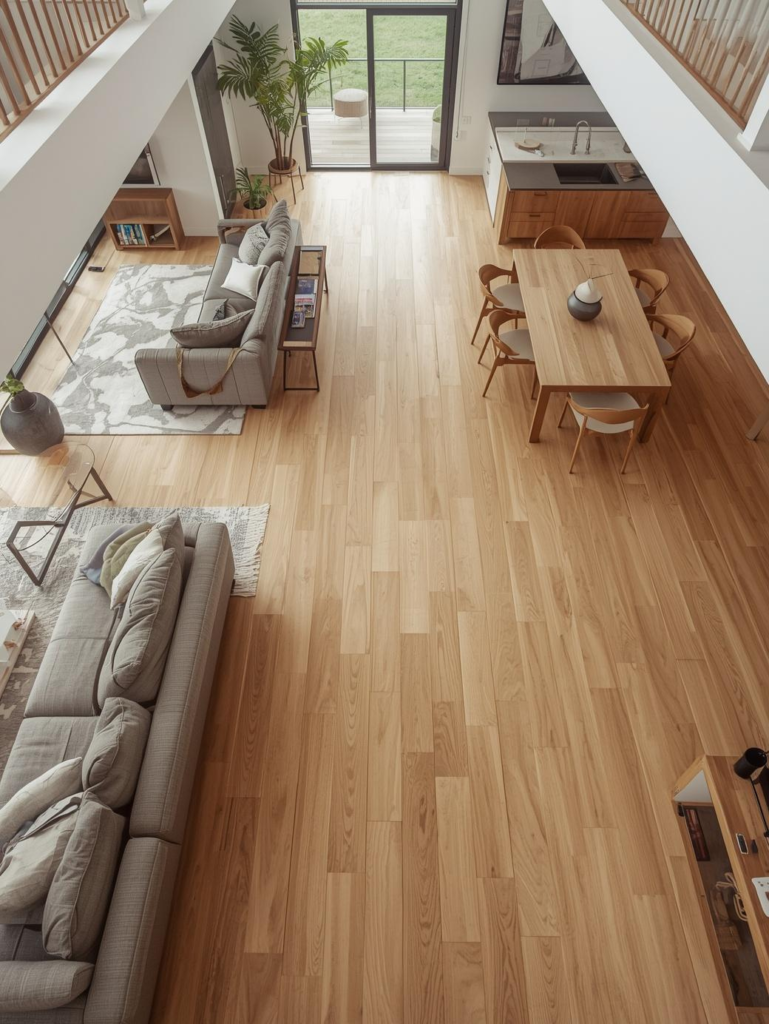
Flooring continuity is one of the most powerful spatial tools available in an open concept home, and it is frequently overlooked in favor of more visible decorative decisions. When the same flooring material runs uninterrupted from the living zone through the dining area and into the kitchen, the eye reads the entire ground plane as a single continuous surface. This unbroken horizontal line extends the perceived length and width of the room in a way that no amount of clever furniture arrangement can fully replicate. Conversely, when flooring changes at every zone boundary, the room feels fragmented and smaller, regardless of its actual dimensions.
Wide-plank hardwood, large-format porcelain tiles, and polished concrete are all excellent choices for open concept spaces because their generous scale minimizes the number of grout lines or seams that interrupt the floor plane. Lighter tones reflect more light and amplify the sense of space, while darker tones create warmth and intimacy at the cost of some perceived square footage. If budget or existing conditions make complete flooring consistency impossible, align the direction of planks across different materials so the eye continues to follow a single linear path through the space, preserving as much of the spatial continuity as possible.
Idea 13
Layer Lighting Thoughtfully
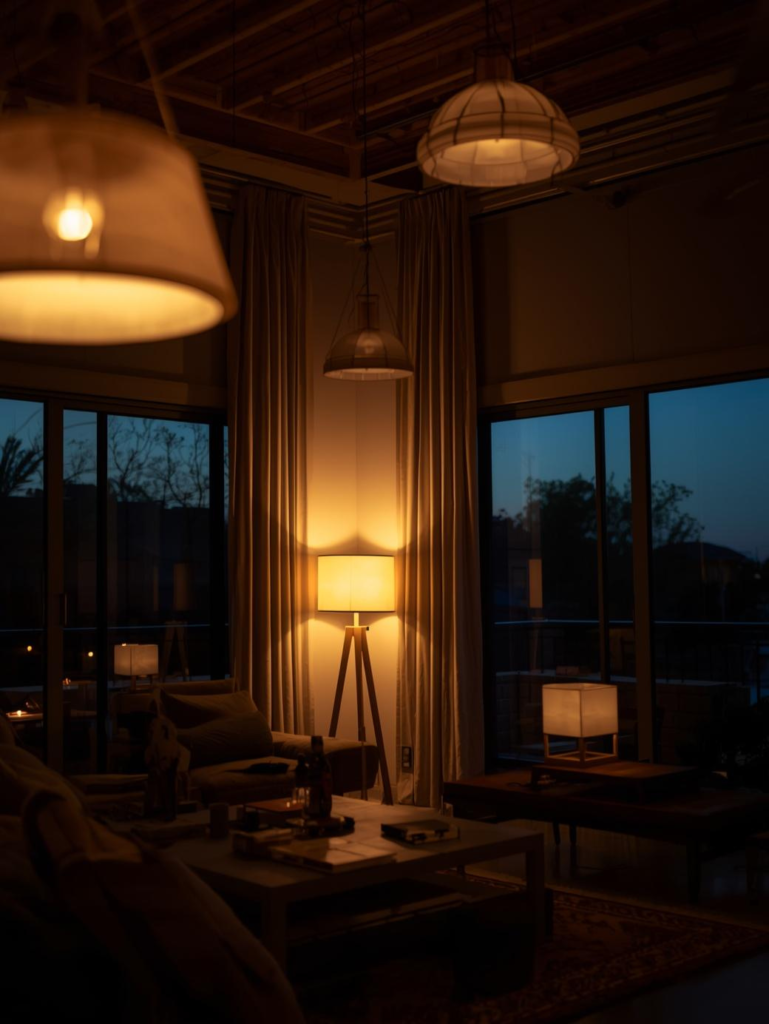
Lighting that relies entirely on a single overhead fixture flattens a room and makes it feel smaller by eliminating the depth that shadows and pools of warm light create. A layered lighting strategy, incorporating ambient, task, and accent sources, fills the room with a complexity of light that adds perceived volume. Pendant lights hung at different heights in different zones of an open concept space are particularly effective because they draw the eye across the room and mark each zone with its own quality of illumination, reinforcing the spatial separation that area rugs and furniture arrangements establish at floor level.
Floor lamps placed in corners push light upward toward the ceiling and outward into the room, softening the shadowy boundaries that make corners feel confining. Table lamps at lower heights create intimate pools of warmth that add coziness without sacrificing the open, airy quality of the room. Dimmer switches on every circuit are essential for an open concept space because they allow the entire room to be adjusted according to time of day and mood, from bright and energizing during daytime use to warm and atmospheric in the evening. Well-layered lighting makes a room feel thoughtfully designed and, crucially, more spacious than a single flat source could ever achieve.
Idea 14
Bring in Greenery and Natural Elements
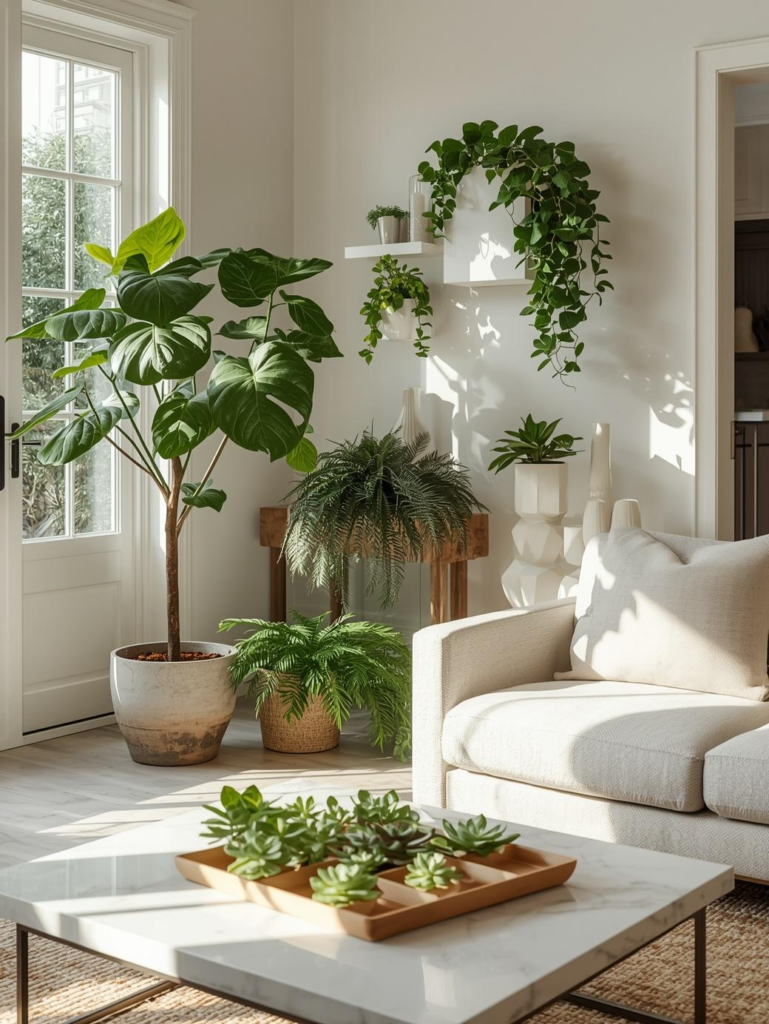
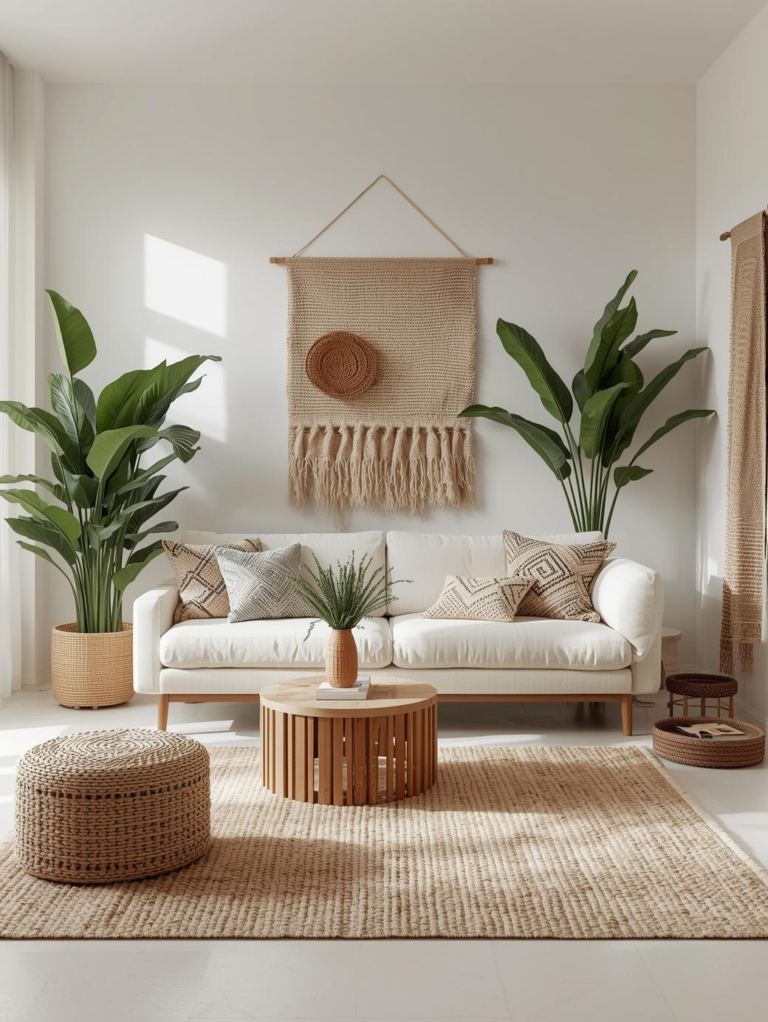
Plants bring a quality of life and movement into a room that no other decorative element can replicate, and in open concept spaces their contribution to spatial perception is significant. A tall indoor tree, such as a fiddle leaf fig or an olive tree, placed in a corner draws the eye upward and softens the geometric hard lines of walls and ceilings in a way that feels organic and effortless. Unlike a piece of furniture, a plant occupies floor space without blocking sightlines, because the eye moves easily through the gaps between trunk and branches. The result is a room that feels furnished and alive without feeling cramped.
Beyond tall statement plants, trailing varieties placed on shelves or hanging from the ceiling add layers of greenery that enhance the sense of depth in a room. A shelf that might otherwise feel like a flat surface of objects gains dimensionality when a trailing pothos or string of pearls falls naturally from its edge. Natural materials beyond plants, such as rattan baskets, linen throws, jute rugs, and wooden bowls, also contribute to the warm, textured quality that makes open concept rooms feel inviting rather than cold. Nature-inspired spaces consistently score higher in surveys of perceived spaciousness because the human eye finds natural variation restful and easy to process.
Idea 15
Adopt a Minimal and Intentional Art Strategy
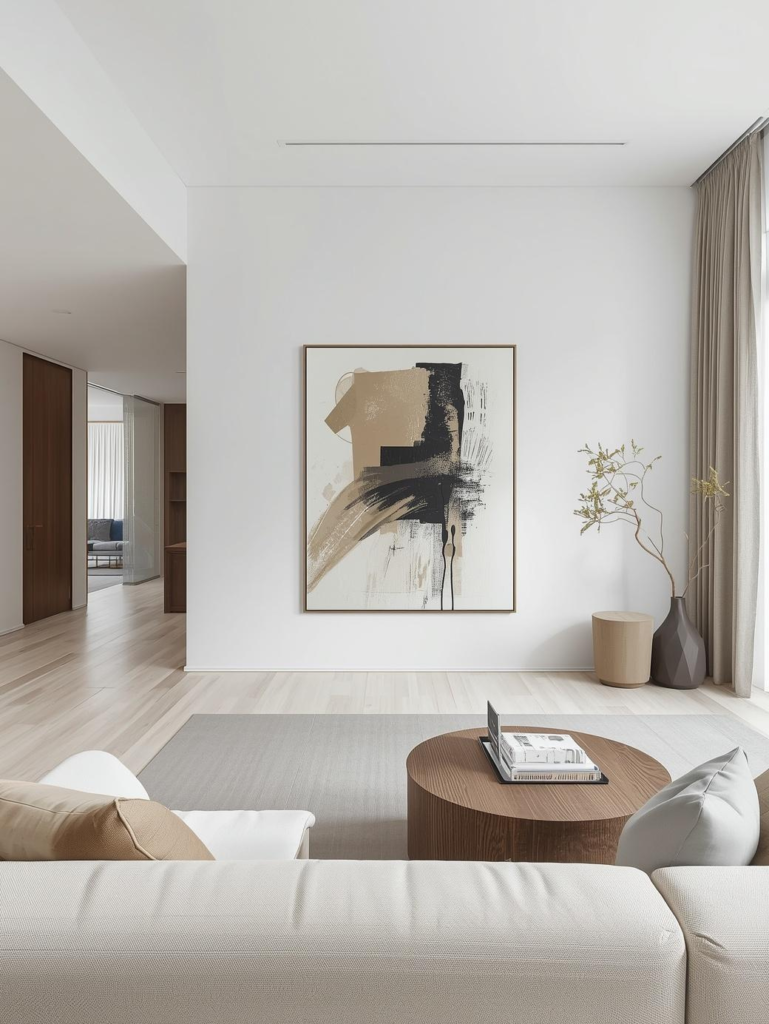
The way artwork is hung and scaled in a room communicates something important about the designer’s confidence in the space itself. A wall crowded with small, mismatched frames signals a room that needs to be filled, which paradoxically makes it feel smaller. A single large-scale artwork on an otherwise bare wall signals restraint, intention, and a trust in the architecture of the room to carry visual interest on its own. In an open concept living room where every wall is visible from the kitchen, dining table, and entry, the art hanging on each surface is seen simultaneously and must work together as a cohesive system rather than as individual pieces chosen in isolation.
Choosing artwork in a scale appropriate to the wall, generally filling at least half the width of the surface it occupies, prevents the dwarfed and floating appearance that small pieces acquire in generous rooms. Abstract work in tones drawn from the existing palette ties art to the room without forcing a thematic connection, while photographs and figurative pieces add narrative depth if selected thoughtfully. The most spatially generous approach is to treat one or two walls as primary art walls and leave the remaining walls largely unadorned, allowing their clean expanse to contribute the same quiet spaciousness that negative space on a page contributes to typography. Restraint in art, as in so many aspects of interior design, is a form of generosity.
Final Thoughts
Putting It All Together
Creating an open concept living room that genuinely feels expansive is rarely the result of a single dramatic decision. It is the accumulation of many smaller, deliberate choices that work in concert: a neutral palette that allows light to travel, curtains hung near the ceiling to celebrate height, furniture floated away from walls to create depth, and a commitment to visual clarity that keeps clutter from eroding the sense of space at every turn.
The fifteen ideas in this guide are not rules to follow in rigid sequence but tools to select based on your specific room, your existing furniture, and your personal aesthetic. Some, like hanging curtains high or choosing a consistent floor material, are foundational decisions best made early. Others, like adding mirrors or incorporating plants, can be layered in gradually as your confidence in the space grows. What they all share is a respect for the power of perception, for the fact that how a room feels is as important as how large it actually is, and that thoughtful design can bridge the gap between the two with remarkable effectiveness.
Begin with one or two ideas from this list that feel most achievable given your current space and budget, observe how the room responds, and build from there. An open concept living room that truly breathes is not a luxury reserved for large homes or large budgets. It is the reward for paying attention to light, scale, flow, and the spaces between things, which are available to anyone willing to look at their home with fresh and intentional eyes.