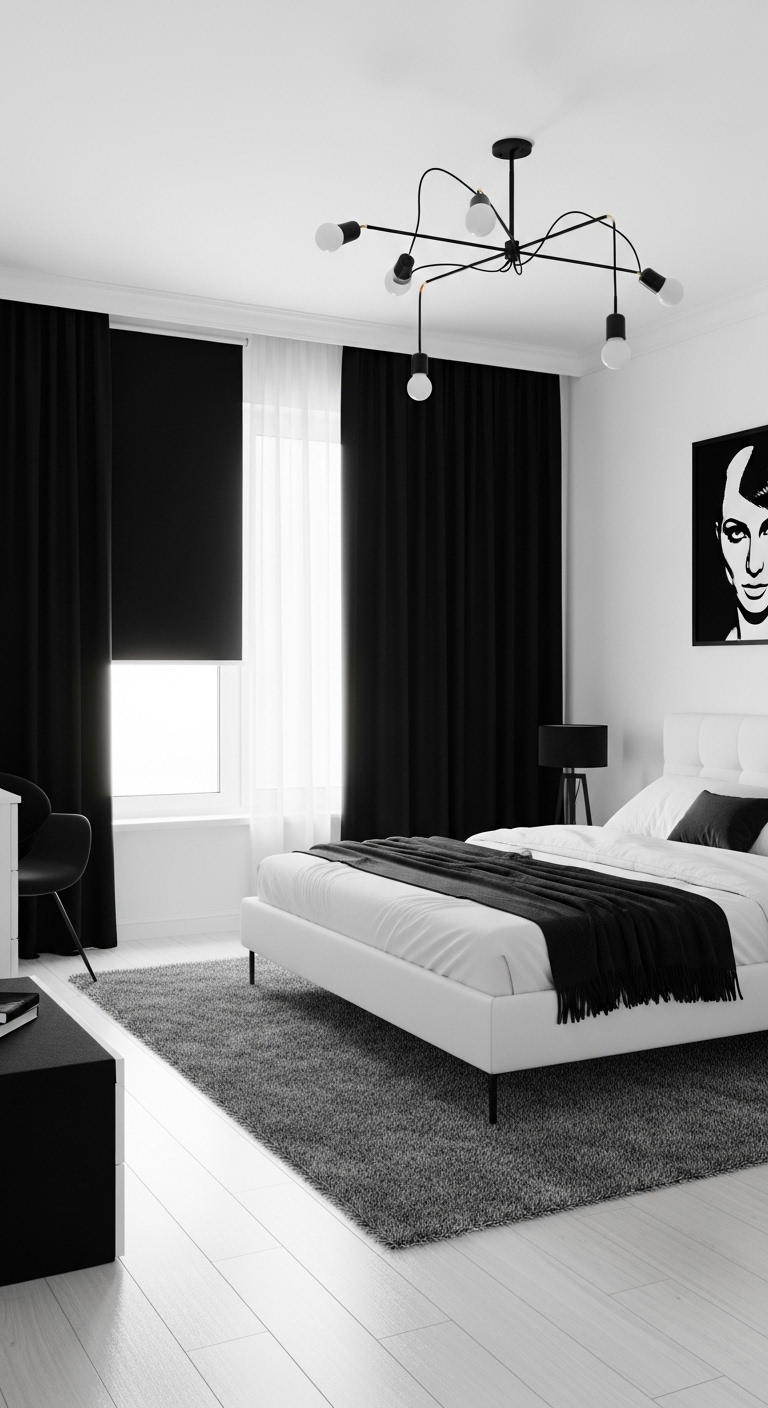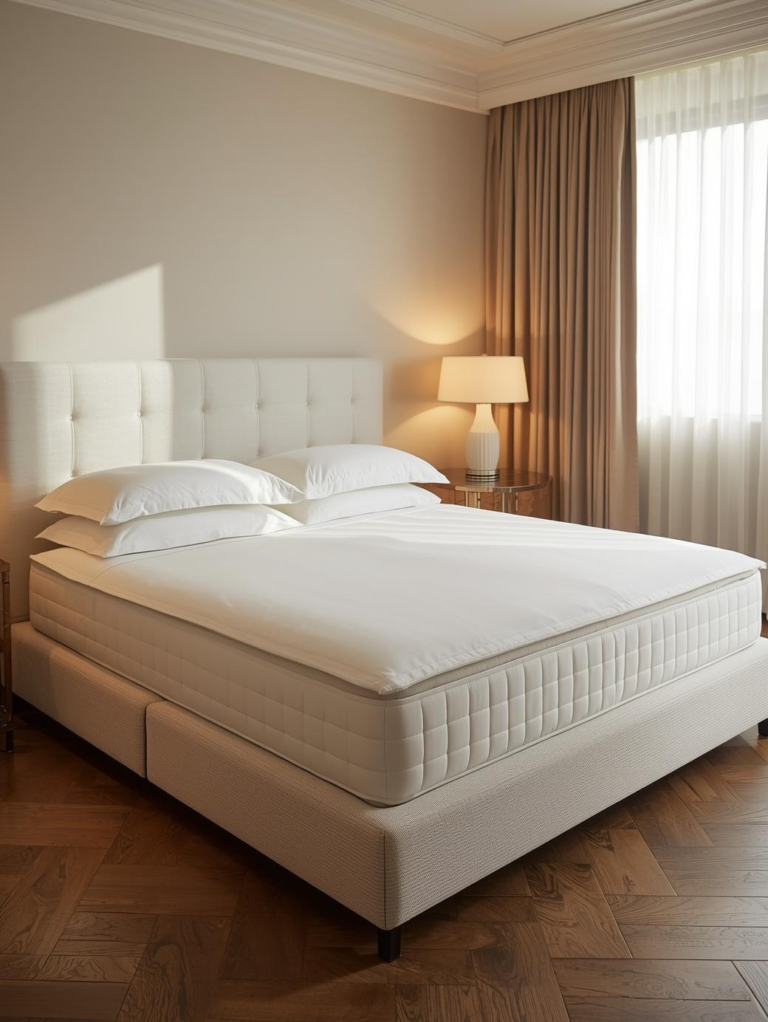
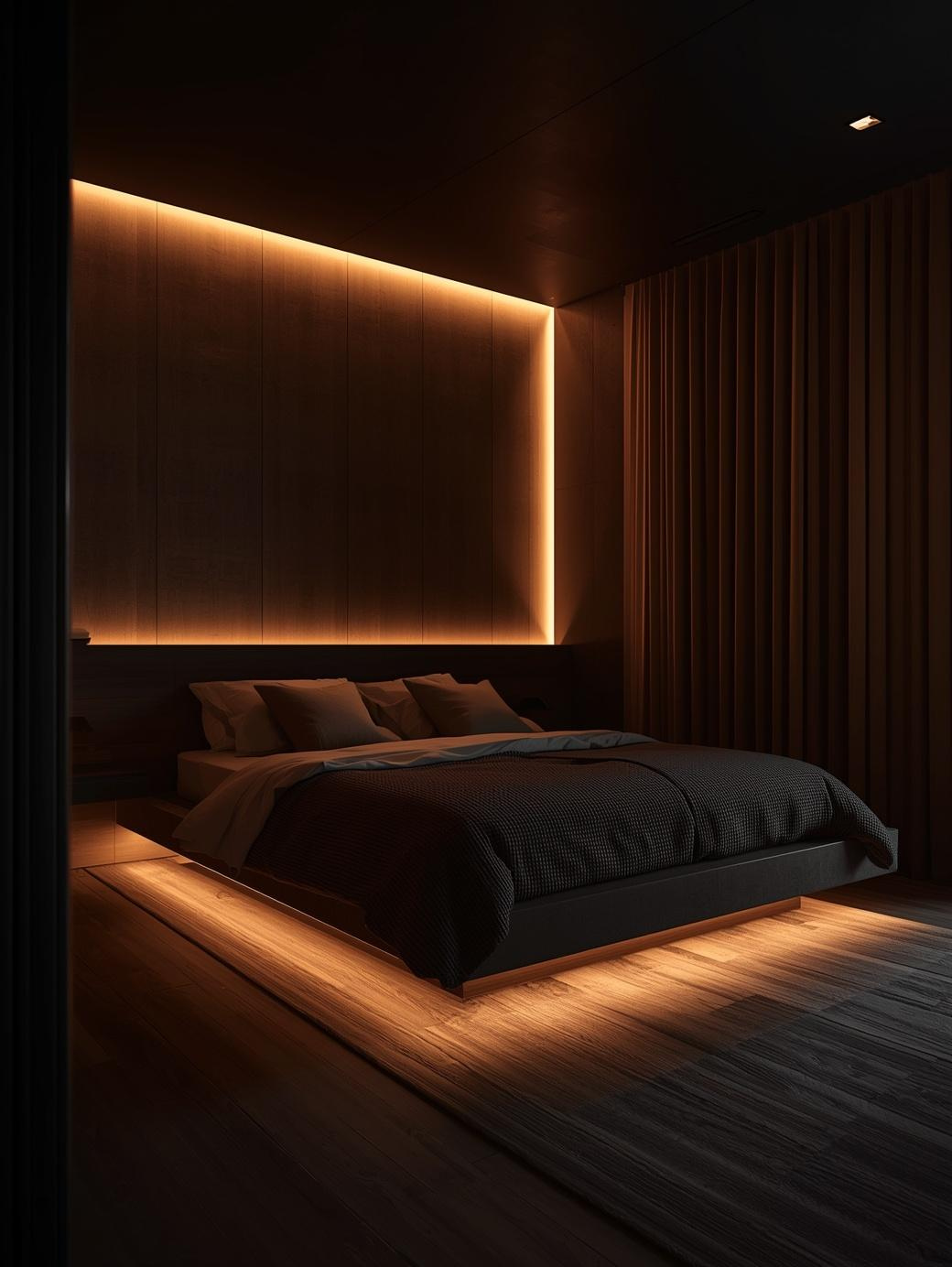
Can Warm Lighting Make Your Bedroom
Look More Luxurious?
Try These 18 Ideas
Luxury in a bedroom is rarely about square footage or expensive furniture alone. It is about atmosphere, and nothing shapes atmosphere more immediately or powerfully than light. The right warm lighting transforms an ordinary room into a sanctuary that feels considered, calm, and deeply inviting. Whether you are starting from scratch or simply tired of a bedroom that never quite feels as refined as you want it to, these eighteen ideas will show you exactly how warm light can close the gap between the room you have and the room you dream about
Idea 01
Switch to 2700K Bulbs Throughout
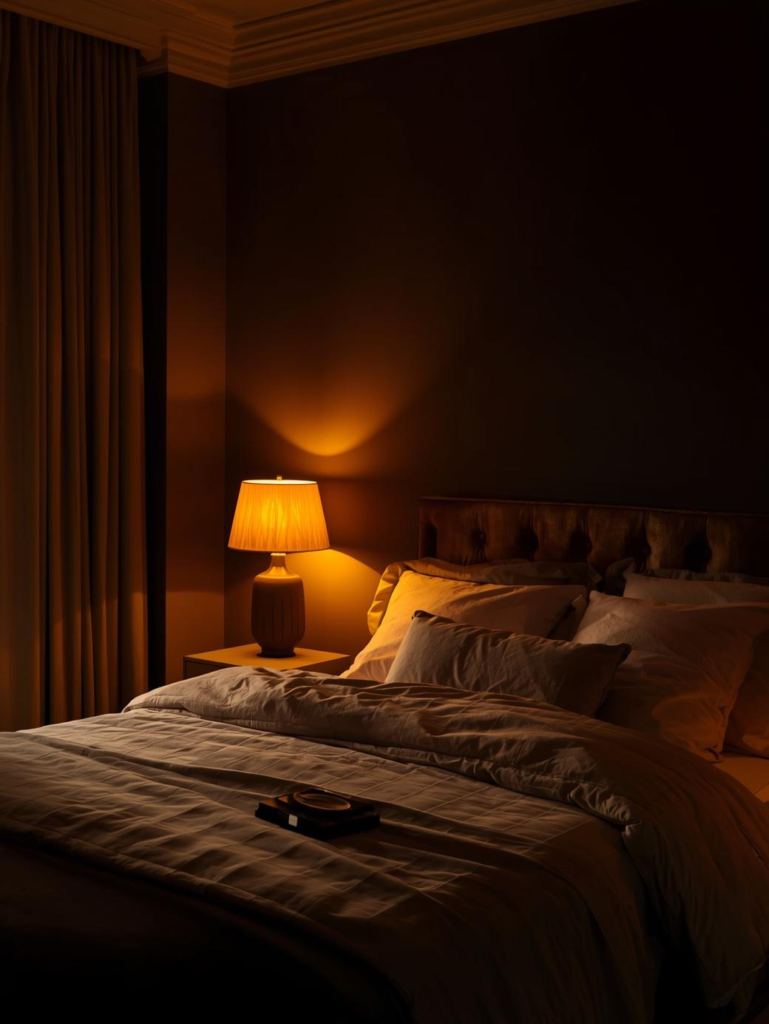
The number printed on a light bulb box, measured in Kelvins, controls everything about the mood of your bedroom. Bulbs rated at 2700K produce a warm, amber-tinted white light that closely mimics the quality of candlelight or late-afternoon sun. This is the temperature used in almost every high-end hotel bedroom precisely because it makes skin look healthy, textures appear rich, and the overall room feel enveloping. Replacing cool or neutral white bulbs with 2700K alternatives is the single fastest upgrade available and costs almost nothing.
The transformation is most dramatic in rooms that currently use daylight bulbs rated at 5000K or above, which produce a clinical blue-white light that flattens surfaces and makes even beautiful rooms feel utilitarian. Swapping every bulb in the bedroom, including ceiling fixtures, table lamps, and any recessed lighting, to a consistent 2700K creates visual harmony across the entire space. When all sources emit the same color temperature, the room reads as a unified whole rather than a collection of separate fixtures, which is a hallmark of thoughtful, luxury interior lighting design.
Idea 02
Install Dimmer Switches on Every Circuit
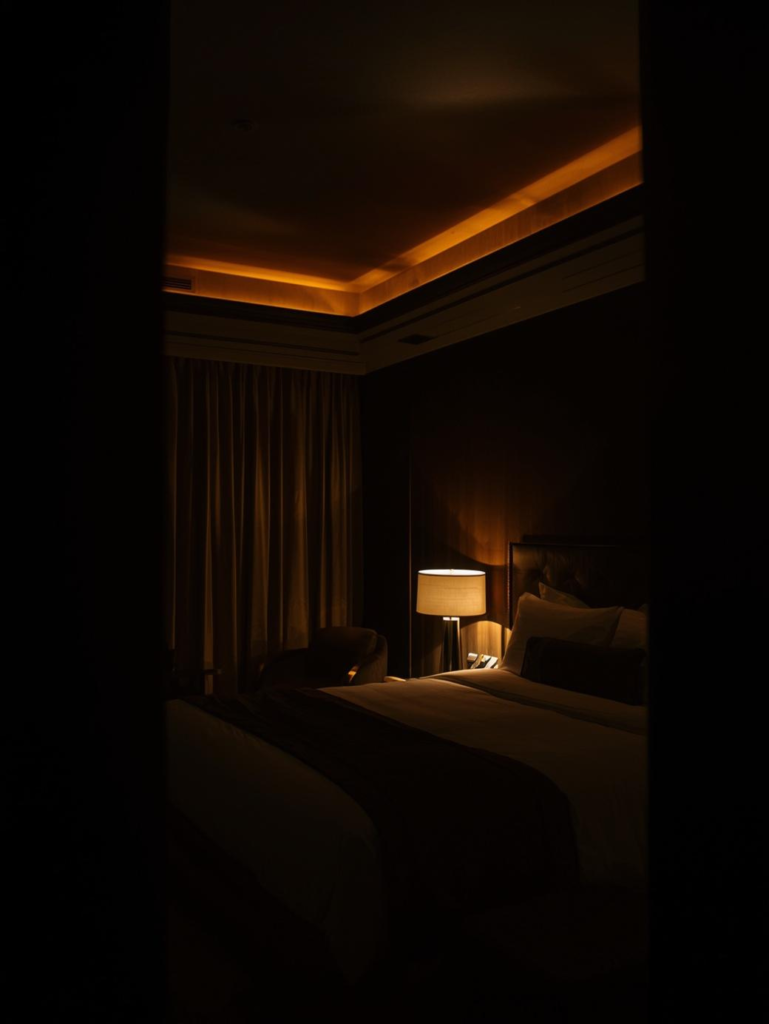
A dimmer switch is arguably the most powerful single investment you can make in bedroom lighting because it gives you the ability to set the mood rather than simply turn the lights on or off. During the day, lights at full brightness serve practical needs like dressing and reading. In the evening, the same lights dimmed to thirty or forty percent create a warm, intimate atmosphere that signals to both the room and the body that it is time to unwind. This flexibility is the defining feature of luxury hotel bedrooms, where lighting is always adjustable and never fixed.
Installing dimmers is a straightforward electrical task in most homes, and the aesthetic return far exceeds the modest cost of the hardware. Smart dimmers with app or voice control add a further layer of convenience, allowing you to create preset scenes such as a reading scene at eighty percent and a sleep scene at five percent that can be recalled instantly. When warm 2700K bulbs are combined with full dimming capability, the bedroom gains the ability to shift from a functional daytime space to a deeply luxurious evening retreat simply by adjusting the intensity of light already present in the room.
Idea 03
Choose Sculptural Bedside Lamps
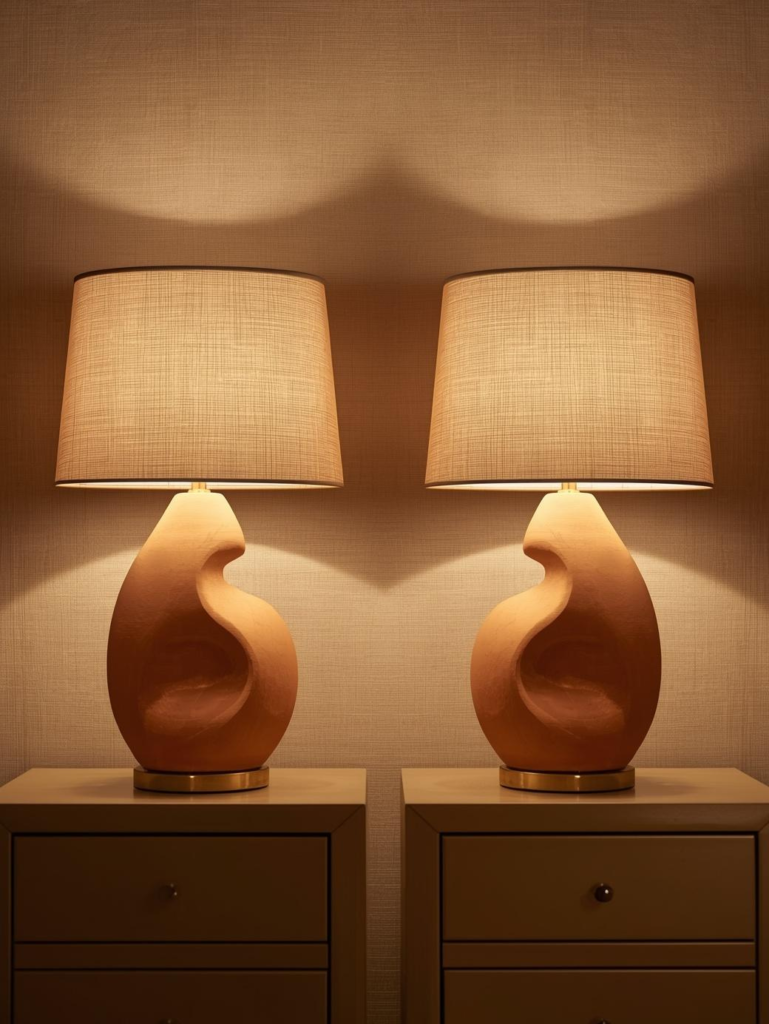
Bedside lamps are the most visible lighting fixtures in any bedroom because they sit at eye level and are seen immediately upon entering the room. Choosing lamps with sculptural, artistic bases elevates them from purely functional objects to statement pieces that contribute to the luxurious character of the space even when switched off. Organic ceramic forms, hand-blown glass, hammered brass, or carved marble all create a sense of material richness that mass-produced plastic bases cannot replicate. The base should feel like something that belongs in a gallery as much as a bedroom.
The shade material is equally important because it determines both the quality and the warmth of the light emitted. Linen, silk, and parchment shades cast a soft, diffused glow that wraps the immediate area in warmth, while drum shades in ivory or cream add a quiet elegance that works in both minimal and maximalist rooms. Avoid white paper or plastic shades, which produce a harsh, flat light that diminishes the effect of even the most beautiful base. A well-chosen pair of bedside lamps, matched in scale to the bed and nightstands, instantly communicates that the bedroom has been designed with intention and care.
Idea 04
Add Wall Sconces Beside the Headboard
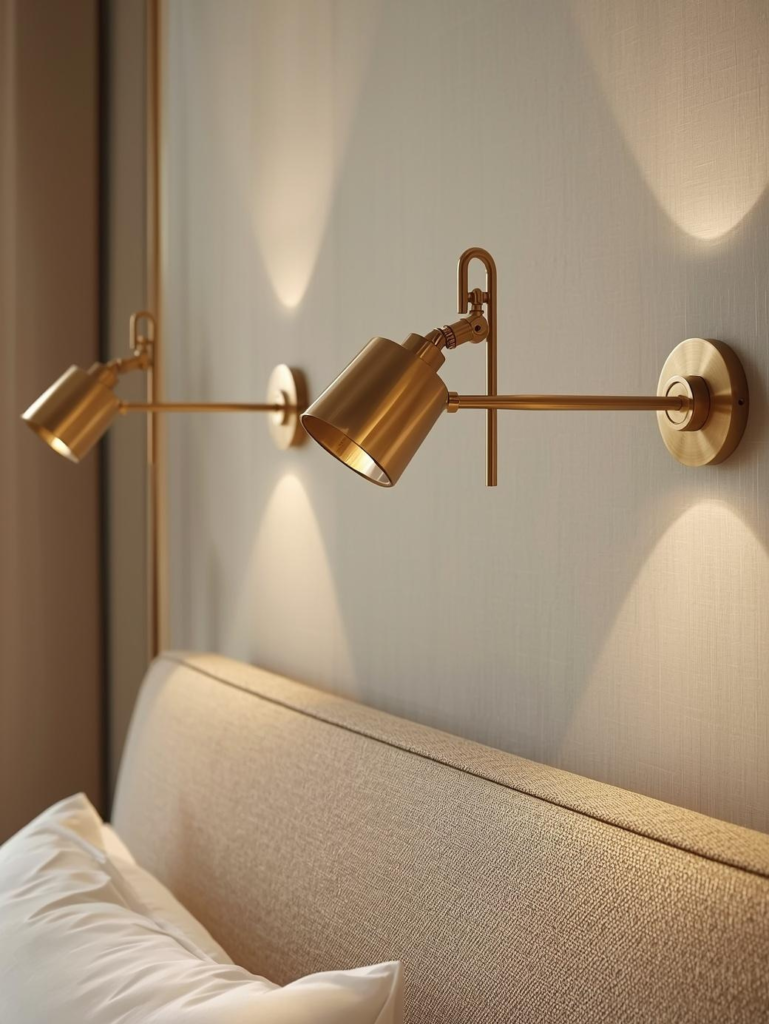
Wall-mounted sconces flanking the headboard are one of the clearest signals of a designed bedroom. They serve the practical function of reading light while clearing the nightstand of a lamp entirely, which frees the surface for books, a glass of water, and a few decorative objects without crowding. The placement of sconces at headboard height also puts warm light exactly where it is most flattering, casting a gentle glow across the pillows and bedding that makes the entire bed look more inviting and hotel-like. Articulating arm sconces offer the added benefit of directional control.
Brass, brushed nickel, matte black, and antique bronze are all finishes that work beautifully in a warm-toned bedroom, with the choice depending on the other metal accents already present in the space. For a fully cohesive look, matching sconces to the hardware on furniture or the finish of a pendant light elsewhere in the room ties the lighting scheme together as a deliberate system rather than a collection of individual fixtures chosen at different times. Wall sconces are also available in hardwired and plug-in versions, meaning they are accessible as an upgrade even in rental properties or rooms without existing wall outlets in the right location.
Idea 05
Use a Statement Pendant Light
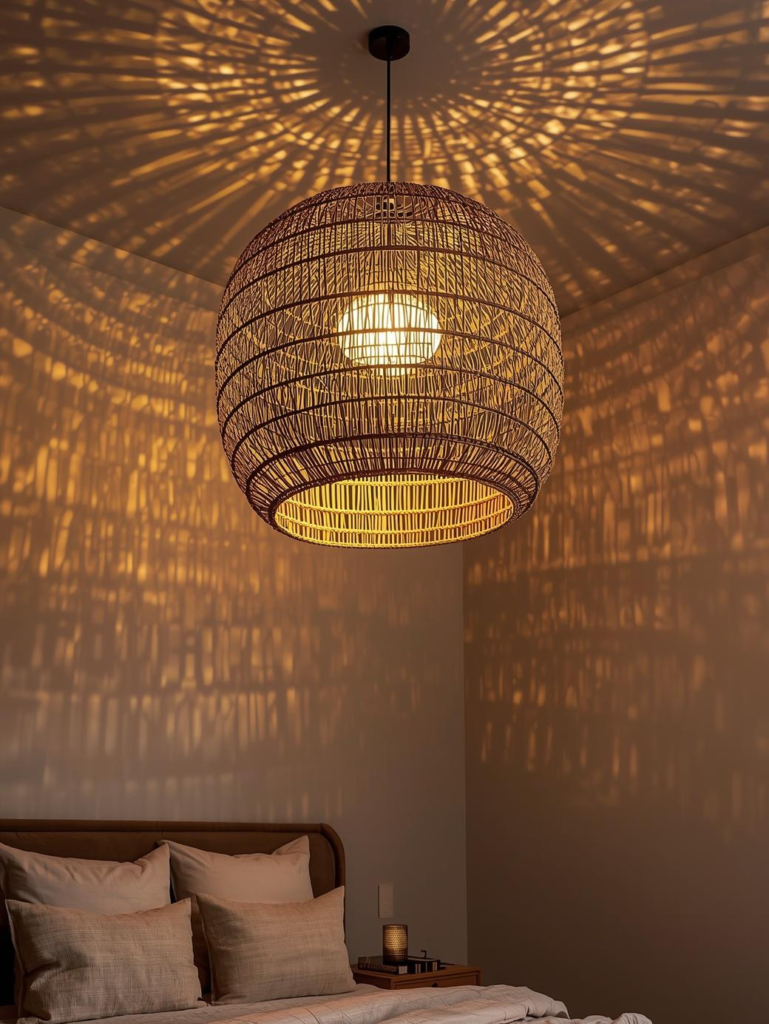
Replacing a standard flush-mount ceiling light with a pendant or chandelier is one of the most transformative changes possible in a bedroom because it introduces architectural drama at the highest point of the room. A pendant hung over the bed at approximately seven feet establishes an intimate canopy of light that draws the eye upward and makes the ceiling feel intentionally designed rather than incidental. Woven rattan, blown glass, sculptural resin, and hammered metal are all materials that interact beautifully with warm light, casting intricate shadows and patterns that add movement and depth to otherwise static walls and ceilings.
The key to choosing a bedroom pendant is scale. A fixture too small for the room disappears visually and fails to anchor the space, while one proportioned correctly becomes the defining focal point of the entire room. As a general rule, the diameter of the pendant in inches should roughly equal the length plus width of the room in feet. Pairing a warm-toned pendant with a dimmer switch allows it to shift from a functional ambient source during waking hours to a deeply atmospheric accent in the evening, which is precisely the kind of versatility that separates a thoughtfully lit bedroom from one that simply has adequate illumination.
Idea 06
Layer Candles and Flameless Alternatives
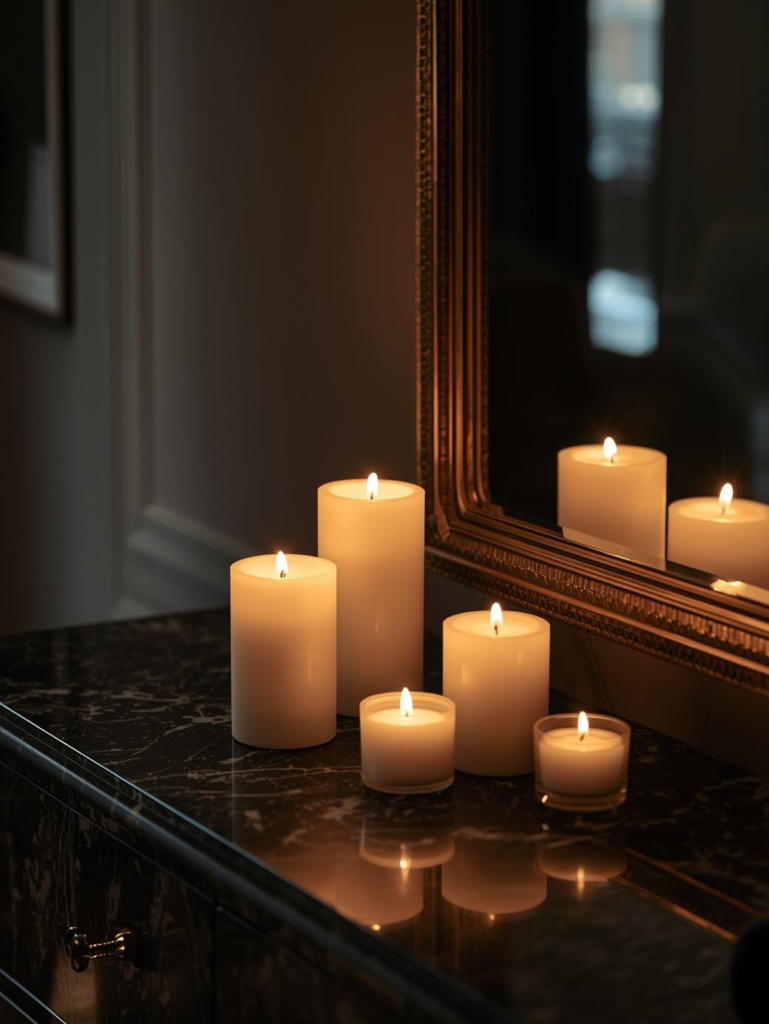
No artificial light source fully replicates the quality of a flame, and candles remain one of the most effective tools for adding warmth and luxury to a bedroom because their light is alive in a way that fixed fixtures cannot be. The gentle, unpredictable flicker of candlelight creates subtle movement across walls and surfaces that adds depth and atmosphere beyond what any static bulb can produce. Grouping candles of different heights on a dresser, a shelf, or a tray on the nightstand creates a focal point of warm golden light that immediately elevates the room to something that feels indulgent and considered.
For safety and practicality, high-quality flameless LED candles have advanced to the point where they are visually nearly indistinguishable from real flames, particularly in low-light conditions. The best options use a realistic flicker algorithm and emit a warm amber glow at the 2700K range that blends seamlessly with other warm light sources in the room. A combination of real candles for special occasions and flameless versions for everyday use gives the bedroom the benefit of both. Scented pillar candles in natural wax add an olfactory layer of luxury that works in concert with the visual warmth of the light to make the room feel like a private spa retreat.
Idea 07
Introduce LED Strip Lighting Behind Furniture
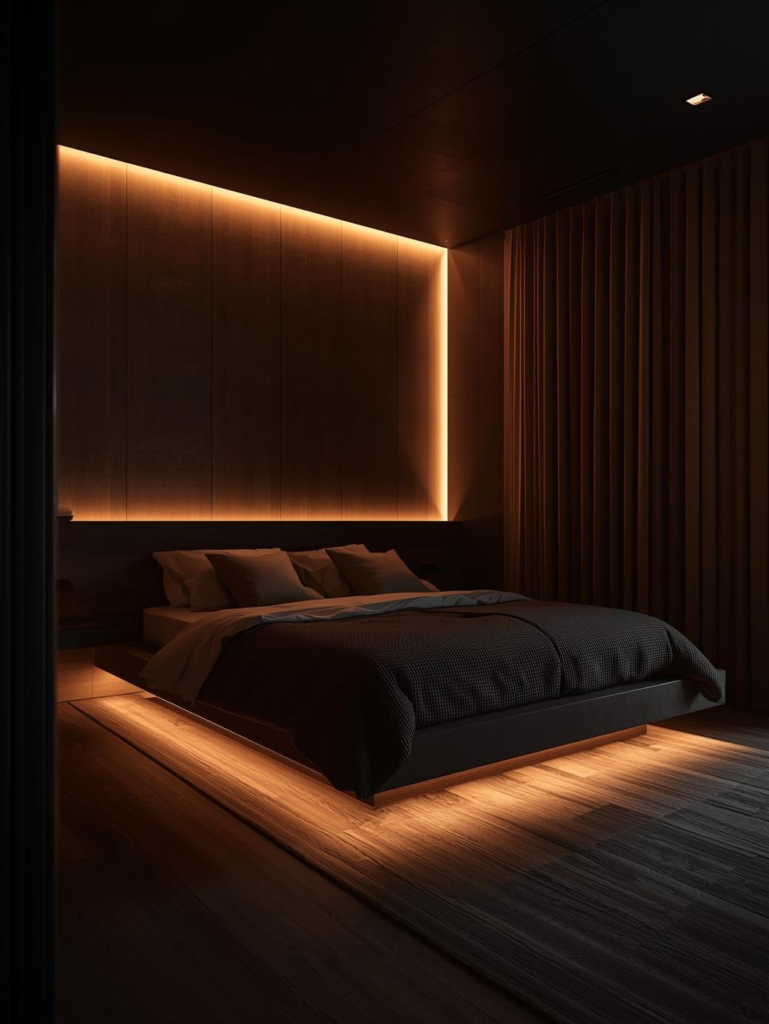
LED strip lighting placed behind furniture creates a halo of indirect warm light that adds depth and architectural interest without any fixture being visible. Concealed behind a floating bed frame, a headboard panel, or a low dresser, the light source itself remains hidden while its glow softly illuminates the wall or floor behind and beneath the piece. This indirect lighting technique is widely used in high-end hotel and residential interiors because the absence of a visible source makes the light feel almost magical, as if the furniture itself is glowing from within, which adds an effortless sense of luxury to even a modest bedroom.
Warm white LED strips rated at 2700K or even warmer 2200K amber tones are the most effective choices for a bedroom because they create a sunset-quality glow that feels genuinely luxurious rather than commercial. Adhesive-backed strips are simple to install behind most furniture without any professional help, and smart-enabled versions can be dimmed and controlled remotely. The placement behind the headboard in particular creates a soft backlit effect that makes the bed the visual centerpiece of the room, framed in warm light in a way that recalls the intentional lighting design of boutique hotel suites.
Idea 08
Drape Warm Fairy Lights with Intention
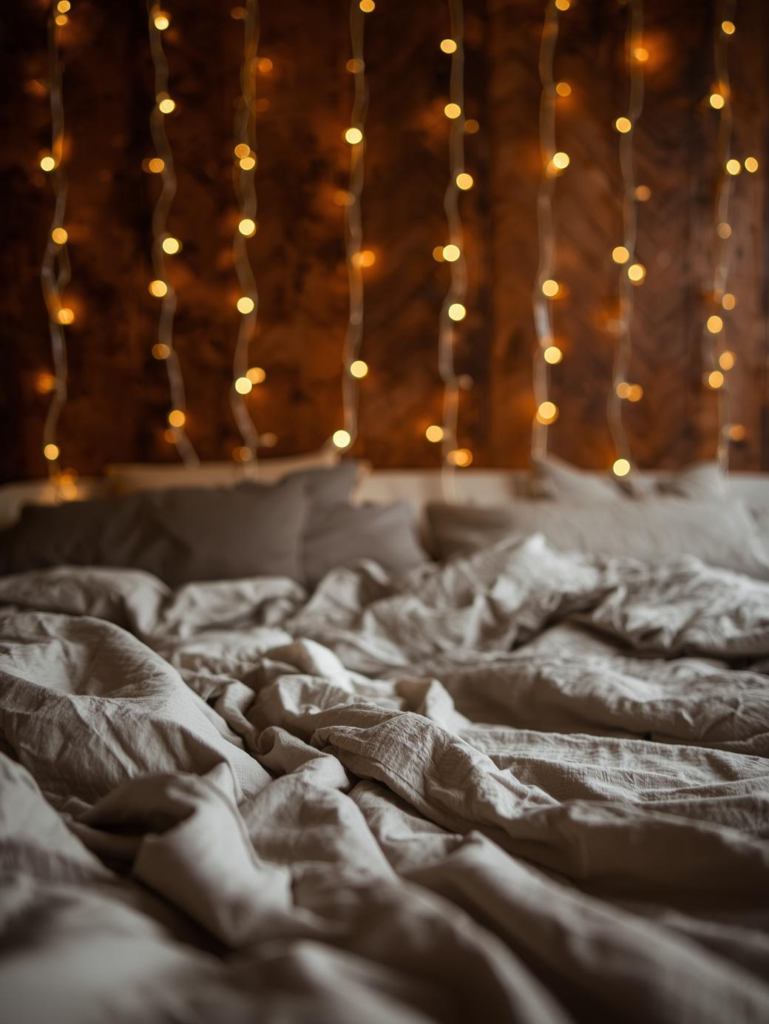
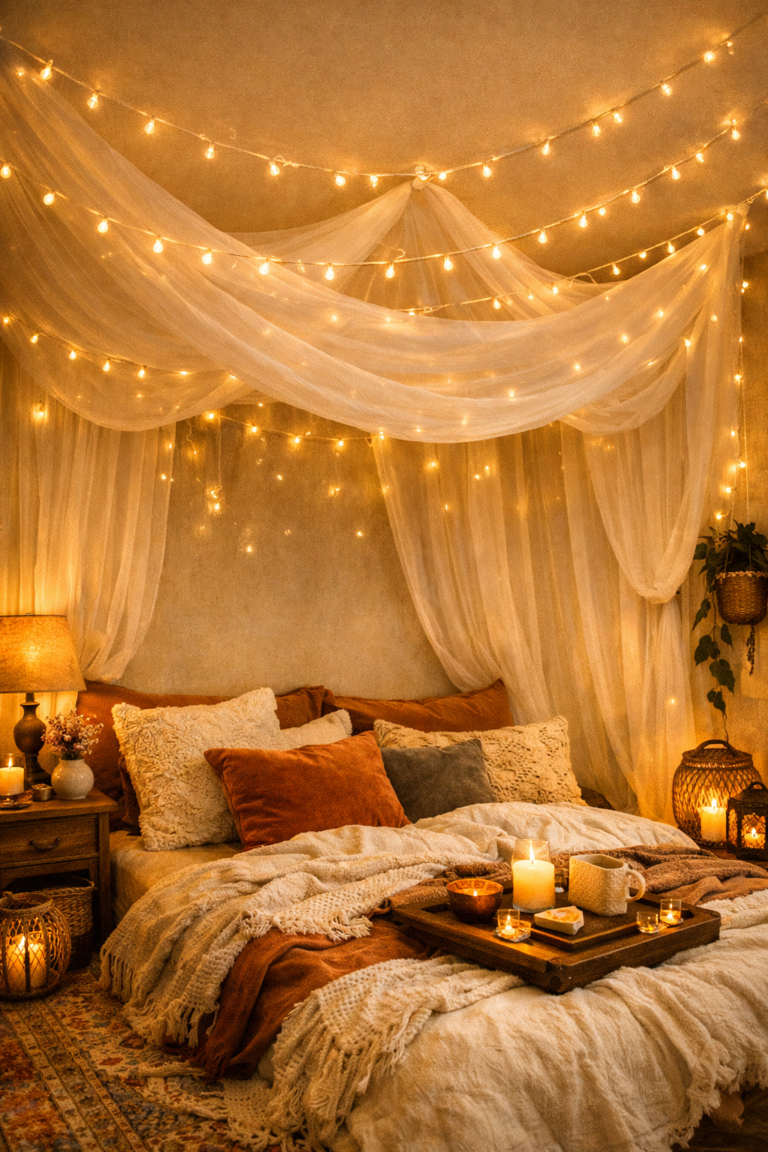
Fairy lights carry an undeserved reputation for being casual or youthful, but when chosen and placed with care they contribute a texture of warm light that very few other sources can provide. The secret is in the bulb type and the installation method. Warm white fairy lights rated at 2200K to 2700K, using Edison-style micro bulbs rather than standard LED dots, produce a golden glow that reads as deliberately atmospheric rather than decorative in a juvenile sense. Draped loosely behind a bed, woven through a branch arrangement, or hung in long vertical drops from a ceiling hook, they create a constellation of light that adds romance and depth to the room.
The installation method determines whether fairy lights look intentional or haphazard. Copper wire versions are flexible enough to be shaped and directed precisely, allowing them to be draped across a feature wall or arranged within a glass vase for a more contained effect. Concealing the wire and power source with careful routing against baseboards or behind furniture prevents the practical elements from breaking the visual spell. When combined with other warm light sources at different heights in the room, fairy lights function as an accent layer that fills the upper and middle zones of the room with warmth, contributing to the multi-layered lighting scheme that defines truly luxurious bedroom design.
Idea 09
Illuminate a Feature Wall with Uplighters
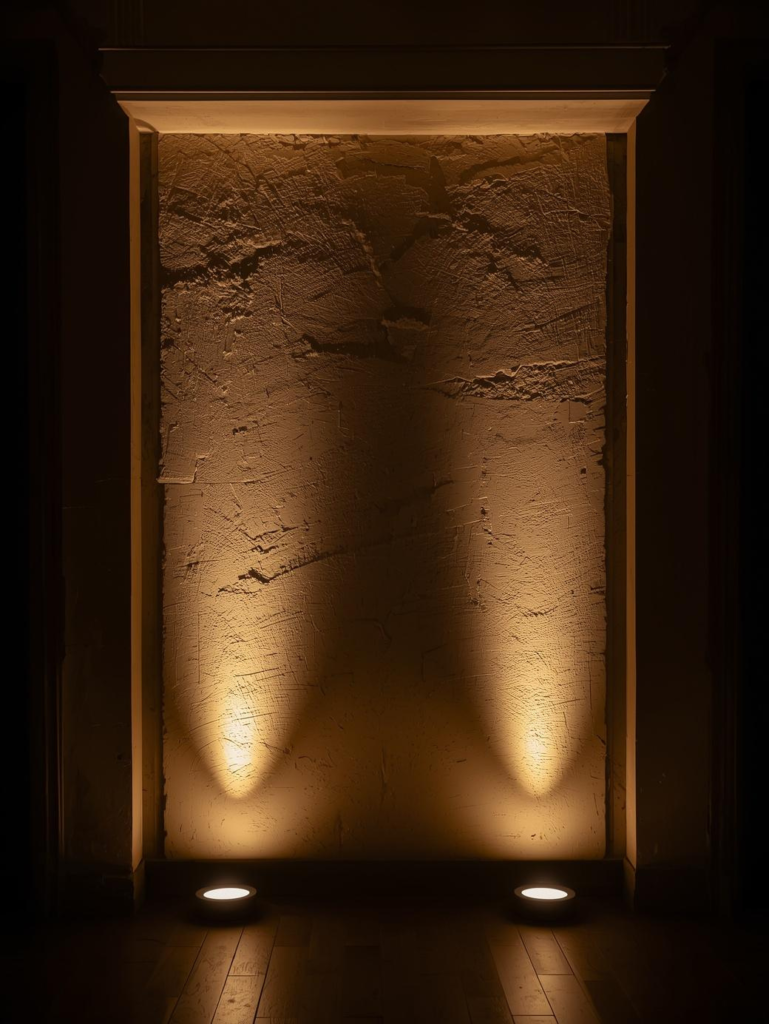
Uplighting a feature wall is one of the most dramatic warm lighting techniques available because it uses light to reveal texture and depth in a surface that ordinary overhead lighting would render flat. A slim floor uplighter placed close to a textured wall, whether plastered, paneled, upholstered, or finished in limewash paint, creates a grazing light effect that throws every surface variation into sharp relief, making the wall appear rich with dimension. This technique is a staple of luxury interior design precisely because it adds visual drama at zero structural cost and works in any bedroom regardless of size or existing decor.
Warm uplighters work best when aimed at walls with inherent texture or tonal variation because smooth, flat walls benefit less from the grazing effect. If the bedroom walls are plain, this is a compelling reason to introduce a textured finish on the headboard wall before installing uplighters, as the combination produces a result far greater than either element achieves independently. Narrow-beam uplighters concentrate the light in a tighter column for a more dramatic effect, while wide-beam versions wash the entire wall more evenly for a softer look. Both approaches add the kind of considered architectural lighting that is the consistent hallmark of bedrooms that feel genuinely expensive and thoughtfully designed.
Idea 10
Place a Warm Floor Lamp in a Corner
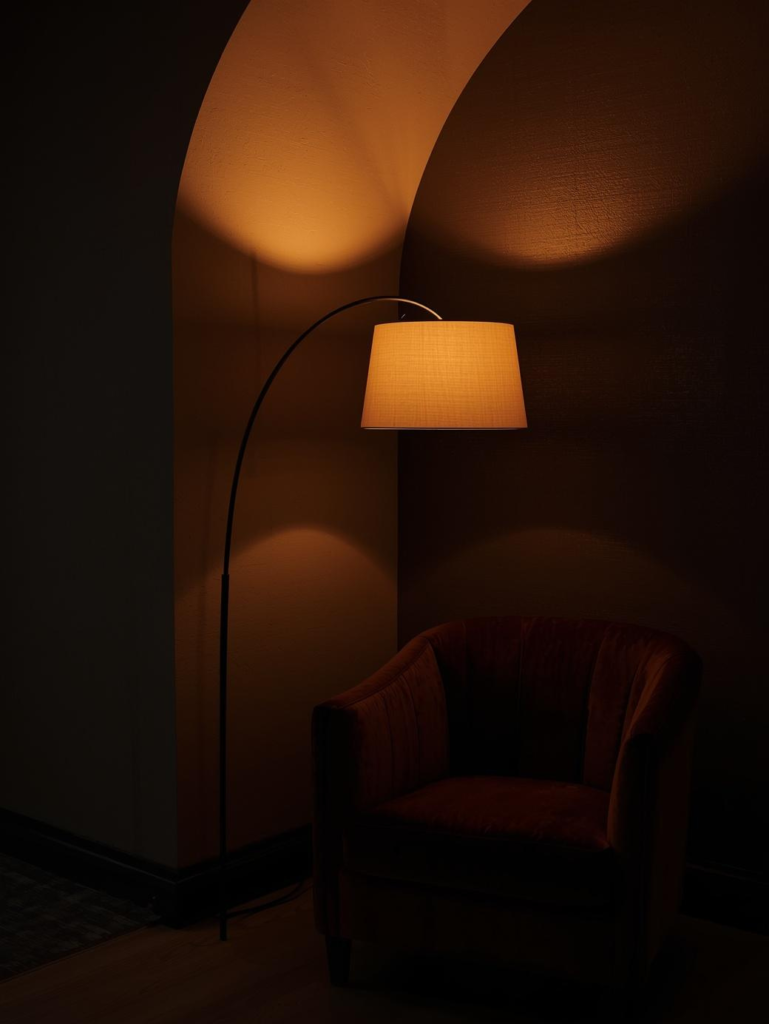
A floor lamp placed in the corner of a bedroom performs several lighting functions simultaneously: it pushes warm light upward toward the ceiling to prevent the room from feeling low and compressed, it fills a corner that would otherwise be dark and forgotten, and it creates an intimate reading or relaxation zone that does not rely on the main overhead light. Arched floor lamps in particular have a graceful, sculptural quality that contributes to the room even in daylight, and their height and reach make them especially effective at distributing warm light across a wide area without the harshness of a direct overhead source.
The shade of a floor lamp plays as significant a role as the base in determining the quality of light produced. Opaque shades direct light downward in a focused pool, which is ideal for reading and task use but offers less ambient warmth. Translucent linen or silk shades allow light to escape in all directions, casting a soft glow on the ceiling and surrounding walls that adds significantly to the overall warmth of the room. A floor lamp with a warm bulb behind a natural linen shade creates a quality of light that strongly resembles firelight in its color and diffusion, which is as close to luxury atmosphere as bedroom lighting gets without an actual fireplace.
Idea 11
Use a Backlit Headboard Panel
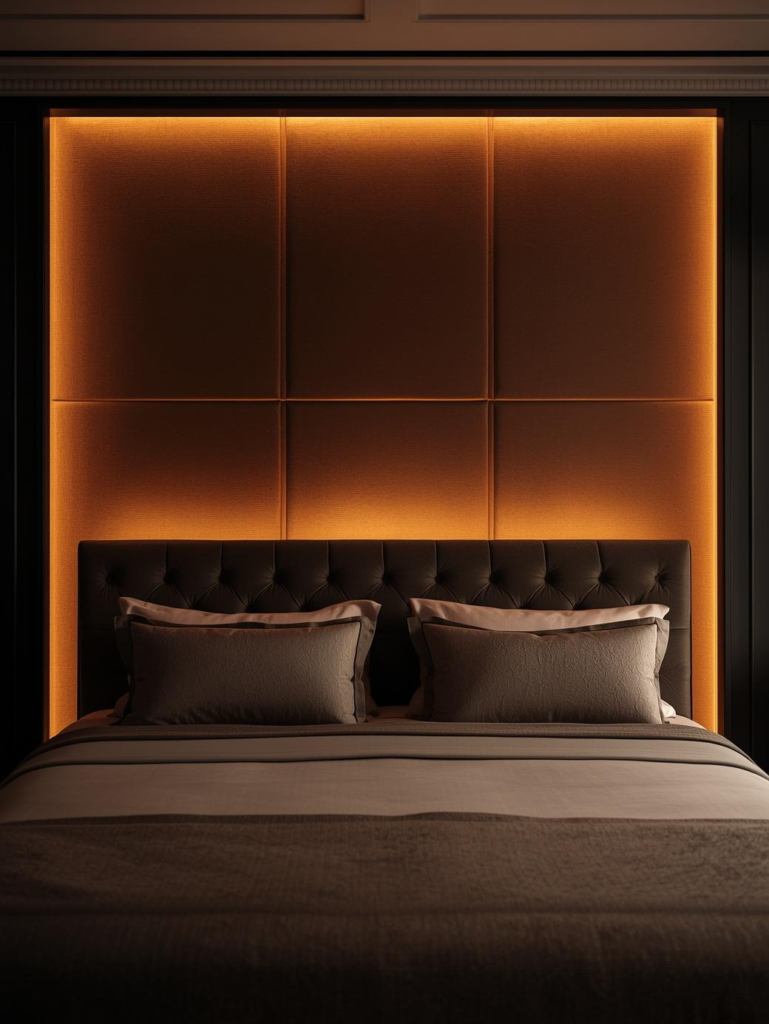
A backlit headboard is one of the most immediately luxurious lighting features a bedroom can have, and it is more achievable than it appears. LED strip lighting in warm amber tones applied to the back edge of a headboard panel casts a soft halo of light against the wall behind the bed, framing the entire sleeping area in warm light and turning the headboard into a glowing focal point that commands the room. This effect is seen consistently in boutique hotel suites and high-end residential bedrooms because it is inherently dramatic while remaining completely functional as ambient lighting.
The effect works with almost any headboard material, from velvet and upholstered linen to solid wood and lacquered finishes, because the light is cast on the wall behind rather than through the headboard itself. The headboard simply needs to stand a few inches away from the wall to allow the glow to escape. Wall color influences the final result significantly: dark, saturated walls such as deep navy, forest green, or charcoal intensify the warm halo dramatically, while lighter walls produce a softer, more diffused effect. Either approach contributes to a bedroom that feels curated and intentionally lit rather than simply furnished, which is the essential quality that distinguishes a truly luxurious sleeping space.
Idea 12
Light the Wardrobe Interior Warmly

Lighting the interior of a wardrobe or walk-in closet with warm LEDs is a detail that elevates the entire bedroom experience in a way that is disproportionate to its cost. An open wardrobe that glows warmly draws the eye and adds a layer of visual depth to the room, creating the impression of a boutique dressing room within the bedroom itself. The warm amber tone makes clothing appear richer in color and texture, turns the act of choosing an outfit into a pleasurable experience, and contributes ambient light to the bedroom when the wardrobe doors are open in the evening.
Motion-activated LED strips or puck lights in warm tones are easy to install in most wardrobe configurations without rewiring. They sit unobtrusively on shelves and hanging rails, switching on automatically when the door opens and off when it closes, which means the luxury effect is present every single time the wardrobe is accessed. In a bedroom where the wardrobe is a significant visual element, whether a large open system or a row of fitted cabinets, warm interior lighting transforms it from a utilitarian storage unit into a design feature that contributes meaningfully to the overall atmosphere of the room.
Idea 13
Try a Lantern-Style Table Lamp
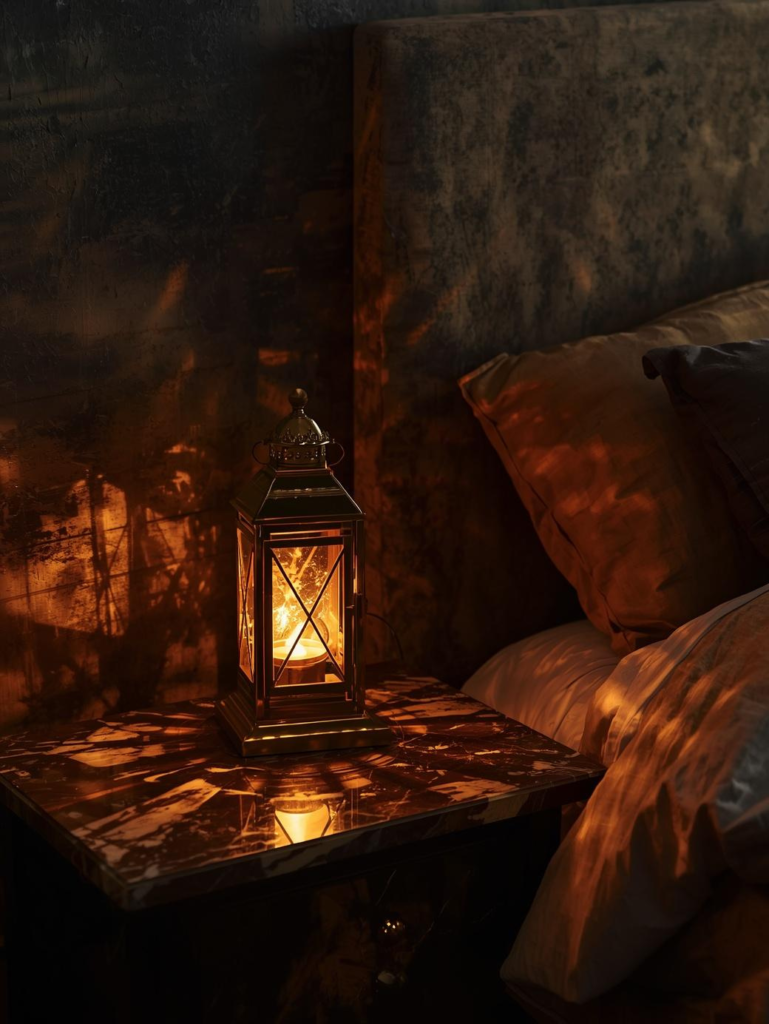
Lantern-style lamps bring an old-world, romantic quality to the bedroom that no other fixture type quite replicates. Their enclosed glass or perforated metal construction creates a contained source of warm light that casts beautiful geometric patterns on nearby surfaces while providing a soft ambient glow that is equally effective as mood lighting and practical bedside illumination. Unlike conventional shaded lamps that direct light primarily downward, lanterns distribute light in multiple directions simultaneously, adding warmth to walls, ceiling, and surfaces in equal measure, which makes the room feel immersed in light rather than simply lit from above.
Antique brass, aged iron, and blackened steel are the most commonly available finishes for lantern lamps, and all three work beautifully in warm-toned bedrooms because they carry a sense of material history and craftsmanship that mass-produced lamps rarely possess. Pairing a lantern lamp with an Edison-style filament bulb visible through the glass further intensifies the warm, amber quality of the light and adds a decorative element within the fixture itself. The visible filament glowing at low wattage inside a glass lantern on a marble or wooden nightstand is one of the most effortlessly luxurious lighting combinations available, requiring nothing more than the right lamp and the right bulb working together.
Idea 14
Install Cove Lighting Near the Ceiling
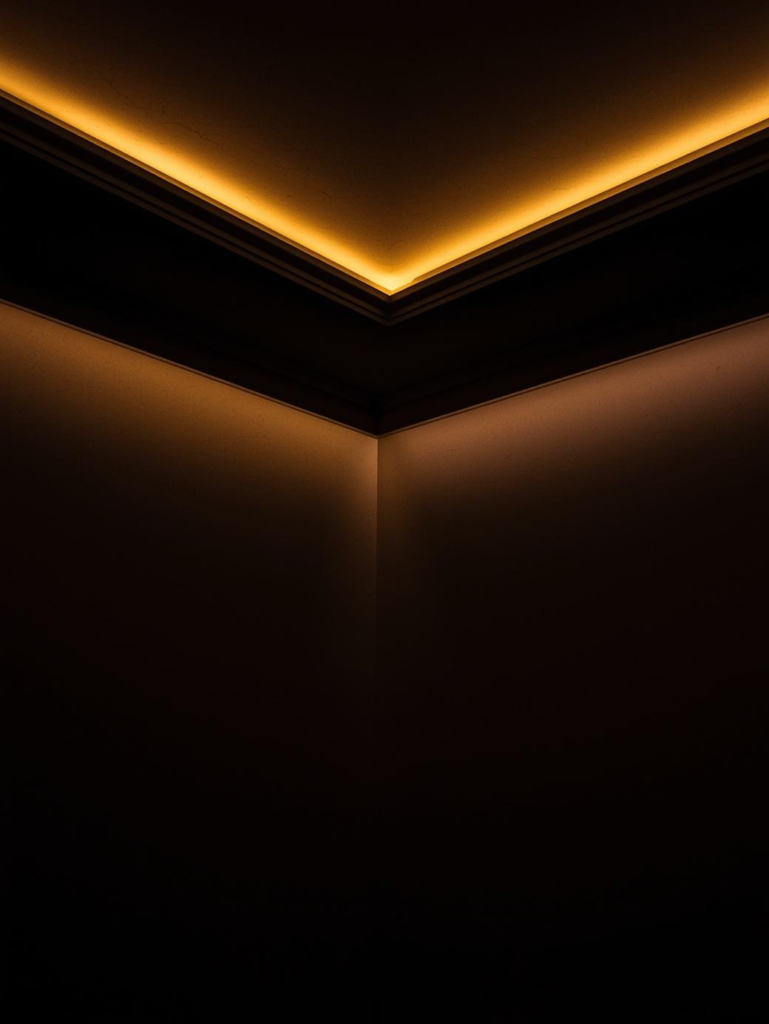
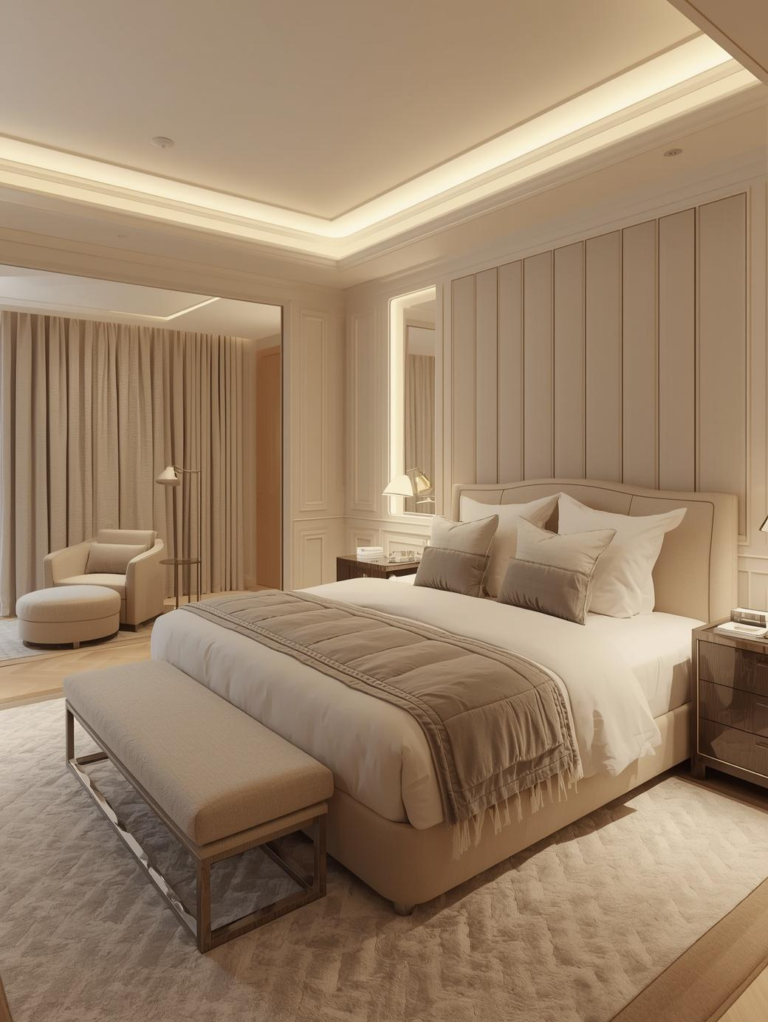
Cove lighting, in which LED strips are concealed within a recessed ledge near the ceiling and aimed upward to wash light across the ceiling plane, is one of the most architectural and refined warm lighting techniques available. Because the light source is entirely hidden, the effect reads as the ceiling itself glowing rather than as a fixture illuminating the room from below. This quality of invisible-source lighting is a consistent feature of high-end hotel and residential interiors because it creates ambient light without visual clutter, leaving the ceiling and walls clean and uninterrupted by any hardware. The result is a room that feels bathed in warmth from every direction simultaneously.
Installing cove lighting typically requires the construction of a simple plaster or plasterboard ledge around the perimeter of the room at ceiling height, within which LED strip lights are fixed and concealed. This is a relatively modest structural undertaking that a skilled plasterer or joiner can complete quickly, and the transformation it delivers to the room is among the most dramatic of any lighting upgrade. Warm amber strips at 2200K to 2700K aimed at a white or off-white ceiling create a sunset-quality glow that makes the entire upper half of the room feel soft and enveloping. Combined with dimmer control, cove lighting turns the ceiling into a variable light canvas that can be shifted from bright and functional to deeply intimate in seconds.
Idea 15
Use Warm Under-Bed Lighting
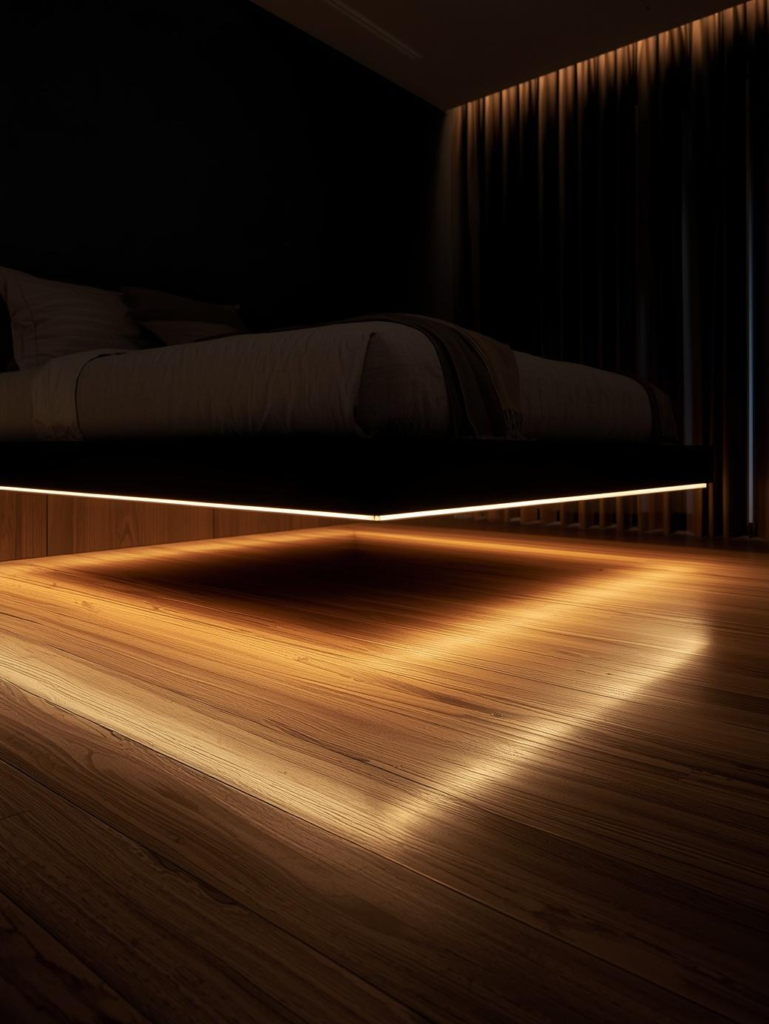
Under-bed lighting produces one of the most visually distinctive effects in bedroom design: the illusion that the bed is floating above a pool of warm light. LED strips fixed to the underside of a bed frame or platform base and aimed downward cast a soft amber glow across the floor that creates a visual boundary around the sleeping area and adds a layer of warmth to the room at the lowest horizontal plane. This ground-level light source balances overhead and mid-height fixtures in the room and contributes to the multi-directional quality of illumination that is the hallmark of professionally designed lighting schemes.
Under-bed lighting also serves a quietly practical function as gentle nighttime illumination that allows safe navigation of the bedroom without switching on brighter sources that might disrupt sleep. At very low intensity, warm amber strips beneath the bed provide just enough light to orientate without jarring the eyes or fully waking the brain. For this reason, smart-enabled versions connected to motion sensors or app-controlled dimmers are particularly well-suited to the bedroom environment. The combination of practical utility and visual drama makes under-bed lighting one of the most rewarding warm lighting ideas available, delivering a result that looks significantly more expensive and considered than the modest cost of installation would suggest.
Idea 16
Pair Warm Light with Mirrors
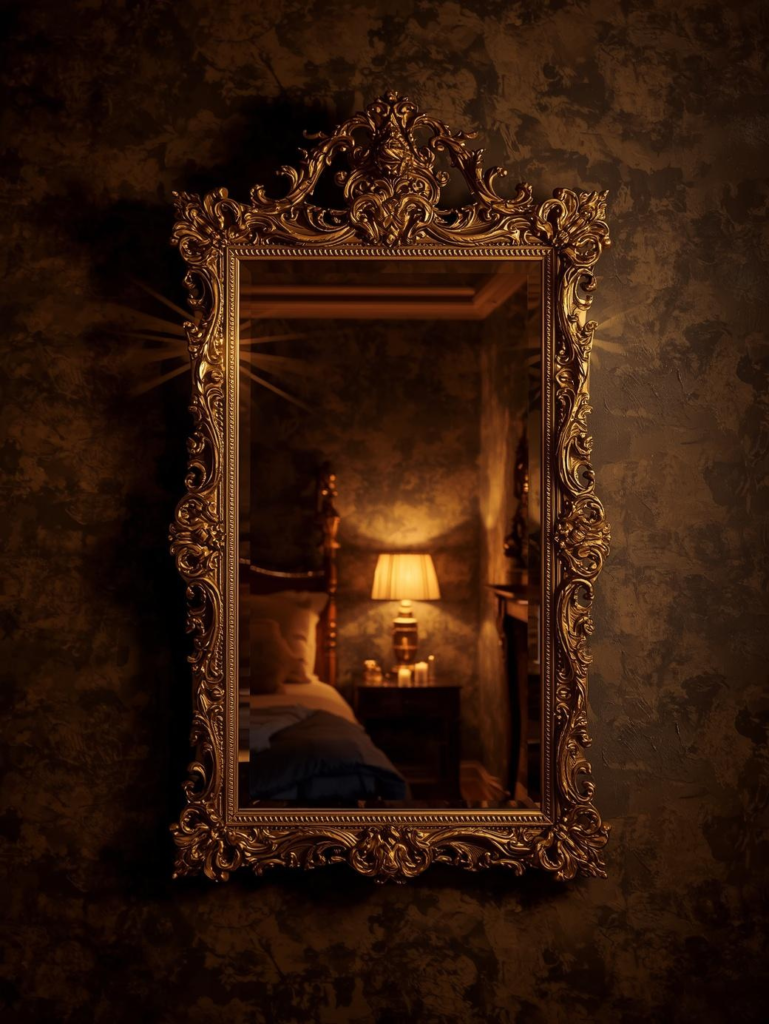
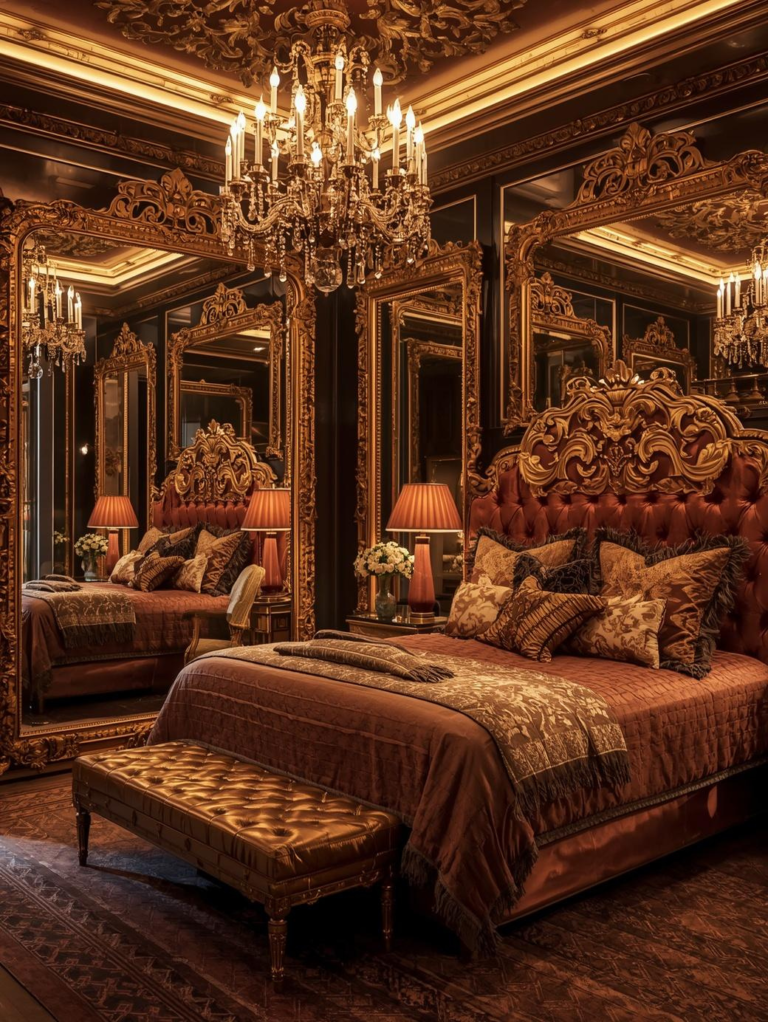
Mirrors and warm light have a uniquely productive relationship in interior design because a mirror does not simply reflect the image of a lamp but multiplies its warmth across the entire room. Positioning a large mirror on the wall directly opposite or adjacent to the primary warm light sources in the bedroom effectively doubles the perceived warmth of those sources, filling corners and surfaces that the original light might not reach. A floor-length mirror beside a warm floor lamp, or a decorative wall mirror positioned to catch the glow of bedside lamps, amplifies the amber quality of the light and adds significant depth to the room simultaneously.
The frame of the mirror contributes to the luxury effect as much as its reflective surface. Warm metal finishes such as antique gold, aged brass, and burnished bronze interact particularly well with amber lighting because they absorb and re-emit warmth rather than reflecting the cool neutrality of silver or chrome. An ornate gilded mirror on a dark bedroom wall, catching the light of candles or a bedside lamp, creates the kind of layered, rich atmosphere that is genuinely difficult to achieve through any other means. Mirrors are one of the few bedroom accessories that work in multiple ways simultaneously, enhancing light, adding depth, increasing perceived space, and contributing a material luxury that serves the warm lighting scheme from every angle.
Idea 17
Choose Warm-Toned Lampshade Materials
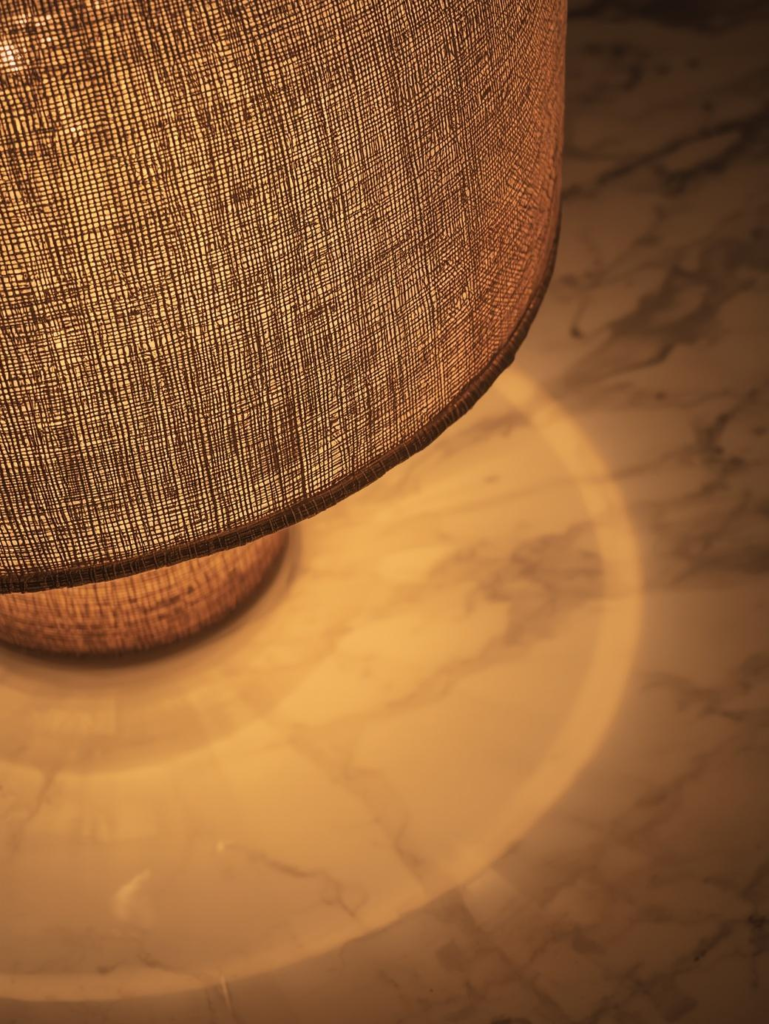
The material of a lampshade functions as a color filter for the light passing through it, and this means the shade has as much influence on the warmth and quality of the light as the bulb itself. Natural linen in ivory, cream, or warm oatmeal tones adds a honey-colored cast to the light that intensifies the warm quality of a 2700K bulb significantly. Silk shades produce an even richer effect because of the way the material catches and refracts light, creating a luminous surface that glows beautifully. Both materials belong to the vocabulary of luxury interiors in a way that plastic and synthetic shades simply do not.
Amber glass, whether used as a shade or as a vase-style lamp body that surrounds the bulb, produces one of the most dramatic warm lighting effects available in a bedside lamp. The glass itself glows amber when lit, creating a source of warm color as well as warm light, and the effect at low wattage is unmistakably luxurious. Rattan and woven lampshades filter light through their woven construction to produce patterned warm light on surrounding surfaces, adding texture to the light itself rather than simply emitting a uniform glow. Choosing lampshade materials thoughtfully, as carefully as any other material in the room, ensures that every light source in the bedroom contributes intentionally to the overall atmosphere of warmth and luxury.
Idea 18
Embrace a Single Dramatic Bedside Light
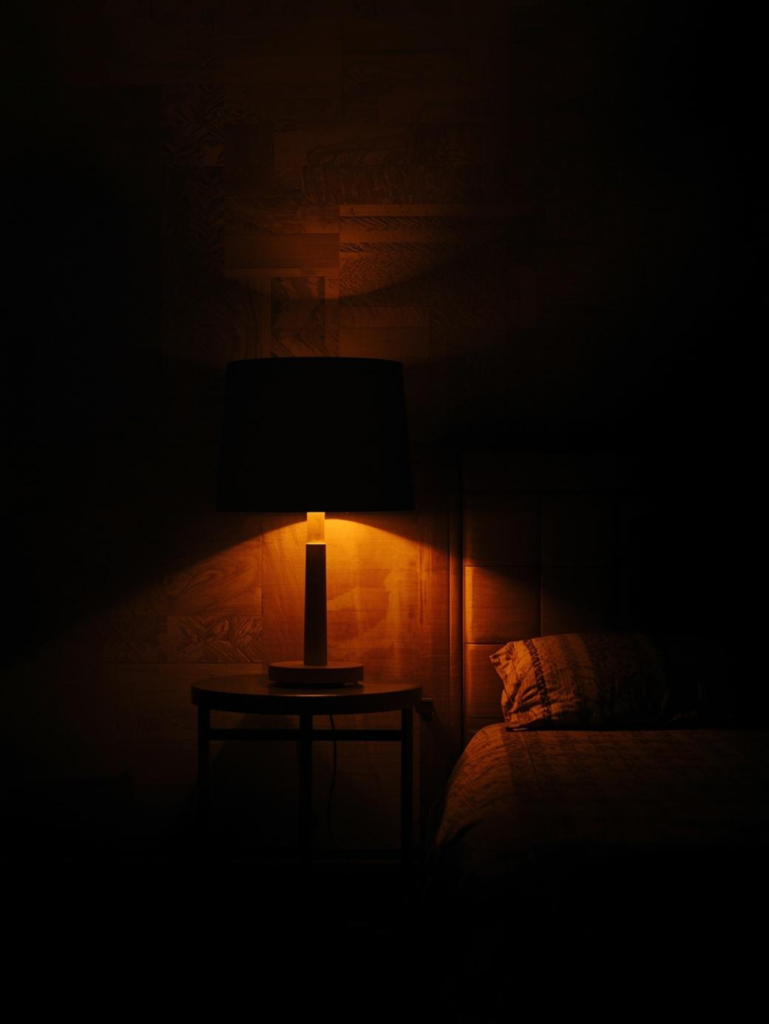
Symmetry is the default language of bedroom design, but a deliberate departure from it, in the form of a single oversized bedside lamp on one side of the bed rather than matching lamps on both sides, creates a dynamic, editorial quality that more symmetrical rooms rarely possess. One large, dramatic warm lamp positioned on a nightstand or on a low stool beside the bed casts an asymmetric pool of amber light across the bedding, pillows, and wall that feels painterly and intentional. This is a technique borrowed from interior photography and editorial styling that translates remarkably well into lived-in bedrooms because the asymmetry draws the eye and creates visual tension that makes the room feel alive.
The lamp chosen for this role needs to earn the prominence its singular position grants it. A large ceramic vase lamp, an oversized plaster table light, or an unusually sculptural base in natural stone or cast metal all work well because their scale and material presence justify the spotlight treatment. The warm amber light they cast in a single direction adds depth and shadow to the room in a way that uniform bilateral lighting cannot, revealing the three-dimensional quality of textured walls, layered bedding, and surrounding furniture. A bedroom lit by one exceptional warm source is often more luxurious in atmosphere than one lit by many ordinary ones, because it demonstrates the confidence to edit ruthlessly and trust that quality of light matters more than quantity of fixtures.
Final Thoughts
Warmth Is a Design Decision
The eighteen ideas in this guide share a common thread: luxury in bedroom lighting is not about spending more money on fixtures but about understanding how light behaves and making deliberate choices about its color, direction, intensity, and source. Warm light at 2700K or below, controlled by dimmers, layered at multiple heights, and emitted through materials that soften and enrich its quality, creates an atmosphere that no amount of expensive furniture can replicate if the lighting itself is cold, flat, or uncontrolled.
The most important shift is to begin thinking of lighting not as a functional necessity that the room requires but as the primary medium through which the room is experienced. Every surface in the bedroom, the texture of linen bedding, the grain of a wooden floor, the depth of a dark wall color, is only visible because of light. When that light is warm, layered, and carefully placed, it reveals those surfaces at their most beautiful. When it is cool and uniform, it flattens them into irrelevance regardless of the quality of the materials themselves.
Begin with the changes that cost least and deliver most: replace bulbs with 2700K alternatives, add dimmers, and rethink the position and shade material of existing lamps. From that foundation, add layers gradually, starting with the ideas on this list that resonate most with your existing room and working outward. The bedroom you are capable of creating with nothing more than thoughtful warm lighting is already present in the space you have. These eighteen ideas are simply the tools to reveal it.