How to Hang Bedroom Curtains the Right Way and Why It Changes Everything
13 curtain hanging rules, tricks, and decisions that professional designers use to make every bedroom window look dramatically better without spending more on the curtains themselves
Curtains are one of the most underestimated elements in bedroom design. Most people choose them last, hang them quickly, and never revisit the decision even when the room continues to feel somehow unfinished or slightly off. The curtains are almost never the problem. The way they have been hung almost always is. The difference between a bedroom that feels pulled-together, spacious, and quietly luxurious and one that feels cramped, dated, or provisional despite perfectly good furniture is frequently nothing more than the height at which the rod has been mounted, the width to which the panels have been extended, and the length at which the fabric meets the floor.
These are not complicated decisions. They do not require a designer, a significant budget, or new curtains in most cases. They require only an understanding of a small set of principles that professional stylists apply consistently across every bedroom they work on, principles that are simple to explain and immediately visible in their effect. The thirteen ideas below address every significant curtain hanging decision from rod placement to fabric weight to layering strategy, giving every bedroom window the treatment it deserves and the room around it the proportions it was always capable of having.
Idea 01Rod Placement
Always Mount the Rod as Close to the Ceiling as Possible
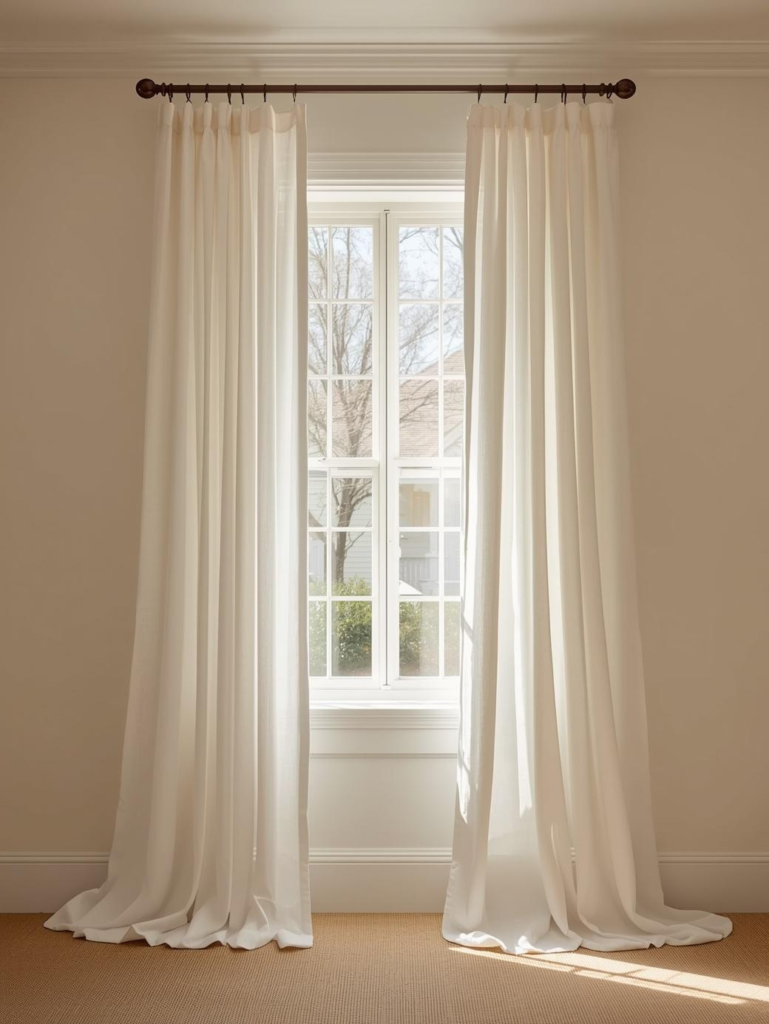
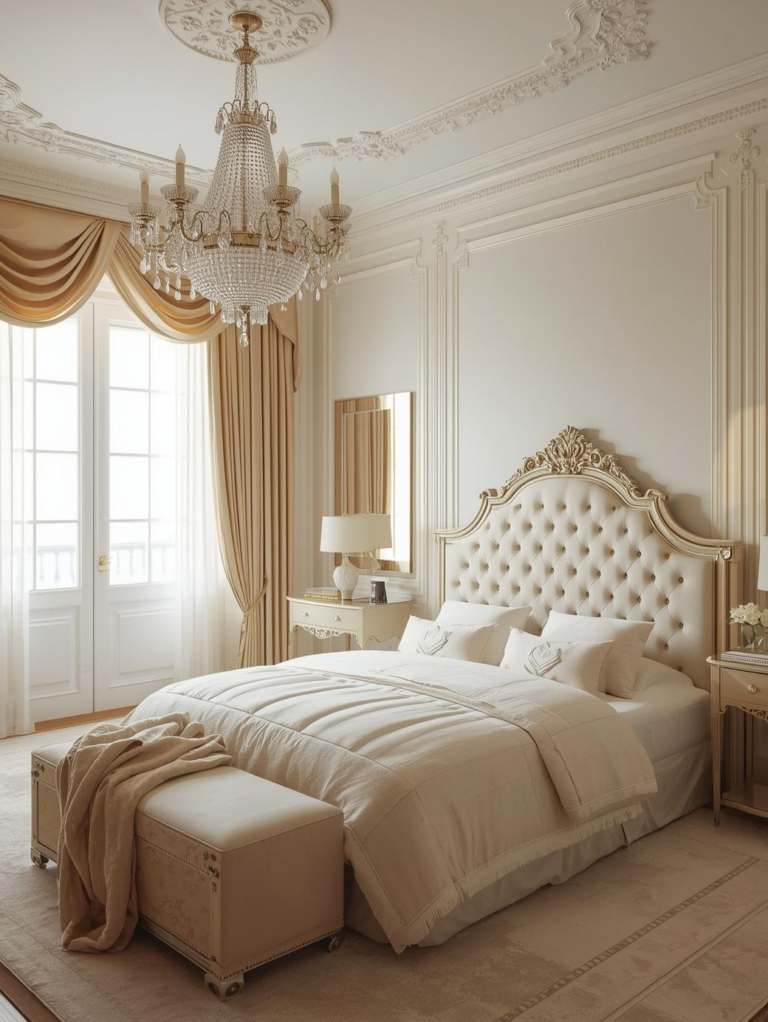
The single most common curtain hanging mistake in bedrooms is mounting the rod directly above the window frame, at the height where the window trim ends. This placement does two things that are both visually damaging: it reveals an expanse of bare wall between the top of the window and the ceiling, and it makes the curtains appear to begin at the window rather than at the room’s full height, which dramatically reduces the perceived ceiling height of the entire space. Moving the rod to within four to six inches of the ceiling corrects both problems simultaneously and at no additional cost.
When the rod is mounted near the ceiling and the curtains hang from that height to the floor, the eye reads the full vertical distance from ceiling to floor as one continuous curtained surface. This tricks the visual perception into registering the ceiling as taller than it actually is and the window as larger than its physical opening. Rooms with eight-foot ceilings, mounted with curtains in this way, consistently read as having nine or ten-foot ceilings in photographs and in person. This one adjustment, requiring only a repositioning of the brackets already in the wall, is the highest-impact curtain change available to any bedroom at any budget level.
Idea 02Rod Width
Extend the Rod Six to Twelve Inches Beyond Each Side of the Window
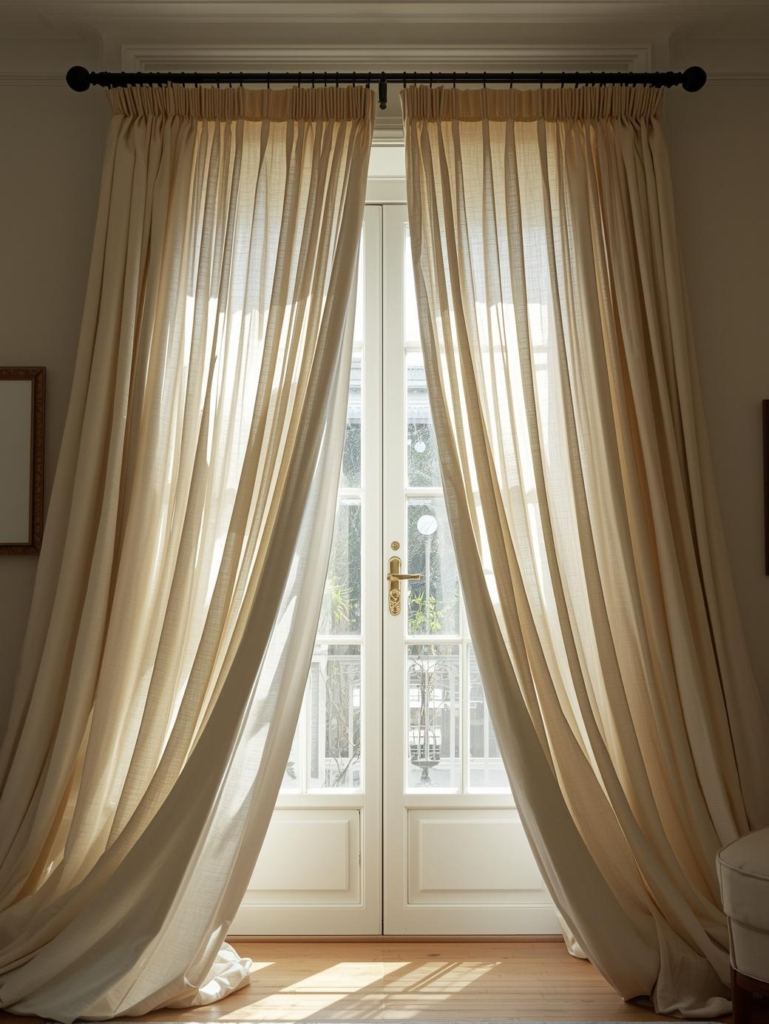
The width to which a curtain rod extends beyond the window frame has an equally significant effect on the room as the height at which it is mounted. A rod that ends at or just past the window frame forces the curtain panels to cover part of the glass even when drawn open, blocking natural light and making the window look narrower than it is. Extending the rod six to twelve inches beyond each side of the window frame allows the curtain panels, when open, to stack entirely clear of the glass, letting in the maximum possible light and revealing the full width of the window opening.
This extension also makes the window appear considerably wider from across the room because the eye follows the rod from bracket to bracket rather than reading the window frame as the boundary of the treatment. A standard thirty-six inch window hung with a rod extended to sixty inches reads visually as a much larger architectural opening, which changes the proportion of the entire wall it sits on. The practical benefit of full light penetration when the curtains are open is as significant as the aesthetic improvement, making this adjustment one of the most functionally and visually rewarding changes in bedroom curtain installation.
Idea 03Curtain Length
Let the Curtains Touch or Slightly Pool on the Floor
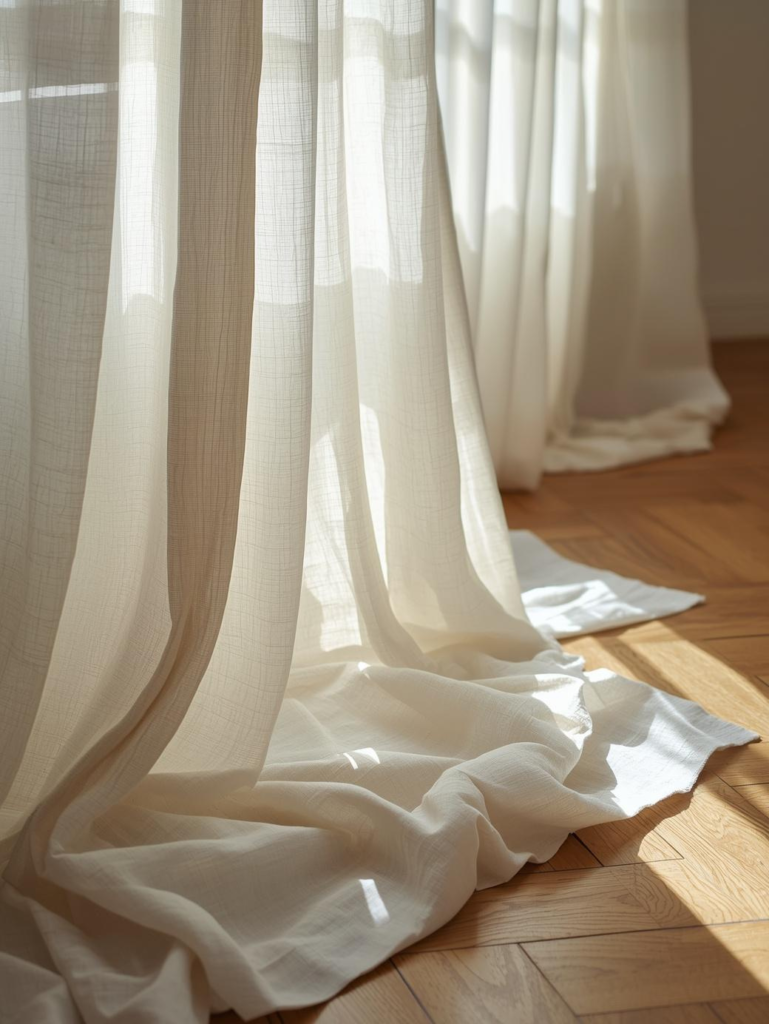
Curtain length is where more styling errors are made than in any other single curtain decision, and the most common of those errors is hanging curtains that hover one to three inches above the floor. This length, while practical in the sense that it avoids the curtain touching the floor, reads as a mistake rather than a decision. It draws the eye to the gap between the fabric hem and the floor in a way that makes the curtains look too short for the rod and the room look unfinished. The correct length for a bedroom curtain in almost every context is one that just grazes the floor or extends slightly beyond it.
A slight puddle or pool of fabric on the floor, where the curtain extends two to four inches past the floor surface and gathers softly, reads as intentionally romantic and luxurious and is a finish seen consistently in high-end bedroom photography and editorial interior design. For a cleaner, more contemporary result, a precise break where the fabric just touches the floor without gathering is equally correct and slightly easier to maintain. Both options read infinitely better than a curtain that stops short of the floor, and the adjustment requires nothing more than a rehemming or a reordering of the correct panel length, which is a worthwhile investment in any room.
Idea 04Fabric Choice
Choose Linen or Linen-Look Fabric for the Most Universally Flattering Drape
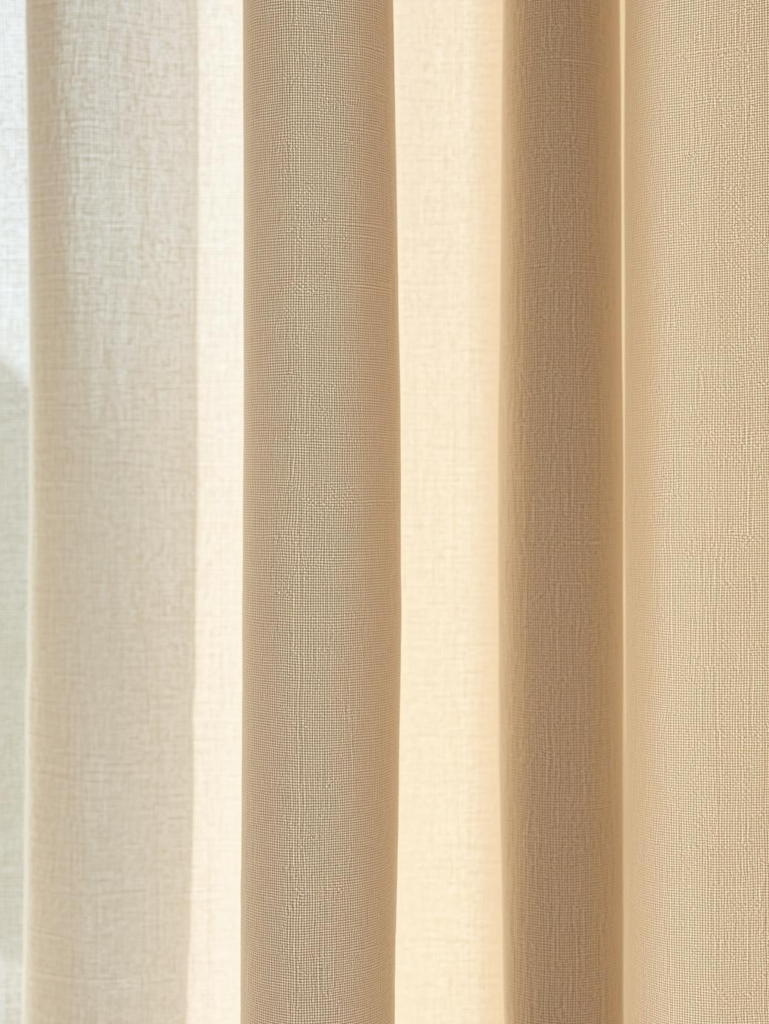
Curtain fabric determines not only the aesthetic of the window treatment but the quality of light it admits when closed, the weight of the drape when open, and the overall atmosphere of the bedroom it inhabits. Among all available curtain fabrics, natural linen and high-quality linen-look polyester blends consistently produce the most flattering results across the widest range of bedroom styles. Linen hangs with a gentle, natural weight that creates soft, irregular folds rather than stiff geometric pleats, and it admits a warm filtered light when closed that gives the bedroom a luminous, honeyed quality during the day.
The natural texture of linen, including its characteristic slubs and slight variation in weave density, gives curtain panels a visual richness that plain cotton or polyester fabrics cannot replicate regardless of their color. This textural quality reads as expensive even in relatively inexpensive linen-look products, which is why linen curtains appear so consistently in high-end bedroom imagery. Warm white, natural, sand, oatmeal, and soft sage are the tones that perform most universally well across different bedroom color palettes, and they photograph with a warmth and softness that makes them among the most-saved bedroom window treatments on any image-based platform.
Idea 05Fullness
Always Buy More Fabric Width Than You Think You Need
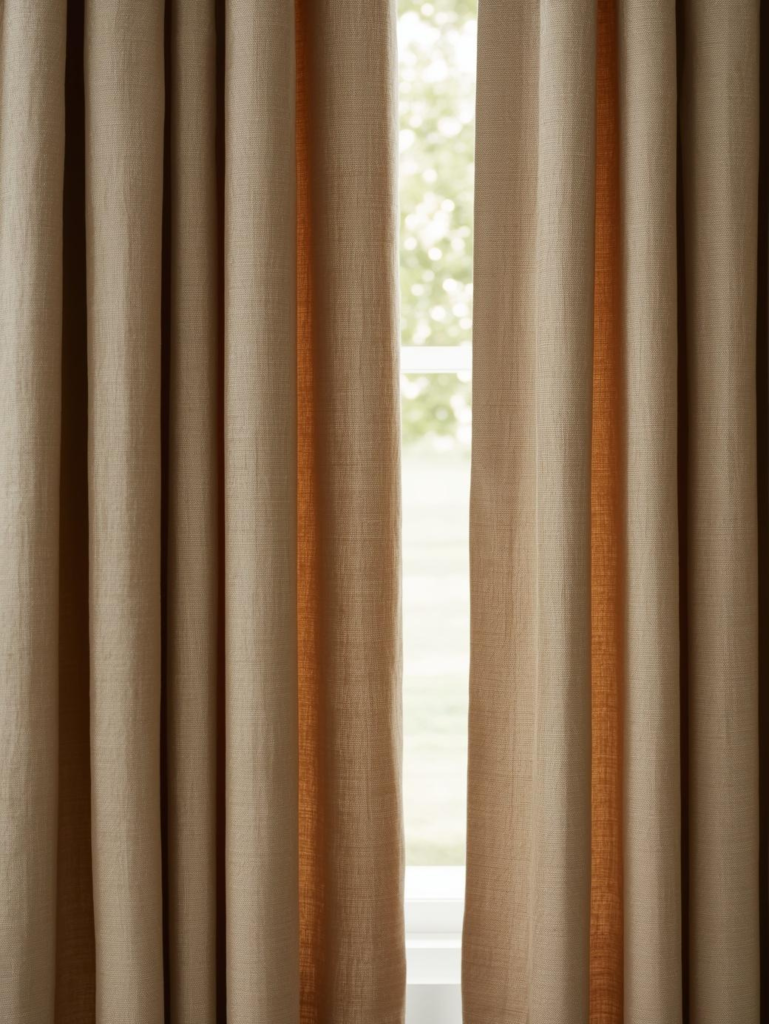
Curtain fullness is the ratio of total fabric width to the width of the window being dressed, and it is one of the most frequently underestimated factors in whether a curtain treatment looks expensive or cheap. Flat curtain panels that barely cover the window when closed have no folds when open and no visual weight when hung, and they consistently read as inadequate regardless of their fabric quality or color. The standard recommendation for a full, rich curtain drape is a total fabric width of two to two and a half times the width of the rod, which means each panel should be significantly wider than half the rod width.
In practical terms this means that a sixty-inch wide window dressed with a rod extended to eighty inches needs curtain panels with a combined width of at least one hundred and sixty inches, which typically means purchasing four panels rather than two and hanging two per side. The visual difference between a two-panel and a four-panel installation on the same window is dramatic and immediate. The four-panel installation has deep, generous folds when open and a rich, layered appearance when closed that reads as a deliberate and considered design choice. The two-panel version, however good the fabric, looks thin and insufficient by comparison.
Idea 06Layering
Layer Sheer Panels Behind Heavier Drapes for Depth and Versatility
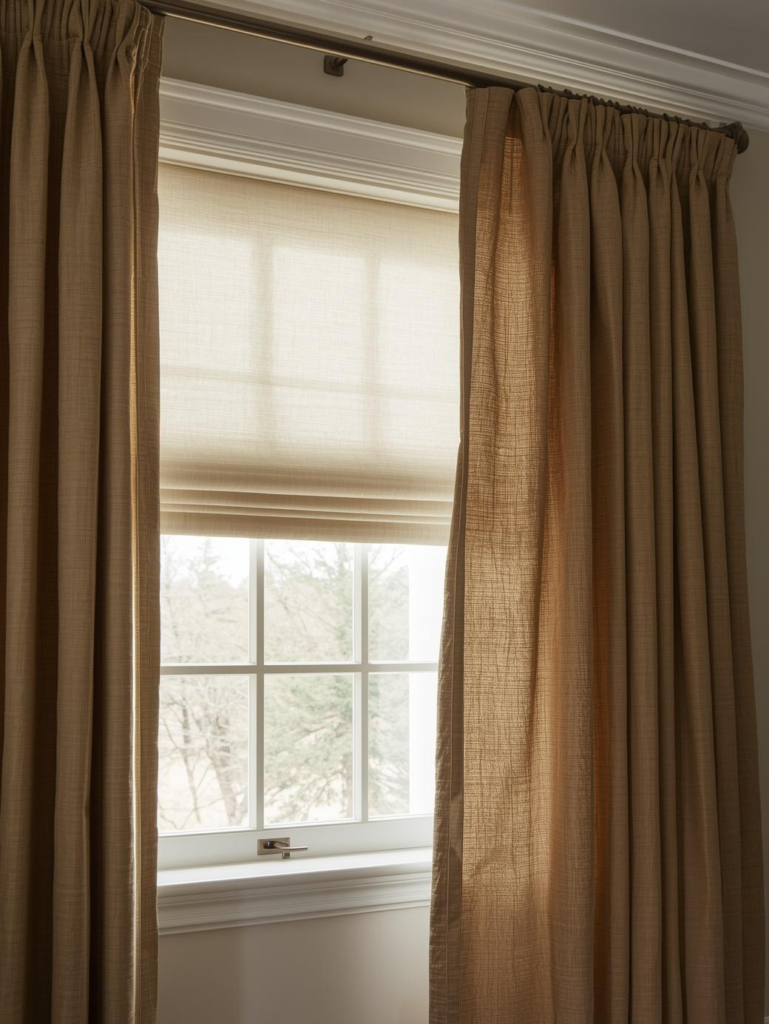
Layered curtains are the window treatment approach most consistently associated with high-end bedroom design, and for good reason. A sheer inner panel paired with a heavier outer drape gives the bedroom window a depth and visual complexity that a single panel cannot achieve, and it provides a level of functional versatility that suits the varied needs of a bedroom throughout the day. The sheer layer diffuses direct sunlight into soft, warm light that fills the room beautifully during the day while providing a degree of privacy. The outer drape adds darkness for sleeping and dramatic visual weight when drawn closed in the evening.
The layered curtain system requires either a double rod that holds both layers on separate tracks, or two separate single rods mounted at slightly different distances from the wall. Double rods are available at most home goods stores for under thirty dollars and the installation is identical to a single rod. Choosing a sheer in warm white or cream and an outer panel in a deeper, more textural fabric such as linen, velvet, or a textured cotton creates a window treatment that shifts the mood of the bedroom dramatically depending on which layer is in use. This versatility makes the layered approach the most functionally and aesthetically sophisticated curtain option available at any budget level.
Idea 07Header Style
Choose Pinch Pleat or Ripple Fold Headers for an Immediately Elevated Look
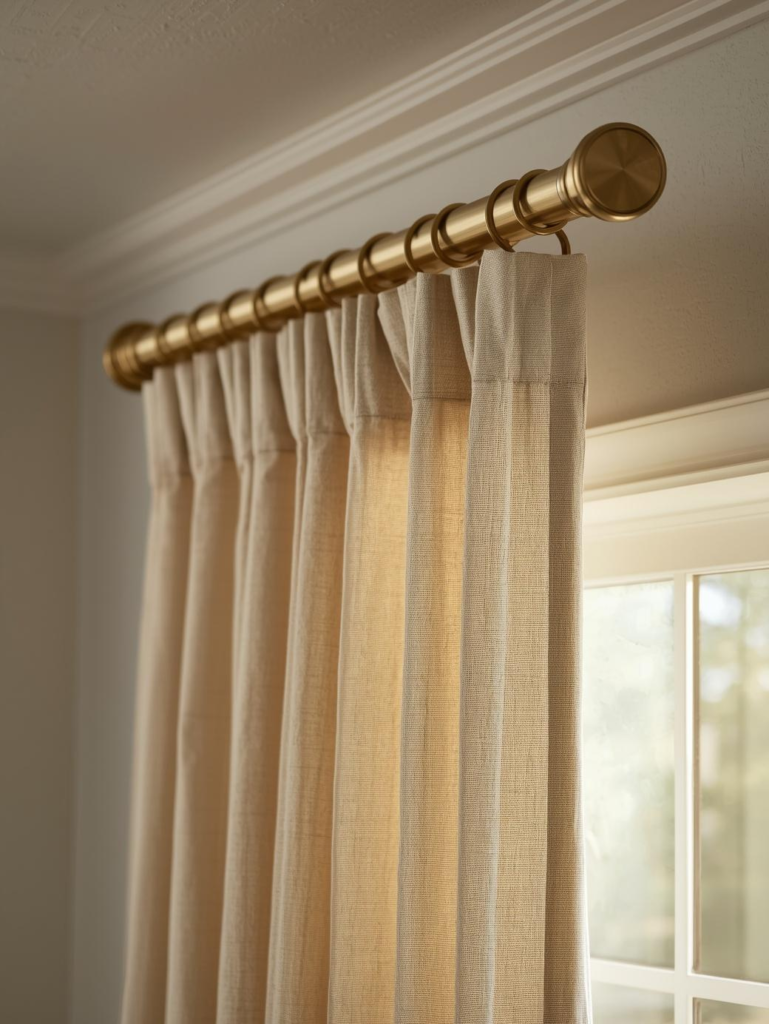
The header style, meaning the way the top of the curtain panel is constructed and attached to the rod or track, has a significant effect on how expensive and intentional the entire window treatment reads. Rod pocket headers, where the rod slides through a sewn channel at the top of the panel, are the most common and the least flattering, creating a gathered, bunched top that is difficult to open and close smoothly and that reads as budget regardless of the fabric used. Pinch pleat headers, where evenly spaced groups of fabric are pleated and sewn to hang in consistent folds, immediately read as considered and tailored.
Ripple fold headers, where the fabric hangs in uniform, evenly spaced waves from a specialized track system, are the contemporary alternative to pinch pleat and are the header style seen most consistently in high-end editorial bedroom photography. They require a compatible curtain track rather than a standard rod, but the tracks themselves are available at accessible price points and the result is a curtain that opens and closes in a smooth, consistent wave that never loses its form regardless of how many times it is handled. Both pinch pleat and ripple fold headers make the same fabric look considerably more expensive than the same fabric would look in a rod pocket or grommet header, which makes the header decision one of the most leverage-rich choices in curtain selection.
Idea 08Hardware
Invest in Quality Rods and Finials That Match the Room’s Metal Palette
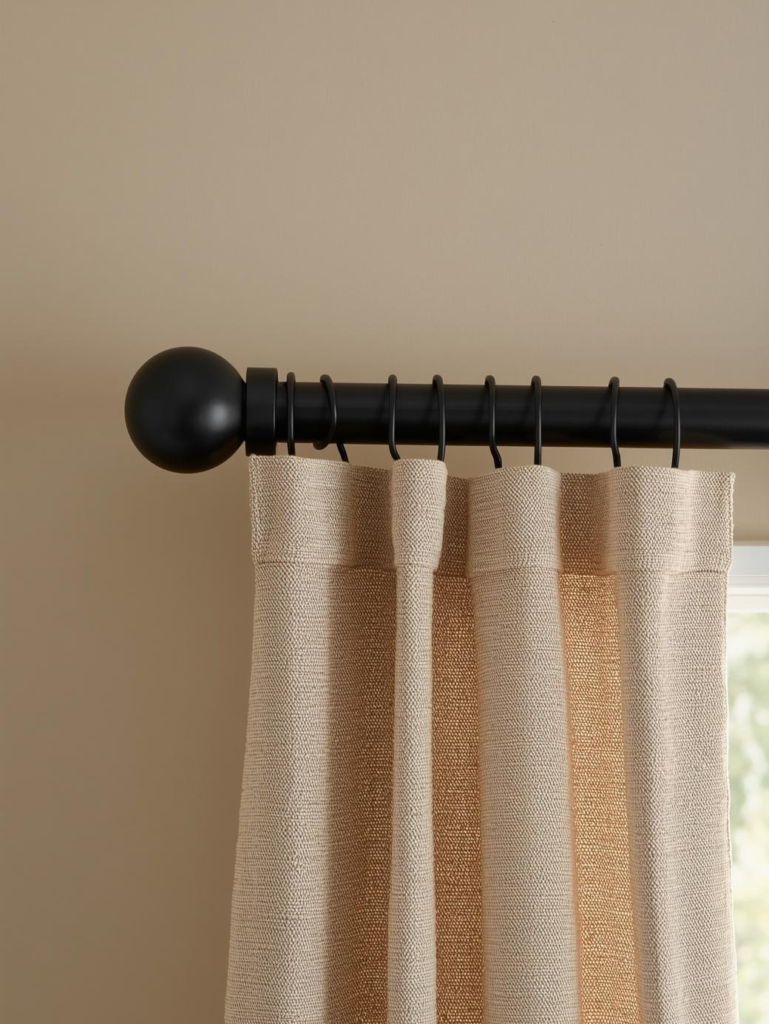
Curtain rods and their finials are the hardware of the window treatment and they deserve the same level of consideration that any other visible hardware in a bedroom receives. A beautiful set of linen panels hung from a flimsy, visibly bending rod with cheap plastic finials will always read as less than it should because the hardware undermines the quality signal that the fabric is trying to send. Investing in a solid metal rod in a finish that matches the other metal elements in the bedroom, the light fixtures, the drawer pulls, the lamp bases, creates a coherent material story at the window that reinforces the quality of the overall design.
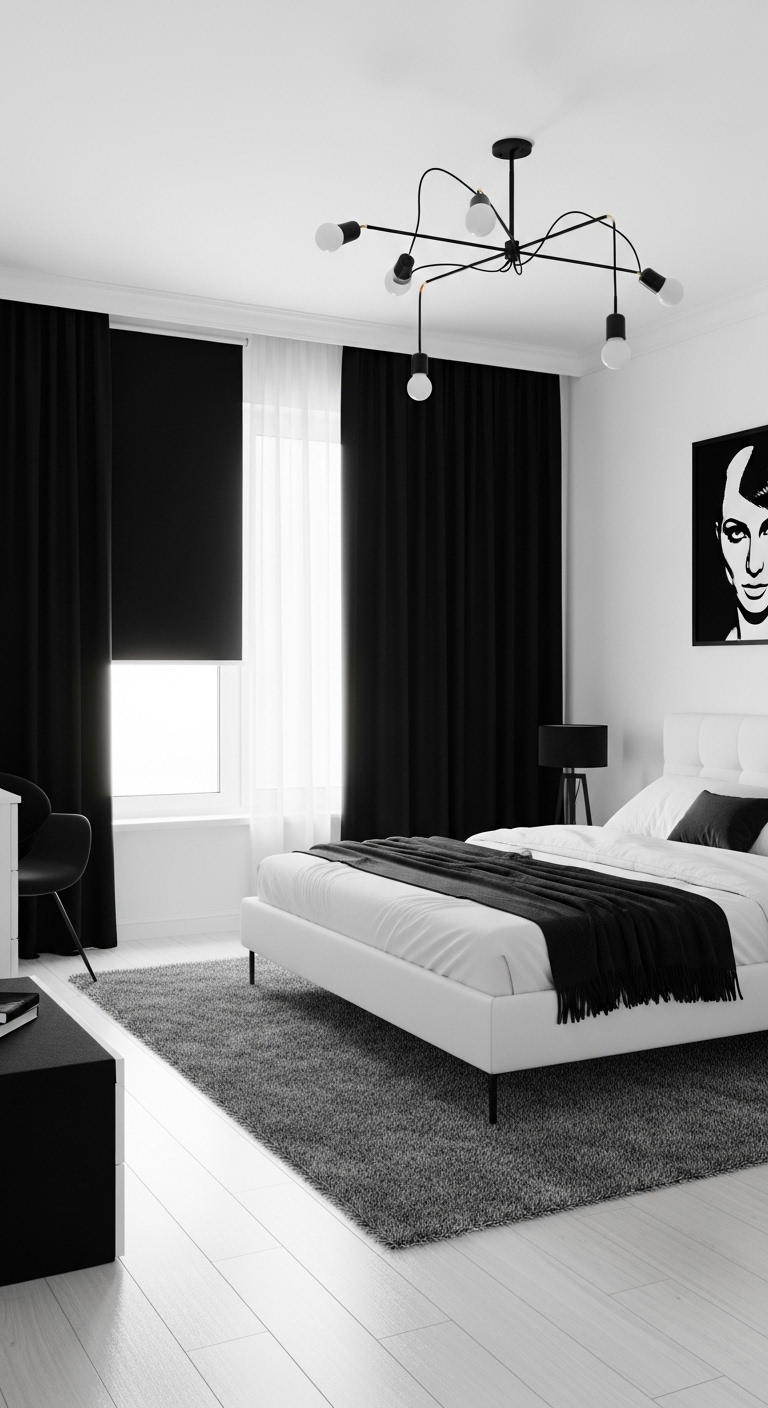
Matte black rods suit contemporary, minimal, and dark feminine bedroom aesthetics. Brushed brass and warm gold suit maximalist, boho, and warm-toned interiors. Brushed nickel and chrome suit Scandinavian and cooler-palette bedrooms. Simple cylindrical finials with a clean end cap are the most universally flattering choice because they draw attention to the curtain fabric rather than to themselves. Decorative or ornate finials tend to read as dated in most contemporary contexts. The rod itself should be thick enough in diameter to hold the weight of the curtain without bowing at the center, which typically means a minimum of one inch in diameter for panels spanning more than sixty inches.
Idea 09Blackout
Add Blackout Lining Without Sacrificing the Fabric You Love
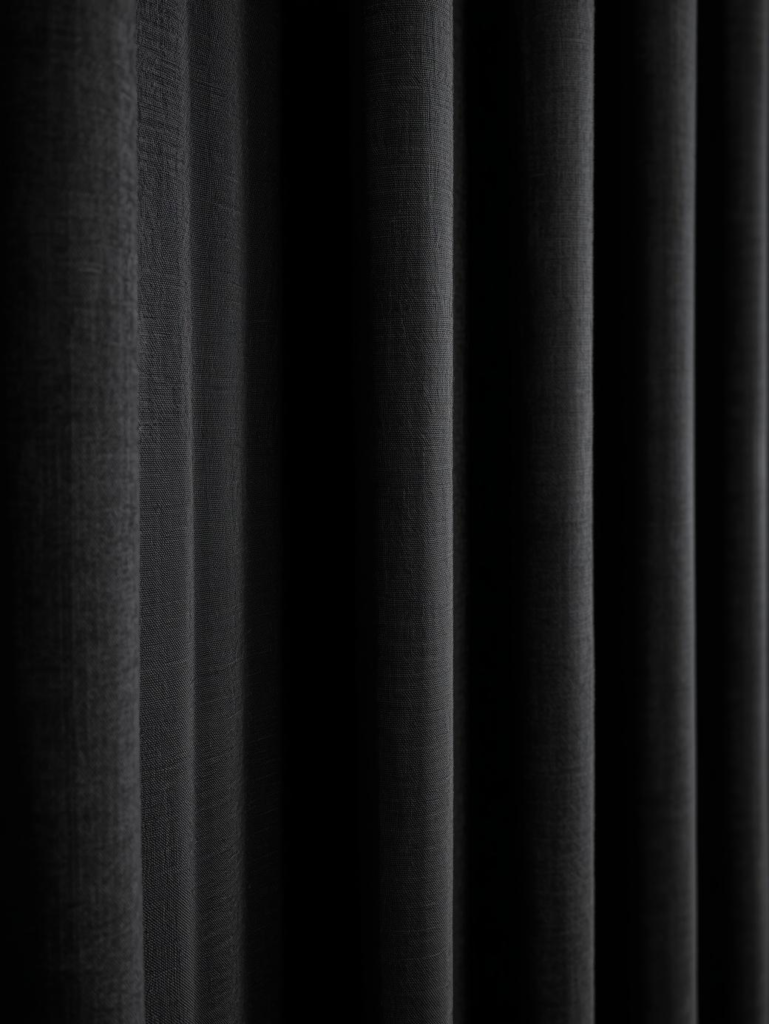
Blackout functionality in a bedroom curtain is not a compromise of aesthetics but a genuine quality of life improvement that directly affects sleep quality, and it does not require choosing between blackout fabric and the curtain material you actually want. Blackout lining can be added to almost any curtain panel as a separate layer stitched or clipped to the back of the panel, preserving the face fabric of your choice while adding complete light blocking capability behind it. This approach is particularly valuable for linen curtains, which are too sheer to block light on their own but are the most beautiful curtain fabric available for the front-facing aesthetic.
Clip-on blackout liners that attach to existing curtain panels via small rings or clips are available at most curtain retailers and require no sewing. They add weight to the panel as well as light blocking capability, which has the additional benefit of improving the drape of lighter fabrics and making them hang in more deliberate, consistent folds. For new curtains, ordering panels with an integrated blackout lining from the manufacturer produces the most seamless result, as the lining is sized precisely to the panel and the two layers hang as a single unified piece. The bedroom environment created by truly effective blackout curtains, dark regardless of the time of day, is one of the most significant and most immediately appreciated improvements available to any bedroom.
Idea 10Color Strategy
Match Curtains to the Wall Color for a Seamless Enveloping Effect
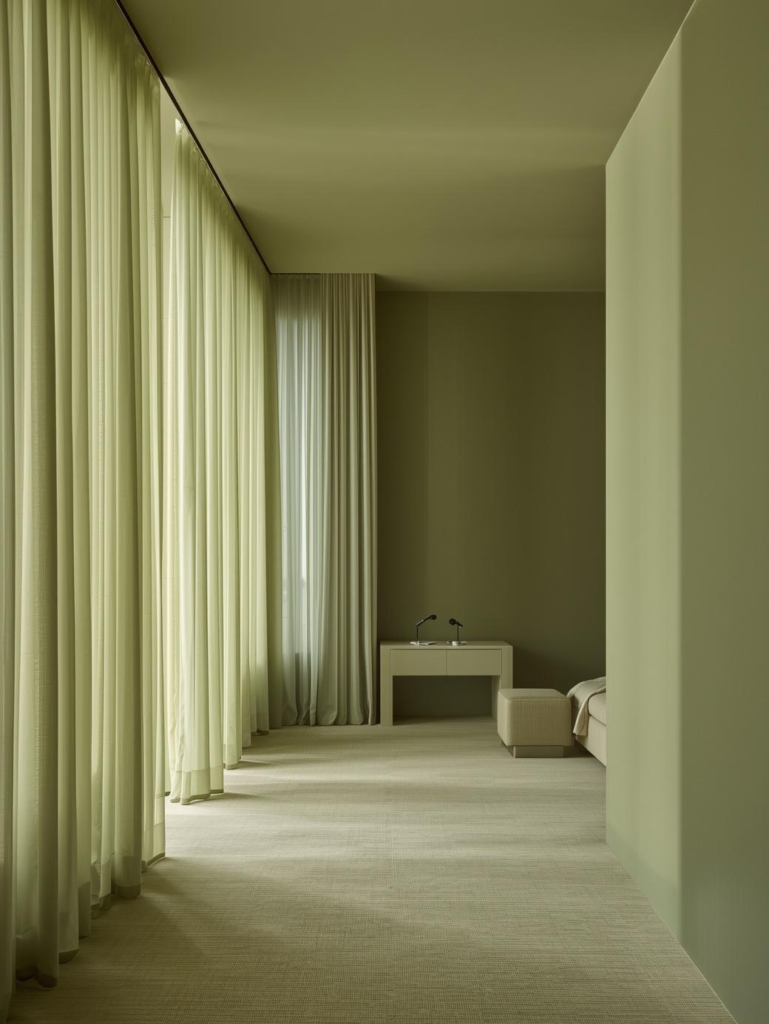
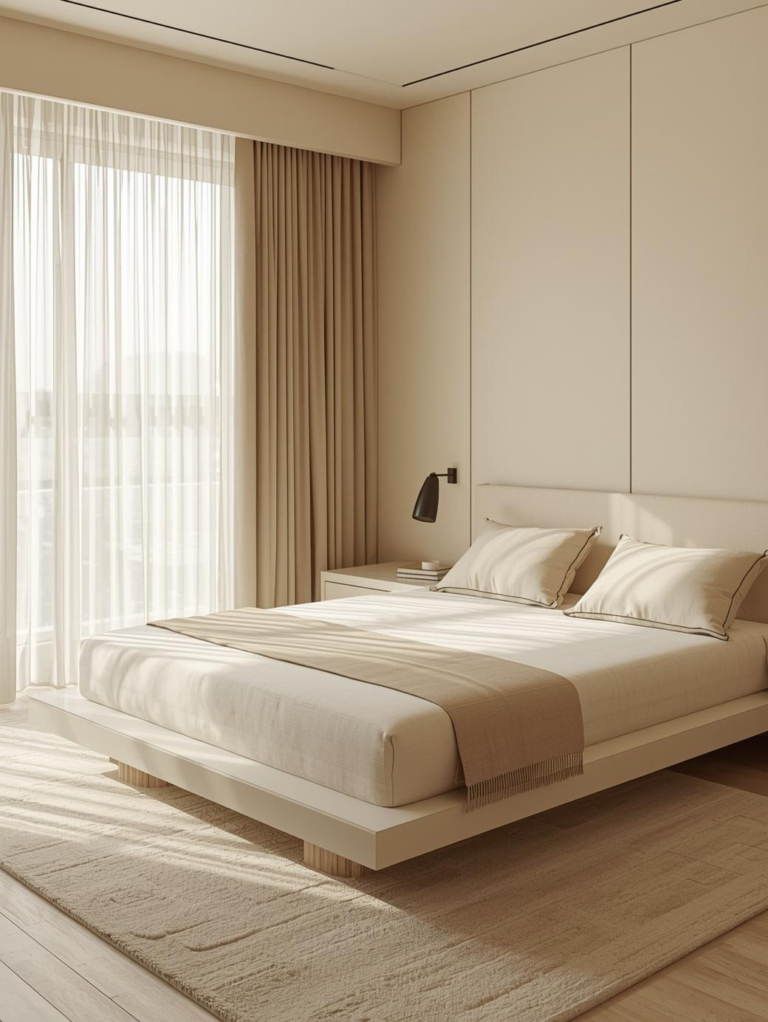
Matching curtain color to wall color is one of the most sophisticated and least commonly applied curtain strategies available in bedroom design. When curtains and walls share the same tone, or sit within one shade of each other, the curtains cease to read as a separate element and instead become an extension of the wall surface, creating a seamless, enveloping room that feels architecturally deliberate and considerably more expensive than a room where the curtains contrast with the walls. This color-drenching approach is particularly effective in smaller bedrooms where contrast between curtains and walls would divide the room visually and make the space feel more cramped.
The tonal match does not need to be exact to be effective. A wall in warm sage green paired with curtains in a slightly deeper or slightly lighter sage reads as an intentional tonal relationship rather than a mismatch. The same principle applies across any color palette, from warm whites and creams through to deeper, moodier tones. The key is to keep both the wall and the curtain within the same color family so that the eye reads them as one continuous surface rather than two competing elements. This approach photographs with a calm, sophisticated beauty that consistently performs well in bedroom content across every platform where interior design imagery is shared.
Idea 11Renter Tip
Use Tension Rods or Adhesive Brackets for a No-Drill Curtain Installation
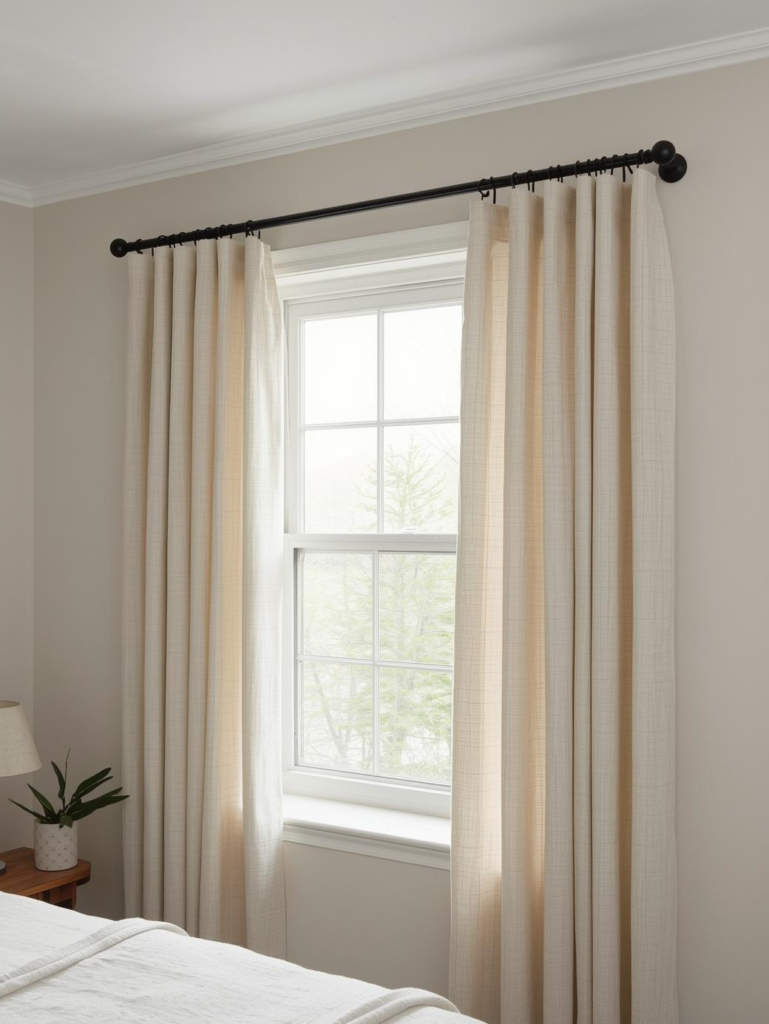
The assumption that proper curtain installation requires drilling into walls is one of the most limiting beliefs for renters who want their bedrooms to look genuinely designed rather than provisionally furnished. Adhesive curtain rod brackets, available at most home goods stores for under twenty dollars, hold a standard curtain rod securely to most painted wall surfaces without any drilling and remove cleanly without wall damage when the time comes to leave. They are weight-rated for standard curtain panels and when installed according to the manufacturer’s instructions they are as reliable in day-to-day use as traditionally drilled brackets.
Tension rods, which fit inside the window recess and hold themselves in place through spring tension against the frame sides, are the simplest no-drill option and are particularly effective for lightweight sheer panels hung inside the recess as an inner layer beneath heavier adhesive-bracket-mounted drapes. The combination of a tension rod for sheers and adhesive brackets for the outer drapes creates a complete layered window treatment with no permanent wall alteration. For renters who want ceiling-height curtain installation, adhesive brackets placed high on the wall near the ceiling line, tested with the curtain weight before full installation, are the most effective and most design-forward solution available without a drill.
Idea 12Styling
Steam or Hand-Press Curtains After Hanging to Remove All Packaging Creases
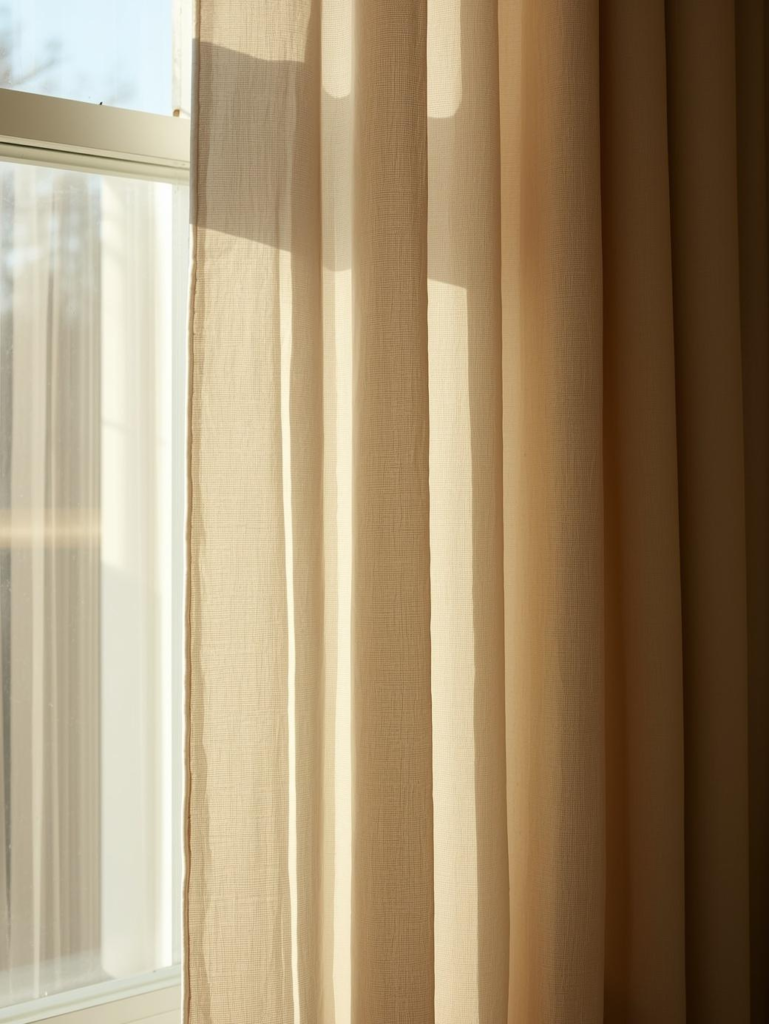
New curtains arrive folded into their packaging and the creases from that folding, sharp horizontal lines running across the fabric at regular intervals, are among the most visible signals that a curtain has been recently purchased and carelessly installed. These creases read as cheap even on expensive fabric and they undermine every other hanging decision that has been made correctly. Steaming curtains in place after hanging them, using a handheld fabric steamer passed slowly down each panel while the curtain hangs from the rod, removes these creases completely and allows the fabric to fall into its natural drape without any artificial interruption.
A handheld fabric steamer is one of the most consistently useful tools in bedroom styling and home maintenance, available for under thirty dollars at most discount retailers, and its effect on freshly hung curtains is immediate and dramatic. After steaming, linen panels in particular shift from looking stiff and commercially packaged to looking relaxed, natural, and expensive in a way that is difficult to achieve by any other means. The steaming process also helps train the fabric into regular folds if the panels are gathered and held in position with a loose tie or clip while still slightly damp from the steam, which sets the fold pattern and maintains it even after the curtains have been opened and closed multiple times.
Idea 13Final Detail
Tie Back One Panel Asymmetrically for a Relaxed, Editorial Finish
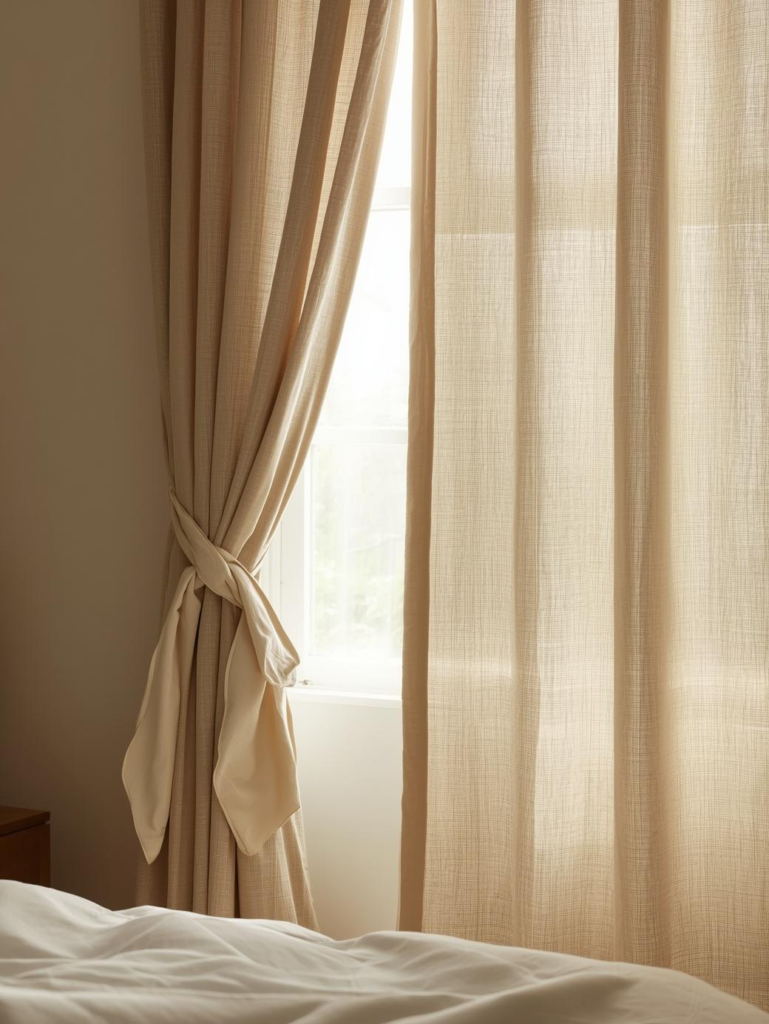
The way curtains are arranged when open is as important to the overall aesthetic of a bedroom as the way they hang when closed, and this is a detail that is almost never addressed in standard curtain installation guidance. Curtains left to hang in two equal panels on either side of the window, evenly stacked and symmetrical, read as correct but unremarkable. Tying one panel back with a simple fabric sash, a leather loop, or even a loose knot in the panel itself at a height approximately two thirds of the way down the panel creates an asymmetric arrangement that reads as relaxed, editorial, and effortlessly stylish in a way that symmetrical installations rarely achieve.
The tieback should be simple in material and execution. A strip of the same linen fabric as the curtain knotted loosely around the panel, a leather cord looped through a wall hook, or a contrasting rope tieback in natural jute are all appropriate. The asymmetric arrangement has an additional practical benefit in that it maximizes light admission on one side of the window while maintaining fabric coverage on the other, which suits bedrooms where one side of the window receives more or less desirable light than the other. It is the finishing styling decision that, in combination with all the technical hanging decisions described elsewhere in this article, gives a bedroom window the editorial quality that makes it worth photographing and worth living with.
Conclusion
Every bedroom has at least one window and every window is an opportunity to make the room feel taller, wider, more luxurious, more intimate, or more flooded with the quality of light that makes a space genuinely beautiful to inhabit. The thirteen decisions described in this article are not about buying better curtains, though better curtains are never a bad idea. They are about making every curtain, regardless of its price point or its fabric quality, perform as well as it possibly can by placing it correctly, sizing it generously, layering it thoughtfully, and finishing it with the attention to detail that separates a designed room from a furnished one.
Begin with rod height and rod width, since these two adjustments produce the most immediate and dramatic visible change and cost nothing beyond the time to remount the brackets. Then move through the remaining decisions in whatever order suits the current state of the bedroom, addressing fabric weight, panel fullness, lining, header style, and the final styling details of tieback and steaming. Each decision builds on the last and the cumulative effect, a bedroom window dressed with genuine intention across every dimension of the treatment, is one of the most significant and most lasting improvements available to any bedroom without replacing a single piece of furniture.