Whimsical Room Ideas for Renters: No Permanent Changes, Maximum Character
12 imaginative, deposit-safe ideas that transform any rental room into a space full of personality, charm, and creative intention
Renting a home comes with a particular kind of creative tension. The space is yours to live in but not entirely yours to alter, and the result, for many people, is a room that feels provisional rather than personal. Blank white walls, standard landlord fixtures, and interchangeable beige carpets become the backdrop for a life that deserves something far more interesting. The assumption that rental spaces must remain neutral until you eventually own a home of your own is one of the most limiting beliefs in modern interior culture, and it is completely worth challenging.
Whimsical design does not require a single nail in the wall, a drop of paint on a surface, or any alteration that a landlord would notice at a checkout inspection. It requires instead a commitment to thinking creatively about the elements that are entirely within your control: textiles, lighting, furniture arrangement, plants, art, and the dozens of objects that make a room feel inhabited by a specific and interesting person. The twelve ideas below offer practical, reversible, and visually striking approaches to building a room that feels full of character, warmth, and genuine enchantment, regardless of what the lease agreement says.
Idea 01
Create a Fairy Light Canopy Ceiling Without Any Drilling
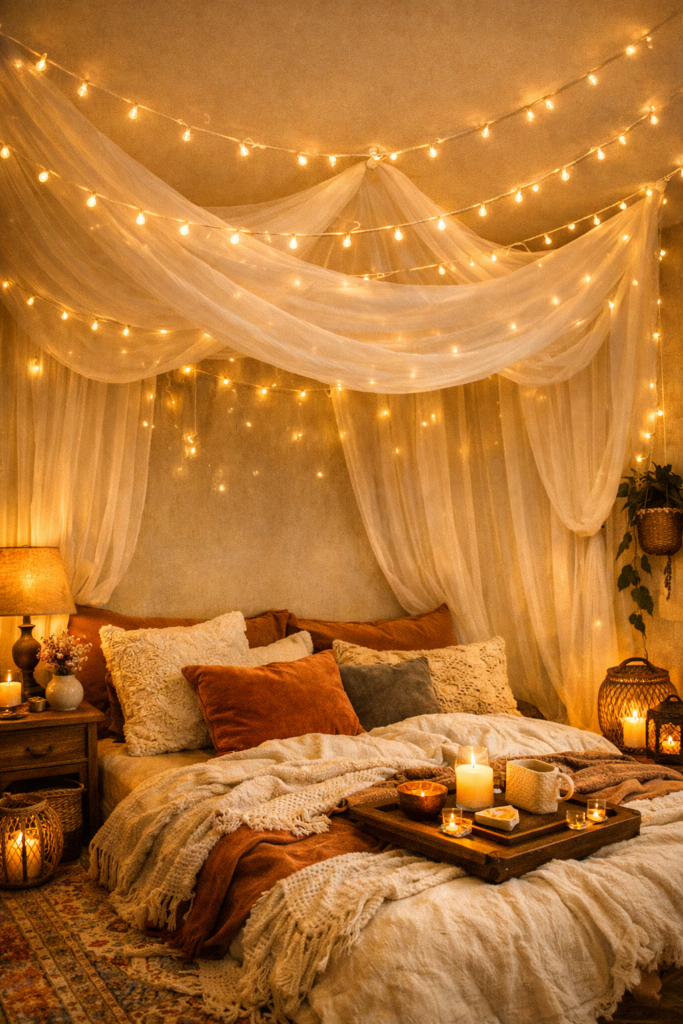
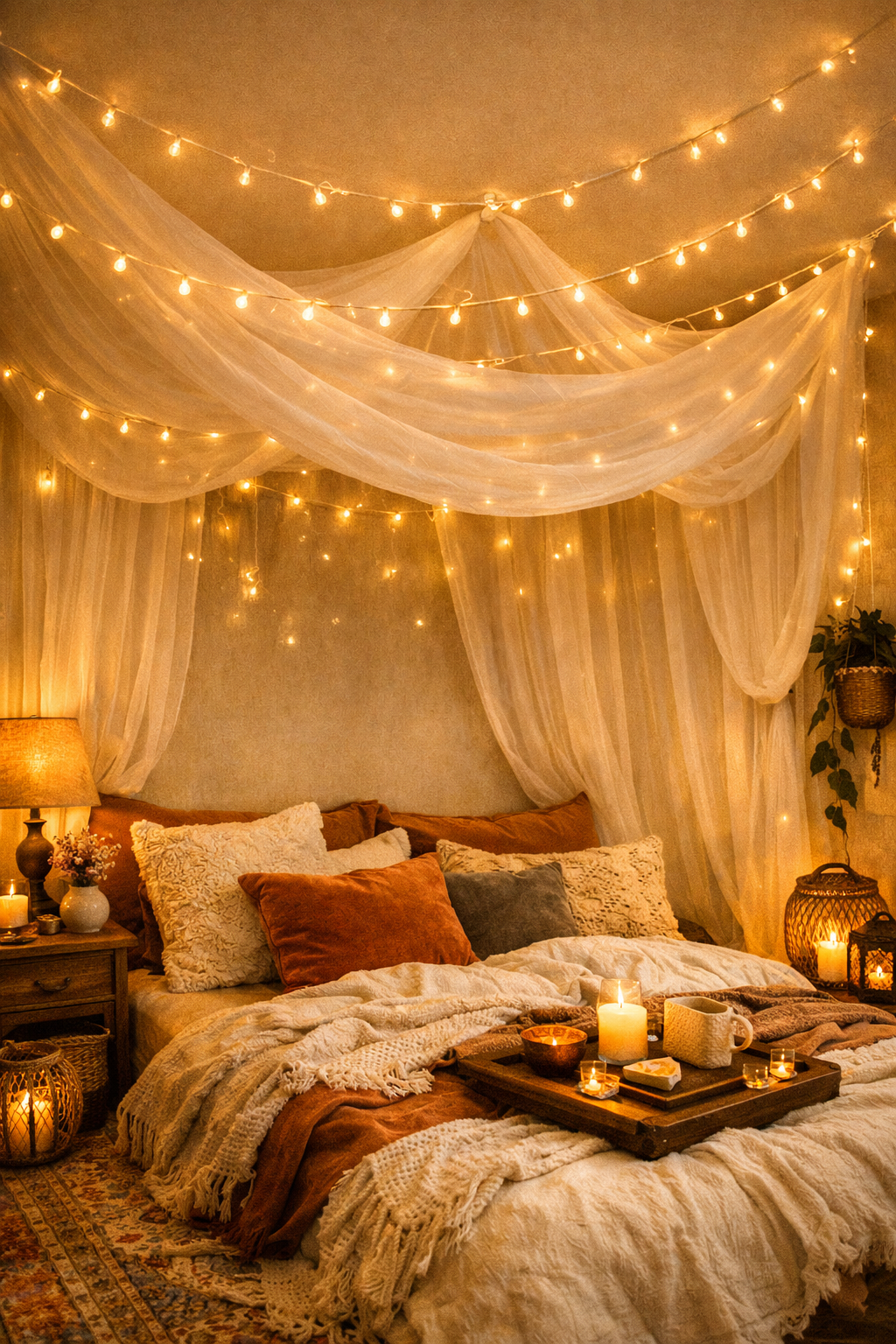
Fairy lights have a reputation for being a student-dormitory solution, but when used with intention and the right hardware they are one of the most transformative tools available to a renter. The ceiling is the largest untreated surface in most rooms and draping warm fairy lights across it using removable adhesive hooks creates an effect somewhere between a Parisian apartment and a secret garden. The light they produce is soft, warm, and diffused in a way that no ceiling fixture can replicate, fundamentally changing the mood of the room after dark.
The key is in the execution. Rather than running lights along a perimeter or pinning them in a flat grid, try gathering them loosely from a central point so they fall in overlapping waves across the ceiling like a softly glowing net. Pairing the lights with sheer fabric panels draped between the hooks adds a canopy quality that makes the sleeping area feel like a separate, enchanted room within the room. Warm white bulbs in the 2200K range produce the most magical effect; cool white lights read as functional rather than atmospheric and should be avoided entirely for this purpose.
Idea 02
Build a Gallery Wall Using Removable Strips and Washi Tape
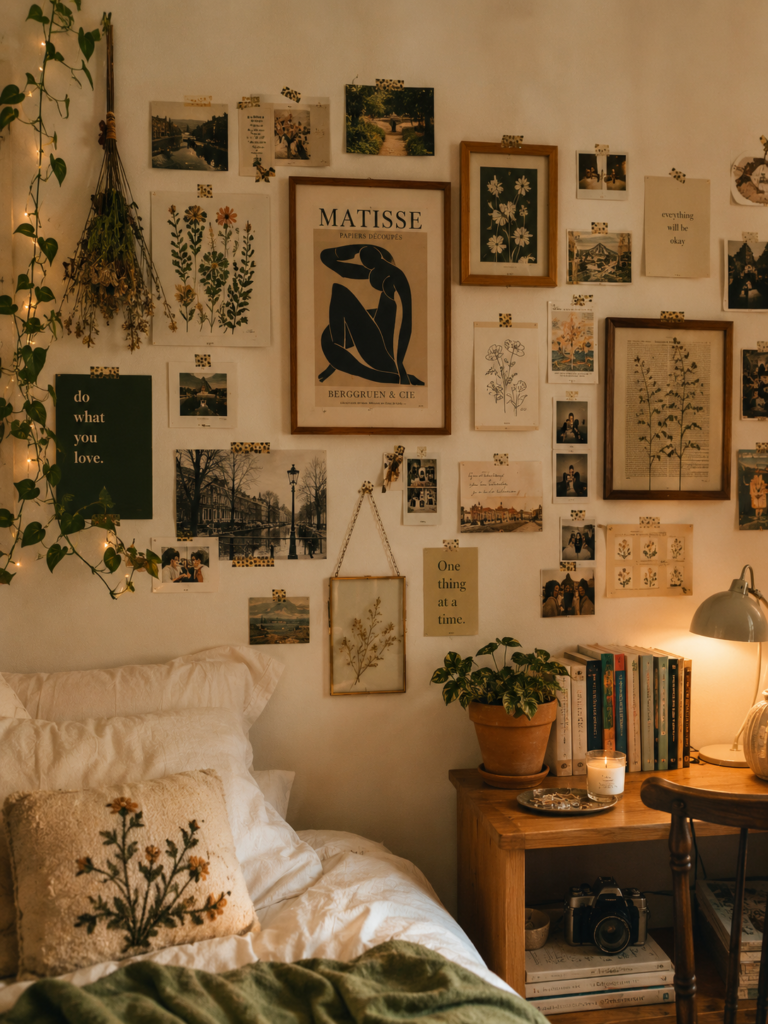
A gallery wall is one of the most powerful ways to inject personality into a blank rental wall, and the assumption that it requires nails and wall anchors is entirely outdated. Removable adhesive picture strips, available in weight ratings from light to heavy, will hold framed art securely to most wall surfaces and remove cleanly without damage when the time comes to move. The creative freedom this offers is considerable: you can build a large, complex arrangement and rearrange it multiple times without any lasting consequence to the wall surface.
For a whimsical renter aesthetic, the gallery wall should feel collected rather than curated, more like a reflection of a real person’s interests than a purchased set. Mix framed botanical prints with polaroid photographs, vintage postcards displayed in small clip frames, pressed flower specimens, pages from illustrated books, and handwritten quotes in small frames. Washi tape can be used to create borders around unframed pieces or to draw simple geometric frames directly on the wall, a technique that photographs beautifully and removes without residue from most painted surfaces when the tape is removed carefully.
Idea 03
Use Peel-and-Stick Wallpaper on a Single Accent Wall
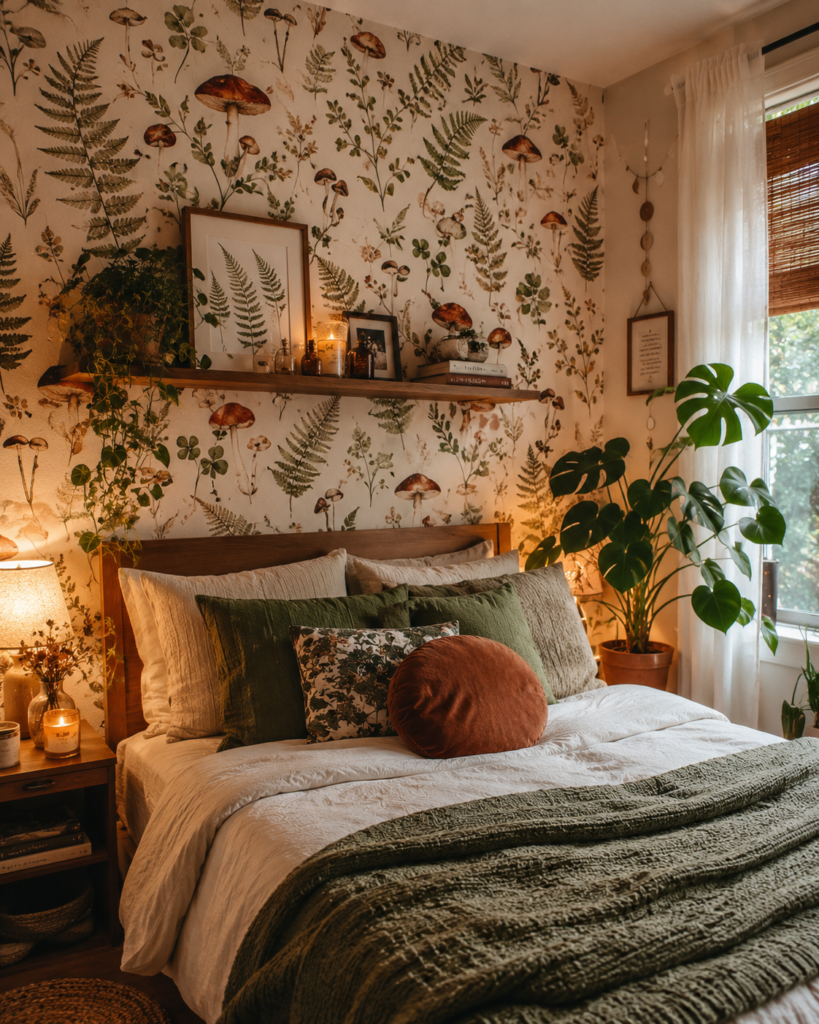
Peel-and-stick wallpaper has improved dramatically in both print quality and adhesion technology, making it a genuinely viable option for renters who want dramatic wall transformation without permanent commitment. Applied to a single accent wall, typically the one behind the bed or the largest visible wall when entering the room, it creates an immediate and striking design statement that changes the entire character of the space. The installation requires patience and careful alignment but no specialist tools, and removal, when done slowly and at the right angle, leaves walls completely undamaged.
For a whimsical room aesthetic, patterns featuring illustrated botanicals, abstract watercolour shapes, celestial motifs, vintage toile scenes, or maximalist floral repeats all perform beautifully. The single accent wall approach means the pattern does not need to be subtle; in fact the more distinctive and detailed the design the more impact it delivers, since the rest of the room can be kept calmer around it. Many brands now offer sample sizes that can be tested on a small patch of wall before committing to a full roll, which is always worth doing in a rental context before purchase.
Idea 04
Hang a Large Tapestry to Cover Blank or Damaged Walls
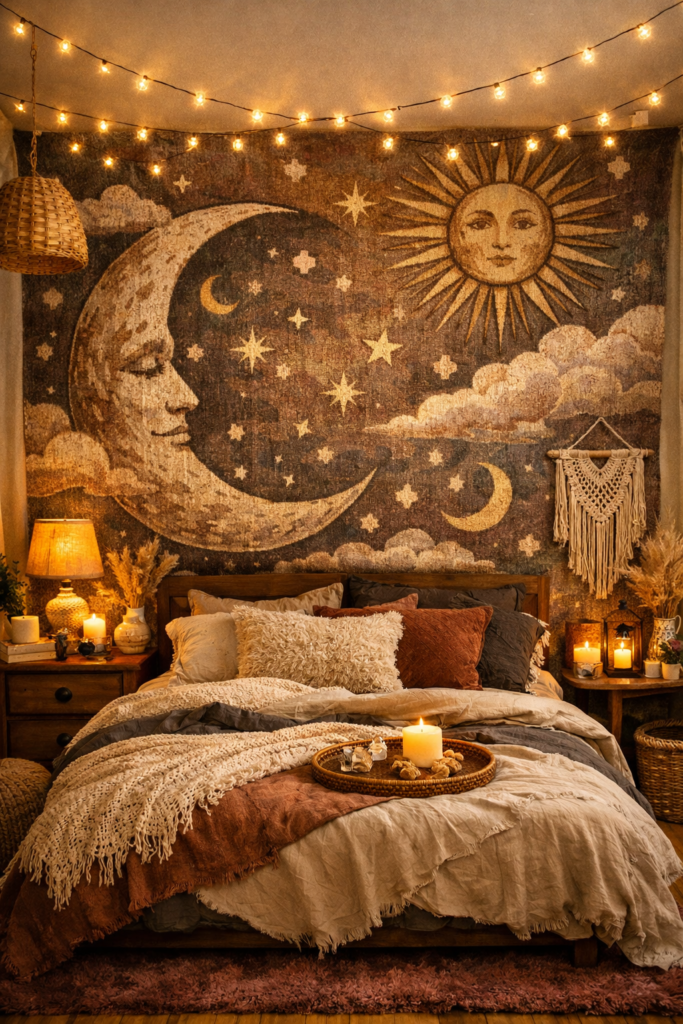
A large wall tapestry is one of the oldest and most effective tools for transforming a rental space and it remains entirely relevant because it solves multiple problems simultaneously. It covers blank, scuffed, or simply uninteresting walls with pattern and texture, adds acoustic softness to a hard-surfaced room, introduces warmth through its material quality, and anchors the visual weight of a bedroom without requiring a single structural change. A tapestry large enough to fill the wall behind a bed turns that wall into a complete design moment rather than an afterthought.
Woven tapestries in celestial, botanical, or abstract patterns have become particular staples of the whimsical rental aesthetic and for good reason. They read as considered and artistic rather than temporary, and they are light enough to hang from a single slim curtain rod mounted with adhesive brackets, from decorative hooks, or even from a wooden dowel suspended by cord attached to adhesive ceiling hooks. Choosing a tapestry in earthy, muted, or jewel tones rather than bright primaries ensures it ages well within the room and remains visually interesting as the surrounding decor evolves.
Idea 05
Style a Maximalist Bookshelf as a Room’s Primary Focal Point
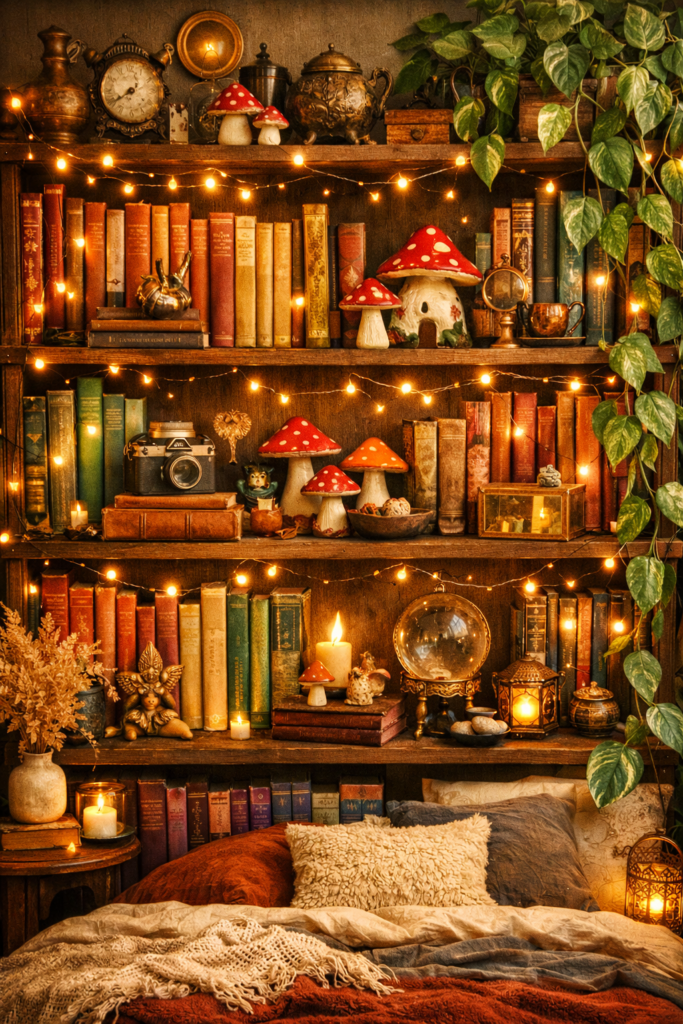
A bookshelf is the most personal piece of furniture a person can own and it is also one of the most powerful design tools available to a renter precisely because it is freestanding, entirely reversible, and can be taken from home to home without negotiation. In a whimsical room, a bookshelf should not function as storage alone. It should function as a curated display of the inhabitant’s inner world: the books they have read, the objects they have collected, the small ceramic figures and trailing plants that make the space feel like theirs specifically.
The styling principle for a whimsical maximalist shelf is organised abundance. Books arranged in colour order or faced outward for cover display, interspersed with small sculptural objects, trailing pothos or string-of-hearts plants, candles, and curious vintage finds create a shelf that rewards looking at from across the room and up close in equal measure. Weaving a strand of warm fairy lights through the upper shelves adds the final atmospheric touch that lifts the bookshelf from furniture to feature. This is one of the few design moves that gets better with every new object added.
Idea 06
Create an Indoor Plant Corner for Living Texture and Colour
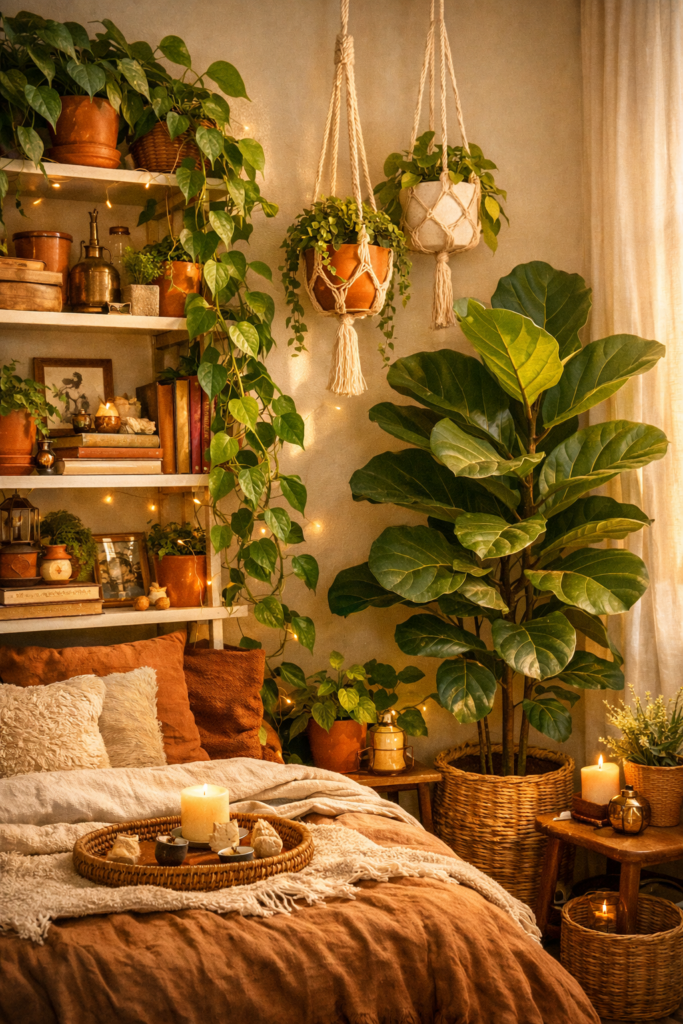
Plants are among the most transformative and completely renter-compliant design elements available. They introduce colour, texture, varying heights, organic shape, and living energy into a room without touching a single wall or floor surface in any way a landlord could object to. A deliberately composed plant corner, built up over time with a mix of trailing, upright, and hanging varieties, can turn an otherwise unremarkable corner of a rental room into something that looks genuinely lush and intentional, the kind of interior that reads immediately as belonging to someone who cares about their environment.
The arrangement should work across multiple heights to create visual depth. Tall plants like fiddle leaf figs or snake plants establish vertical presence. Medium plants in terracotta or ceramic pots on plant stands fill the middle range. Trailing varieties like pothos, string of pearls, or heartleaf philodendron can be placed on shelves or in macrame hangers attached to adhesive ceiling hooks to create cascading greenery at eye level. This layered plant grouping approach creates far more visual impact than individual plants scattered around a room and it makes the corner feel genuinely designed rather than incidental.
Idea 07
Swap Landlord Light Fixtures for Pendant Lamps Using Plug-In Cords
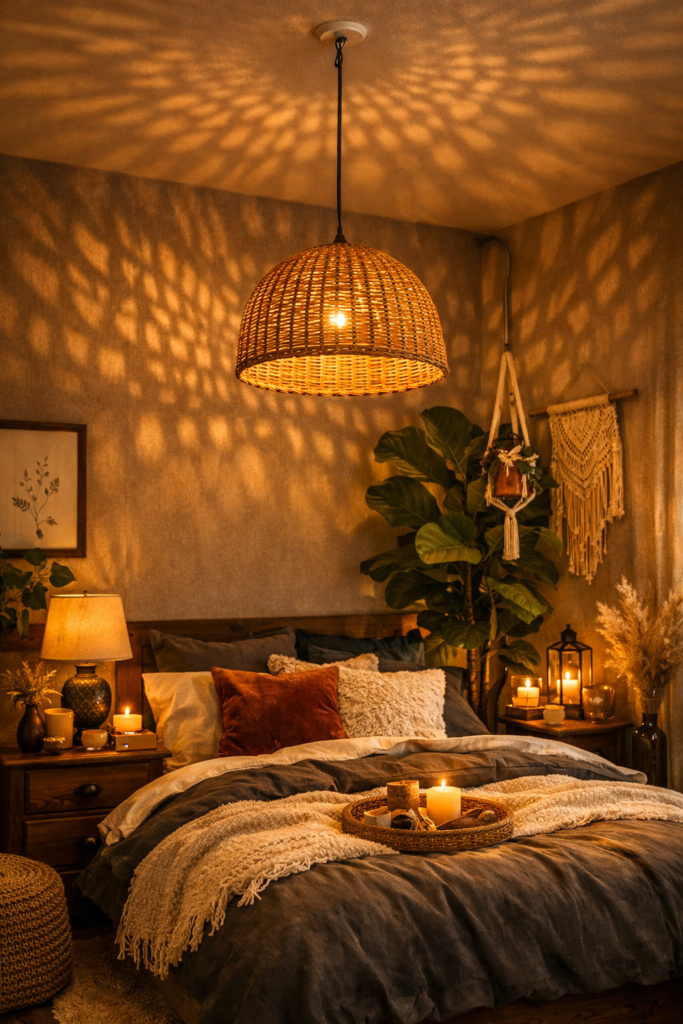
The standard ceiling light fixture in most rental properties is designed to be invisible rather than beautiful, a functional placeholder that serves its purpose without contributing anything to the character of the room. Replacing it requires an electrician and landlord permission. But bypassing it entirely with a plug-in pendant lamp requires nothing more than a single adhesive ceiling hook and access to a nearby outlet. The cord runs along the ceiling and down the wall in a managed route using adhesive cord clips, and the result is a hanging pendant lamp that looks intentional and transforms the entire mood of the room.
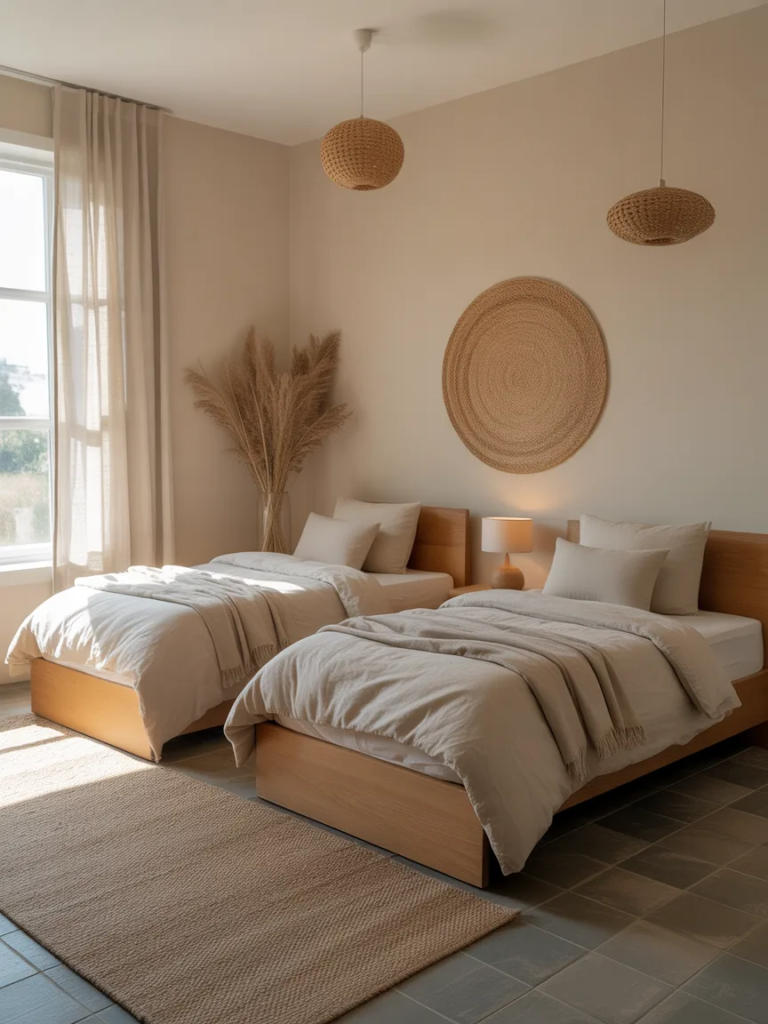
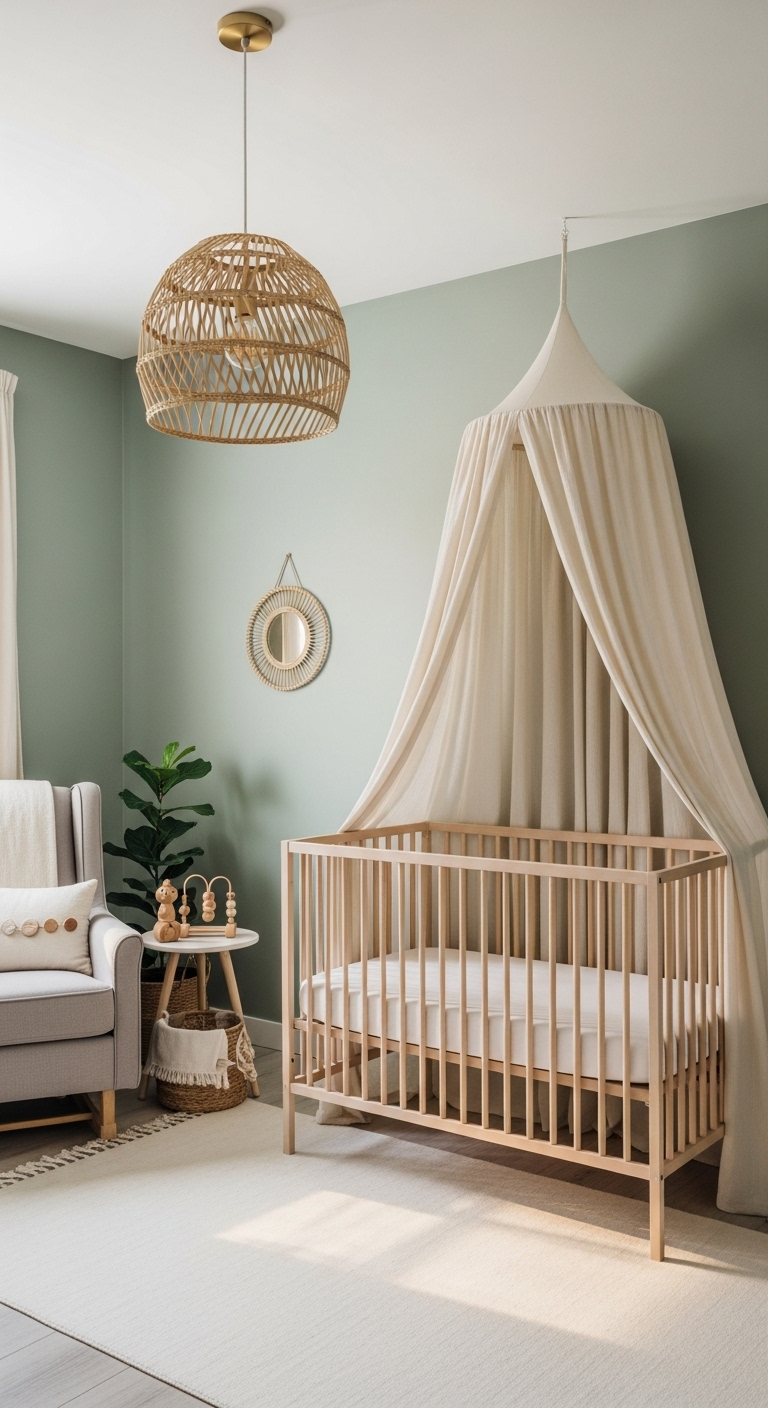
Rattan pendants, woven wicker shades, ceramic dome pendants, and smoked glass globes are all available in plug-in formats and all contribute significantly to a whimsical interior aesthetic. The warm patterned shadows that rattan and woven shades cast across walls and ceilings when lit are particularly beautiful, adding a level of atmospheric detail that no ceiling-mounted bulb can achieve. When leaving the rental, the pendant comes with you, the adhesive hook is removed cleanly, and the original ceiling fixture, which has simply been left in place and switched off at the wall, is entirely undisturbed.
Idea 08
Layer Rugs to Define Zones and Add Pattern to Bare Floors
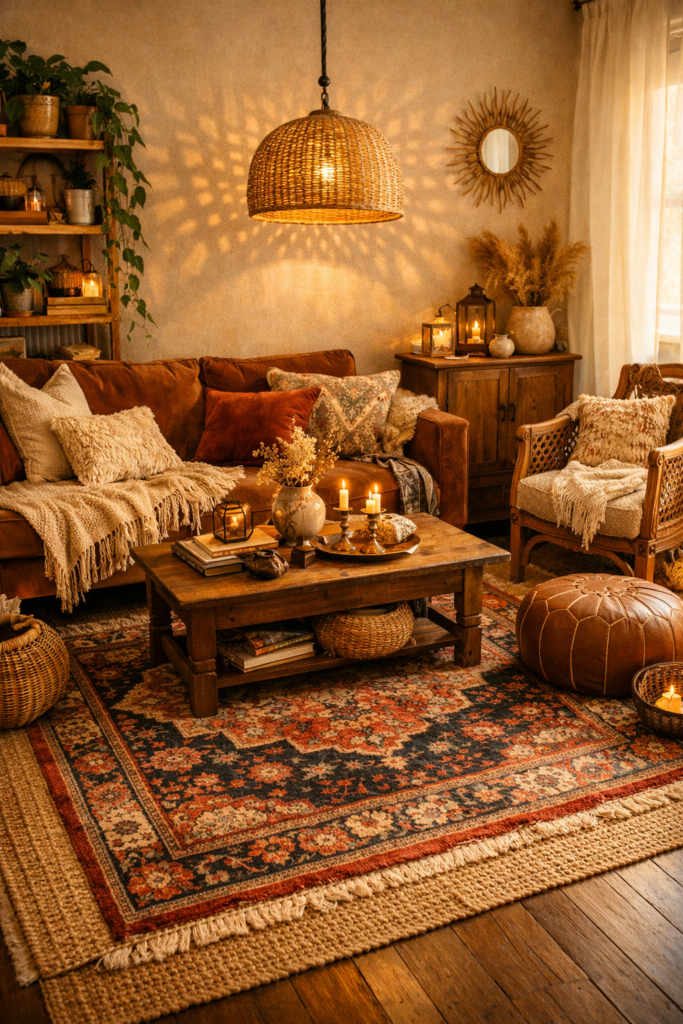
Rental floors are among the most challenging elements to work with because they are often carpeted in a shade chosen for durability rather than beauty or left as bare boards that feel cold and impersonal. Rugs are the renter’s most powerful floor remedy, and layering them, placing a smaller, more decorative rug over a larger neutral base rug, creates a level of visual richness and considered eclecticism that a single rug rarely achieves on its own. This technique is also practical in rooms where no single affordable rug is large enough to anchor the whole seating or sleeping area effectively.
For a whimsical interior, the layered rug approach works best when the two pieces contrast in texture and pattern. A flat-woven jute or sisal rug as the base layer provides a neutral, organic ground. On top of it, a smaller vintage-style Persian, a bold geometric kilim, or a colourful hand-knotted piece introduces pattern, colour, and personality. The top rug should be positioned slightly off-centre and at an angle to the base to reinforce the collected, effortless quality of the whimsical aesthetic. Non-slip underlay between the two rugs keeps everything safely in place.
Idea 09
Use Curtains to Create a Reading Nook or Bed Alcove
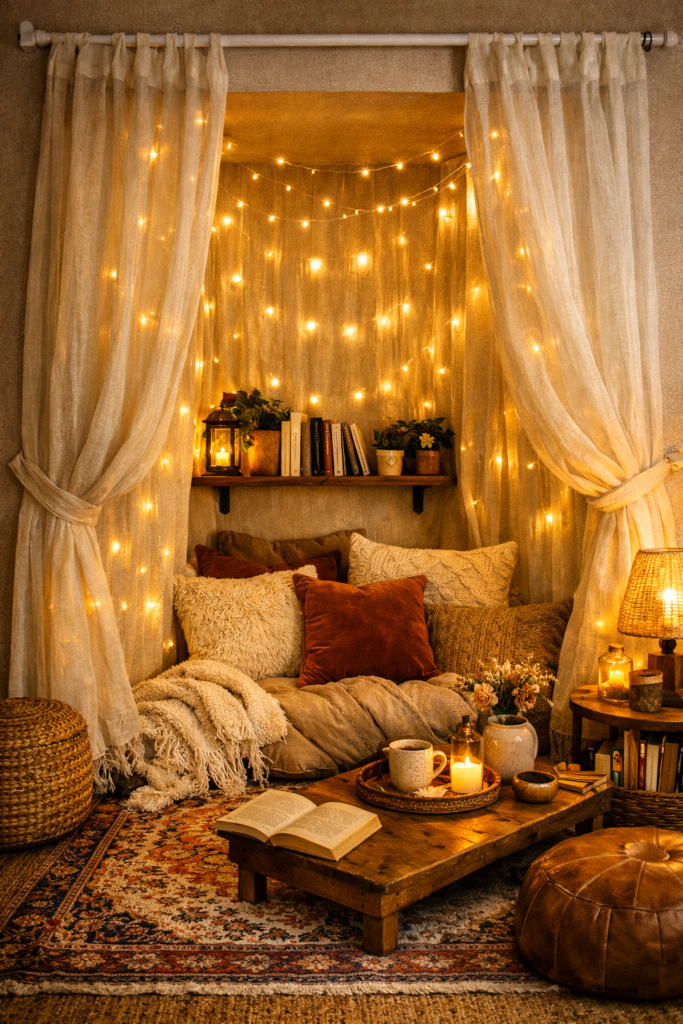
Curtains are one of the most versatile and underutilised tools in a renter’s design toolkit. Beyond their standard function at windows, they can be used to create entirely new spatial zones within a room, dividing a large open room into distinct areas or enclosing a small corner to create the impression of a separate, intimate space. A reading nook built by hanging sheer or semi-sheer curtains from a tension rod mounted between two walls, or from a ceiling-mounted curtain track attached with adhesive fixings, costs very little and adds an architectural quality that the room was not born with.
Inside the curtained nook, the design can be as playful and personal as desired since the enclosure gives it a sense of separateness from the rest of the room. A pile of cushions and a rolled blanket on the floor, a small floating shelf attached with adhesive fixings holding a few beloved books, and a strand of fairy lights overhead create a reading sanctuary that feels genuinely magical. The curtains themselves, in linen, sheer muslin, or a light cotton print, become the primary decorative element of the nook and should be chosen with as much care as a piece of furniture.
Idea 10
Collect and Display Vintage Objects on a Dedicated Curiosity Shelf
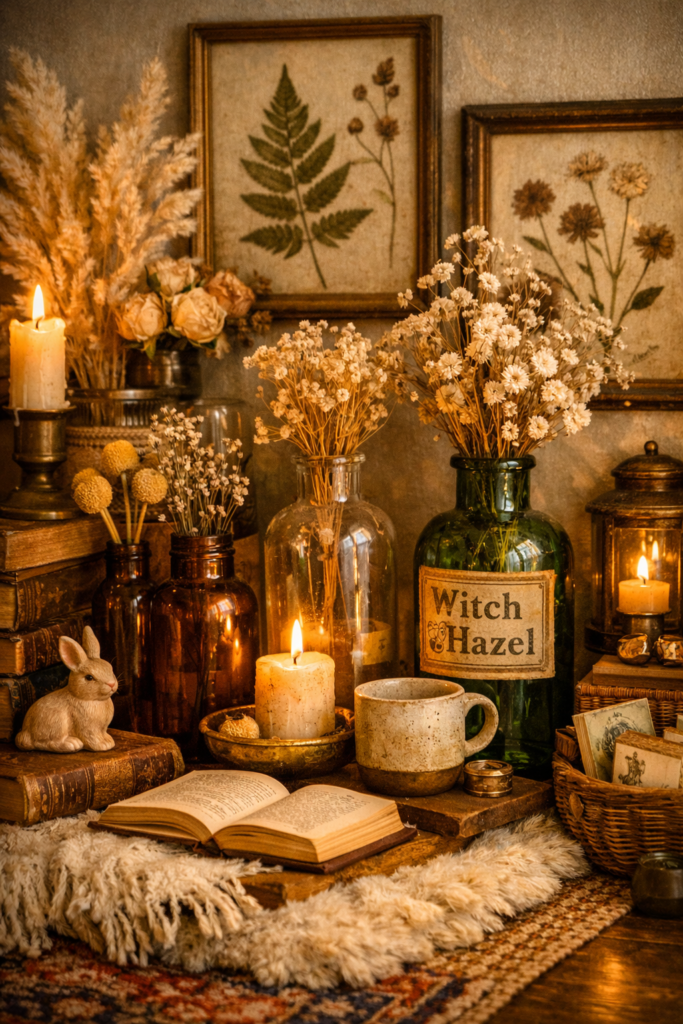
One of the defining qualities of a whimsical interior is the sense that it has been accumulated over time by a person with genuine curiosity and specific tastes, rather than assembled in a single afternoon from a single store. A dedicated curiosity shelf or surface, styled with vintage glass bottles, small ceramic figures, dried botanical specimens, candles of varying heights, and a few objects with personal meaning, achieves this quality immediately. It gives the room a sense of depth and history that is very difficult to manufacture with new objects alone.
The curiosity shelf works best when it sits on a piece of furniture that already exists in the room rather than requiring additional wall-mounted hardware. The top of a bookshelf, a windowsill, the surface of a dresser, or a small freestanding console table can all serve this purpose. Styling the shelf with objects at different heights using stacked books or small risers as platforms, and ensuring that every object either has personal meaning or genuine visual interest, keeps the display from tipping into clutter. The line between a curated curiosity display and a pile of random objects is largely a matter of intentional height variation and breathing room between pieces.
Idea 11
Dress Windows with Layered Curtains for Drama and Softness
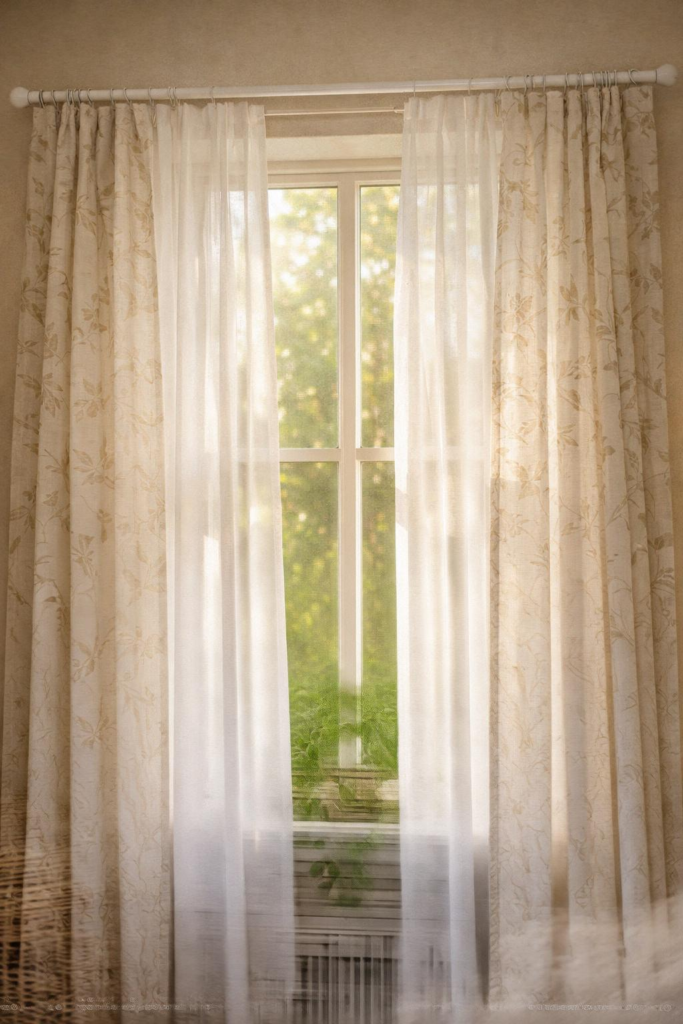
The windows of a rental property are almost always dressed with functional blinds chosen by the landlord for privacy rather than beauty. These blinds, while useful, contribute nothing to the character of the room and in many cases actively diminish it. The good news is that curtains can be layered over existing blinds without removing or damaging them, using a tension rod fitted inside the window recess or a curtain rod mounted above the window frame using adhesive brackets. This single change has a disproportionately large effect on the feel of the entire room.
Layering a sheer inner curtain with a heavier outer panel in a print or textured fabric creates the kind of window dressing that looks genuinely considered and slightly romantic, precisely the qualities that characterise the whimsical interior at its best. Hanging the rod as high above the window frame as possible, and choosing curtains long enough to pool slightly on the floor, exaggerates the height of the window and makes the ceiling feel taller. Botanical prints, subtle embroidered sheers, and vintage-style toile patterns are all excellent choices for a renter who wants their windows to feel like a design feature rather than an afterthought.
Idea 12
Build a Floor-Level Lounge Area with Cushions, Poufs, and Low Furniture
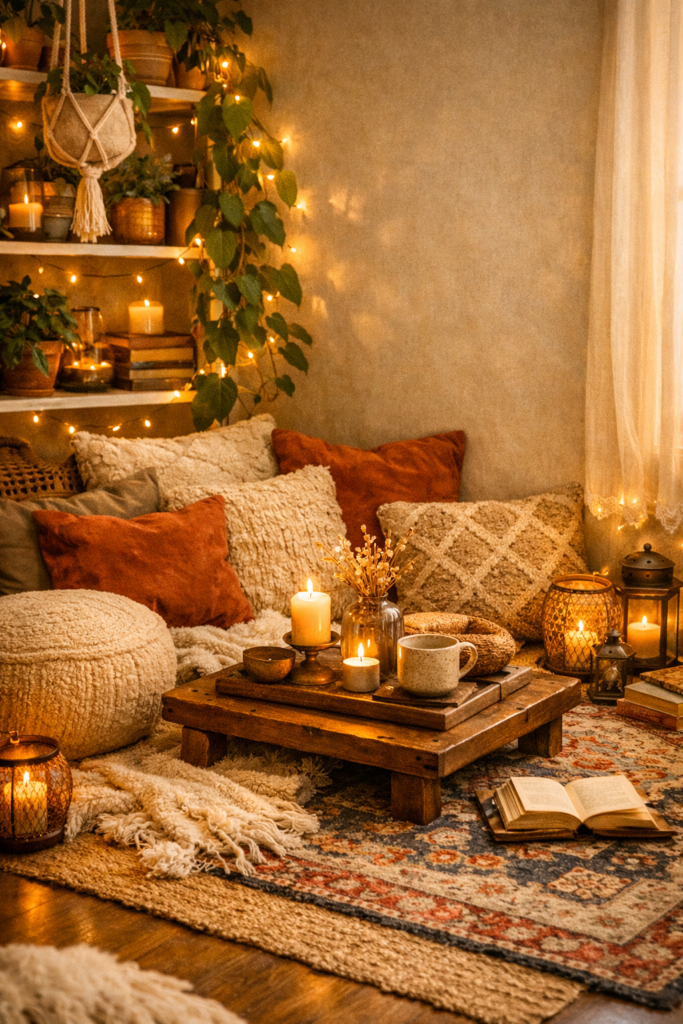
Not every room needs to conform to the standard arrangement of sofa, coffee table, and television stand. In a rental room where floor space is limited or where the existing furniture feels too conventional for the aesthetic you are trying to build, a floor-level lounge area offers an alternative that is entirely renter-friendly, deeply whimsical, and surprisingly practical for reading, relaxing, and hosting the kind of low-key gatherings that feel more intimate at floor level than seated at height. The investment required is minimal because the primary components are cushions, throws, and a pouf or two.
The floor lounge works best when it occupies a dedicated corner of the room rather than spreading across an open floor area, which can make a space feel unfinished. Define the zone with a rug, arrange large floor cushions and a pouf around a low tray table or a flat wooden crate used as a surface, and add a trailing plant, a small lamp, and a stack of books to complete the vignette. The result is a secondary living area within the room that feels like a private retreat, the kind of corner that makes a rental feel genuinely lived-in and full of character rather than simply occupied.
Conclusion
Renting does not mean settling for a space that feels anonymous and temporary. Every idea in this list is completely reversible, requires no permission, and leaves no lasting mark on the property. What they do leave is a lasting mark on the experience of living in that space, transforming a generic rental room into somewhere that feels genuinely inhabited by a specific and creative person. The whimsical interior does not announce itself loudly. It reveals itself slowly, in the details of a beautifully styled shelf, the warm glow of fairy lights on a ceiling, the particular plant trailing from a macrame hanger in the corner.
The most important principle underlying all twelve of these ideas is that character in a room comes from commitment, not from expenditure or from permanent alteration. A room styled with genuine intention and personal meaning will always feel more beautiful than one that is expensively furnished but empty of personality. Renters have access to every tool they need to create spaces that feel enchanting, personal, and full of life. The only thing required is the decision to stop waiting for a permanent home before beginning to build one.