12 Living Room Rug Ideas That Anchor Every Seating Area Perfectly in 2026
The rug ideas, placement rules, and styling approaches that professional designers use to ground every living room seating arrangement with intention, warmth, and visual clarity
A living room without a rug is a living room without a foundation. Furniture floats, seating areas lack definition, and the eye has no place to rest before it begins moving upward through the room looking for something to anchor itself to. The rug is not merely a decorative accessory in a living room. It is the architectural element that defines where the seating area begins and ends, that pulls disparate furniture pieces into a coherent grouped conversation, and that introduces the warmth, texture, and pattern that hard flooring surfaces cannot provide on their own. When the rug is wrong in size, placement, or material, the room communicates that wrongness even to people who cannot articulate why the space feels unresolved.
The twelve rug ideas in this article address the full range of living room configurations, aesthetics, and budgets that characterize the way people actually live in 2026. Some ideas focus on specific rug styles and the seating arrangements they suit best. Others address the layering techniques, placement rules, and sizing decisions that determine whether any rug, regardless of its visual quality, performs as well as it should in the space it occupies. All of them are grounded in the understanding that the right rug in the right position changes a living room more fundamentally than almost any other single design decision, and that getting it right is considerably more achievable than most people assume before they begin.
Idea 01Sizing Rule
Always Size Up: Choose a Rug Larger Than Your First Instinct Suggests
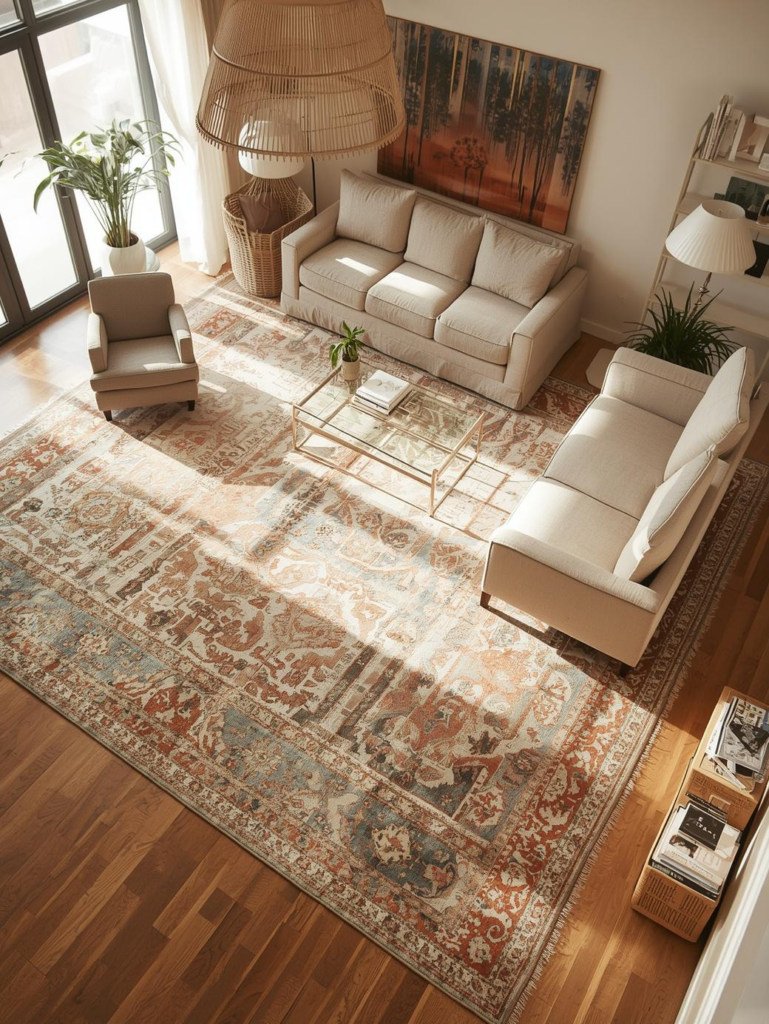
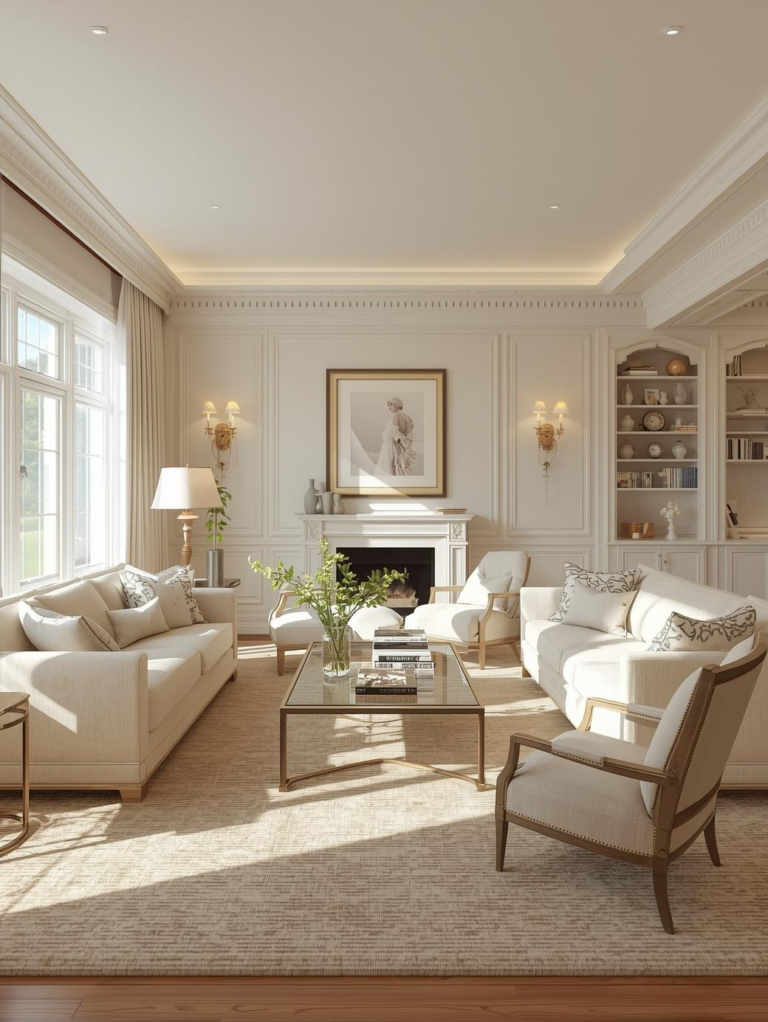
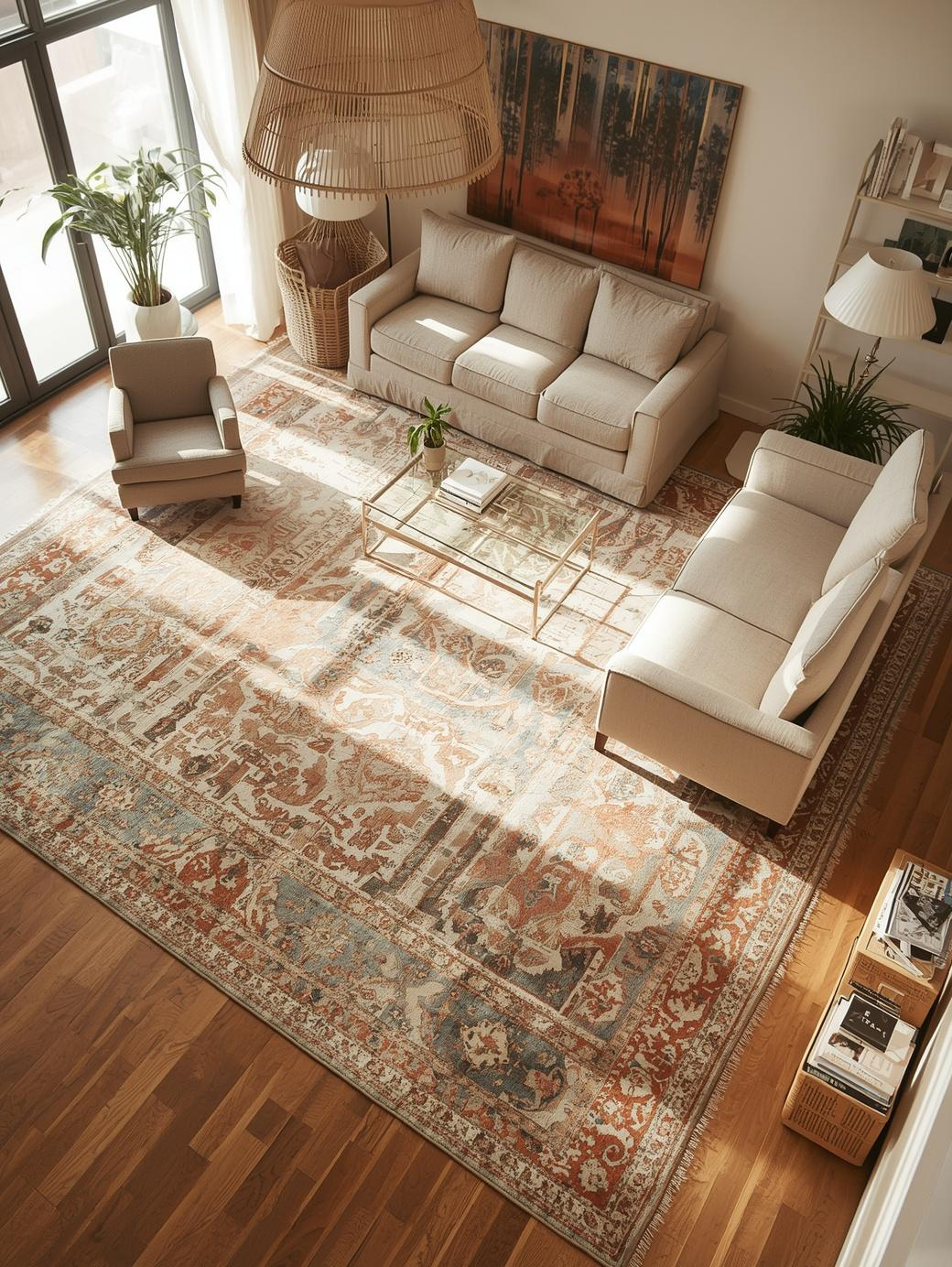
The most consistently repeated rug mistake in living rooms is choosing one that is too small for the seating area it is meant to anchor. A rug that sits only under the coffee table, surrounded by furniture legs that hover entirely on bare floor, looks like a mat placed in the wrong room rather than a design decision made with intention. The rug should be large enough for all the front legs of every sofa and chair in the seating arrangement to rest on its surface simultaneously, creating a unified ground plane that reads as one considered composition rather than a collection of independent pieces.
In practical terms this means that most living rooms require a rug of at least eight by ten feet, and many require nine by twelve or larger to properly anchor a standard sofa, two chairs, and a coffee table arrangement. The visual effect of the correct size is immediate and dramatic. Furniture that looked disconnected and awkwardly spaced suddenly coheres into a seating area with clear boundaries and a shared ground. The room feels larger, not smaller, because the rug defines the social space and allows the surrounding floor to read as intentional circulation space rather than wasted area. Sizing up is always the correct decision when in doubt.
Idea 02Rug Style
Anchor a Modern Living Room With a Vintage Persian or Turkish Rug
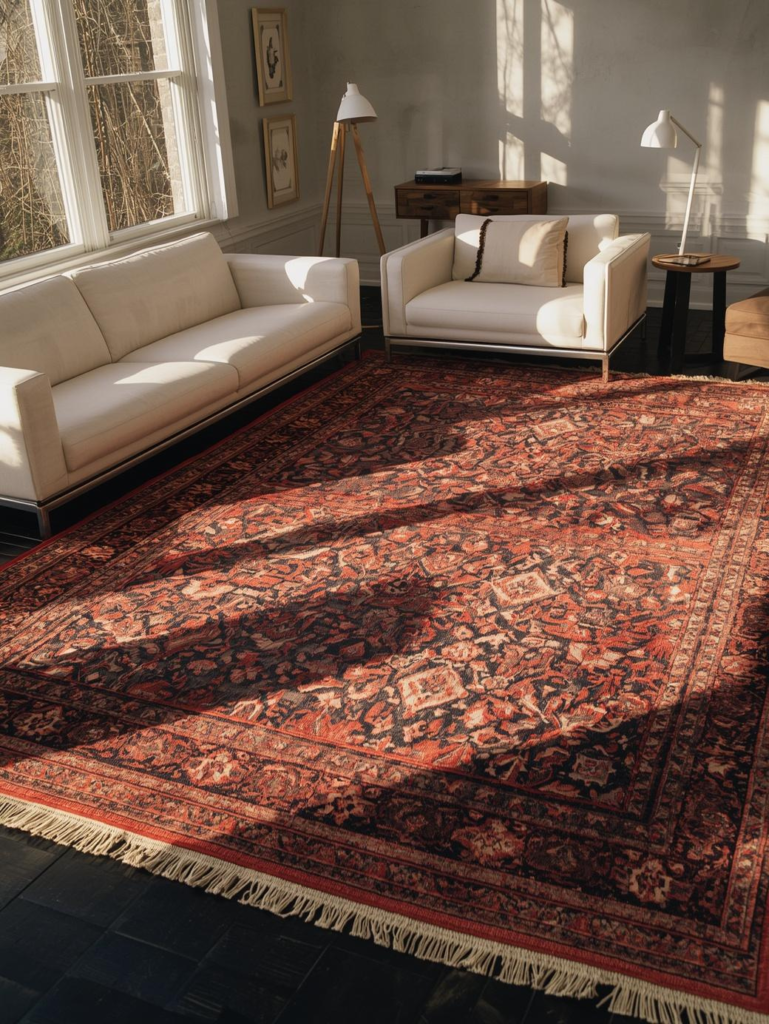
The vintage Persian or Turkish rug has maintained its position as one of the most sought-after living room anchor pieces through decades of changing interior trends because it offers something no contemporary rug can replicate: genuine age, the specific color quality that comes from natural dyes mellowed by time, and a pattern complexity that rewards looking at from across the room and up close in equal measure. In a modern or minimal living room, a vintage rug introduces the warmth, history, and visual richness that clean-lined contemporary furniture inherently lacks, creating a tension between old and new that is one of the most enduringly beautiful combinations in interior design.
Vintage Persian and Turkish rugs are available across a very wide price range, from museum-quality antiques to affordably priced vintage pieces with minor wear that adds to rather than detracts from their character. Online vintage rug marketplaces have made accessible what was once the exclusive territory of specialist dealers, and it is now entirely possible to source a genuinely beautiful vintage rug in the correct size for a living room without leaving home. The muted, time-softened palette of most vintage pieces, rich reds and navy blues that have faded to dusty rose and slate, integrates into contemporary living rooms with a naturalness that no reproduction rug manages to achieve regardless of its quality.
Idea 03Texture Trend
Choose a Boucle Rug for Sculptural Texture and Quiet Luxury
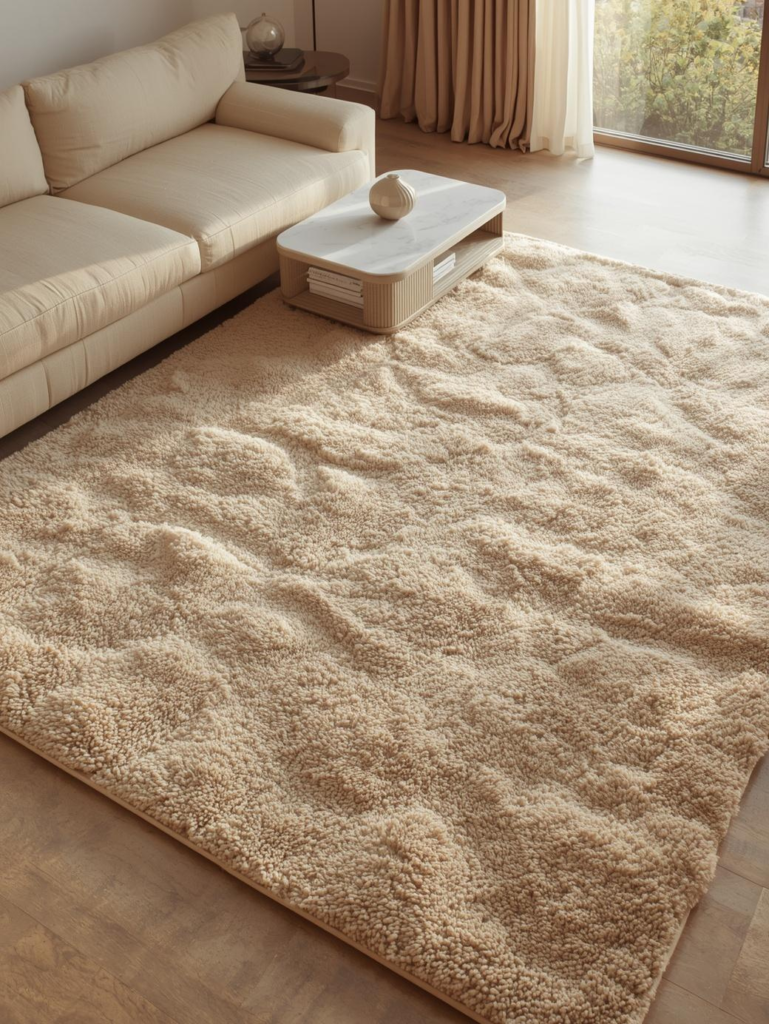
Boucle rugs have become one of the defining floor covering choices of the quiet luxury interior movement and their sustained presence in design-forward living rooms through 2025 and into 2026 shows no sign of diminishing. The looped, nubby texture of boucle fabric translated into rug form creates a floor surface that is simultaneously soft underfoot, visually sculptural, and tonally neutral in a way that works with almost every furniture palette and wall color. Its off-white and cream colorways reflect warm light upward into the room, making the floor plane itself a source of warmth and luminosity rather than a simple neutral ground.
Boucle rugs perform particularly well in living rooms built around the quiet luxury aesthetic, those that favor clean lines, considered proportions, and a restrained material palette where texture carries the visual interest rather than pattern or color. Placed under a low-profile sofa in linen or leather, a simple stone or marble coffee table, and one or two accent chairs in a complementary neutral, a boucle rug anchors the seating area with a sense of quiet, effortless sophistication that reads as expensive regardless of the actual price point of the rug itself. Its texture is best appreciated in rooms with good natural light that can travel across its looped surface and reveal its sculptural quality throughout the day.
Idea 04Natural Fiber
Ground a Coastal or Organic Living Room With a Jute or Seagrass Rug
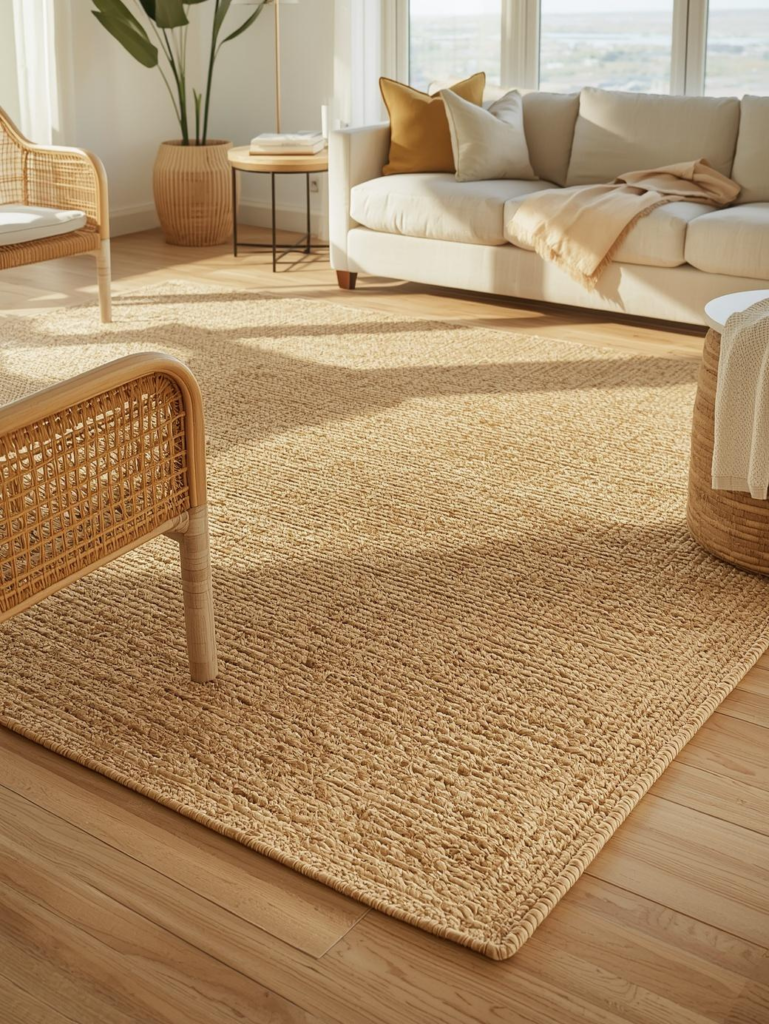
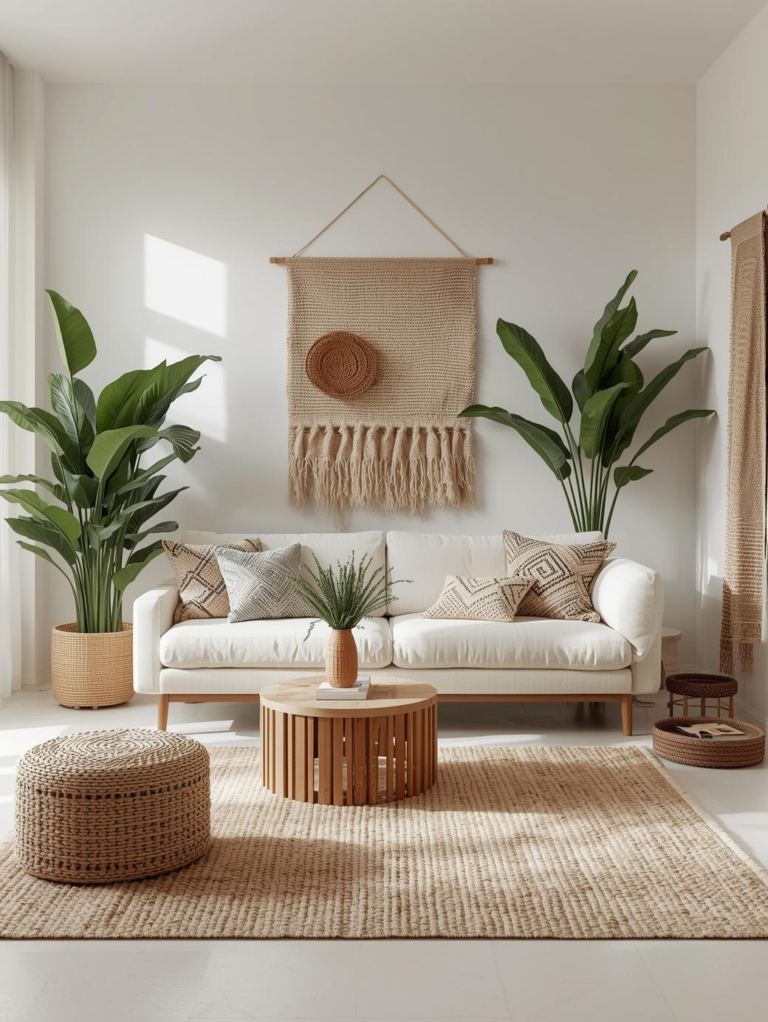
Jute and seagrass rugs are among the most universally applicable living room choices available because their flat, tightly woven construction and warm sandy tones integrate into almost every interior aesthetic without demanding attention or competing with surrounding elements. They ground a seating area with a quiet, organic authority that synthetic rugs consistently fail to replicate, and their natural fiber construction improves in character with age and use rather than deteriorating in the way that pile rugs in high-traffic areas often do. For living rooms built around coastal, organic, Scandinavian, or farmhouse aesthetics they are the natural first choice.
The flat weave of jute and seagrass also makes these rugs exceptional base layers in a layered rug arrangement, providing a neutral, textured ground onto which a smaller, more decorative rug can be placed to create depth and visual interest at the center of the seating area. This layering approach, discussed in greater detail elsewhere in this article, extends the visual and functional reach of a jute rug considerably beyond what it achieves on its own and is one of the most widely saved living room styling approaches in current interior design content. Choosing a jute rug generously sized for the full seating arrangement and layering a vintage or patterned piece on top produces one of the richest and most considered floor treatments available at a combined cost that is typically very accessible.
Idea 05Layering
Layer Two Rugs of Different Scales and Textures for Maximum Depth
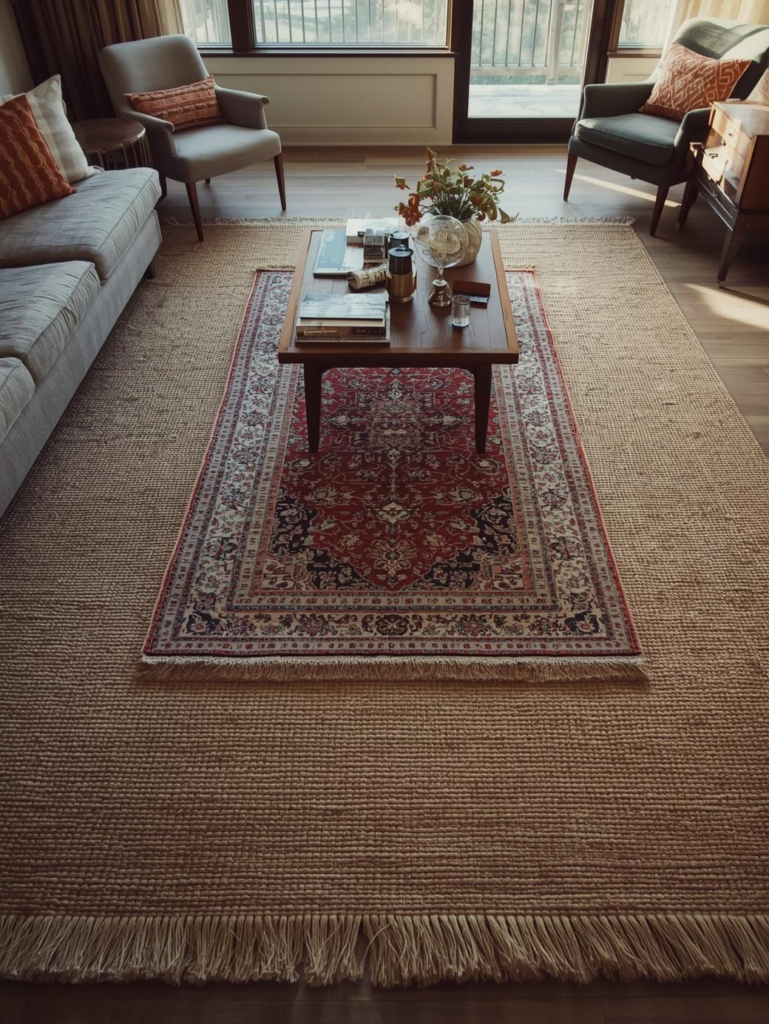
Layering rugs in a living room is a styling technique that delivers a level of visual richness and designed complexity that a single rug, however beautiful, cannot replicate on its own. The principle is straightforward: a larger, simpler rug in a natural material serves as the base layer and defines the boundaries of the seating area, while a smaller, more decorative rug sits on top of it centered beneath the coffee table, introducing pattern, color, and a contrasting texture at the heart of the arrangement. The two rugs in combination create a floor treatment that reads as collected, layered, and deeply considered rather than simply purchased and placed.
The most effective layered combinations pair contrasting textures rather than contrasting colors. A flat-woven jute or sisal base paired with a high-pile vintage Persian, a shaggy Moroccan, or a hand-knotted wool piece creates textural depth that the eye finds genuinely interesting at every scale of viewing. The top rug should be positioned so it sits slightly off-center or at a slight angle to the base rug, reinforcing the effortless, organic quality of the layered aesthetic rather than making the arrangement look like two rugs stacked deliberately. Non-slip rug pad between the two layers keeps everything safely in place and prevents the top rug from shifting with foot traffic.
Idea 06Bold Choice
Anchor a Neutral Living Room With a Dark or Jewel-Toned Statement Rug
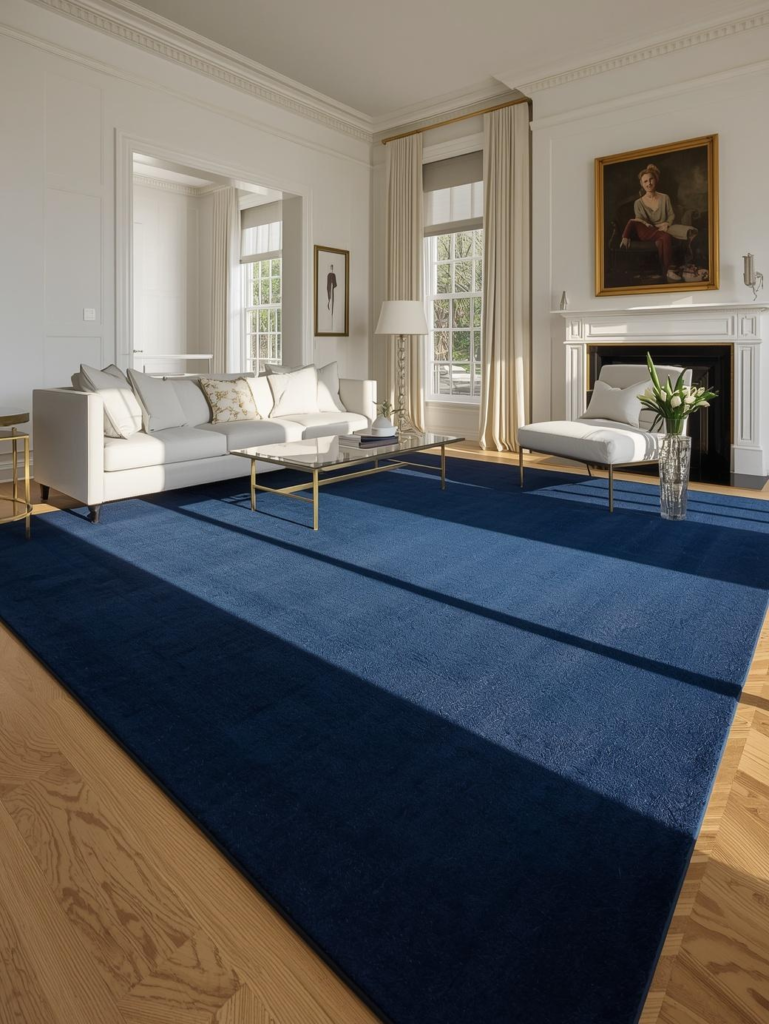
A living room built in a neutral palette of whites, creams, and warm grays is a beautiful foundation but it can read as flat and lacking in visual energy without a strong counterpoint to its lightness. A dark or jewel-toned rug, deep navy, forest green, burgundy, charcoal, or rich terracotta, introduced at floor level provides exactly this counterpoint. It anchors the seating area with a visual weight that lighter rugs cannot provide and creates a strong contrast with pale walls and furniture that gives the room a sense of deliberate composition. The effect is grounding in the most literal sense of the word.
Dark rugs also perform a practical function that lighter alternatives cannot. In a living room that receives significant foot traffic, a dark or deeply patterned rug hides wear, pet hair, and everyday dirt far more effectively than a cream or light neutral, making the room easier to maintain without the anxiety of a pale floor covering in a heavily used space. Jewel-toned rugs in particular, those in the saturated mid-range between very dark and very bright, tend to age exceptionally well because their color is rich enough to hide fading and wear while not so dark that every piece of light-colored debris is immediately visible against them. The investment in a quality dark rug pays consistent dividends in daily living.
Idea 07Placement Rule
Position All Front Furniture Legs on the Rug for a Unified Seating Zone
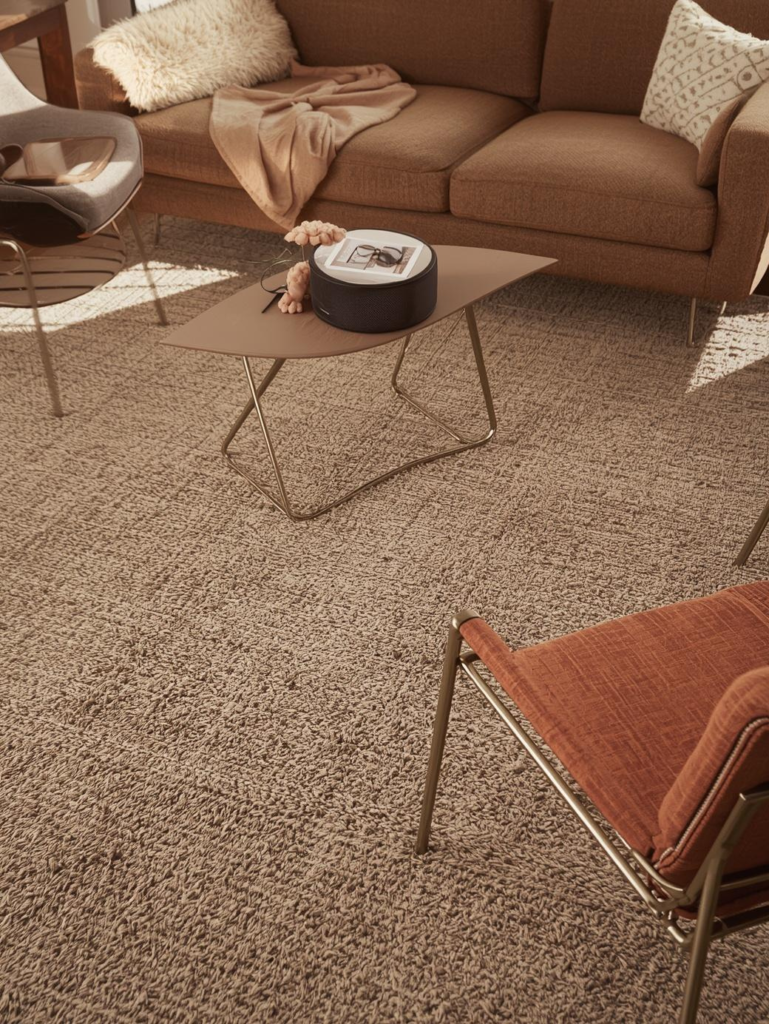
Rug placement within a living room seating arrangement follows a hierarchy of approaches that produce very different visual results. The all-legs-on approach, where every piece of seating furniture has all four legs on the rug surface, creates the most unified and enclosed seating area and suits smaller living rooms where the rug needs to work harder to define a zone within a limited floor area. The front-legs-on approach, where only the front two legs of each sofa and chair rest on the rug while the back legs remain on bare floor, is the most widely recommended professional standard because it connects the furniture to the rug without requiring an enormous rug size to accommodate full leg placement.
The one approach that should always be avoided is placing furniture entirely off the rug, which produces the visual impression of a decorative mat floating in the center of the room with no relationship to the surrounding furniture. This arrangement makes the rug look too small for the space regardless of its actual dimensions and disconnects the furniture from the floor plane in a way that makes the seating area feel unresolved. The front-legs-on standard works for the widest range of room sizes and rug dimensions and produces a seating area that feels both open and anchored, maintaining a visual connection between the furniture and the rug without the confinement of the all-legs-on arrangement in larger rooms.
Idea 08Pattern Play
Use a Geometric Rug to Introduce Pattern in an Otherwise Solid-Tone Room
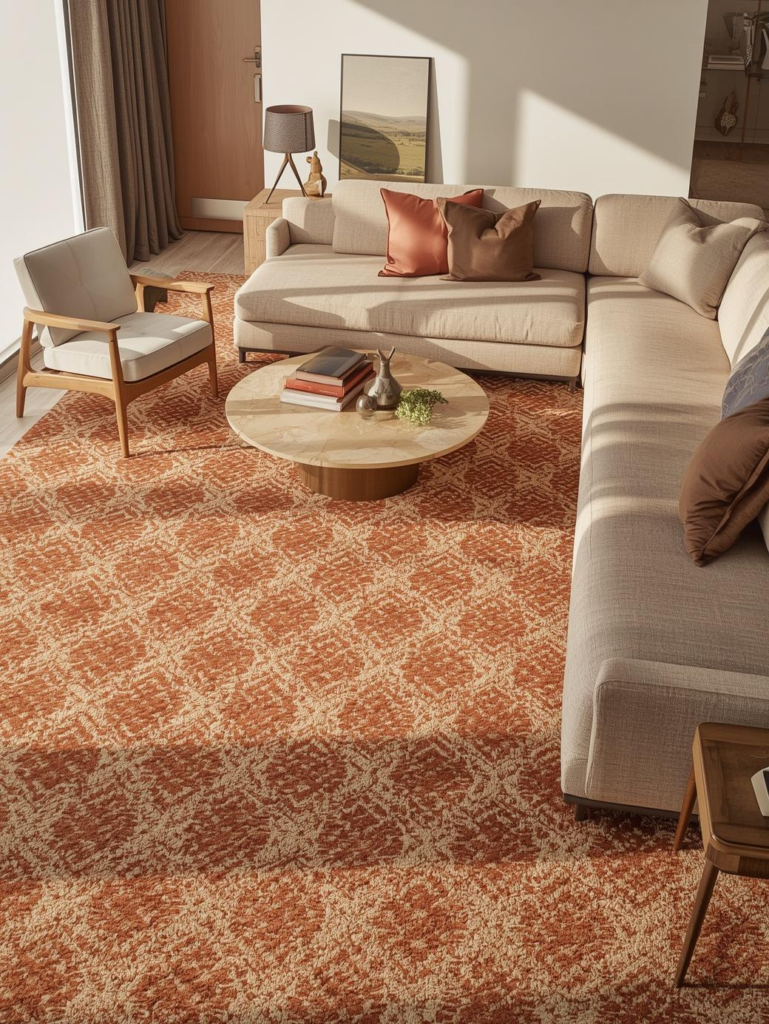
A living room composed entirely of solid-tone elements, solid upholstery, solid wall color, solid curtains, can read as restrained and elegant or as flat and lacking in visual energy depending on how well its material textures and proportions are managed. Introducing a geometric rug at floor level provides the pattern element that prevents the room from tipping from the first reading into the second without disrupting the clean, controlled palette of the space above it. Geometric patterns in the rug, diamonds, hexagons, chevrons, or abstract interlocking shapes, add visual complexity at the level where it is least likely to feel busy or overwhelming.
The color palette of the geometric rug should draw from tones already present in the room rather than introducing entirely new ones, which keeps the pattern feeling integrated rather than imported. A rug in warm terracotta and cream in a room where the sofa is cream and the walls carry warm undertones reads as an extension of the existing palette rather than a contrasting element, which allows the pattern to do its work of adding interest without creating visual conflict. Geometric rugs with a low pile or flat-woven construction tend to age more gracefully in high-traffic living rooms than high-pile alternatives and their pattern remains clearly legible even as the rug accumulates the wear of daily use.
Idea 09Budget Strategy
Style an Affordable Rug Expensively With the Right Pad and Placement
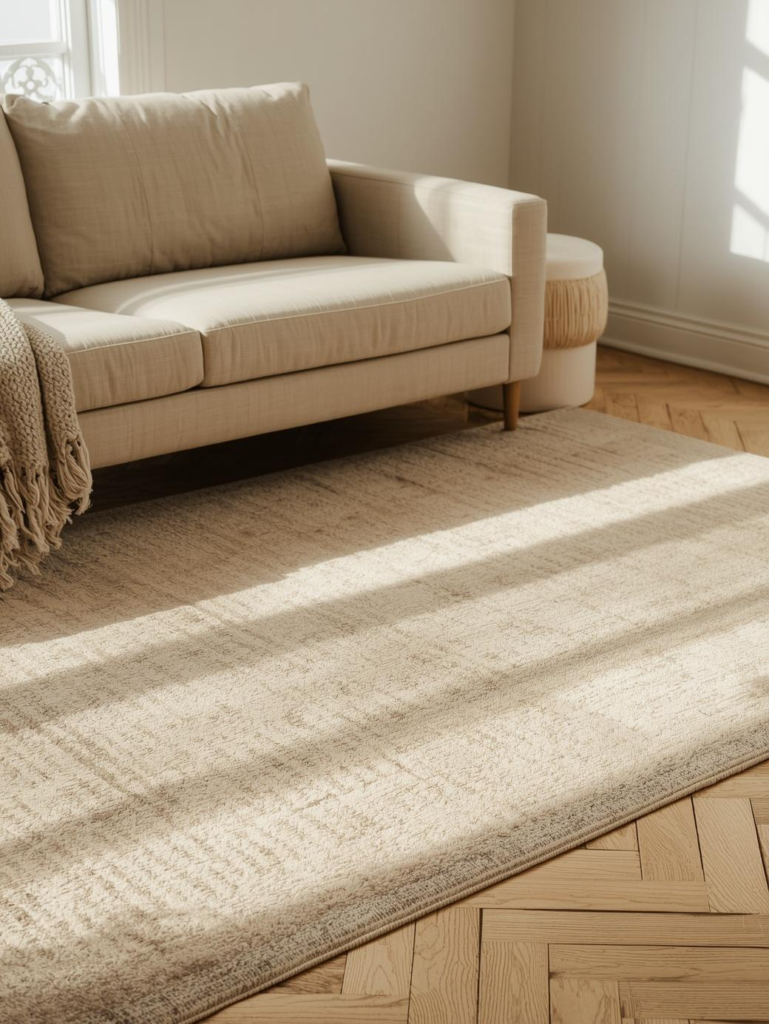
A budget rug styled correctly consistently outperforms an expensive rug placed without thought, and the variables that determine how expensive a rug looks are almost entirely within the control of the person placing it rather than the manufacturer who made it. The first and most important of these variables is size: a budget rug in the correct large size for the seating area will always read as more considered and more successful than an expensive small rug floating incorrectly in the center of the room. The second variable is the rug pad placed beneath it, which adds height, prevents slipping, and makes even a thin budget rug feel substantial and well-made underfoot.
A quality rug pad in felt and rubber combination, cut to sit approximately one inch inside the rug border on all sides, lifts the rug off the floor surface and gives its edges a clean, deliberate definition that makes the rug look more intentionally placed and of better construction than it actually is. Pairing this with correct front-leg furniture placement and a seating arrangement that is properly scaled to the room completes the illusion of a more considered and expensive floor treatment. The total investment in a correctly sized budget rug plus a quality rug pad is typically well under two hundred dollars and the result, in a well-proportioned seating arrangement, is indistinguishable from a much more expensive approach at normal viewing distances.
Idea 10Maximalist
Commit to a Large Moroccan or Shaggy Rug for a Warm Maximalist Anchor
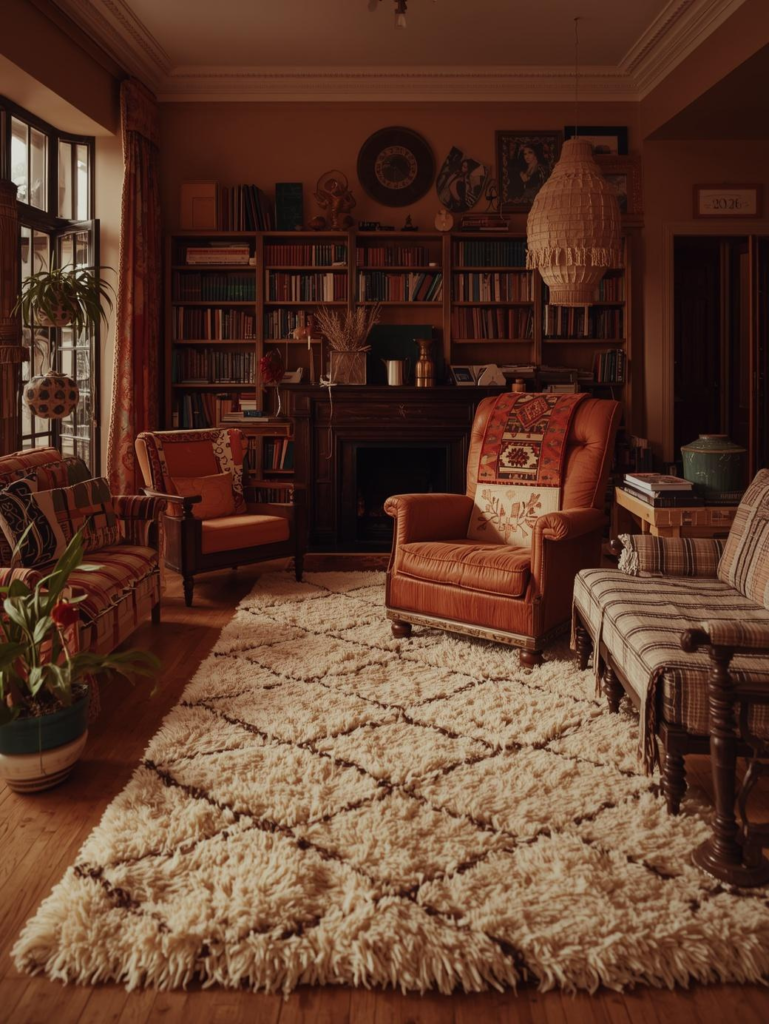
The Moroccan high-pile rug, with its characteristic diamond or geometric pattern in cream, ivory, and black, has occupied a central position in the maximalist and boho living room for well over a decade and remains one of the most warmly received rug choices in home design content in 2026. Its deep, soft pile creates a floor surface that is as tactilely inviting as it is visually warm, and its relatively simple geometric pattern provides enough visual interest to hold its own in a richly layered room without competing with the patterned textiles, stacked books, and eclectic objects that surround it. It is a rug that rewards bare feet and lingering.
In a maximalist living room, the Moroccan rug serves as the calm, textural ground beneath a composition of furniture and objects that is deliberately busy and layered above it. Its cream and ivory tones provide a visual resting point at floor level that prevents the room from feeling overwhelming despite the richness of everything above it. Choosing a high-pile version in a size generous enough to extend well beyond the coffee table on all sides gives the rug the presence it needs to anchor the arrangement properly. The pile should be regularly raked or brushed in the direction of the weave to maintain its appearance and prevent the directional crush that heavy furniture can cause over time.
Idea 11Open Plan
Use a Rug to Define the Living Area in an Open Plan Space
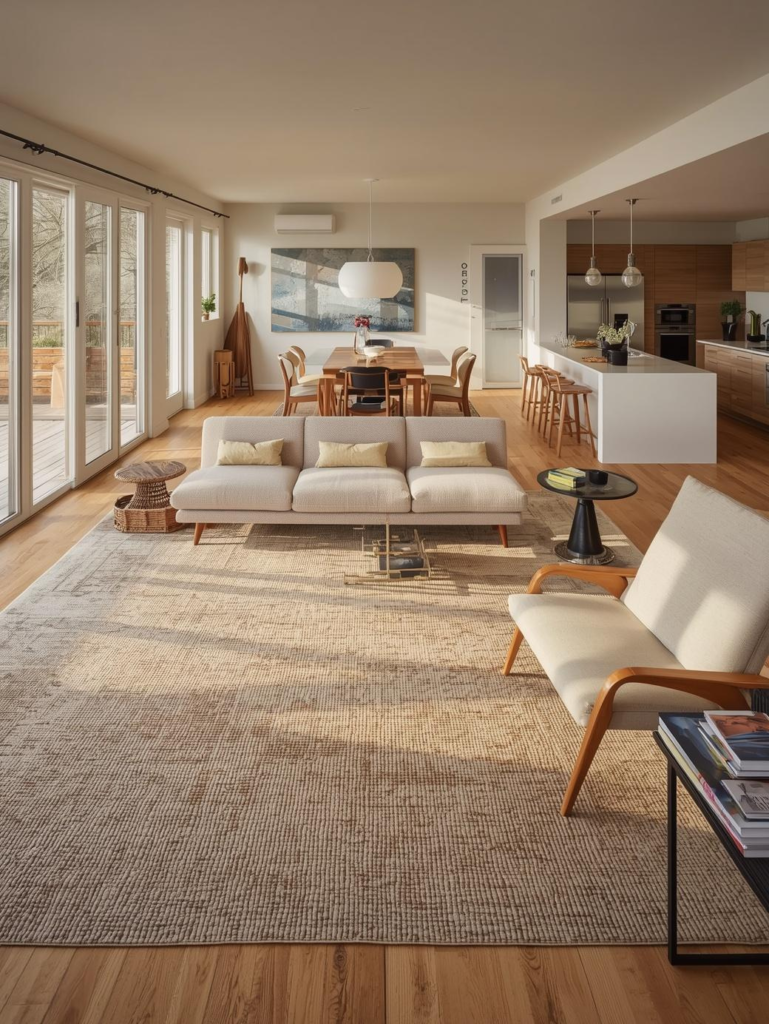
In open plan living spaces where the living area, dining area, and kitchen share one continuous floor surface, the rug performs an architectural function that goes beyond decoration. It defines where the living room begins and ends, creating a visual boundary between the social seating zone and the surrounding functional spaces without requiring any physical partition. This zone-defining function makes the rug selection in an open plan space particularly important because a rug that is too small for the seating area leaves the zone poorly defined, while a rug in the correct size makes the living area read as a complete, self-contained room within the larger open space.
The color and pattern of the rug in an open plan context should be considered in relation to all the surrounding zones rather than just the furniture immediately above it. A rug that reads beautifully in isolation may clash with the kitchen cabinetry visible behind the sofa or conflict with the dining chair fabric visible from the primary seating position. Neutral and tonal rugs in natural materials tend to perform most successfully in open plan spaces because their visual neutrality allows them to define the zone clearly without creating tension with the surrounding areas. The rug’s border, where the defined living zone meets the bare floor of the surrounding space, should always be clearly legible from the room’s primary entry point.
Idea 12Maintenance
Choose a Flat-Weave or Low-Pile Rug for High-Traffic Living Rooms
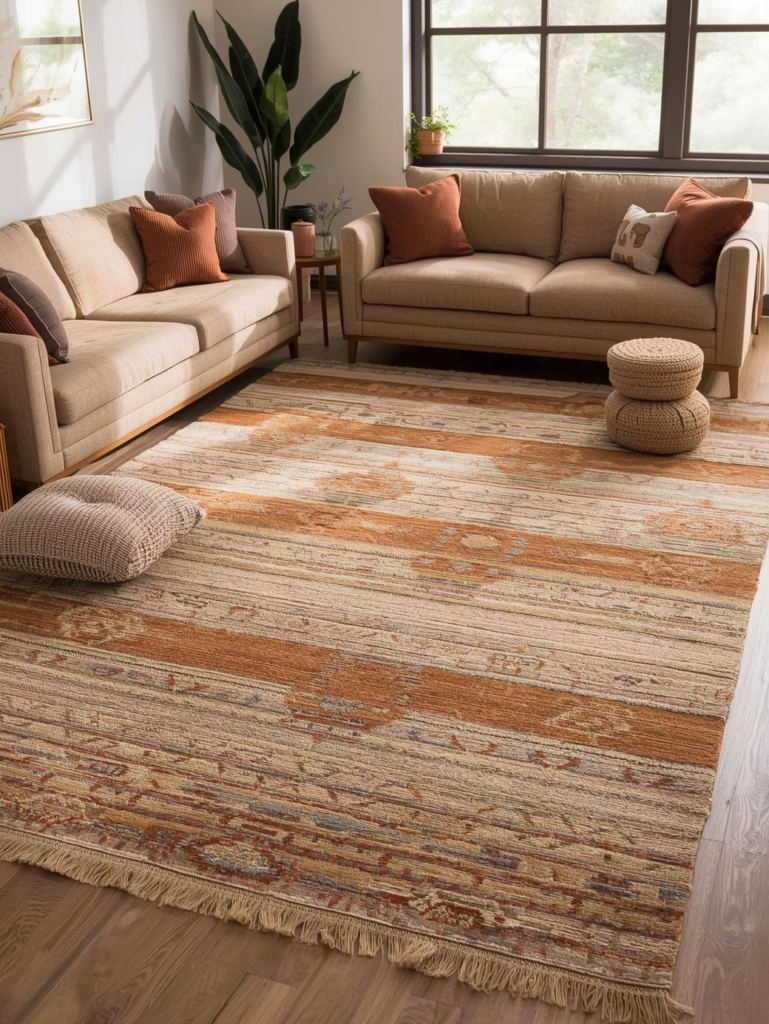
Living rooms that receive significant daily traffic from children, pets, or simply a large household require a rug that balances aesthetic quality with practical durability, and flat-weave and low-pile rugs consistently outperform high-pile alternatives in this context. Their tightly constructed surface does not trap pet hair, food crumbs, or fine debris in the way that deep pile does, making them considerably easier to vacuum and spot-clean in daily use. They also hold their appearance under heavy furniture weight more reliably than high-pile rugs, which can develop permanent crush marks beneath sofa and chair legs over time.
Flat-weave kilim-style rugs with geometric or tribal patterns in warm, mid-toned colors represent perhaps the ideal combination of practicality and visual quality for a high-traffic living room. Their pattern disguises everyday dirt and minor wear in the way that solid-tone rugs cannot, and their relatively low cost compared to high-pile alternatives makes them easier to replace when they have genuinely reached the end of their useful life. Wool flat-weave rugs are the most durable natural fiber option and develop a beautiful patina with age that synthetic alternatives cannot replicate. Cotton flat-weave rugs are the most affordable and the most easily laundered, making them a pragmatic choice for households where machine washing is a genuine priority.
Conclusion
The right rug in a living room does something that no other single element achieves with equal efficiency: it organizes the space, warms the atmosphere, introduces texture and pattern at the scale the room most needs them, and anchors the seating arrangement into a coherent, intentional composition. The twelve ideas in this article represent twelve different approaches to achieving this outcome, each suited to a different living room aesthetic, budget, or practical requirement. What unites them is the understanding that the rug decision is not a finishing touch applied after everything else has been resolved. It is a foundational decision that should be made early in the design process and allowed to inform the furniture, textile, and color choices that surround it.
Begin with size, since getting the size right is the prerequisite for every other rug decision performing as it should. Then consider the aesthetic, the material, the placement, and the layering strategy that best suits the specific room and the specific life being lived in it. A living room rug chosen with this level of attention, sized generously, placed correctly, and selected for both its visual quality and its practical fit with the household it serves, will anchor the seating area with a clarity and warmth that transforms the room around it in ways that are immediately felt by everyone who enters the space and sits down within it.