Small Dark Feminine Bedroom? Here’s How to Make It Work
There is a persistent myth in interior design that small rooms demand light walls and minimal decor. The assumption goes that darkness closes a room in, that deep tones shrink space and make it feel oppressive. For years, this logic kept countless people from designing the moody, feminine bedroom of their dreams. But that logic is wrong. Darkness, when handled with intention, does something remarkable to a small room. It dissolves the walls, removes the visual clutter of boundaries, and makes a space feel immersive rather than cramped.
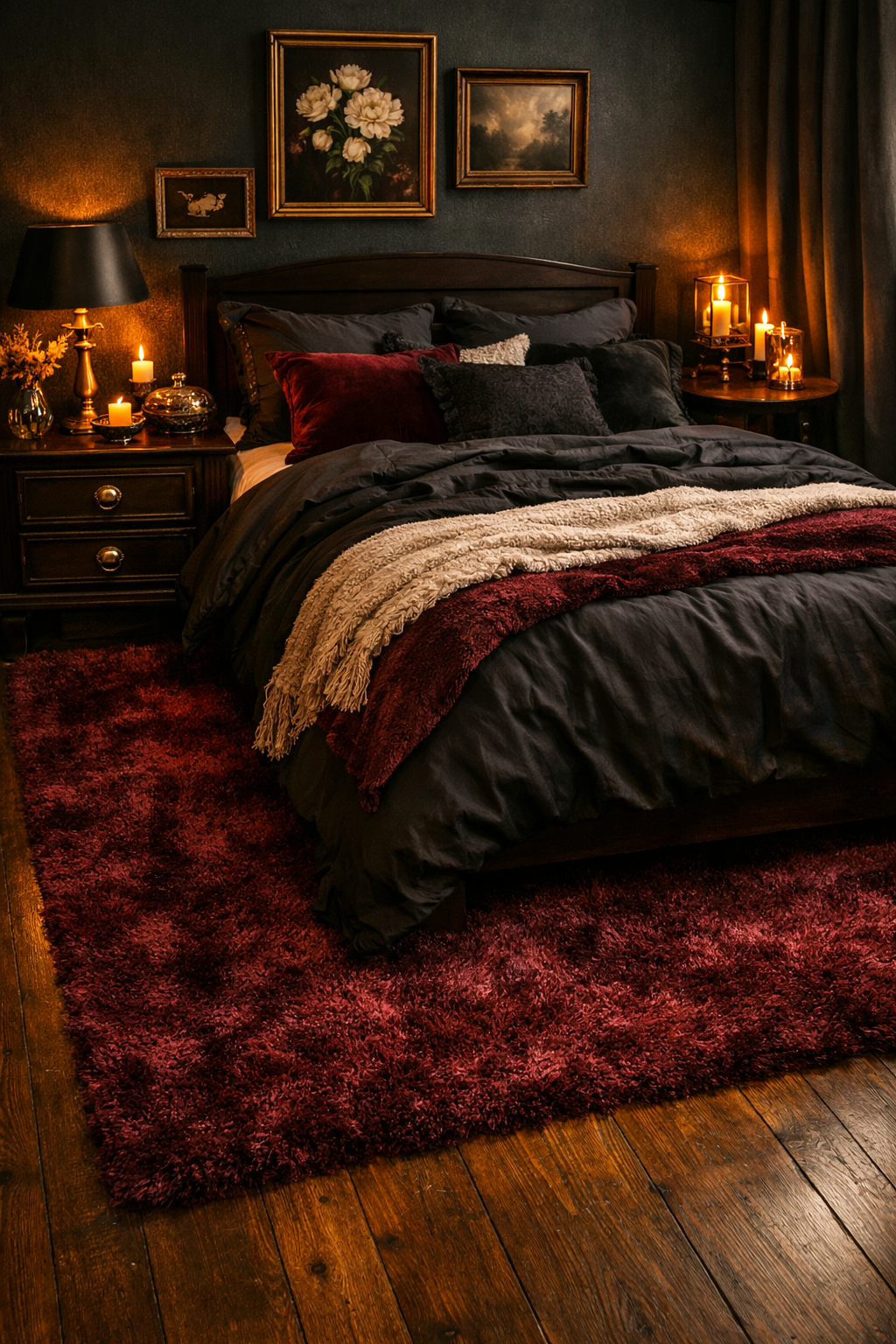
The dark feminine aesthetic lives at the intersection of drama and softness, of depth and intimacy. It is not about painting everything black and hoping for the best. It is about layering textures, choosing the right tones, manipulating light, and placing every element with care. A small bedroom is not a limitation for this aesthetic. In many ways, it is the ideal canvas. The ideas below offer fourteen practical, Pinterest-worthy approaches to designing a small dark feminine bedroom that feels intentional, beautiful, and completely your own.
Idea 01
Use One Dark Accent Wall to Anchor the Space
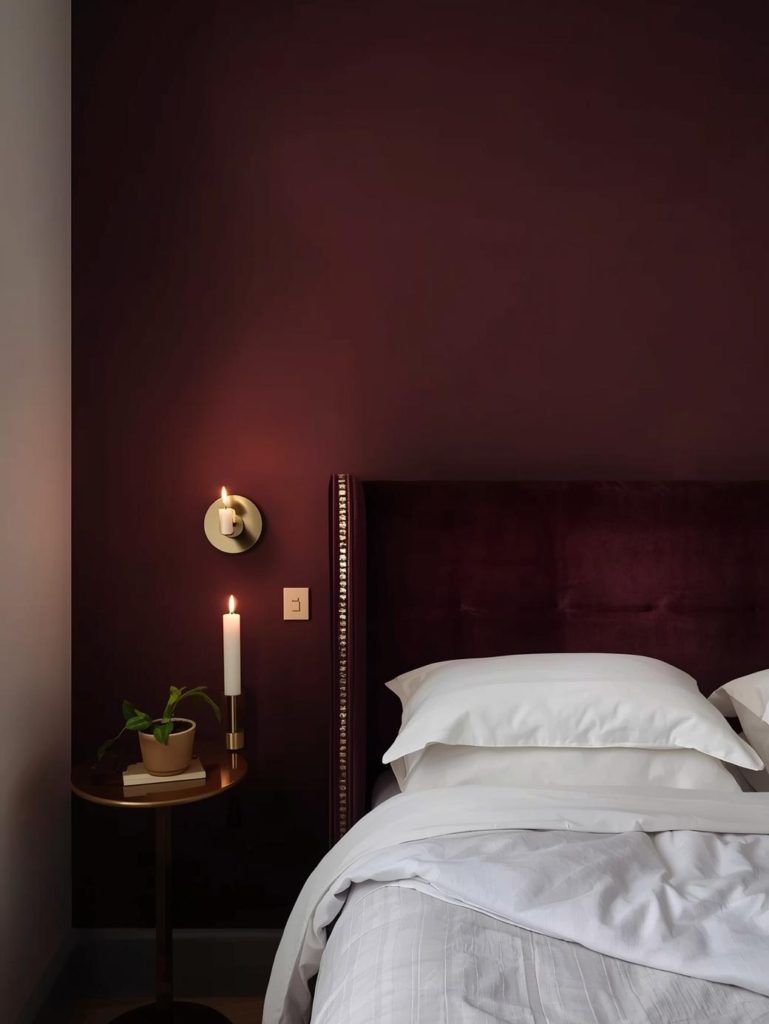
In a small room, painting all four walls a deep shade can feel overwhelming if not done carefully. A smarter approach is to commit fully to one feature wall, typically the wall behind the bed, and use it as the dramatic anchor of the entire room. Deep shades like plum, charcoal, or forest green work particularly well because they recede visually, creating the illusion of depth where the wall appears farther away than it actually is.
The remaining walls can be kept in a lighter complementary tone or a warm off-white that picks up undertones from the accent wall. This contrast does two things simultaneously: it gives the room a clear focal point and it prevents the darkness from feeling claustrophobic. Pair the accent wall with a plush upholstered headboard in a matching or slightly deeper shade and you have a bedroom that feels curated, intentional, and quietly dramatic without sacrificing any sense of openness.
Idea 02
Layer Warm Lighting Instead of Relying on Overhead Fixtures
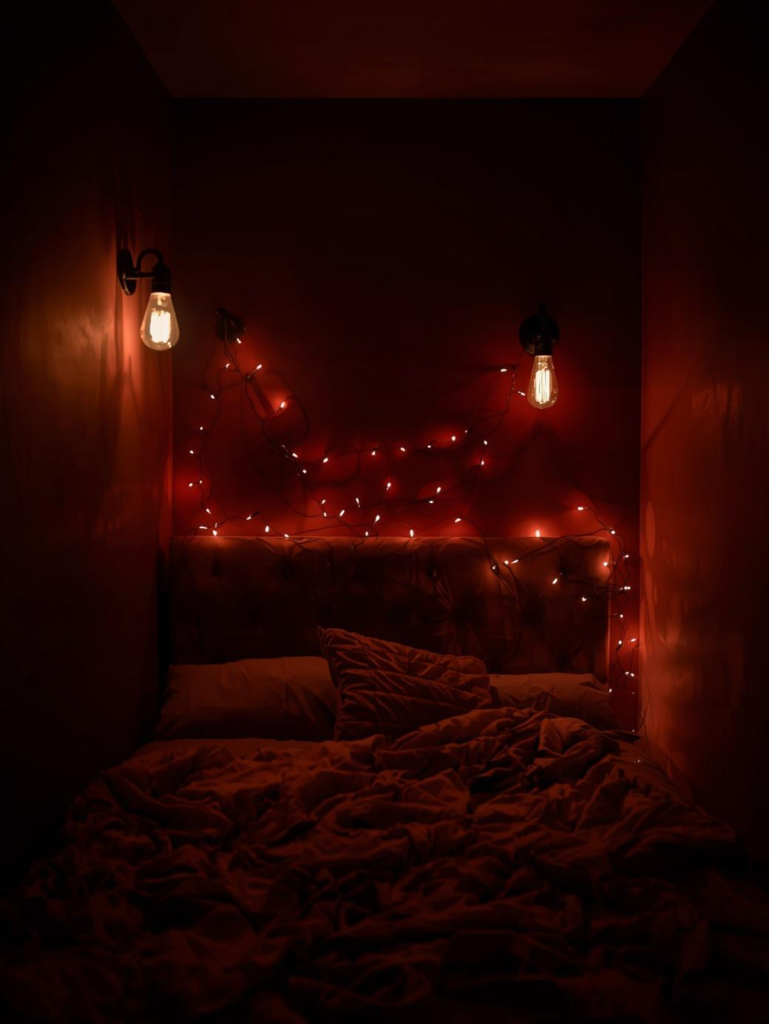
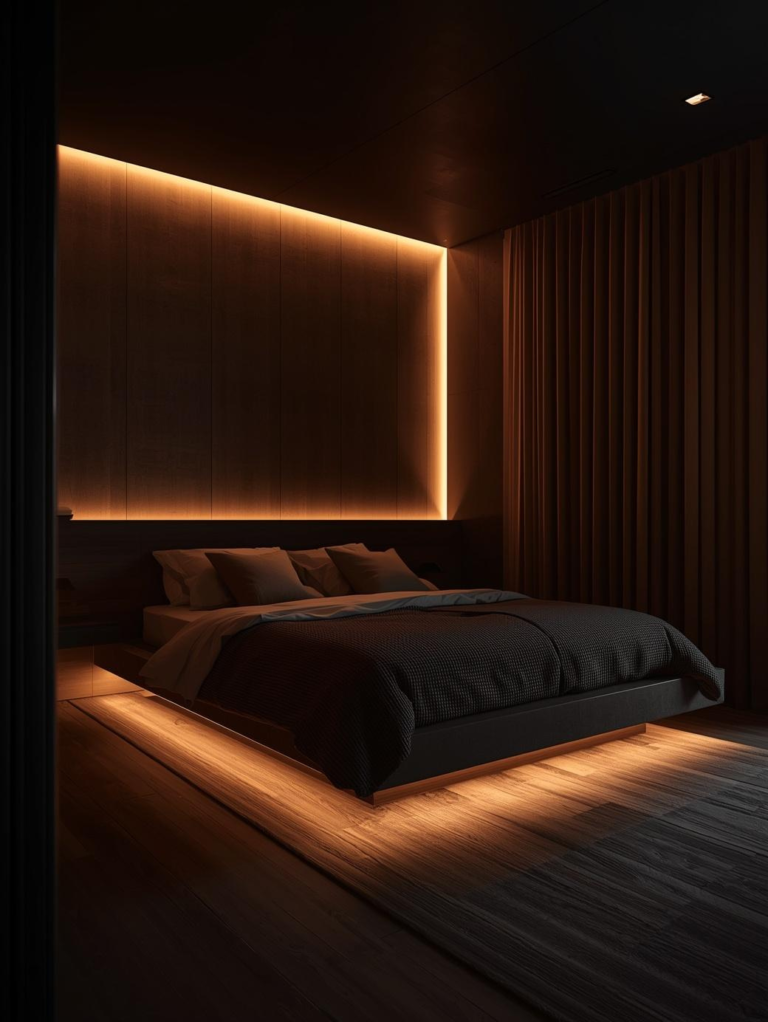
Lighting is arguably the most powerful tool in a small dark bedroom and it is almost always underused. A single overhead ceiling light in a dark room flattens every texture and makes the space feel smaller and more institutional. The solution is to abandon the overhead fixture entirely for evening use and replace it with multiple warm light sources positioned at different heights throughout the room. Sconces on either side of the bed, a small table lamp on a nightstand, and a strand of warm fairy lights can create entirely different moods depending on which combination you use.
Warm bulbs in the 2200K to 2700K range are essential here. They cast a golden amber light that makes dark walls glow rather than absorb, turning deep tones into something rich and alive rather than heavy. Placing lights at eye level or lower rather than above you creates a sense of intimacy and draws the eye horizontally across the room rather than vertically, which optically widens a narrow space. Dimmers on every light source give you full control over the atmosphere at any given moment.
Idea 03
Choose a Velvet Headboard as the Room’s Statement Piece
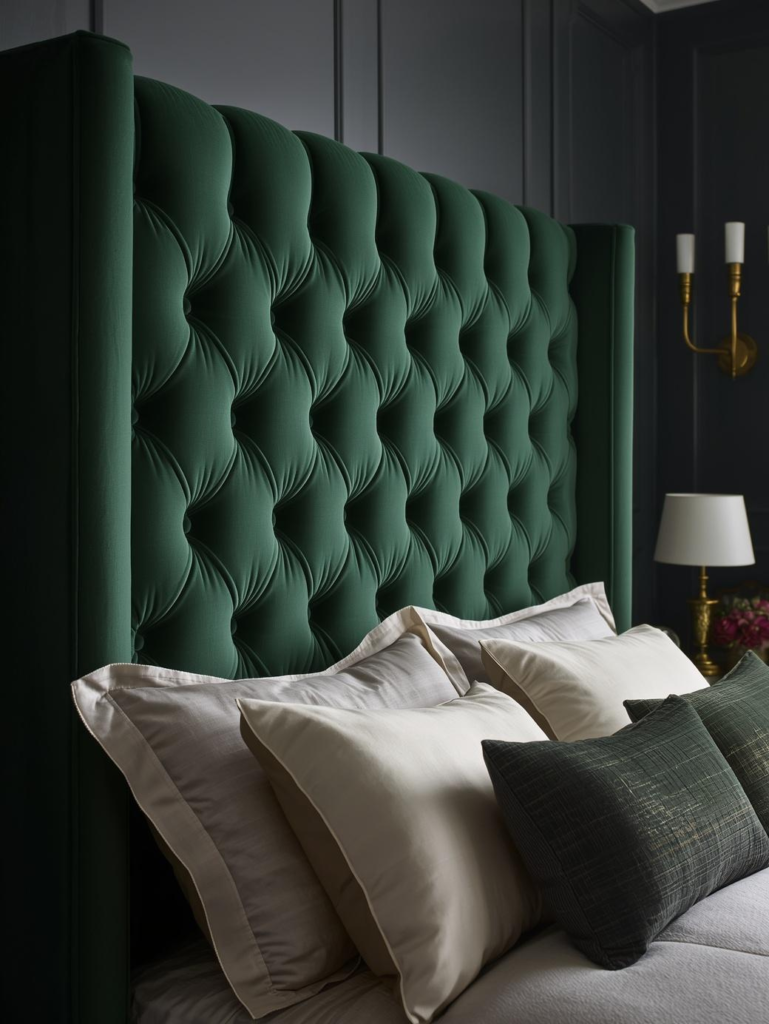
In a small bedroom, decorating restraint is wise but it does not mean the space must feel sparse. The trick is to concentrate visual drama into one hero piece and let the rest of the room breathe around it. A velvet headboard accomplishes this beautifully. Its texture catches and reflects light in ways that no painted surface can, shifting from matte to luminous depending on the angle of illumination. Tall headboards also draw the eye upward, making low ceilings feel higher and adding vertical scale to rooms that lack it.
Emerald green, midnight blue, deep wine, and black velvet are all exceptional choices for the dark feminine bedroom. Rather than matching the headboard to the walls exactly, try going one or two shades deeper or selecting a complementary jewel tone that creates contrast without conflict. The headboard should feel like the first thing you see when you enter the room, a deliberate choice that announces the entire design direction of the space. Keep surrounding furniture lower and simpler to let it hold that visual authority.
Idea 04
Incorporate Mirrors Strategically to Expand the Space
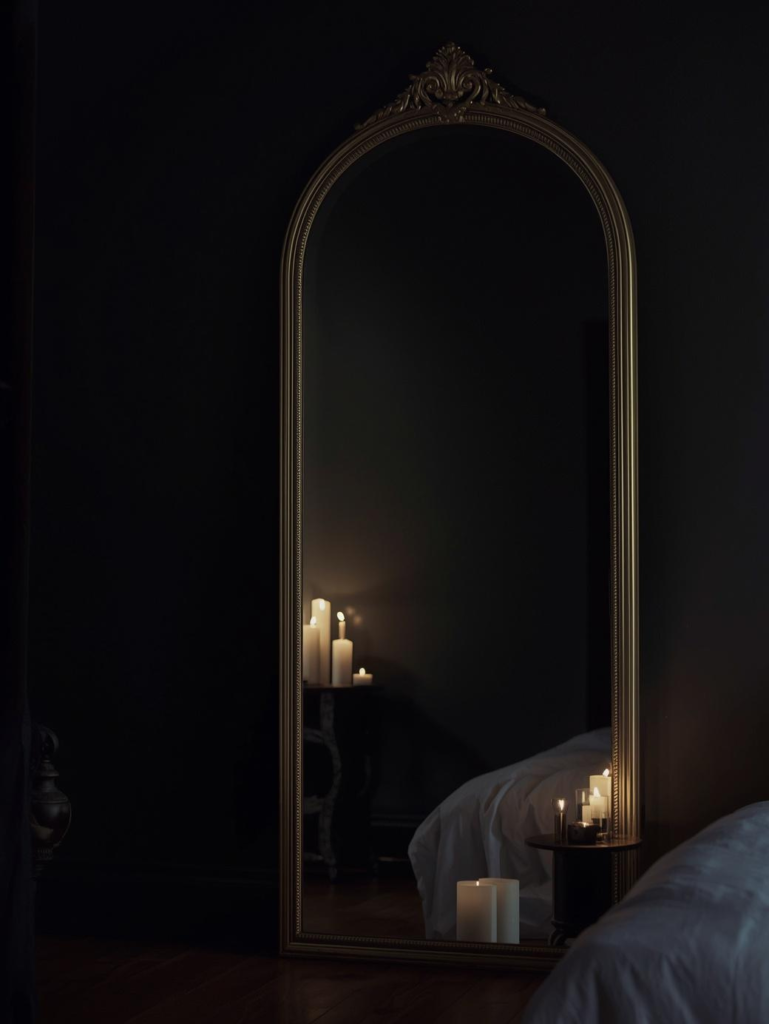
Mirrors and dark rooms have a complicated reputation. Many designers assume that mirrors only belong in light, airy spaces where they bounce natural light around the room. In reality, mirrors work just as powerfully in dark rooms, but they do something different. Rather than multiplying brightness, they multiply depth. A large mirror placed on a dark wall reflects the room back at itself, creating the sensation of a doorway into another space and effectively doubling the perceived square footage of the bedroom.
An arched or ornately framed vintage mirror adds to the dark feminine aesthetic while serving this practical function. Lean it against a wall rather than hanging it flush to give the room a more relaxed, collected-over-time feeling that aligns with the intimate mood of this aesthetic. Position the mirror so it reflects a light source, a lamp, a candle cluster, or a window, rather than a dark corner. This placement ensures the reflection adds warmth and luminosity to the room rather than simply duplicating its darker elements.
Idea 05
Go Floor-to-Ceiling with Dark Curtains to Create Height
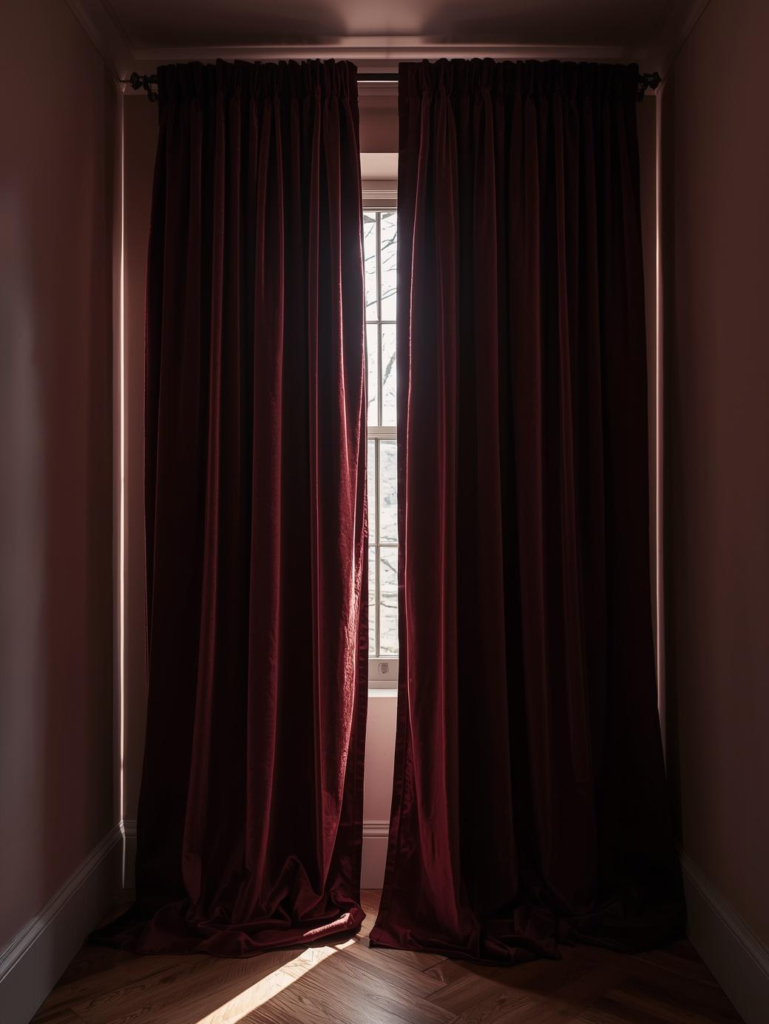
One of the fastest ways to make a small room feel taller and more dramatic is to hang curtains as high as possible, ideally right at the ceiling line, and let them fall all the way to the floor. This technique visually stretches the walls upward and creates an architectural grandeur that feels out of proportion with the actual room size in the best possible way. In a dark feminine bedroom, curtains in deep velvet or heavy linen become a major textural element in addition to their structural visual function.
Dark curtains do not block light when you want it and they create a cocooning intimacy when drawn. Burgundy, forest green, charcoal, and dusty mauve are particularly beautiful choices that align with the moody feminine palette. Using curtains in a shade that closely matches the walls creates a seamless, enveloping effect where it becomes difficult to tell where the wall ends and the fabric begins. This tonal layering removes visual interruptions and makes the room feel more expansive and considered despite its compact footprint.
Idea 06
Choose Low-Profile Furniture to Keep the Sightlines Open
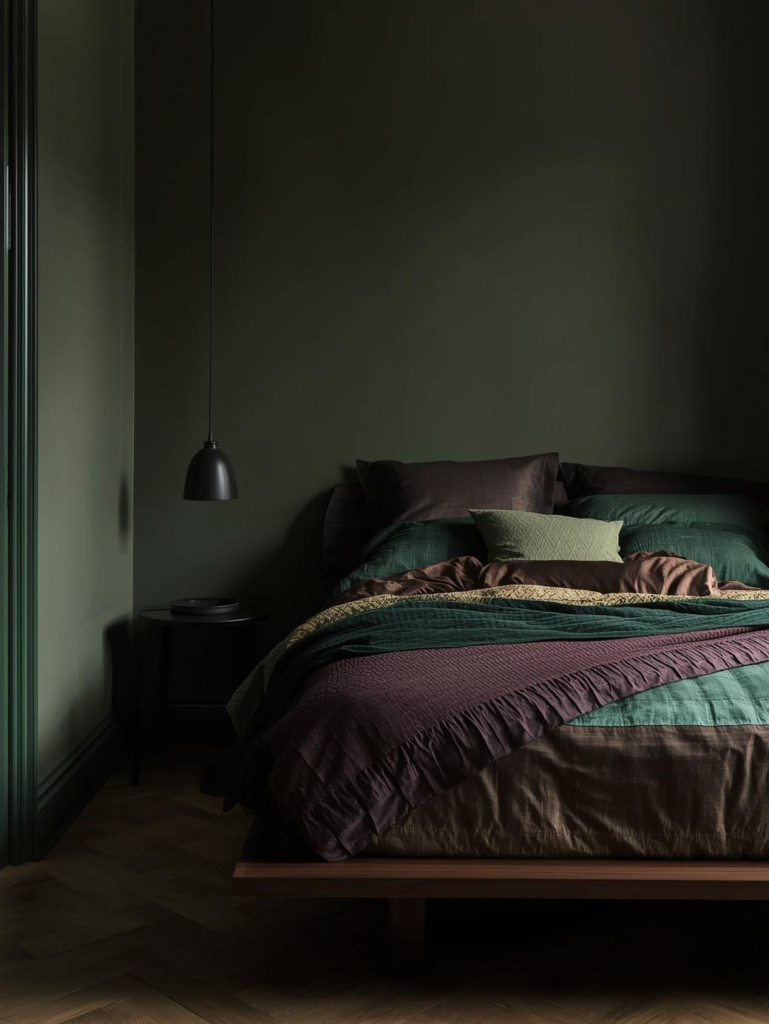
Furniture height has an enormous impact on how spacious a room feels. Tall wardrobes, chunky bed frames, and high dressers all eat into the vertical space of a room and create a sense of visual clutter even when the floor plan is relatively unobstructed. In a small dark bedroom, keeping furniture low to the ground preserves the sightlines across the room, allowing the eye to travel further and making the space feel less crowded. A low platform bed is the most important piece to consider in this context.
Low-profile furniture also creates more wall space above furniture pieces, which can then be used for artwork, sconces, or botanical arrangements without the room feeling busy. Dark wood tones, ebonized finishes, and matte black frames all work beautifully within the dark feminine palette while keeping the aesthetic cohesive from floor to ceiling. Choose pieces with clean lines and minimal hardware to avoid visual noise, and leave generous space between furniture items so the dark floor acts as a grounding element rather than a claustrophobic one.
Idea 07
Use Dark Floral Wallpaper on One Wall for Maximum Drama
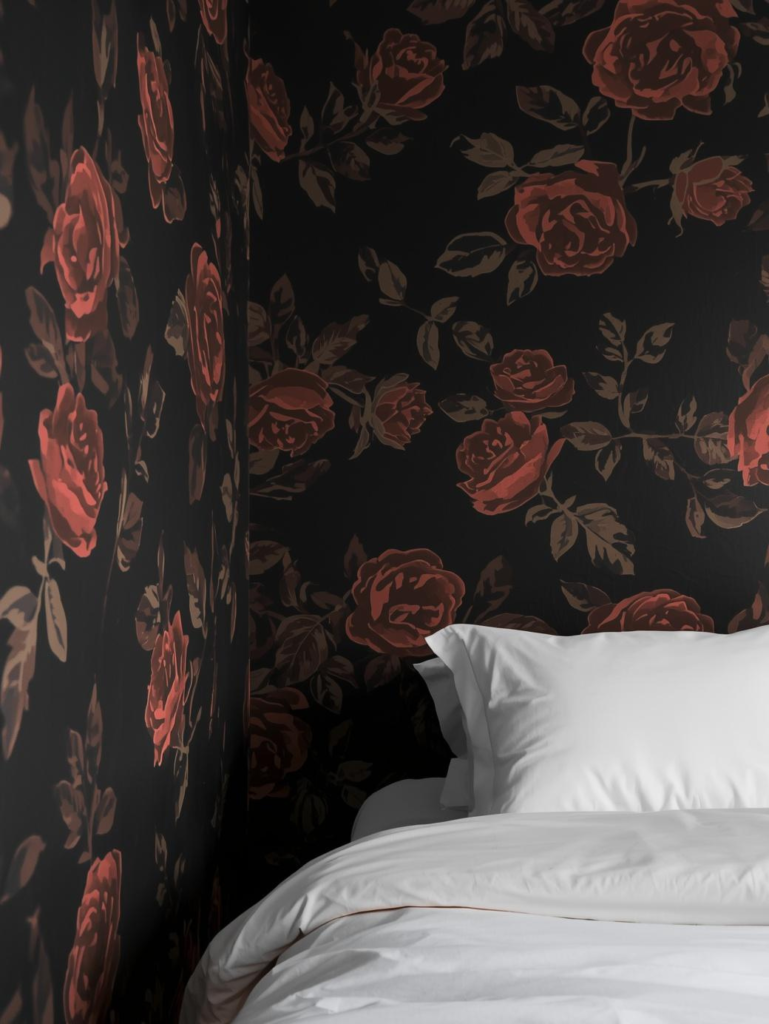
Wallpaper is experiencing a full revival and for the dark feminine bedroom it offers something paint simply cannot: intricate pattern, texture, and visual storytelling packed into a single surface. A dark botanical or floral wallpaper on the wall behind the bed transforms the room into something that feels deliberately designed rather than casually decorated. The pattern draws the eye and holds it, creating a sense of richness and depth that goes far beyond what a solid paint color can achieve, even a beautiful one.
The key to making dark wallpaper work in a small room is contrast. The bed linens, if the wallpaper is very dark and patterned, should be kept relatively simple, in white, cream, or a single jewel tone that pulls from the wallpaper’s palette without competing with it. Moody florals featuring deep roses, trailing vines, or abstract botanical motifs on backgrounds of near-black, deep teal, or midnight navy perform particularly well in this context. They feel simultaneously romantic and sophisticated, which is the exact emotional register the dark feminine aesthetic occupies.
Idea 08
Layer Textures to Add Depth Without Adding Visual Clutter

In a small dark room, color variety is limited by design. The palette is intentionally narrow, built around deep rich tones that relate to one another harmoniously. When color cannot provide visual interest, texture takes over. Layering multiple textures in a small dark bedroom creates a richness and complexity that makes the space feel expensive, considered, and deeply livable. The bed is the natural place to begin this layering process, as it occupies the most visual real estate in any bedroom.
Combine a velvet duvet cover with satin pillowcases, a faux fur throw draped at the foot of the bed, and a chunky knit blanket folded nearby. Each material catches light differently, creating subtle tonal variation across the surface of the bed even when every element is in a similar color family. Extend this textural thinking to the walls with limewash paint, to the floor with a high-pile rug, and to the nightstand with objects in ceramic, glass, and brass. The goal is for every surface to offer something interesting to touch or look at, even in a very small space.
Idea 09
Install a Canopy or Bed Crown to Create Intimate Enclosure
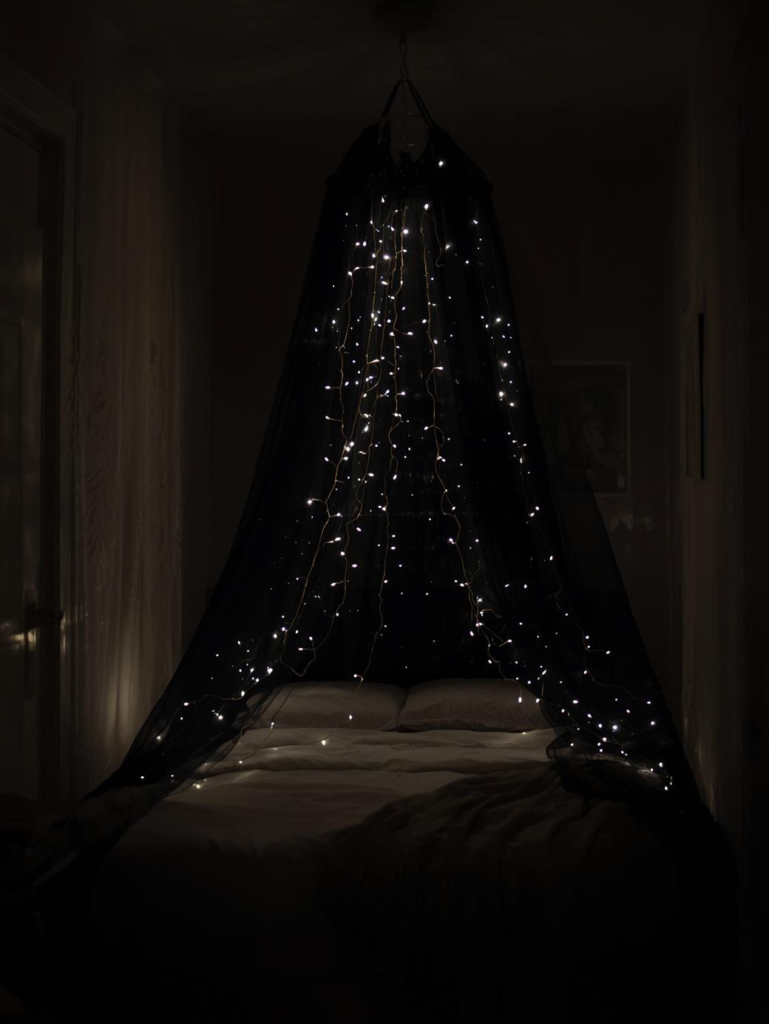
There is a paradox at the heart of small space design: sometimes making a space feel even more enclosed makes it feel more intentional and less cramped. A canopy or bed crown works on this principle. By framing the bed within a defined architectural boundary, it creates a room within a room, a private sleeping sanctuary that feels deliberately intimate rather than accidentally small. Canopies also add vertical drama, drawing the eye upward and filling the often-neglected upper portion of the bedroom with something beautiful.
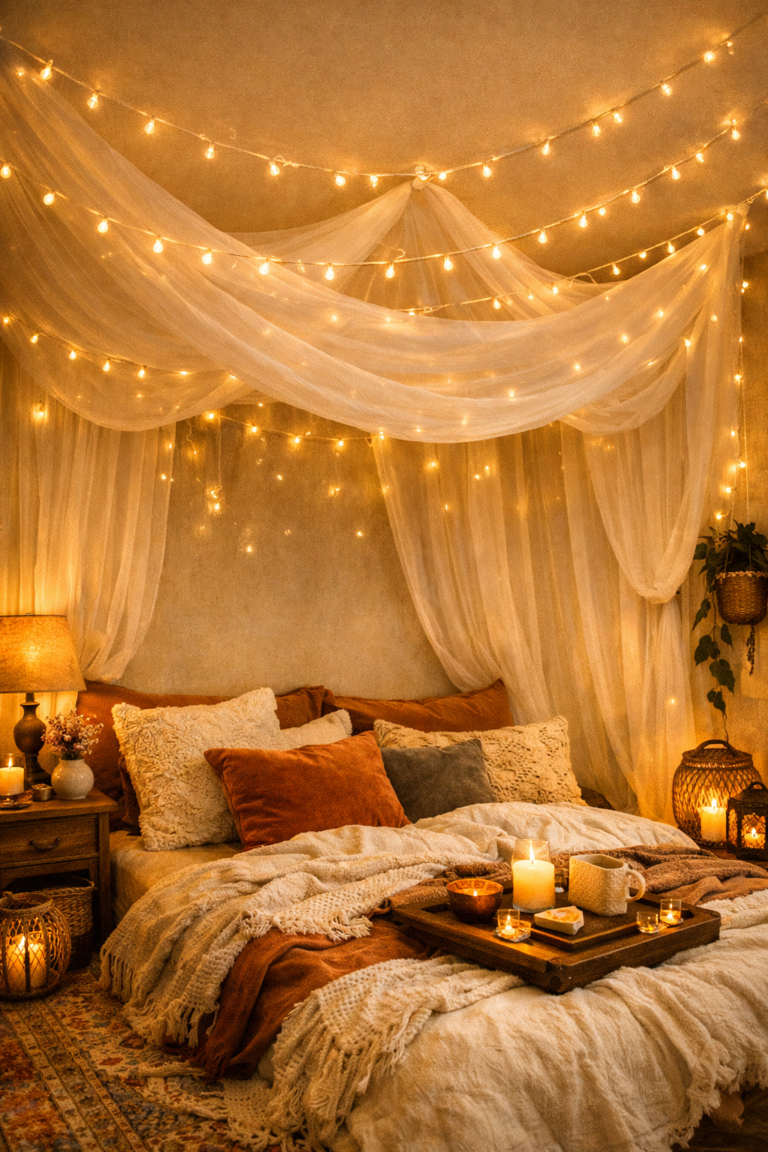
For the dark feminine bedroom, sheer black or deep jewel-toned fabric works beautifully as canopy material. A simple ceiling hook with fabric panels draped from it can achieve a very similar effect to a full four-poster bed frame at a fraction of the cost and without the visual weight of heavy wooden posts in a small room. Threading warm fairy lights through or behind the canopy fabric creates a magical glowing effect after dark that perfectly captures the dreamy, slightly otherworldly quality of the dark feminine aesthetic at its best.
Idea 10
Decorate with Dried Botanicals and Dark Organic Elements
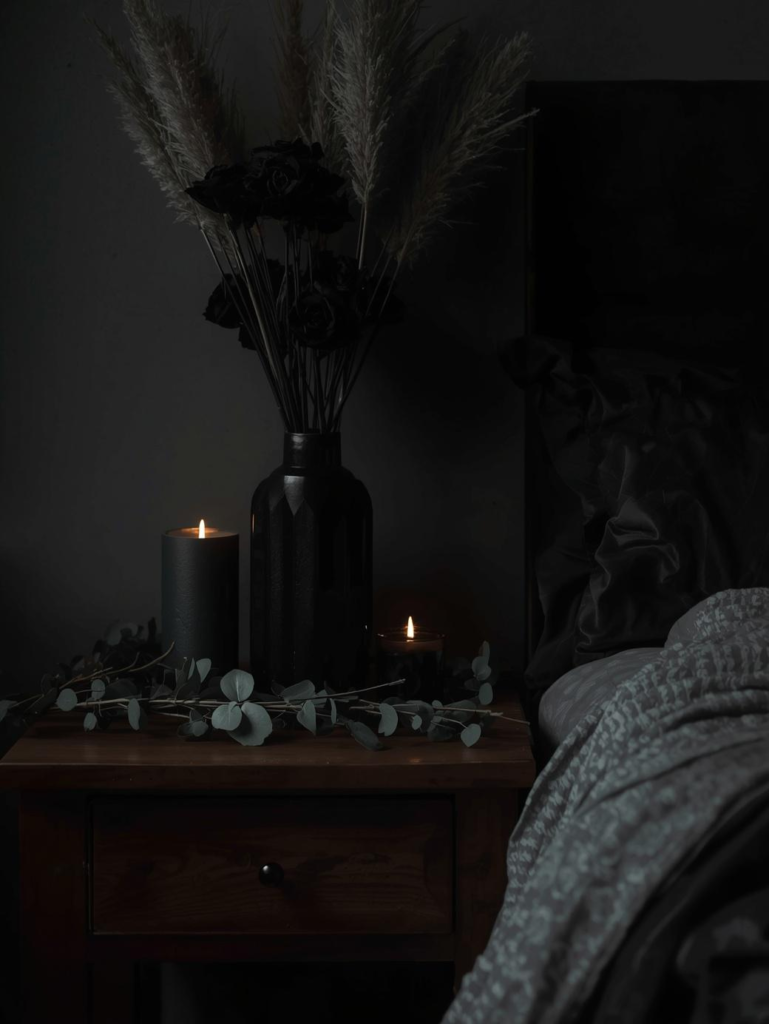
The dark feminine aesthetic draws heavily from the natural world but it prefers nature at its most dramatic: dried rather than fresh, dark rather than bright, preserved rather than fleeting. Dried botanicals are ideal for a small dark bedroom because they require no maintenance, they never wilt or drop petals onto the nightstand, and they carry a romantic melancholy that perfectly suits the mood of the space. Black-dyed or naturally dried roses, pampas grass, eucalyptus, and honesty pods all bring organic texture into a bedroom without introducing bright color.
Arrangement matters greatly in a small room. Grouping botanical elements together in a single intentional vignette on a nightstand or dresser creates more visual impact than scattering them throughout the room, which can make a compact space feel busy. Tall dark vases, ceramic vessels in matte black or deep terracotta, and dark wood trays provide the foundation for these arrangements. The overall effect should feel like something discovered in a witchy apothecary or a beautifully appointed Victorian dressing room: deliberate, personal, and slightly enchanted.
Idea 11
Use Dark Paint on the Ceiling for a Cocooning Effect
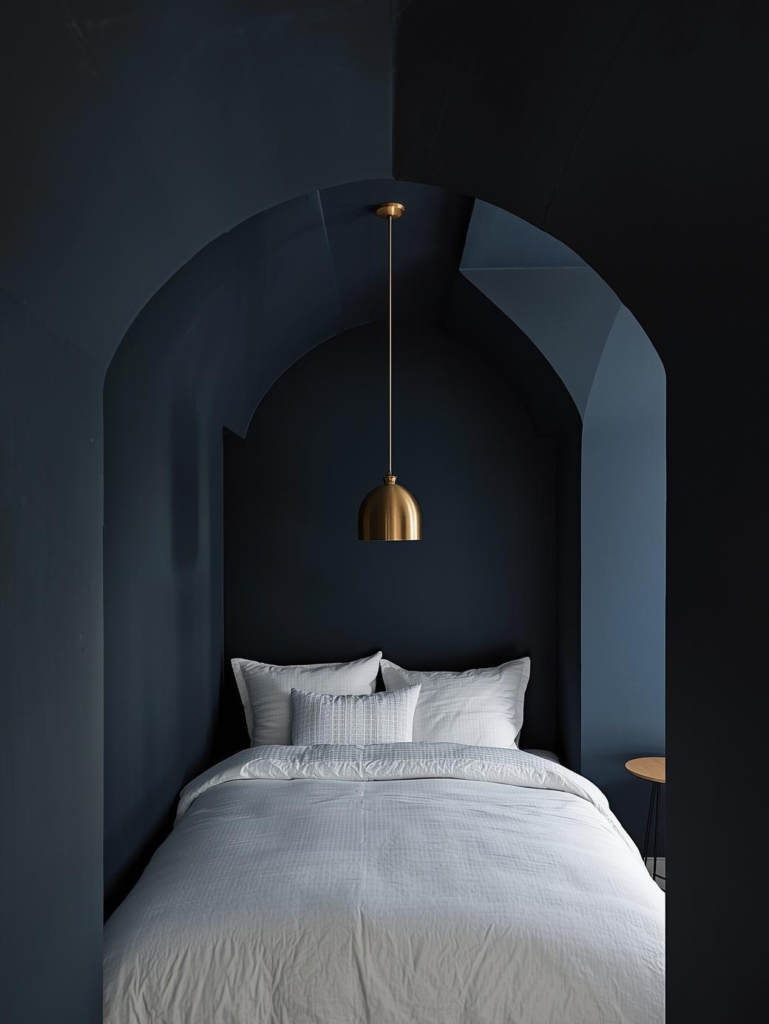
The ceiling is the most overlooked surface in any bedroom and in a small dark feminine space it represents a significant missed opportunity. Painting the ceiling in the same dark shade as the walls, or in a shade one tone deeper, creates a color-drenched enveloping effect that is one of the most talked-about design trends of 2026. Rather than making the room feel smaller, a dark ceiling removes the visual break between wall and ceiling and creates a sense of being wrapped inside the room rather than sitting beneath a flat white plane.
This technique works particularly well in rooms with lower ceilings because it shifts the aesthetic from “this ceiling is low” to “this room is intentionally intimate.” The key is to also extend the dark tone to the crown molding and any architectural details, creating a seamless shell. A single pendant light or chandelier in brass or matte black hanging from a dark ceiling becomes a dramatic focal point, its warm glow creating a halo of light that feels theatrical and beautiful. This is one of the bolder choices on this list but also one of the most transformative.
Idea 12
Incorporate Brass and Gold Accents to Warm the Darkness
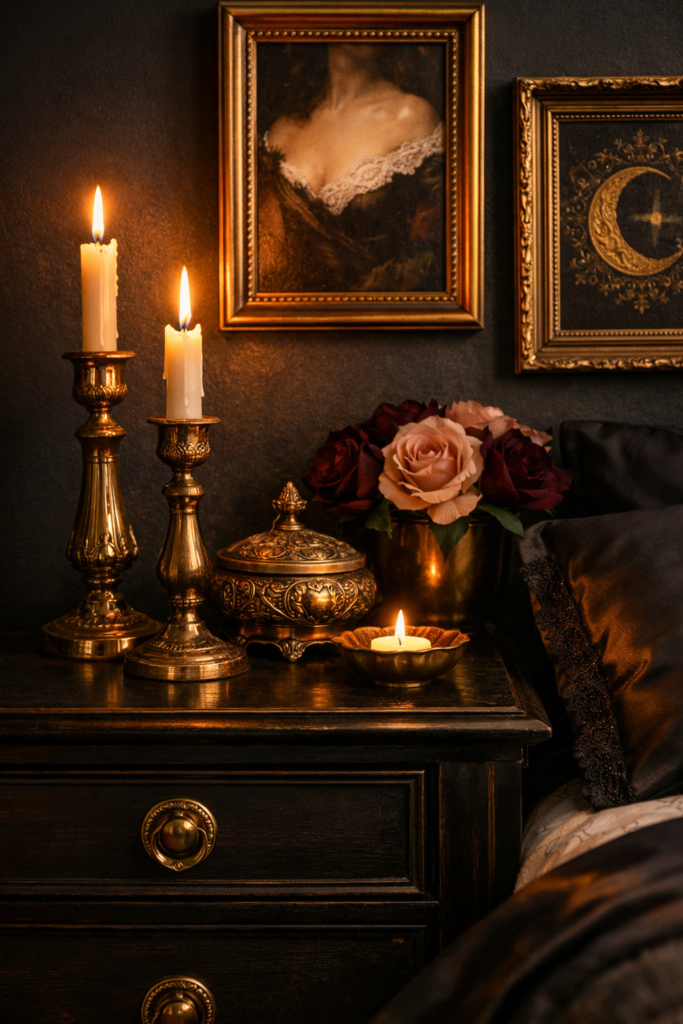
Metal accents in the right tone can completely change how darkness reads in a bedroom. Cool silvers and chromes can make dark rooms feel cold and slightly clinical. Warm brass and gold, by contrast, pull out the warmth in dark paint tones and make the entire room glow. In a small dark feminine bedroom, brass and antique gold accents serve as the moments of light relief that keep the space from feeling heavy. They catch the candlelight, the lamp glow, and even ambient daylight and redistribute it across the room in small but meaningful bursts.
The best approach is to use brass and gold consistently across multiple object types rather than concentrating it in one place. Nightstand hardware, picture frames, candle holders, drawer pulls, mirror frames, and small sculptural objects can all be sourced in warm metallic finishes. Antique or tarnished brass has a particular character that suits the dark feminine aesthetic because it feels aged, collected, and personal rather than showroom-new. Avoid mixing brass with chrome or nickel in the same room; commit to one metal family for a more cohesive, expensive-feeling result.
Idea 13
Display Dark Art and Framed Prints to Fill Vertical Space
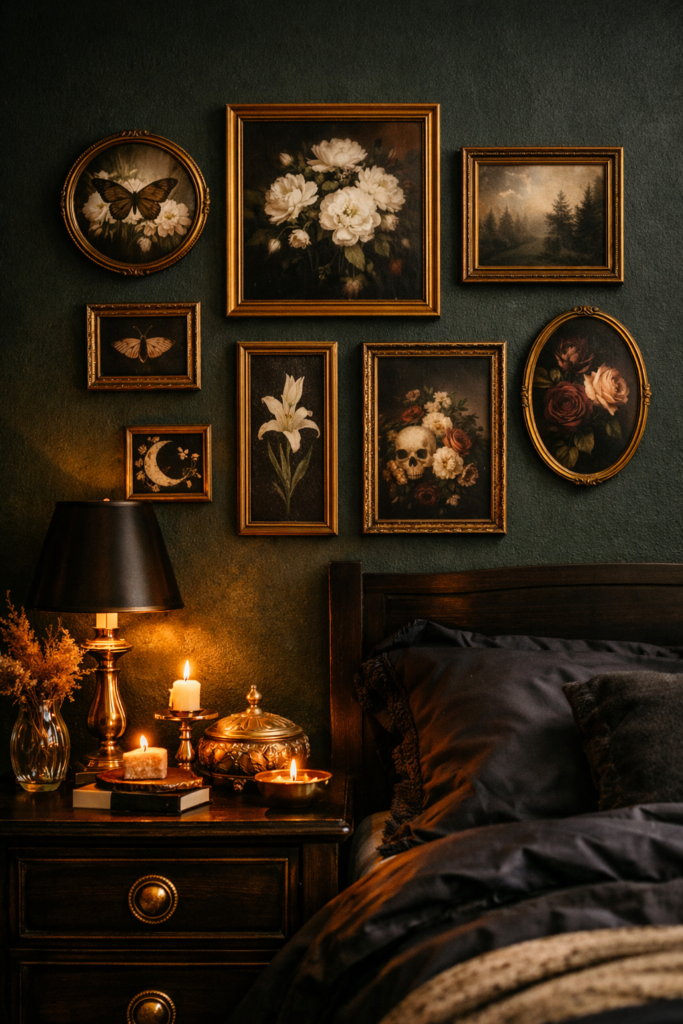
Art is one of the most effective tools for making a small room feel deliberate and fully realized. In a dark feminine bedroom, the walls are already doing significant aesthetic work through their color or wallpaper, so art needs to be chosen carefully to add to the mood rather than fight against it. Dark botanical illustrations, moody landscape prints, vintage portrait studies, and abstract works in deep jewel tones all integrate beautifully without creating visual noise. Framing matters as much as the art itself; dark wood, antique gold, and slim black frames all complement the aesthetic.
A gallery wall above the bed or along a side wall can fill vertical space meaningfully and make the room feel richer without requiring floor space. The arrangement does not need to be perfectly symmetrical; in fact a slightly asymmetric or organic arrangement suits the dark feminine aesthetic better because it feels more personal and less decorator-perfect. Keep the frames within one or two finish families to maintain cohesion and hang artwork at eye level or slightly above the bed to draw the eye upward and create the impression of greater ceiling height.
Idea 14
Add a Dark Plush Rug to Define the Bed Zone and Add Warmth
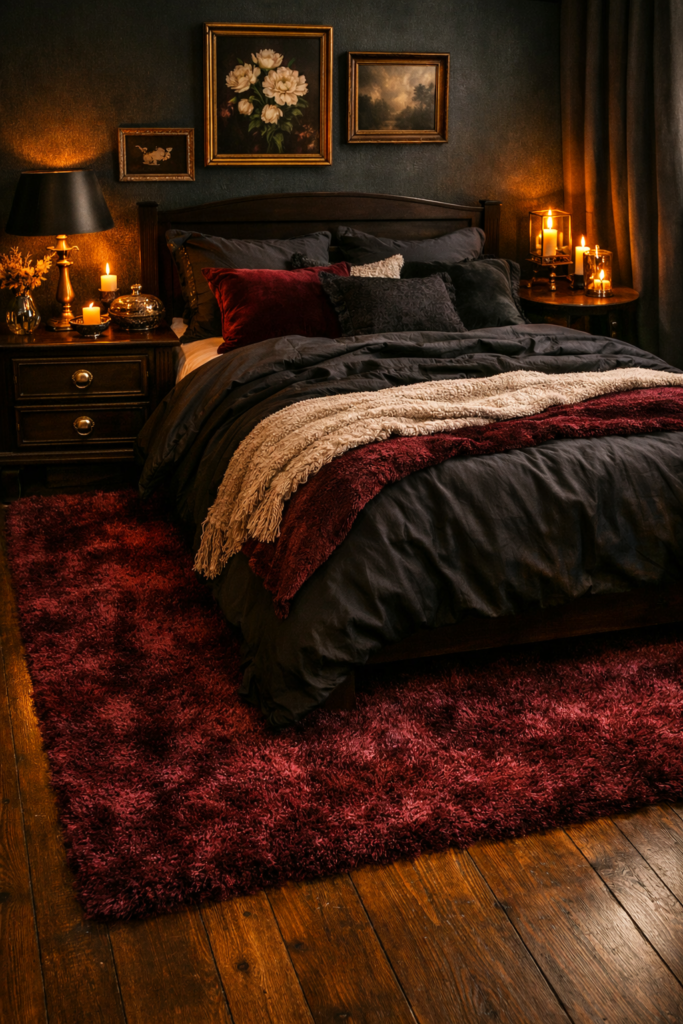
A rug serves a critical functional and aesthetic role in a small dark bedroom. Functionally, it defines the sleeping zone and separates it from the rest of the room, creating a sense of distinct spatial purpose even in a very compact footprint. Aesthetically, a large rug in a deep, rich tone adds another layer of texture and color to the floor plane, completing the enveloping quality that the dark feminine aesthetic is built on. Without a rug, bare floors in a dark room can feel cold and unanchored regardless of how well the walls and bed are styled.
The rug should be large enough to extend at least sixty centimeters on each side of the bed so that you step onto it rather than past it when getting out of bed in the morning. High-pile rugs in burgundy, deep taupe, forest green, or near-black add a tactile softness that contrasts beautifully with the drama of dark walls and heavy textiles on the bed. Persian-inspired patterns in muted jewel tones are another excellent option for a room that leans toward the maximalist side of the dark feminine spectrum, as they add visual complexity to the floor without requiring any additional decor above the rug itself.
Conclusion
A small bedroom is not an obstacle to the dark feminine aesthetic. It is a canvas that rewards the kind of layered, intentional, and intimate design thinking this style demands. The fourteen ideas above are not a checklist to complete in full. They are a set of tools to draw from, combining and adapting based on the specific dimensions, light conditions, and personal sensibility of the space in question. Some rooms will benefit most from the drama of a canopy and dark wallpaper working together. Others will find their character in something as simple as a velvet headboard against a single deep accent wall with well-placed warm lighting.
What unites all of these approaches is the understanding that darkness, handled with care, creates warmth rather than coldness, depth rather than constriction, and character rather than chaos. The dark feminine bedroom at its finest is not a room that shouts its aesthetic from across the corridor. It is a room that draws you in quietly, wraps itself around you, and makes leaving feel like a small and reluctant act. That quality, that sense of genuine sanctuary, is entirely achievable in a small space. It simply requires knowing where to begin.