12 Neutral Bedroom Aesthetic Ideas Trending in 2026
The most beautiful, textured, and quietly considered neutral bedroom approaches defining how we think about bedroom design in 2026, from warm greige to tonal linen layering and everything between
Neutral does not mean boring. That distinction, simple as it sounds, is the foundational understanding that separates a neutral bedroom that feels genuinely beautiful from one that feels merely inoffensive. The neutral bedroom at its best is not a room from which color has been removed. It is a room in which the full richness of a carefully chosen tonal palette, warm whites, sandy taupes, soft greiges, and earthy creams, has been explored with the same depth and intentionality that a more colorful room explores its hues. The result is a space that is calm without being cold, restrained without being empty, and sophisticated in a way that more assertive color choices rarely achieve.
The neutral bedroom aesthetic has evolved considerably in 2026 beyond its earlier association with stark white walls and minimalist furniture. What is trending now is richer, warmer, and more layered. It is the bedroom that earns its quietness through the quality of its materials, the depth of its textures, the considered relationships between its tonal values, and the small but deliberate details that reveal a designer’s eye without announcing it. The twelve ideas below represent the most significant and most widely admired expressions of this aesthetic currently defining bedroom design, each one offering a distinct approach to the same underlying ambition: a bedroom that feels like the most beautiful, restful version of itself.
Idea 01Color Trend
Build the Entire Room Around a Single Warm Greige Tone
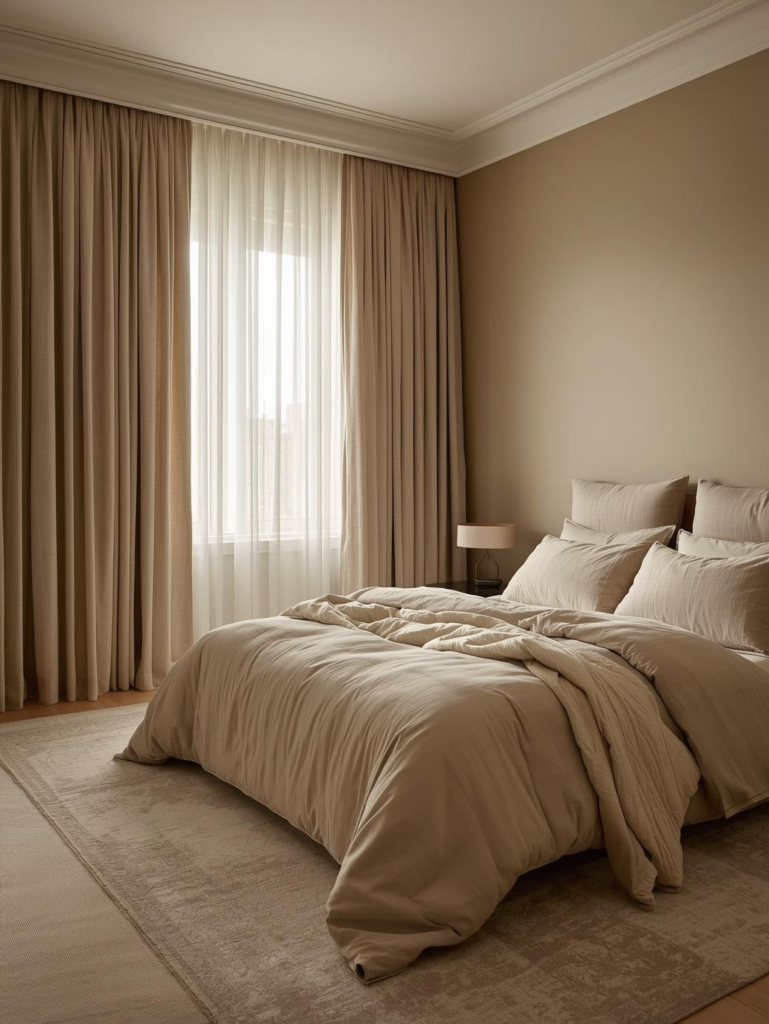
Greige, the hybrid of gray and beige that sits in the warm middle ground between cool neutrals and earthy tones, has become the defining wall color of the 2026 bedroom aesthetic. Its particular quality is an ability to shift between warmer and cooler readings depending on the light in the room at any given time of day, making it a living color rather than a static one. In morning light it reads as a warm sandy cream. In the blue-gray light of an overcast afternoon it deepens toward a sophisticated taupe. This responsiveness to light gives greige bedroom walls a richness that single-directional neutrals cannot match.
Building an entire bedroom around a single greige tone, extending it from the walls to the bedding, curtains, rug, and upholstered furniture in varying shades and textures within the same tonal family, creates the color-drenching effect that is one of the most significant and widely discussed interior trends of 2026. The effect is enveloping and deeply calm, removing all visual contrast from the room and directing attention entirely to the differences in texture and material between the elements rather than to any color relationships between them. The result photographs with a still, almost cinematic beauty that has made this approach one of the most saved bedroom aesthetics on every image-sharing platform this year.
Idea 02Texture Layering
Layer Linen, Boucle, and Waffle Weave for a Textural Neutral Bed
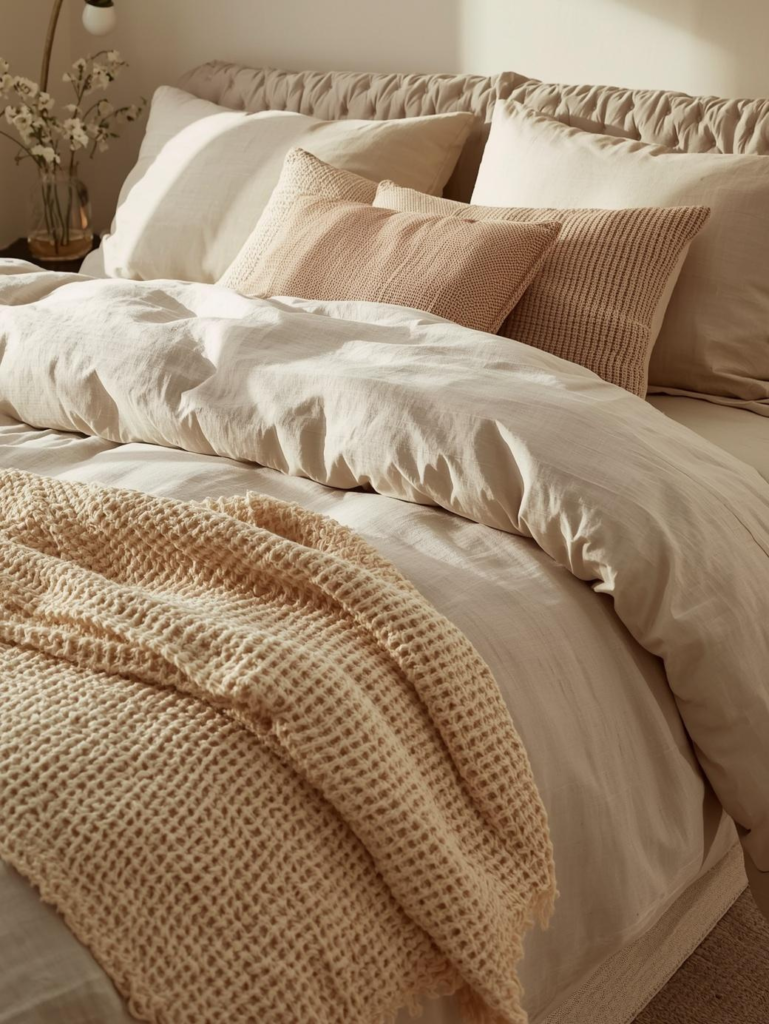
When color is removed from the equation, texture becomes the primary visual language of a bedroom and nowhere is this more apparent than on the bed itself. A neutral bed styled with multiple contrasting textures, the natural slub of washed linen against the looped nubby surface of boucle against the gridded relief of a waffle-weave throw, creates a visual and tactile richness that reads as luxurious from across the room and as deeply considered up close. Each material catches and reflects light differently, creating subtle tonal variation across the bed surface even when every element is within the same cream to sand color range.
The layering sequence matters as much as the materials themselves. A fitted linen sheet in warm white as the base, a slightly deeper linen duvet folded back at the top third of the bed, two boucle or textured cushions in front of the sleeping pillows in cases, and a waffle-weave or chunky-knit throw draped loosely across the lower third creates a bed arrangement that reads as effortlessly styled rather than laboriously assembled. Keeping all elements within a two-shade tonal range, where the deepest tone is no more than one or two shades darker than the lightest, ensures the textures read as a unified composition rather than a collection of separate decisions placed in proximity.
Idea 03Wall Treatment
Apply a Limewash or Venetian Plaster Finish for Organic Wall Depth
The limewash and Venetian plaster wall finishes that defined aspirational bedroom design in 2024 and 2025 have only deepened in their influence through 2026, evolving from trend to standard in the design-forward neutral bedroom. These finishes do something that flat paint cannot: they give the wall surface a layered, mineral quality that shifts in appearance with the changing light throughout the day, creating a bedroom where the walls themselves become a source of quiet visual interest rather than simply a background for the furniture placed against them. In a neutral bedroom where color is absent, this wall-level depth is not decorative but essential.
Limewash applied in warm cream, sand, or soft clay tones creates a bedroom atmosphere that references aged European interiors, Tuscan farmhouses, and the kind of rooms that feel as though they have been inhabited and loved for generations rather than recently decorated. Venetian plaster taken to a polished finish produces a more refined, almost marbled surface that suits the quieter luxury end of the neutral bedroom spectrum. Both finishes can be approximated with DIY techniques using diluted flat paint and application with a wide brush and damp rag, making the look accessible at a range of price points. The organic imperfection of both finishes is a feature rather than a flaw and contributes directly to the warmth the neutral bedroom depends on.
Idea 04Material Mix
Combine Raw Wood, Rattan, and Linen for a Warm Organic Palette
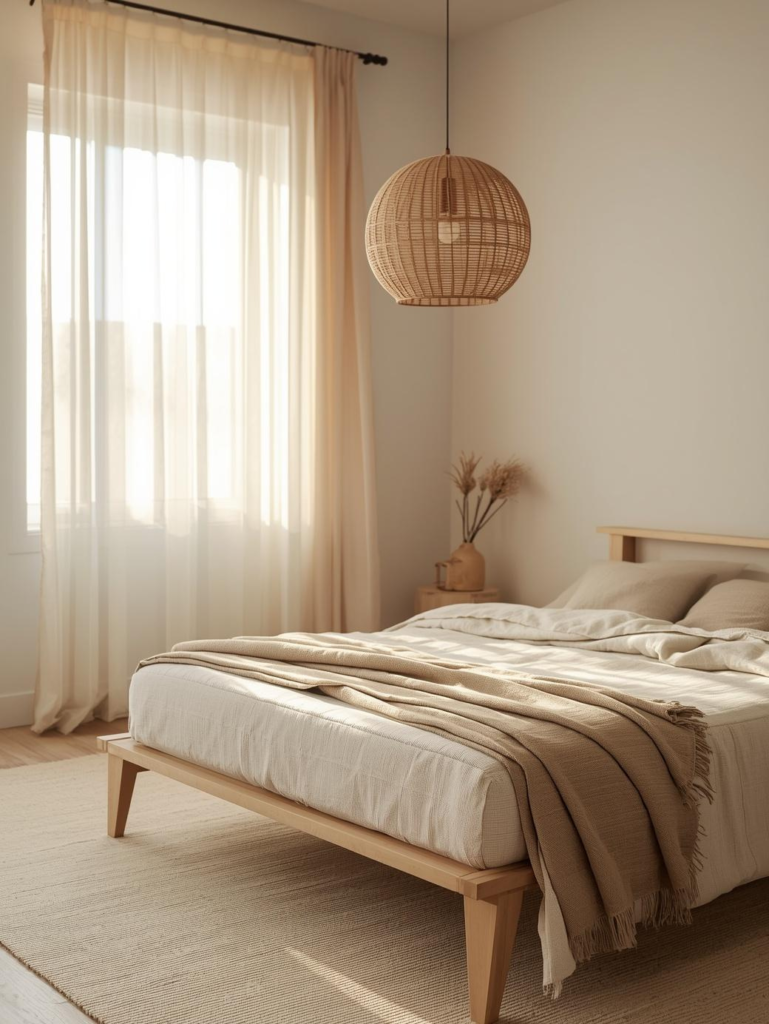
The most enduring neutral bedroom material combination of 2026 pairs raw or lightly finished wood, natural rattan or cane, and linen textiles in a palette that is warm, organic, and unmistakably rooted in the natural world. Raw oak, light ash, and unstained walnut all contribute a warmth to a neutral bedroom that painted or lacquered furniture surfaces cannot provide, because the grain and natural color variation of real wood reads as a living material rather than a manufactured finish. Paired with the woven texture of rattan in a pendant light, a bedside table, or a mirror frame, and the soft, naturally creased surface of linen bedding and curtains, the result is a bedroom that feels genuinely restful in the way that only rooms built from natural materials do.
This material combination suits the Japandi aesthetic that continues to define aspirational bedroom design in 2026, blending the Japanese appreciation for natural, imperfect materials with the Scandinavian commitment to warm, functional simplicity. The neutral tonal palette that emerges from this material mix, warm whites from the linen, honey and amber tones from the wood, sandy beige from the rattan, sits entirely within the neutral spectrum while offering a richness and variety that purely painted and upholstered rooms rarely achieve. Every element in this combination improves with age and use, developing a patina and character that makes the bedroom feel more beautiful over time rather than simply maintaining its original appearance.
Idea 05Quiet Luxury
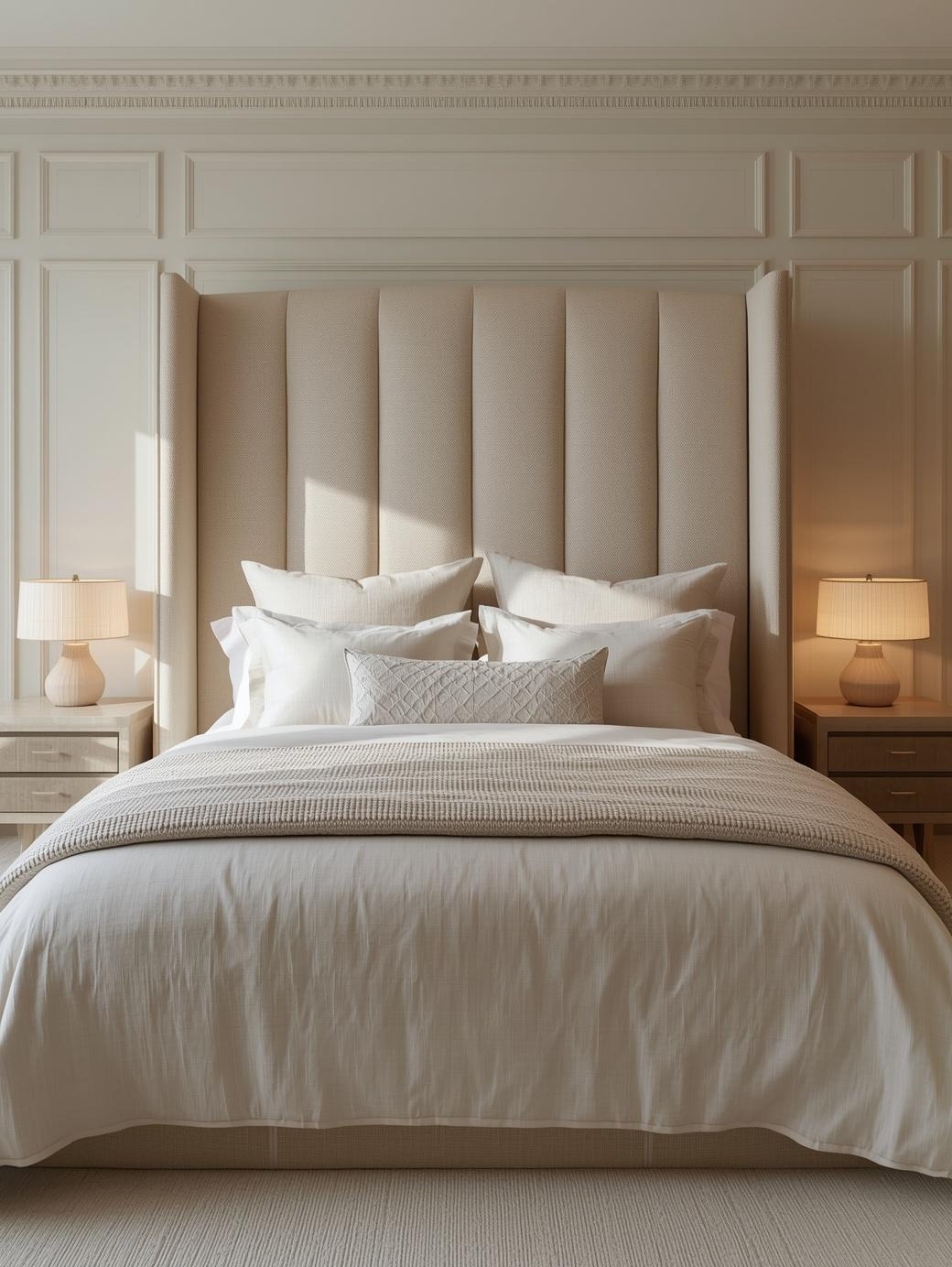
Invest in One Statement Upholstered Headboard in Cream or Oatmeal Boucle
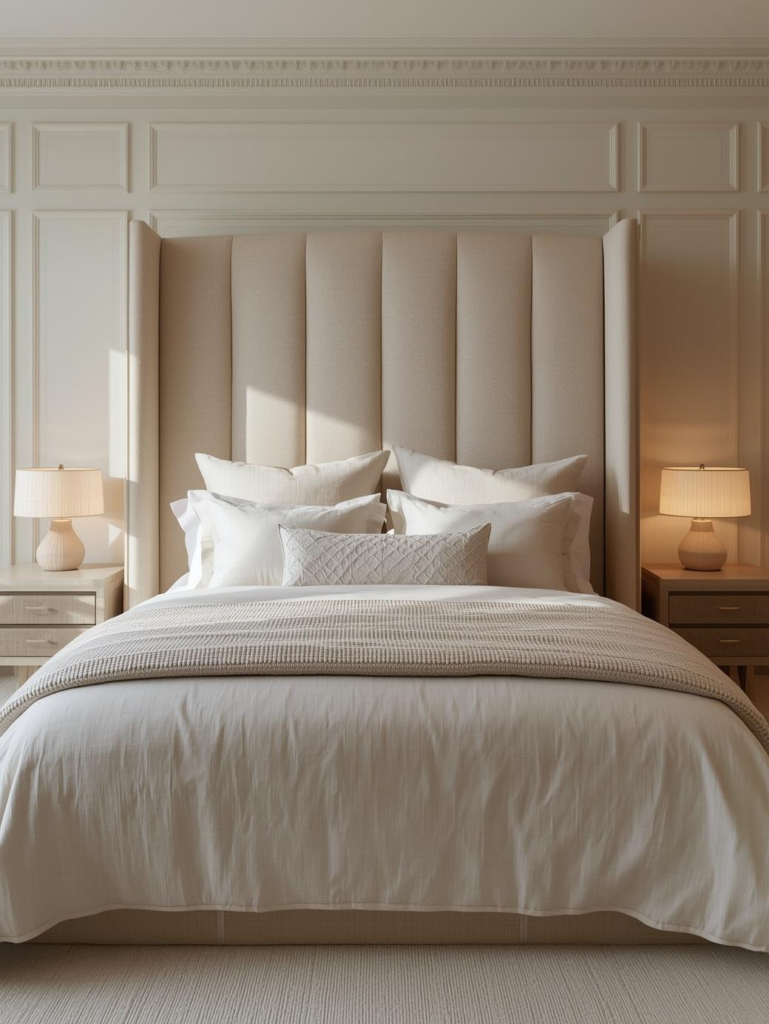
In a neutral bedroom where every element is working within a restrained tonal palette, the headboard carries an outsized share of the visual and textural work because it occupies the largest single surface visible above the bed and sets the material tone for the entire room. An upholstered headboard in cream or oatmeal boucle is the single investment that most reliably elevates a neutral bedroom from pleasant to genuinely beautiful. Its looped texture catches morning light in a way that creates a soft, sculptural quality across the face of the headboard that shifts throughout the day, making it the most visually dynamic element in the room despite its complete absence of color.
Tall headboards extending to within a foot of the ceiling line have the additional architectural benefit of making low ceilings feel higher and giving the bedroom a sense of scale and grandeur that standard-height headboards cannot provide. In a neutral bedroom, where the wall behind the headboard and the bedding in front of it are in a similar tonal family, a tall boucle headboard creates a layered composition of related textures at the room’s focal point that reads as deeply considered and expensive regardless of the surrounding furniture’s actual price point. This is the one element in the neutral bedroom where spending more produces a result that is immediately and permanently visible in the quality of the room.
Idea 06Lighting
Use Warm Ambient Lighting Exclusively to Keep the Neutral Palette Alive After Dark
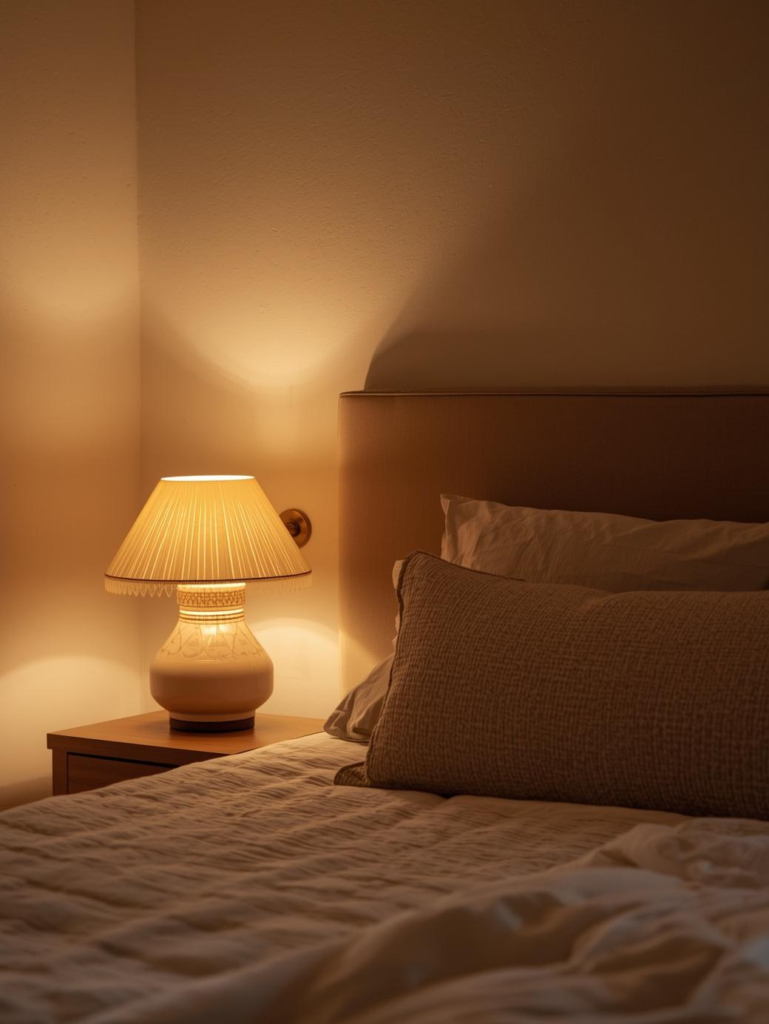
Neutral bedrooms are uniquely vulnerable to the damage that cool or harsh artificial lighting inflicts on their carefully constructed palette. A bedroom built in warm creams and sandy taupes that looks beautiful in natural daylight can read as flat, yellowish, or even greenish under the wrong artificial light source after dark. The solution is deliberate and consistent: warm bulbs in the 2200K to 2700K color temperature range used exclusively throughout the bedroom, with overhead ceiling fixtures replaced or supplemented by bedside lamps, wall sconces, and any ambient light sources positioned at eye level or below. This lighting strategy envelops the neutral tones in warmth rather than stripping them of it.
The placement of light sources at multiple heights throughout a neutral bedroom creates dimension and shadow that flat overhead lighting eliminates. A bedside lamp casting a warm pool of light across linen bedding reveals the texture of the fabric in a way that overhead illumination flattens entirely. A wall sconce angled toward a limewash wall surface brings out the layered depth of the finish that disappears under diffuse overhead light. Dimmers on every circuit in the bedroom allow the atmosphere to be modulated from reading light to sleeping light to the softest possible ambient glow, giving the neutral bedroom the theatrical range that its restrained palette might otherwise suggest it lacks.
Idea 07Window Treatment
Hang Floor-to-Ceiling Linen Curtains in a Tone Matching the Walls
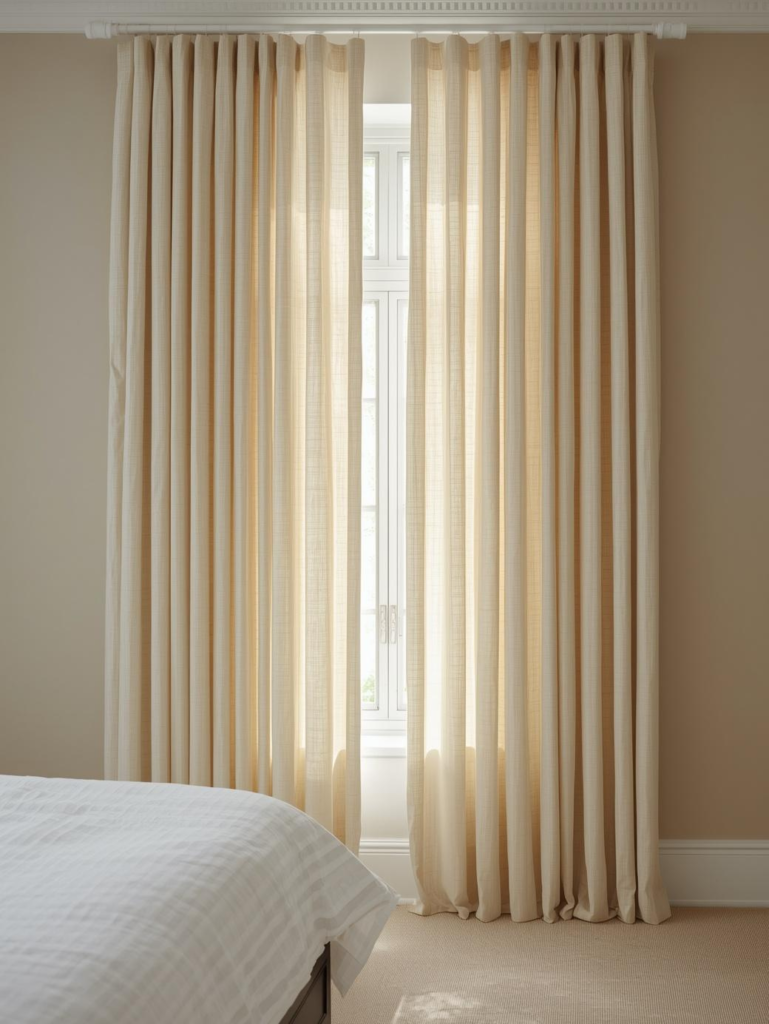
The curtain decision in a neutral bedroom has the power to either reinforce the enveloping quality of the tonal palette or interrupt it with a visual boundary that divides wall from window treatment and introduces unnecessary contrast into a composition that depends on its continuity for its effect. Hanging floor-to-ceiling linen curtains in a tone that matches or closely relates to the wall color removes this visual interruption, making the curtained wall read as one continuous, textured surface from ceiling to floor. The curtains become part of the wall rather than a separate element applied to it, and the room gains an architectural quality that standard window treatments cannot provide.
Mounting the curtain rod within four to six inches of the ceiling line and choosing panels long enough to just pool on the floor reinforces the vertical proportion of the room and makes the ceiling feel significantly higher than its actual measurement. In a neutral bedroom where the curtains, walls, and much of the bedding share a tonal family, the window becomes the most dramatic architectural element in the space because of the quality of light it admits rather than because of any contrast it creates. Natural linen in warm white or sand, layered over a blackout liner, achieves the dual function of beautiful daytime softness and complete darkness for sleeping without compromising the aesthetic coherence of the neutral palette.
Idea 08Minimalist
Edit the Room to Its Essential Elements and Let Negative Space Work
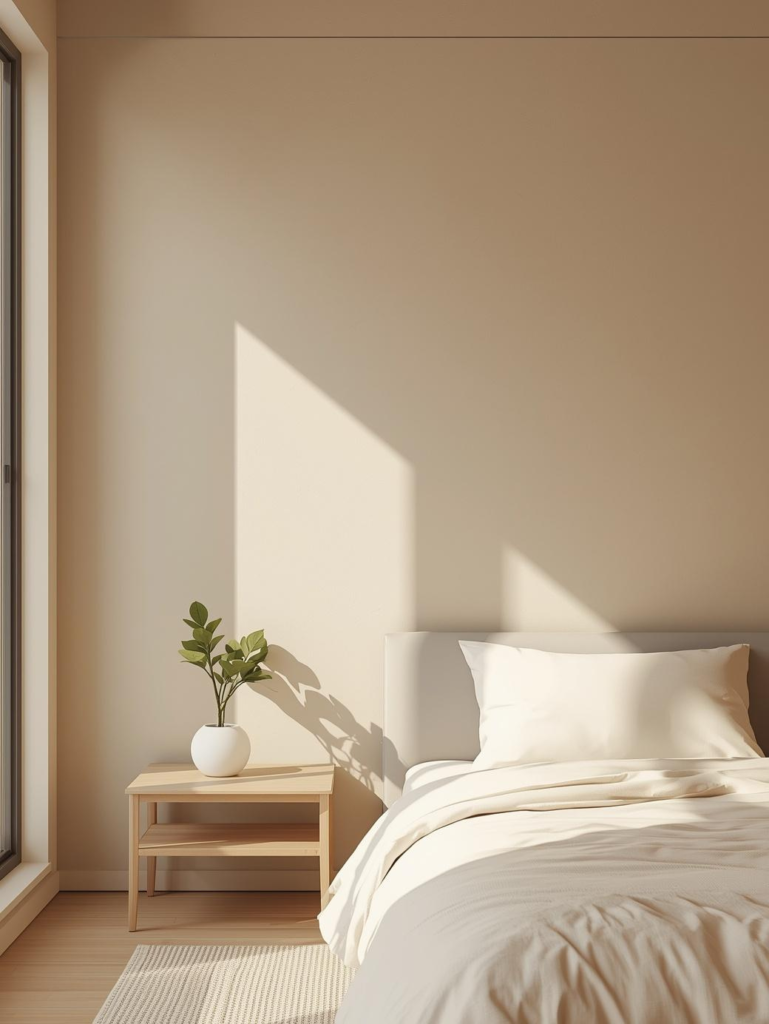
The minimalist approach to the neutral bedroom operates on a principle that runs counter to most decorating instinct: that removing elements from a room makes it more beautiful rather than less complete. In a neutral bedroom where there is no color to carry visual interest, the quality of the space between objects becomes as important as the objects themselves. Empty wall sections, clear floor areas, and surfaces with only one or two carefully chosen objects on them create a breathing room that allows the eye to slow down, rest, and appreciate the materials and proportions that are present without the distraction of accumulated objects competing for attention.
Editing a neutral bedroom to its essential elements, the bed, one or two nightstands, a light source on each side, and perhaps a single plant or one piece of art, requires the confidence to leave things out even when surfaces and walls feel bare by conventional decorating standards. The rooms that most effectively use negative space as a design element are those where what remains has been chosen with such care that its quality is immediately apparent in the absence of surrounding clutter. A perfectly made bed in beautiful linen on a well-proportioned wooden frame, positioned in a room with clean walls and clear floor, communicates more about design sensibility than the same bed surrounded by furniture and objects accumulated to fill every available surface.
Idea 09Earthy Neutral
Introduce Terracotta and Clay Accents to Warm a Cool Neutral Palette
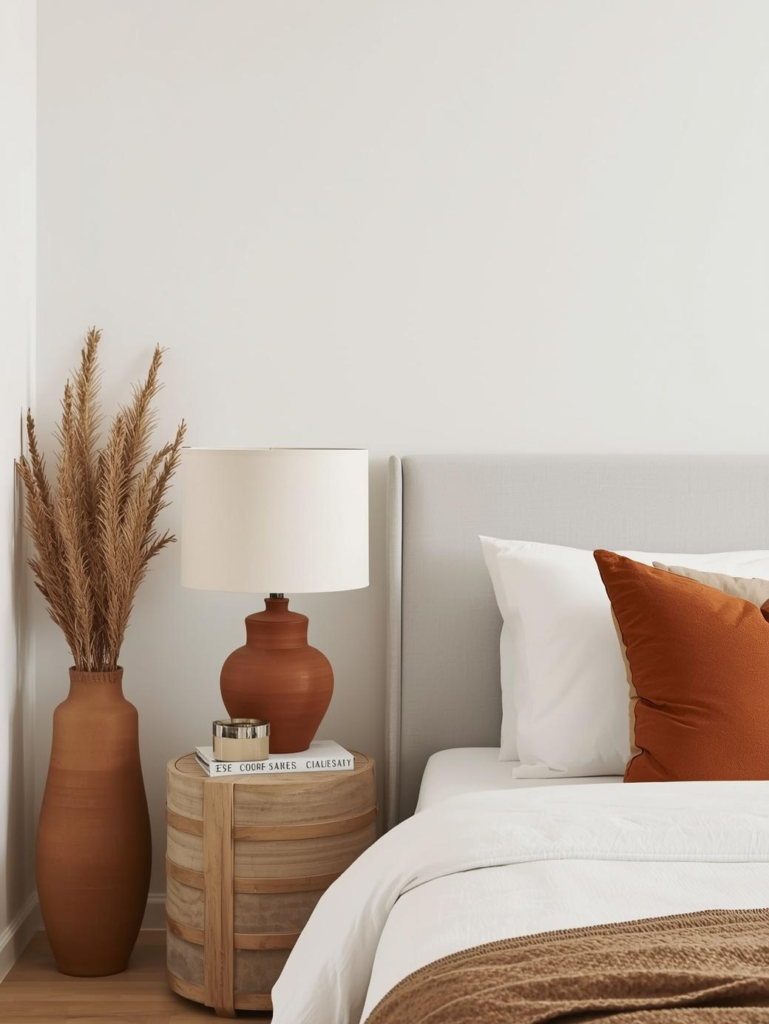
A neutral bedroom built on a foundation of whites and light grays can tend toward coolness that, while visually clean, lacks the warmth that makes a bedroom feel genuinely welcoming and restful rather than clinical. Introducing terracotta, clay, and warm earth tones as accent elements within the neutral palette corrects this without disrupting the overall tonal restraint of the room. These earthy accents, introduced through a ceramic lamp base, a clay-toned throw cushion, a terracotta plant pot, or a dried botanical arrangement in a warm-toned vase, push the room’s temperature from cool to warm without adding a color that reads as decorative in a way that compromises the neutral aesthetic.
The distinction between terracotta as a neutral accent and terracotta as a color statement lies entirely in how it is used. A single terracotta element in a room of whites and sandy tones reads as a warm earth tone within the neutral family. Multiple terracotta elements in a room of whites and grays begins to read as a color-blocked design decision. The correct approach is to use earthy accents with restraint, placing them where they will make the most difference to the room’s warmth, typically on the nightstand surfaces and in the textiles closest to the bed, and keeping them subordinate in visual weight to the primary neutral tones that define the overall aesthetic of the space.
Idea 10Plant Styling
Style With Dried and Preserved Botanicals for Organic Warmth Without Color
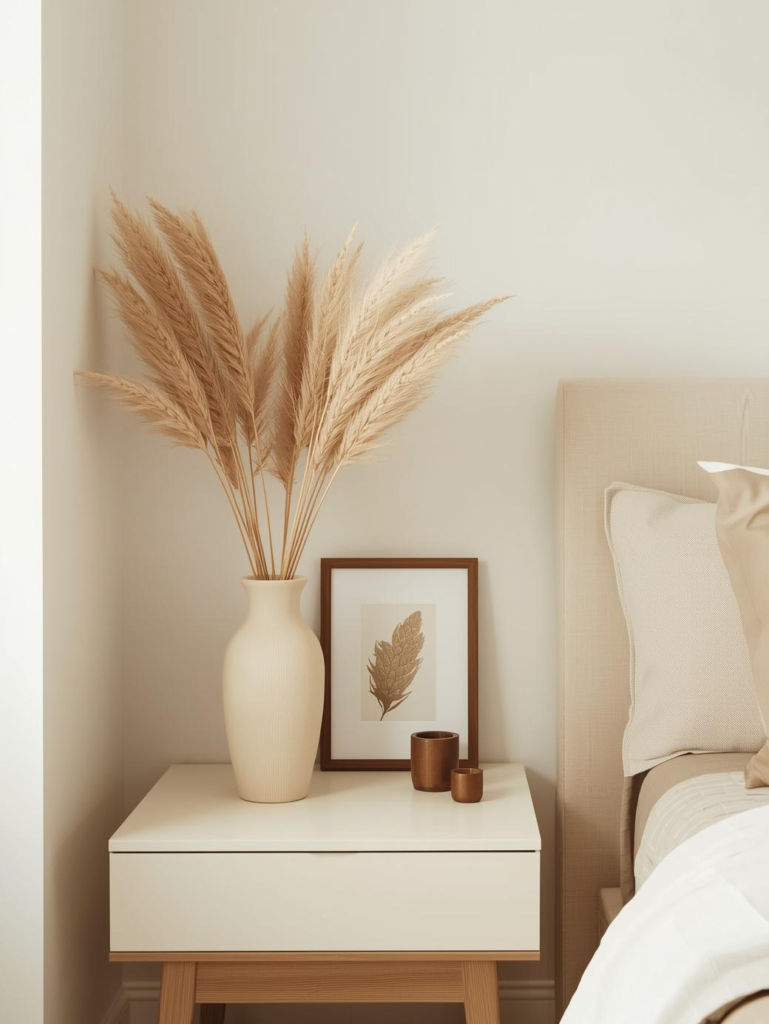
Fresh flowers introduce bright color into a neutral bedroom that can disrupt the carefully maintained tonal palette, but dried and preserved botanicals offer the organic warmth, texture, and natural reference of plant material without introducing any color that sits outside the neutral spectrum. Dried pampas grass in cream and sandy tones, dried wheat stems, bleached branches, preserved eucalyptus in its muted gray-green, and dried cotton stems all integrate into a neutral bedroom with a naturalness that feels compositionally correct rather than decoratively added. They bring the outdoors in without the chromatic interruption that living plants inevitably introduce.
Dried botanicals also carry a quality of stopped time and quiet permanence that suits the contemplative atmosphere of a well-designed neutral bedroom. A tall stem of dried pampas grass in a simple ceramic vase on a nightstand, a small arrangement of dried wheat in a bud vase on a dresser, or a pressed botanical specimen in a slim frame on a wall all contribute to the sense of a room that has been assembled with patience and personal attention rather than purchased and installed. Their warm, straw-toned palette sits entirely within the greige and sand spectrum that defines the 2026 neutral bedroom aesthetic, making them the most naturally congruent botanical choice for this particular design direction.
Idea 11Rug Choice
Anchor the Bed With a Large Wool or Jute Rug in a Tonal Neutral
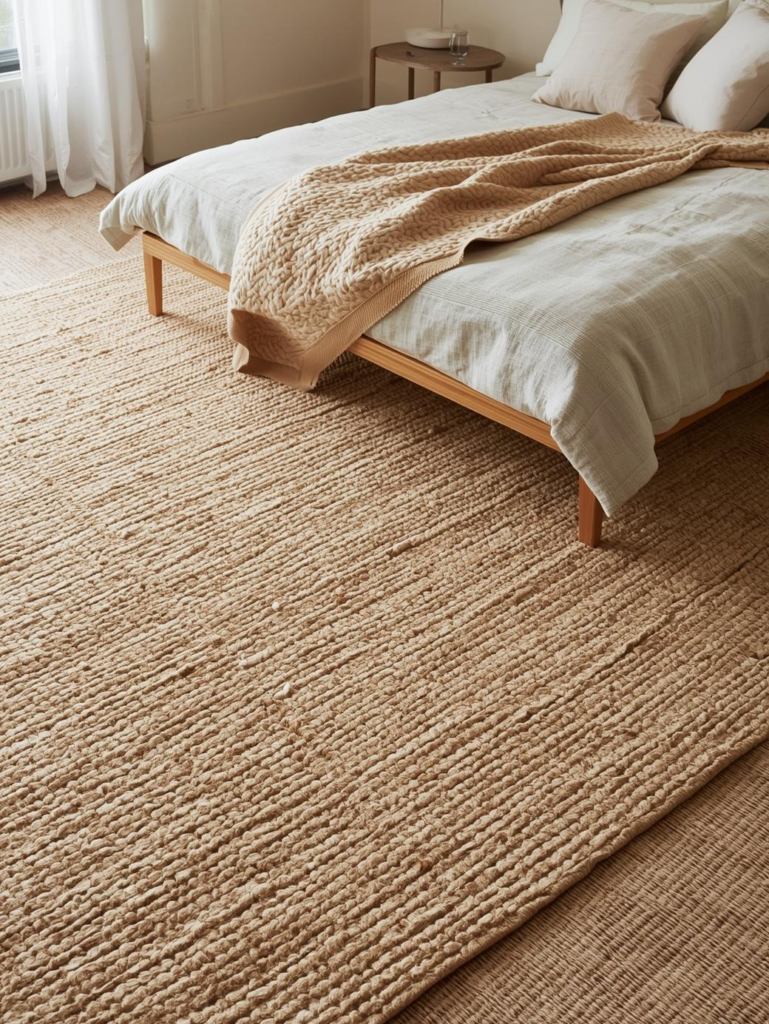
The floor plane of a neutral bedroom is as important to the overall tonal composition as the walls and textiles, and a rug in the wrong material or the wrong tone can undermine the carefully maintained warmth of the neutral palette as effectively as any other single incorrect element. A large wool or jute rug in oatmeal, warm ivory, or sandy beige, sized generously enough to extend at least sixty centimeters on each side of the bed, anchors the sleeping area with organic warmth and introduces the tactile softness underfoot that is one of the most fundamentally satisfying qualities of a well-appointed bedroom. The rug should be felt as well as seen.
Wool rugs in the neutral bedroom offer a depth and warmth of tone that synthetic alternatives struggle to replicate, and their natural fiber construction means they improve in softness and character with age and regular use. A low pile or flat-weave wool rug in a solid neutral tone allows the texture of the weave itself to carry the visual interest rather than any pattern or color contrast, which suits the restrained aesthetic of the neutral bedroom better than more decorative rug styles. Placed on bare wooden floorboards, the warm tones of the rug and the natural warmth of the wood create a floor plane that is as tonally considered as the walls and ceiling above it.
Idea 12Art and Objects
Choose Art and Objects in Tone Rather Than Color for a Cohesive Finish
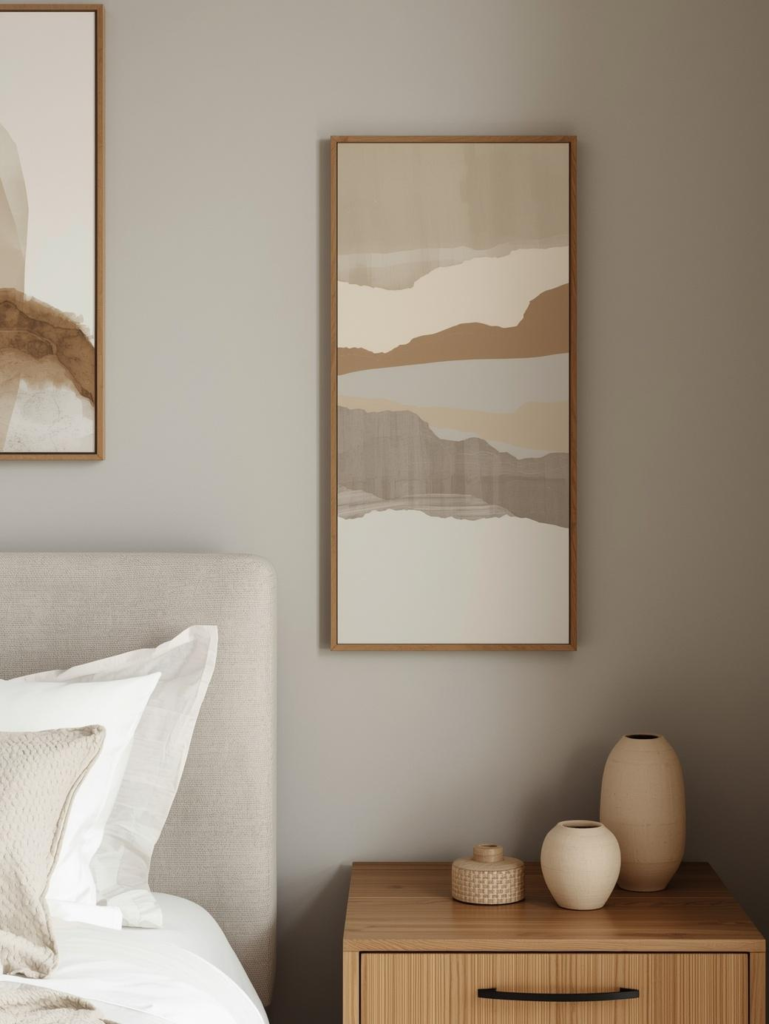
The final layer of a neutral bedroom, the art on the walls and the objects on the surfaces, is where many otherwise beautifully executed neutral rooms introduce a discordant note by choosing pieces that are visually interesting in isolation but tonally incompatible with the palette that has been built below and around them. A neutral bedroom built in warm creams and sandy taupes is disrupted by art with strong black lines or bright color accents, just as it is disrupted by objects in chrome, cool white ceramics, or painted surfaces in tones that sit outside the established palette. Choosing art and objects in tone rather than in subject matter ensures that these final additions reinforce rather than compromise the coherence of the whole.
Abstract works in cream, warm gray, sandy beige, and soft terracotta integrate into a neutral bedroom palette with the most natural ease because their color is already within the established tonal family and their lack of representational subject matter allows them to function as textural and tonal elements rather than focal points that demand interpretation. Ceramic objects in matte warm white, unglazed terracotta, and natural stoneware finishes, a simple vase, a small sculptural piece, a textured bowl, contribute to the surface styling of nightstands and dressers without introducing any visual note that falls outside the palette. This disciplined final layer is what distinguishes a neutral bedroom that feels complete from one that feels unfinished.
Conclusion
The neutral bedroom aesthetic of 2026 is not a trend in the conventional sense of a look that will feel dated within a season or two. It is an approach to bedroom design rooted in enduring principles of material quality, tonal restraint, textural richness, and deliberate composition that have defined the most beautiful interiors across cultures and centuries. What changes from year to year is the specific expression of these principles, the particular shade of greige that feels most current, the material combination that most captures the mood of the moment, the lighting approach that best suits the way we live now. The twelve ideas in this article represent where that expression stands in 2026, each one a different facet of the same underlying commitment to rooms that are calm, considered, and quietly beautiful.
Begin with the tonal palette and let every subsequent decision, materials, lighting, textiles, art, and objects, serve and strengthen that foundation. A neutral bedroom built on a clear, warm, and internally consistent palette with layers of texture accumulated carefully above it will outlast every more colorful and trend-dependent room in the house in terms of both visual beauty and the quality of the daily experience it provides. It is the room that rewards waking up in, that makes the ordinary ritual of beginning and ending a day feel slightly more significant than it would anywhere else. That quality is what every bedroom should aspire to and what the neutral aesthetic, executed with genuine attention, reliably delivers.