17 Modern Foyer Ideas
You Will Love in 2026
The foyer is the first room every guest experiences and the last one every resident passes through before stepping out into the day. It is a space that sets the tone for everything that follows, communicating the character, values, and aesthetic of the home within seconds of arrival. Yet in most houses the foyer is treated as little more than a transitional corridor, furnished with whatever is leftover and styled with whatever happens to accumulate near the door. In 2026, that approach is being replaced by a more intentional one, in which the entryway is designed with the same care and considered detail as any other room in the home. The seventeen ideas in this guide represent the most exciting, practical, and Pinterest-worthy directions that modern foyer design is taking this year, from bold architectural statements to quietly functional details that make arriving home feel genuinely wonderful every single time.
Idea 01
Install a Dramatic Statement Console
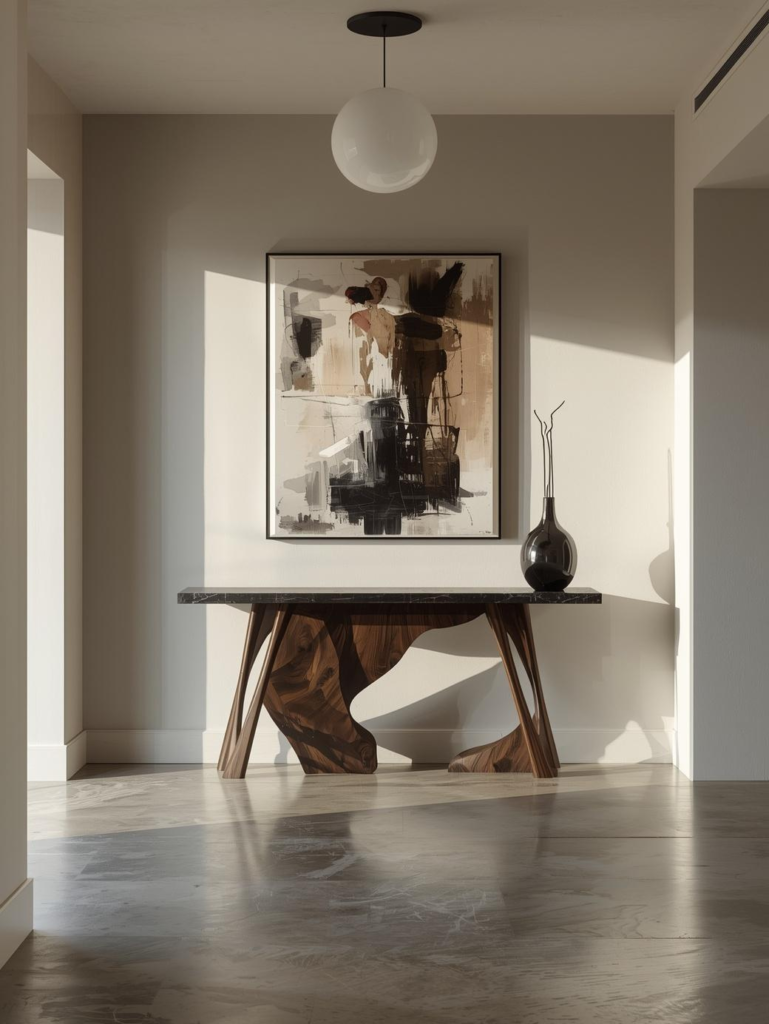
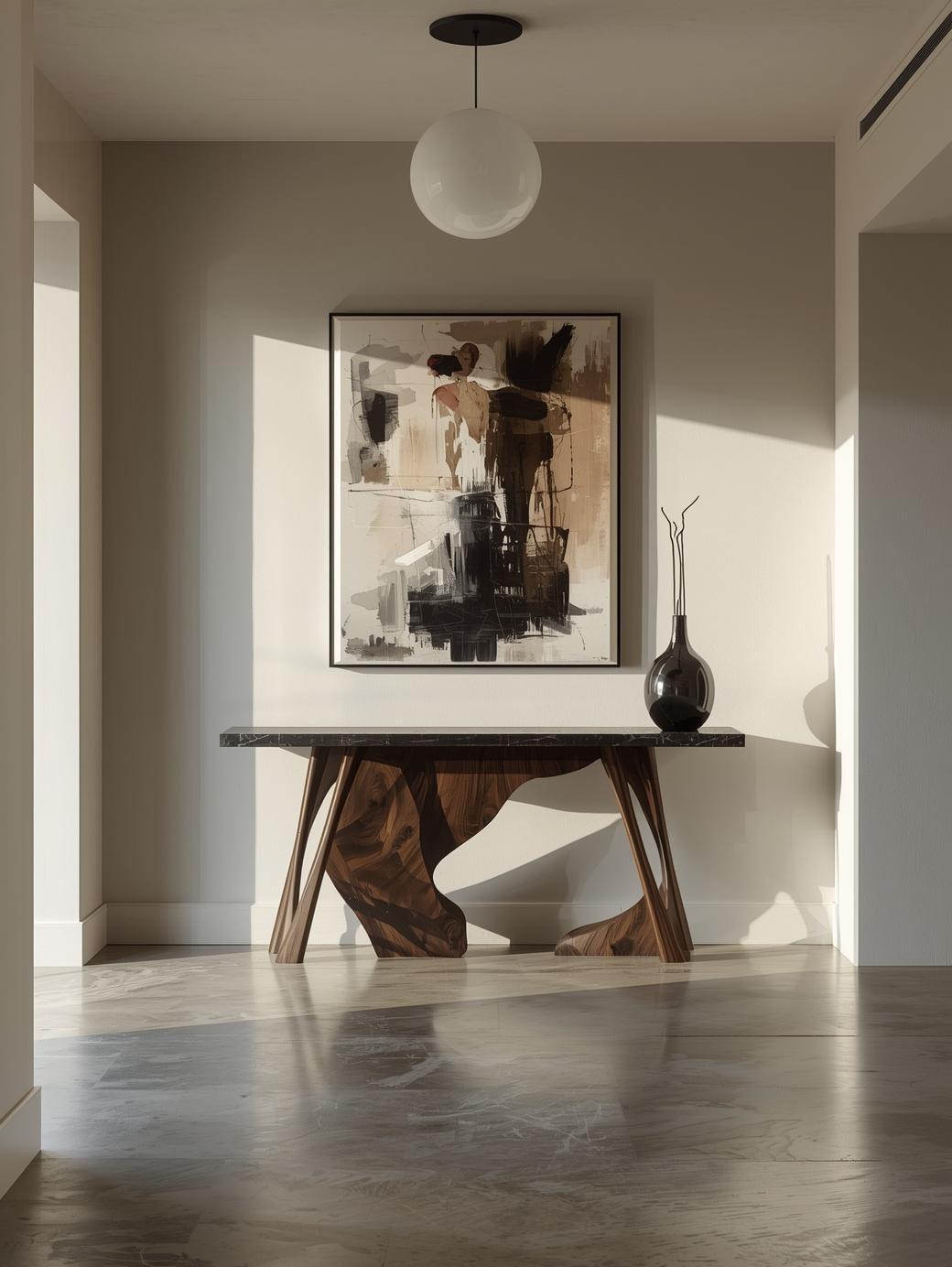
A statement console table is the most powerful single piece of furniture available for a foyer because it occupies the primary wall of the entryway and is seen immediately upon entering the home. In 2026, the direction for console design is toward more sculptural, architecturally considered forms, with curved stone tops on blackened steel bases, solid wood slabs on geometric metal legs, and hand-cast concrete surfaces on raw oak supports all emerging as the preferred aesthetic over the conventional rectangular console that dominated entryway design throughout the previous decade. The material and form of the console communicates the design language of the entire home in a single piece.
Styling a statement console correctly is as important as choosing the right piece, because an extraordinary console surrounded by clutter loses its impact entirely. The most effective approach is to treat the console and the wall above it as a single composition, anchored by one large piece of artwork or a leaning mirror, supported by one or two considered objects at varying heights, and left with generous empty space that allows the quality of the console’s own form to be appreciated. A single oversized vase, a sculptural object, and one small plant is often all that is needed to complete the vignette without overcrowding the surface.
Idea 02
Use Limewash or Textured Plaster Walls
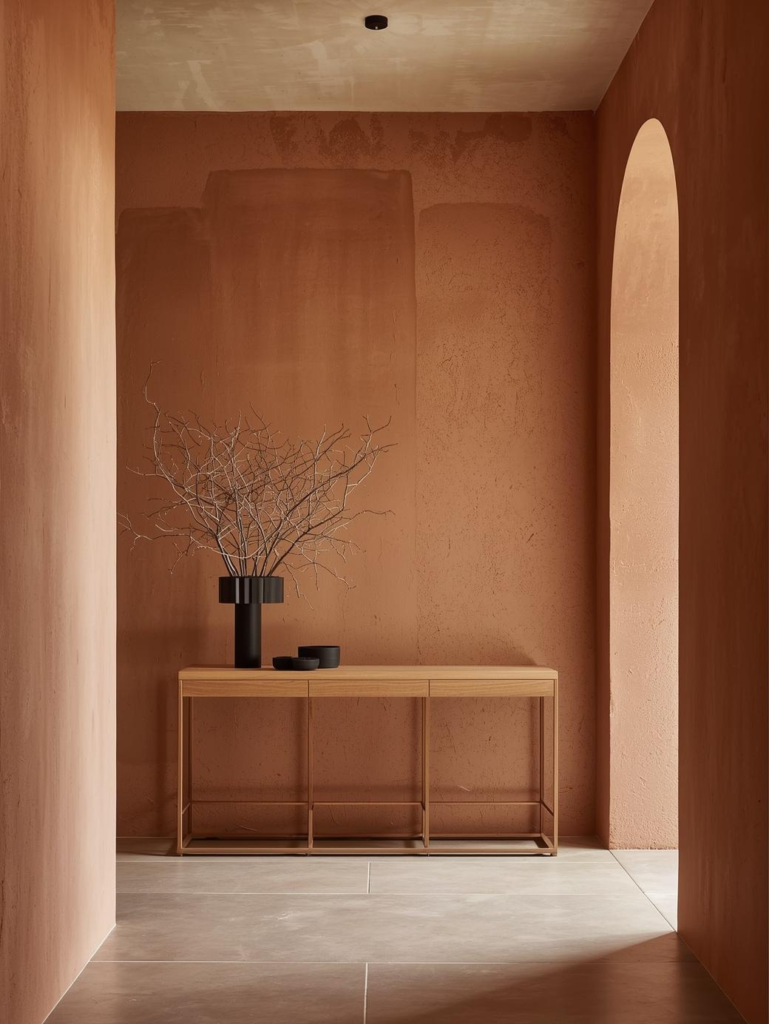
Limewash paint and textured plaster finishes are among the most significant wall treatment trends shaping modern interiors in 2026, and the foyer is the ideal space to apply them because the entryway wall is seen at close range and from multiple angles, allowing the layered depth and tonal variation of these finishes to be fully appreciated. Unlike flat paint, which reads as a single uniform surface, limewash creates a living wall that shifts between lighter and deeper tones depending on the direction and intensity of light, giving the foyer a sense of material richness and artisanal craftsmanship that immediately elevates the perceived quality of the entire home.
Warm terracotta, aged ivory, dusty sage, and deep ochre are the limewash tones performing most strongly in 2026 foyer design, all of them sharing a quality of organic warmth that relates naturally to the natural materials, warm lighting, and earthy palettes dominant across modern interiors this year. The application technique matters as much as the color choice: a skilled application with visible brush strokes and deliberate layering produces a result significantly more beautiful than a rushed or overly uniform finish. For those who prefer a smoother texture, Venetian plaster in a tonal neutral achieves a similar quality of depth and material interest with a slightly more polished and contemporary result.
Idea 03
Add an Oversized Round Mirror
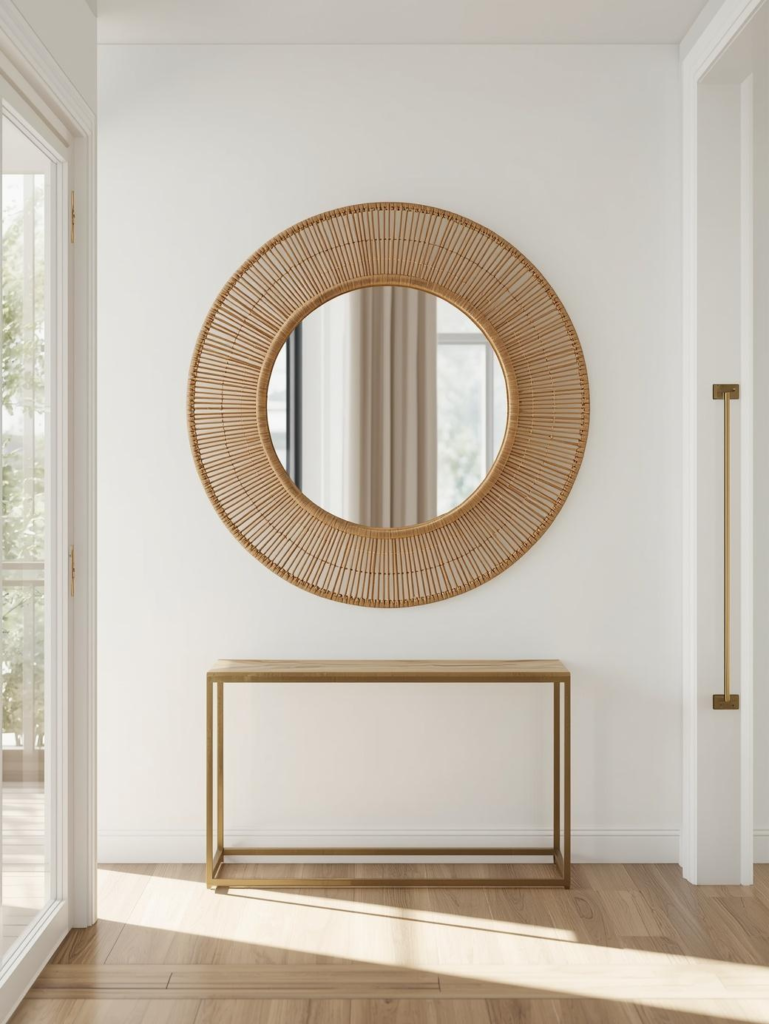
An oversized round mirror is the single most effective tool for making a small or narrow foyer feel significantly larger and more generous than it actually is, and it remains one of the most consistently popular entryway choices on Pinterest precisely because its impact is so immediately and dramatically visible. The circular form introduces a softness into the typically rectangular geometry of a foyer that makes the space feel less corridor-like and more considered, while the reflective surface doubles the perceived depth of the entry and bounces light from windows or overhead fixtures across the space in multiple directions simultaneously. In 2026, thick natural rattan, raw travertine, and aged brass frames are the most compelling choices for round foyer mirrors.
Positioning is critical to extracting the maximum spatial and aesthetic benefit from an oversized round mirror in the foyer. Hanging it on the wall directly opposite the front door creates the most dramatic first impression, as the mirror immediately reflects the arriving guest back at themselves within the context of the beautifully designed entry, which is both welcoming and visually striking. Hanging it above the console table at a height that reflects the light source, whether a pendant above or a window beside, ensures the mirror’s reflective function is working actively throughout the day. A mirror that is genuinely oversized, meaning close to or exceeding the width of the console below it, always reads as more intentional and impactful than one that is too small for its position.
Idea 04
Create a Built-In Mudroom Wall
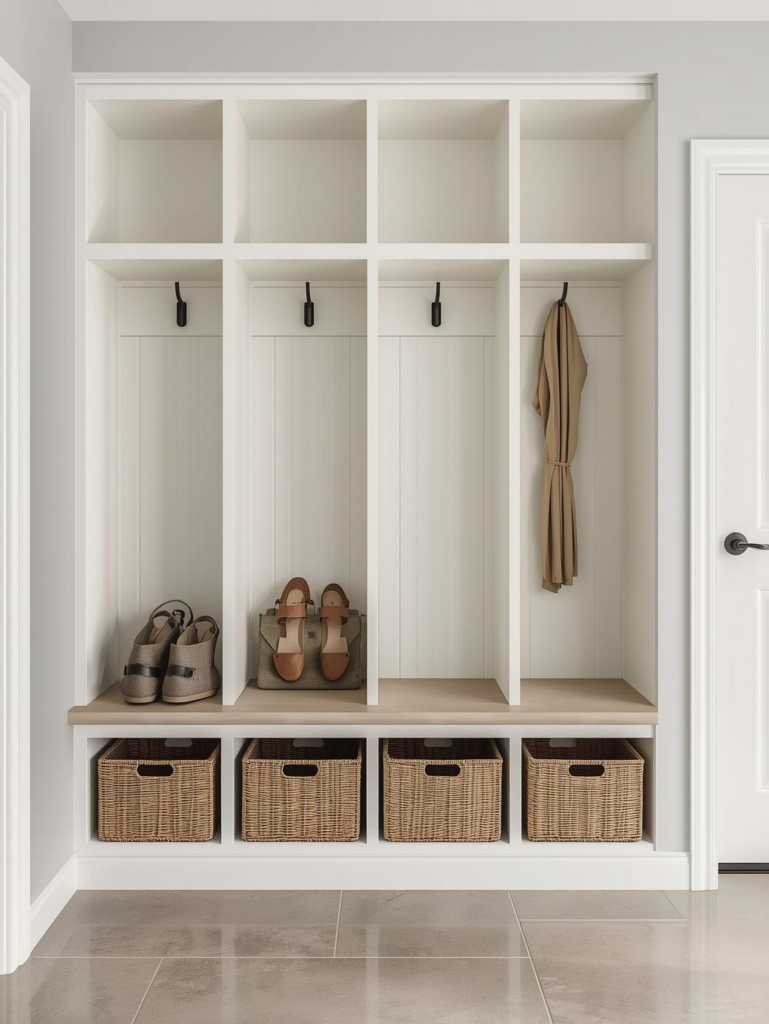
A built-in mudroom wall transforms the foyer from a space that passively receives the chaos of daily life into one that actively organizes and contains it, which is one of the most significant shifts in modern entryway design in 2026. The fully integrated approach, combining hooks at multiple heights for coats, bags, and hats, a bench with concealed storage beneath for shoes, dedicated cubbies for each family member, and a small shelf for keys and everyday essentials, brings the functionality of a full mudroom into the footprint of a standard foyer without requiring any additional square footage. When painted in a single tone and fitted with matching hardware, a built-in mudroom wall looks architecturally permanent and intentional.
The design of the built-in itself determines whether the mudroom wall reads as a beautiful design feature or simply as storage furniture pushed against a wall. Shaker-style doors on lower cubbies, integrated LED lighting under shelves, and a bench upholstered in a performance fabric with piped edges are the details that elevate a functional installation into a genuinely designed space. Painting the built-in in the same tone as the surrounding walls, or in a single contrasting color that anchors the entryway as a distinct zone within an open-plan home, gives the installation a custom quality that significantly adds to the overall value and appeal of the property as well as to the daily experience of living in it.
Idea 05
Lay a Bold Geometric Floor Tile
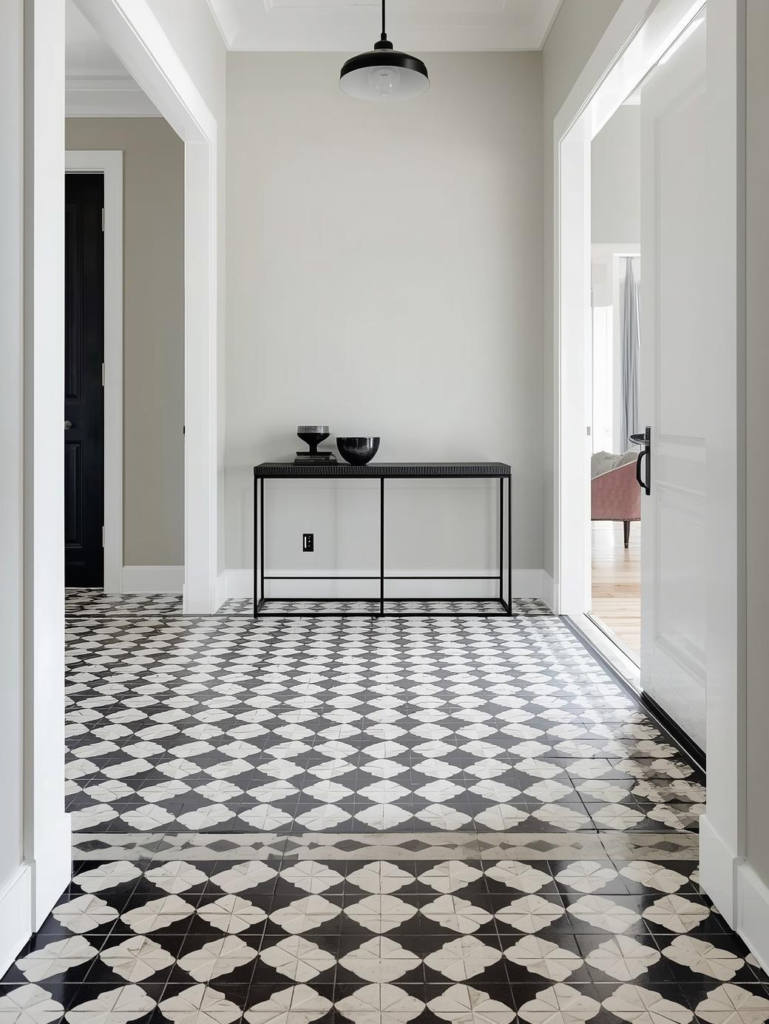
A bold geometric floor tile in the foyer is one of the most architecturally confident design decisions available in entryway design, and it works because the floor is the first surface seen as the door opens, making it the most powerful canvas for a strong visual statement. Black and white encaustic tiles in hexagonal, diamond, or chevron patterns, terracotta zellige in an irregular hand-laid formation, and large-format marble tiles with a dramatic vein are all directions performing strongly in 2026 foyer design. The key quality they share is an ability to transform an otherwise plain entryway into a space with genuine visual presence simply by treating the floor as a design feature rather than a neutral background.
Keeping the walls, furniture, and accessories relatively simple when the floor tile is bold is the most reliable approach to preventing the foyer from feeling visually overwhelming. A graphic floor tile surrounded by white walls, a slim dark console, and a single large mirror allows the tile to lead the design conversation without competition. Choosing a tile that relates in tone or pattern to materials used elsewhere in the home, such as a black-and-white floor tile that echoes black hardware in the kitchen or a terracotta tile that connects to warm tones in the living room, ensures that the foyer reads as the considered beginning of a cohesive interior story rather than a standalone design statement unconnected to the rest of the home.
Idea 06
Hang a Sculptural Pendant Light
The overhead light fitting in a foyer is often the only lighting fixture in the space, which makes its choice and scale more consequential than in rooms where multiple light sources share the responsibility of creating atmosphere. In 2026, the direction for foyer pendant design is strongly toward sculptural, oversized forms that make a genuine architectural statement from the ceiling, with large woven rattan globes, hand-blown glass clusters, pleated paper lanterns, and geometric metal frameworks all competing for the position of most desirable foyer centerpiece. A pendant that is genuinely large relative to the space, rather than tentatively sized, communicates design confidence and draws the eye upward in a way that makes the entire foyer feel more generous and considered.
The pendant light also sets the tone for the quality of light that greets arriving guests, which makes the bulb choice as important as the fixture itself. Warm bulbs at 2700K, dimmed slightly below full brightness, create the welcoming amber glow that makes an entryway feel like a sanctuary rather than a transit zone. Smart bulb integration allows the foyer light to be adjusted from the front door via an app or voice control, making it possible to arrive home to a perfectly set lighting scene every time. A pendant hung on a long cord that descends dramatically from a high ceiling is one of the most compelling visual effects available in any foyer, regardless of the specific style or material of the fixture chosen.
Idea 07
Use a Dark Moody Paint Color
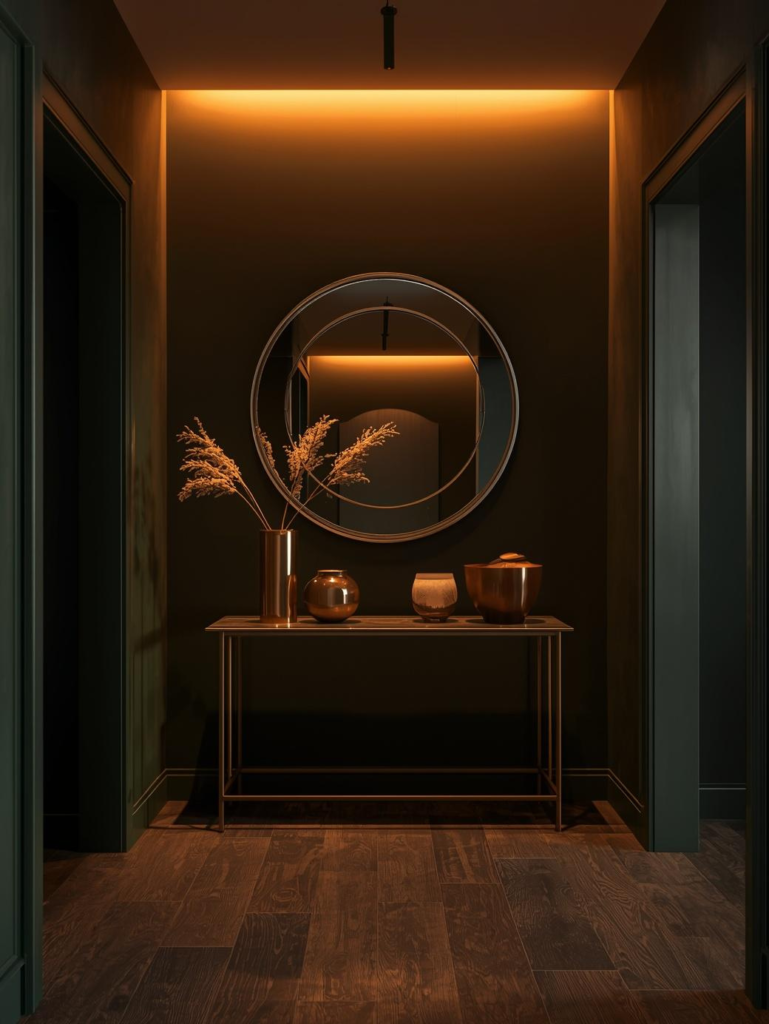
Dark, saturated wall colors in the foyer are one of the strongest and most impactful design trends of 2026, replacing the pale neutrals that dominated entryway design throughout much of the previous decade with deep, enveloping tones that create an immediate sense of drama and intimacy upon entry. Forest green, charcoal, deep navy, aubergine, and rich terracotta are all performing strongly in modern foyer design this year, each of them creating a distinctly different mood while sharing the quality of making the foyer feel like a genuinely designed room rather than simply a transitional space between the street and the rest of the home. Against dark walls, warm brass and aged gold accessories glow with a richness that lighter rooms cannot replicate.
The psychological effect of entering a dark foyer before moving into a lighter, brighter interior is one of contrast and relief, a design sequence borrowed from theatre and used deliberately by some of the most accomplished interior designers working today. The dark entry amplifies the brightness and openness of the rooms beyond, making the living spaces feel more expansive and welcoming than they would if the transition from exterior to interior were made through a neutrally toned foyer. Painting the ceiling in the same dark tone as the walls, rather than leaving it white, enhances the enveloping quality of the color and removes the visual boundary between wall and ceiling that would otherwise diminish the immersive effect.
Idea 08
Style with a Tall Indoor Plant
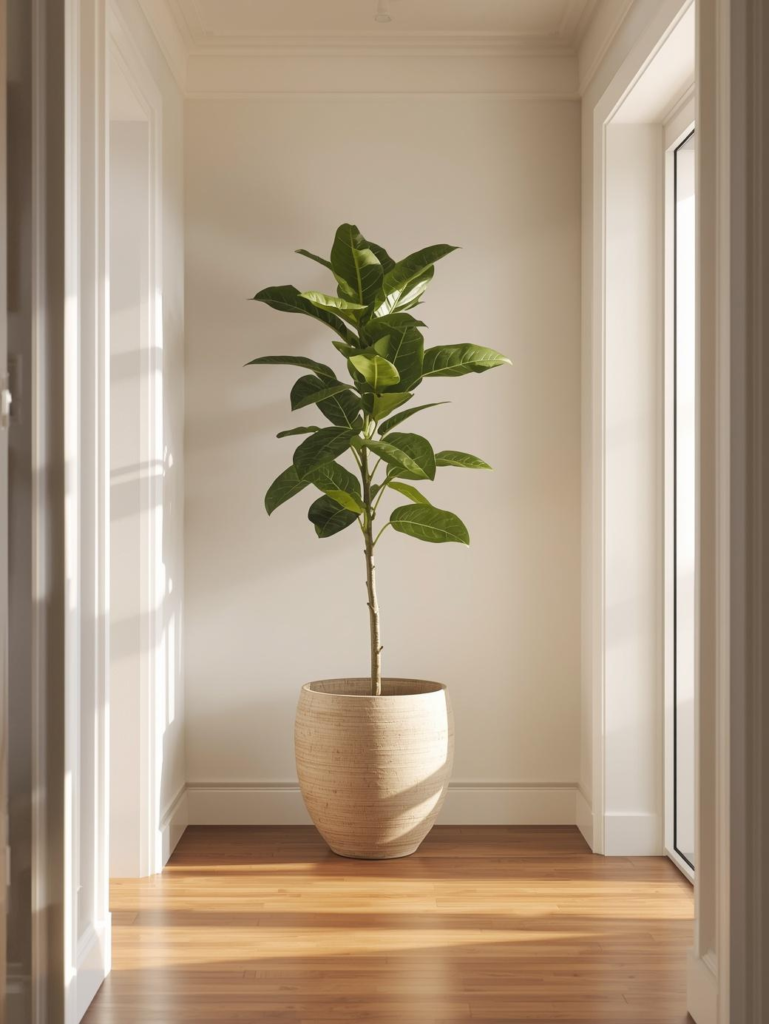
A tall indoor plant placed in the foyer introduces life, warmth, and vertical height into the entryway in a way that no other single decorative element can replicate, and the biophilic design movement that has been building throughout the early 2020s reaches a new level of sophistication in 2026 foyer design. A fiddle leaf fig, a tall olive tree, a dramatic bird of paradise, or a slender eucalyptus column in a generously sized ceramic or stone planter brings the quality of a garden or courtyard into the first room of the home, creating an immediate connection to the natural world that is genuinely welcoming and psychologically restorative after time spent in urban or indoor environments.
The pot or planter is as important a design element as the plant itself in the foyer context, where every object is seen at close range and contributes to the overall aesthetic of the space. A hand-thrown ceramic pot in a matte earth tone, a ribbed concrete planter, or a woven seagrass basket all add material texture and artisanal warmth that complements the organic form of the plant above. Placing the plant in the corner of the foyer where it receives the best available natural light, whether from a sidelight beside the front door or a window at the end of the entry hall, ensures it thrives and continues to contribute to the design of the space throughout the year.
Idea 09
Add a Floating Shelf Gallery Wall
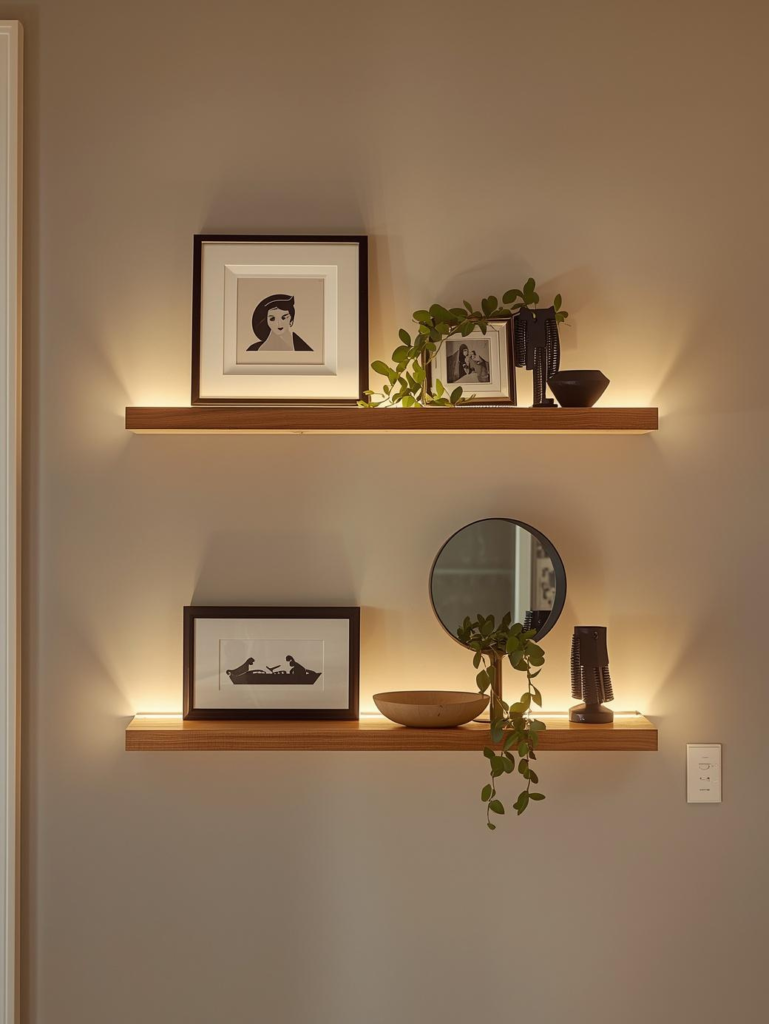
A floating shelf gallery wall in the foyer is a highly flexible and personal approach to entryway design that allows the space to display art, objects, and living plants in a composition that can be easily updated and rearranged as tastes and seasons change. Unlike a fixed gallery wall of framed artwork, floating shelves add a three-dimensional quality to the display, with objects projecting from the wall surface and casting shadows that add depth and visual interest throughout the day as the light shifts. In 2026, the shelf gallery approach is being interpreted with increasing restraint and curation, prioritizing fewer, more considered objects over the densely populated shelves that characterized earlier iterations of this trend.
Slim shelves in natural oak, smoked ash, or painted plaster installed at varying heights create a composition that feels dynamic and architectural rather than simply decorative. The objects placed on the shelves should be chosen and arranged with the same care given to a curated exhibition, with attention to height variation, material contrast, and generous negative space between groupings. A small framed photograph or print, a hand-thrown ceramic vessel, a trailing plant spilling over the shelf edge, and one small sculptural object are typically sufficient to create a compelling and personal vignette without overcrowding the shelves. The foyer gallery wall is ultimately an introduction to the people who live in the home, and it should feel genuinely reflective of their taste and character.
Idea 10
Include a Comfortable Entry Bench
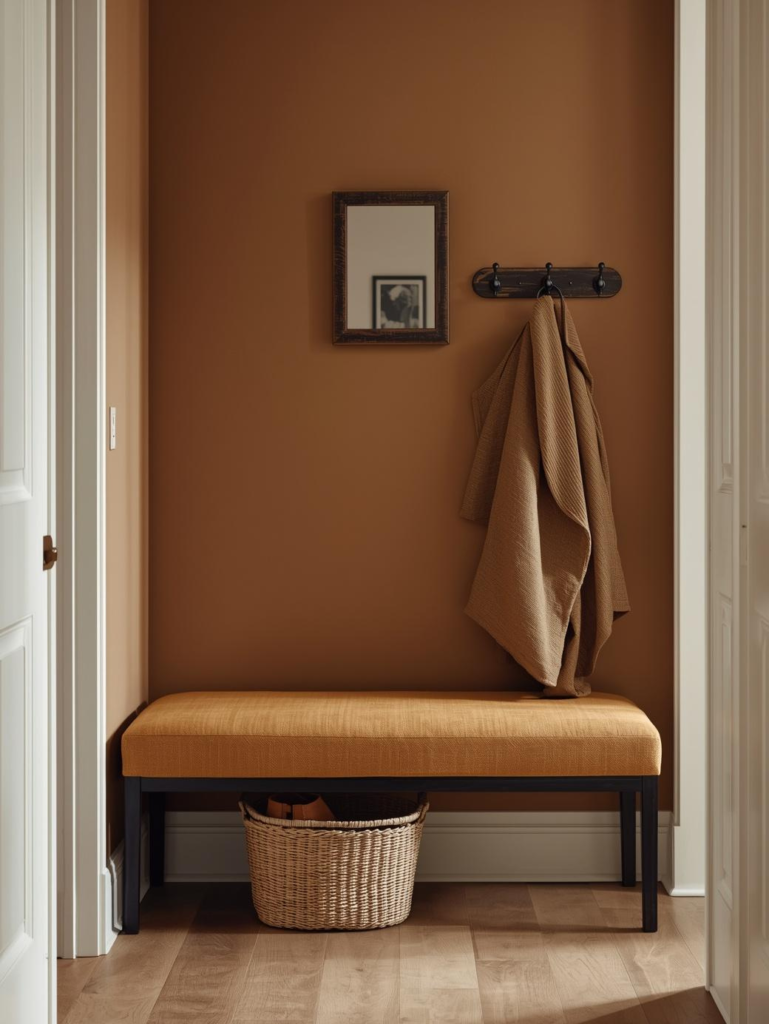
An entry bench is one of the most practically generous provisions a foyer can offer, allowing residents and guests to sit while putting on or removing shoes without the awkward balancing act that a bench-free entryway requires. In 2026, the entry bench is being treated as a proper furniture piece rather than a purely functional afterthought, with upholstered designs in bouclé, linen, and performance velvet replacing the plain wooden benches that previously dominated entryway design. A bench with slim tapered legs in a warm metal or natural wood finish has a lightness and elegance that heavier designs lack, keeping the foyer feeling open even in a narrow entry corridor.
The space beneath the entry bench is as valuable as the seat itself in a well-designed foyer, providing a designated location for shoes, baskets, a pet bed, or an umbrella stand that keeps the floor of the entryway clear and organized. A pair of matching woven baskets or rattan boxes beneath the bench contain everyday items without displaying them, maintaining the visual order of the foyer while keeping everything accessible. Hooks or a coat rack positioned directly above the bench create a vertically integrated entry station that handles coats, bags, hats, keys, and shoes within a single wall zone, which is the most space-efficient organization system available for any foyer regardless of its size.
Idea 11
Introduce Arch Details and Curves
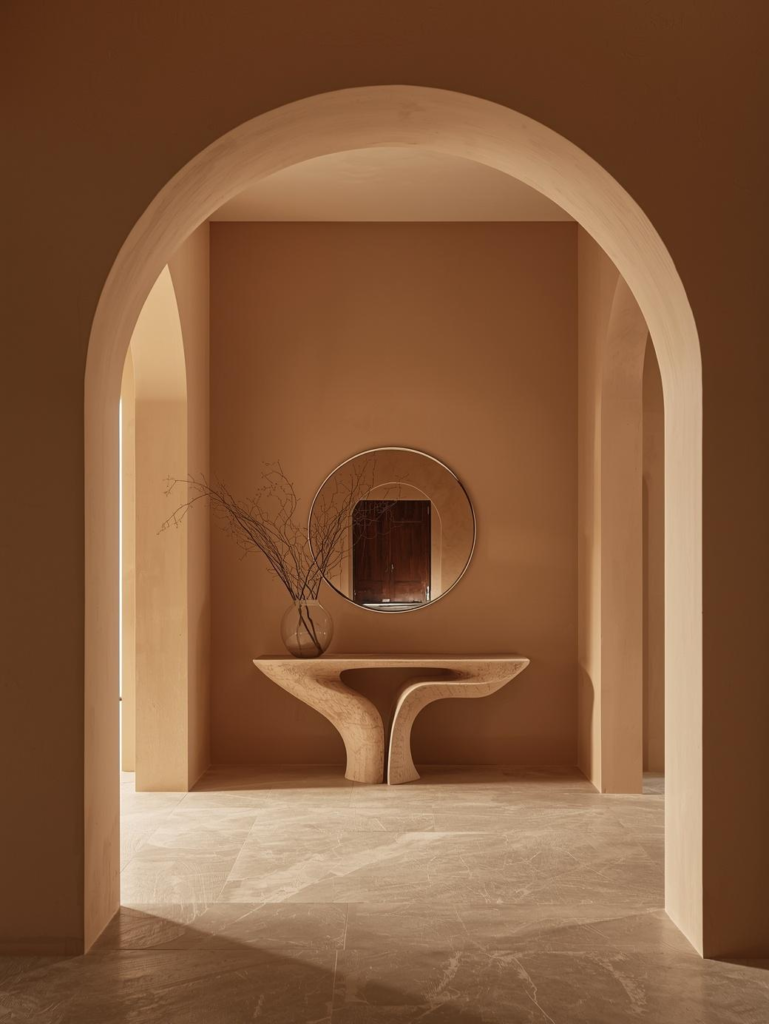
Curved architecture and arched openings are among the most enduring and increasingly sophisticated trends in modern interior design, and the foyer is the space where they make their most dramatic statement because an arched doorway leading from the entry into the main living areas is the first architectural feature experienced upon entering the home. In 2026, the arch detail in the foyer is being executed with a new level of material consideration, with smooth plaster reveals, limewash-finished curves, and arched niches used to display art or plants all contributing to an entry space that feels genuinely architectural rather than simply decorated. The curve communicates softness, welcome, and a departure from the hard-edged geometry of conventional residential construction.
For foyers without existing curved architecture, introducing curves through furniture and accessories achieves a similar softening effect without structural intervention. A console table with curved legs or a curved front edge, a round mirror, a semicircular entry bench, and an arched wall niche created with plasterboard and plaster are all ways of bringing the curve design language into the foyer without removing or rebuilding walls. Painting an arched shape directly onto the wall in a contrasting tone is an even simpler approach that creates the visual impression of an architectural arch with nothing more than paint and a steady hand, and it is one of the most impactful and low-cost foyer transformations available in 2026.
Idea 12
Use Warm Wood Paneling
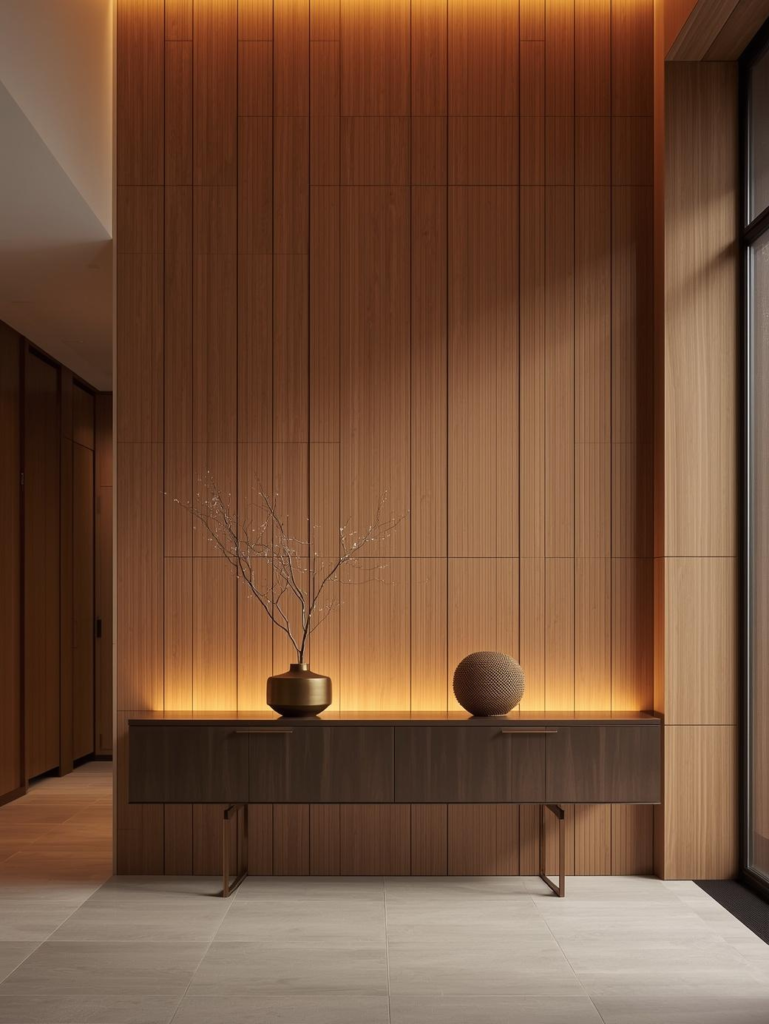
Warm wood paneling on the foyer wall is one of the most material-rich and visually compelling directions in 2026 entryway design, bringing a quality of natural warmth, texture, and architectural weight to the entry space that paint alone cannot provide. Natural oak, smoked ash, walnut, and cedar are all performing strongly as paneling choices this year, each offering a distinct character that ranges from the light, contemporary warmth of oak to the deeper, more dramatic richness of walnut. Vertical panel orientation draws the eye upward and makes ceiling heights feel more generous, while horizontal installation creates a more grounded, contemporary quality that works particularly well in foyers with modern, low-profile furniture.
Wood paneling does not need to cover all four walls of a foyer to be effective. Treating a single wall, typically the one facing the front door or the one behind the console table, with a wood panel treatment while leaving the remaining walls in a complementary paint tone creates a feature wall effect that delivers the warmth and material richness of wood without the cost or visual weight of a fully paneled room. Incorporating integrated lighting within the paneling, either in the form of recessed LED strips along the top edge of the panel or small spotlights directed at the wood surface, amplifies the grain and depth of the material and creates a quality of light that makes the foyer feel genuinely architectural and considered.
Idea 13
Add a Vintage or Antique Accent Piece
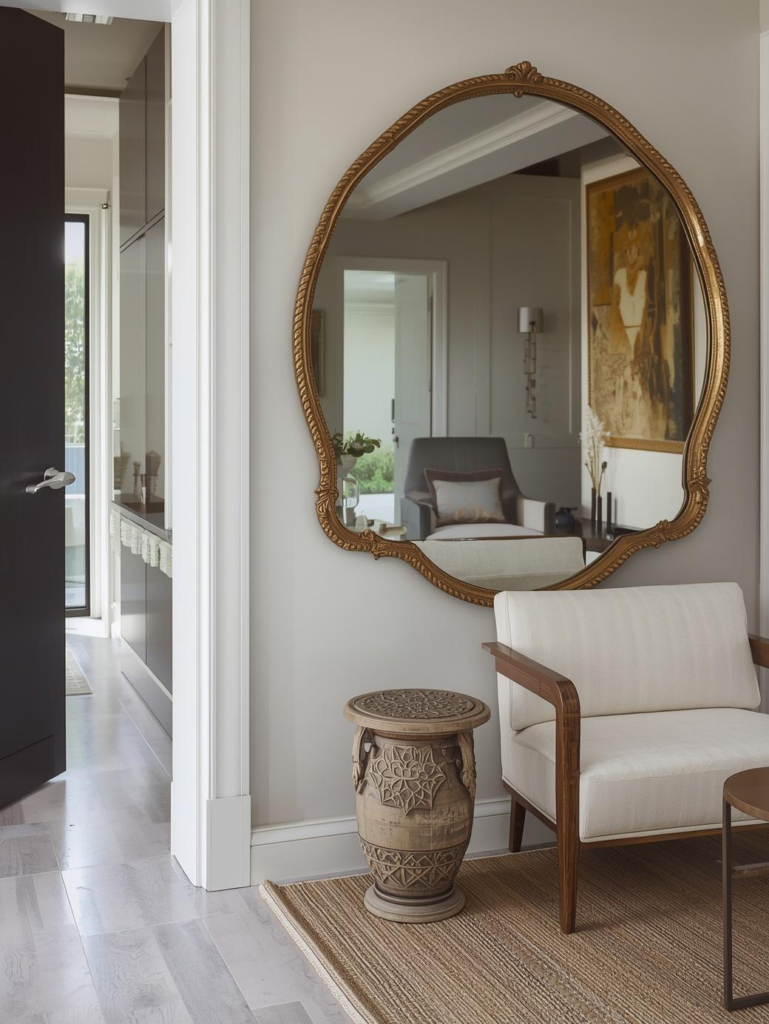
Incorporating one carefully chosen vintage or antique accent piece into an otherwise modern foyer is one of the most sophisticated design moves available in 2026, reflecting a broader shift in contemporary interior design away from purely singular aesthetic commitments toward more layered, collected, and personally resonant spaces. A gilded antique mirror above a modern console, a pair of aged ceramic garden stools used as side tables, a vintage lamp on a contemporary shelf, or a single piece of antique furniture in an otherwise minimal entry all introduce a quality of history and character that newly manufactured pieces cannot replicate, regardless of their design quality or material richness.
The antique or vintage piece works best in a modern foyer when it is given enough visual space to be appreciated rather than crowded by surrounding objects. One exceptional old piece surrounded by restraint, whether a beautiful antique console table against a plain white wall or a vintage gilded sconce in a modern entry with minimal other decoration, commands attention and generates the kind of visual intrigue that makes guests stop and look rather than simply pass through. The contrast between old and new is itself a design statement in 2026, communicating that the home has been assembled with genuine curiosity and taste rather than purchased as a complete set from a single retailer.
Idea 14
Layer a Foyer Rug with Intention
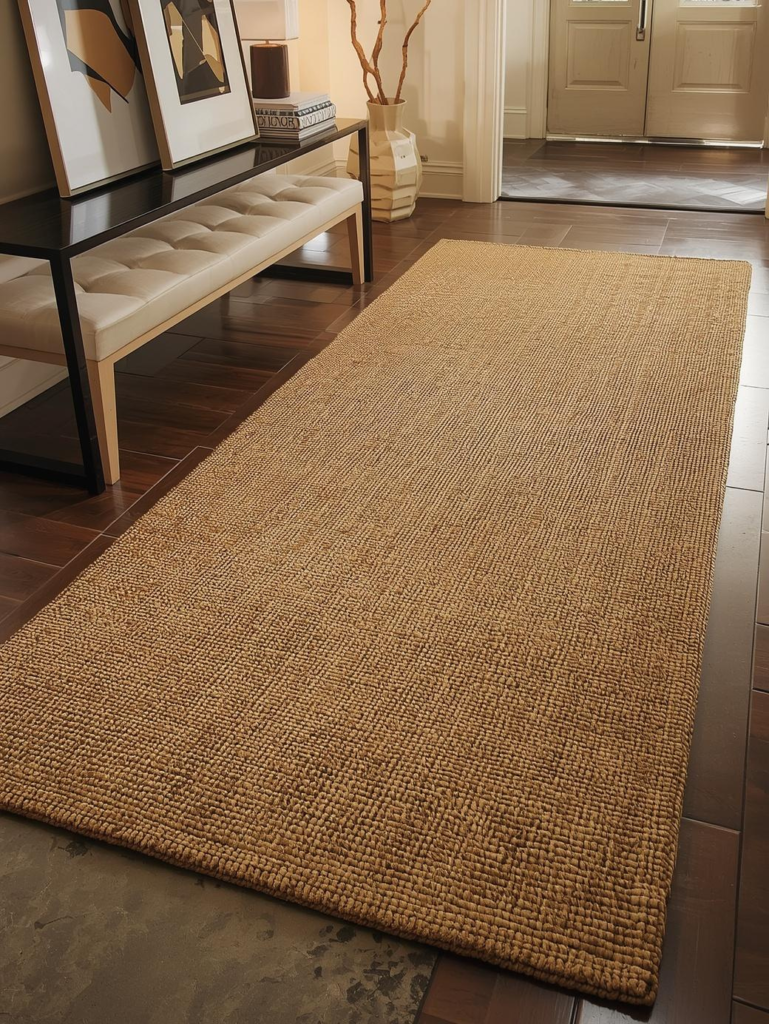
A rug in the foyer performs a function that goes beyond the purely decorative, defining the entry zone as a distinct area within an open-plan home, adding acoustic softness to a space that often has hard floor surfaces on every side, and protecting the floor from the daily traffic of outdoor shoes. In 2026, the direction for foyer rugs is toward larger, more generously scaled options in natural fibers and hand-crafted textures, with jute, sisal, and hand-knotted wool flat weaves all performing strongly as choices that add warmth and material interest without the pattern complexity that can make a small foyer feel visually busy. A rug that extends beneath the console table and reaches toward the bench feels anchored and intentional rather than floating uncertainly in the middle of the floor.
The layered rug approach, in which a smaller decorative rug is placed over a larger natural fiber base, is becoming increasingly popular in foyer design as a way of introducing pattern and color without committing a single bold rug to the full entry space. A natural jute base rug topped with a smaller vintage-style or geometric accent rug creates a composition that feels collected and layered in the same way that a well-styled room does. The top rug should be small enough that the base layer remains visible on at least two sides, maintaining the sense that the two rugs have been deliberately chosen to work together rather than simply placed on top of each other for practical reasons.
Idea 15
Install Wall Sconces for Ambiance
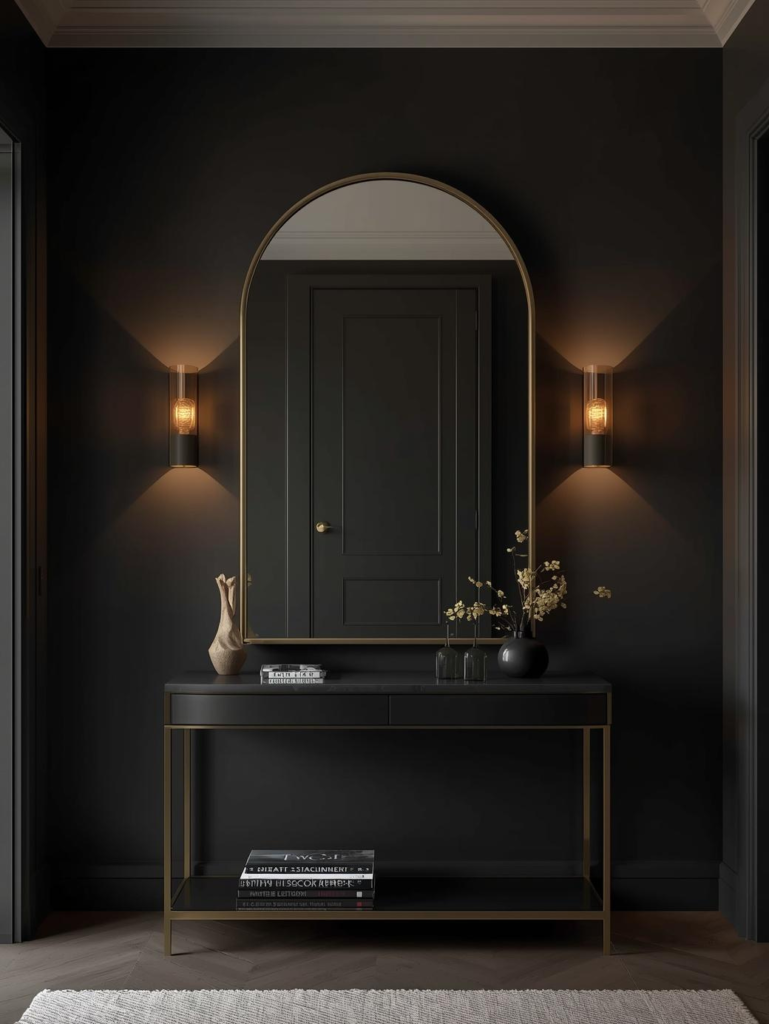
Wall sconces in the foyer introduce a layer of warm, directed light at eye height that no overhead pendant, however beautiful, can provide on its own. In 2026, the combination of a sculptural pendant above and a pair of wall sconces at console height is emerging as the gold standard of modern foyer lighting, creating a multi-layered illumination scheme that makes the entry feel genuinely atmospheric rather than simply bright. Slim articulating arm sconces in matte black, aged brass, or antique bronze are the most versatile choices because they can be directed to illuminate artwork, the mirror surface, or the console styling depending on what the particular foyer composition most benefits from highlighting.
Sconces also serve a decorative function during the day when switched off, their physical form contributing to the visual composition of the foyer wall as sculptural hardware that adds character and interest to an otherwise flat surface. Plug-in sconces with cord covers or fabric-wrapped cables offer a practical installation option for foyers without existing wall wiring, making this lighting upgrade accessible without an electrician’s involvement in most cases. Connecting foyer sconces to a smart dimmer switch or a scene-setting system allows the entry lighting to be adjusted for time of day and occasion, from a bright welcome setting for daytime arrivals to a warm, intimate glow for evening guests that makes the first impression of the home genuinely exceptional.
Idea 16
Use Open Shelving for Styled Storage
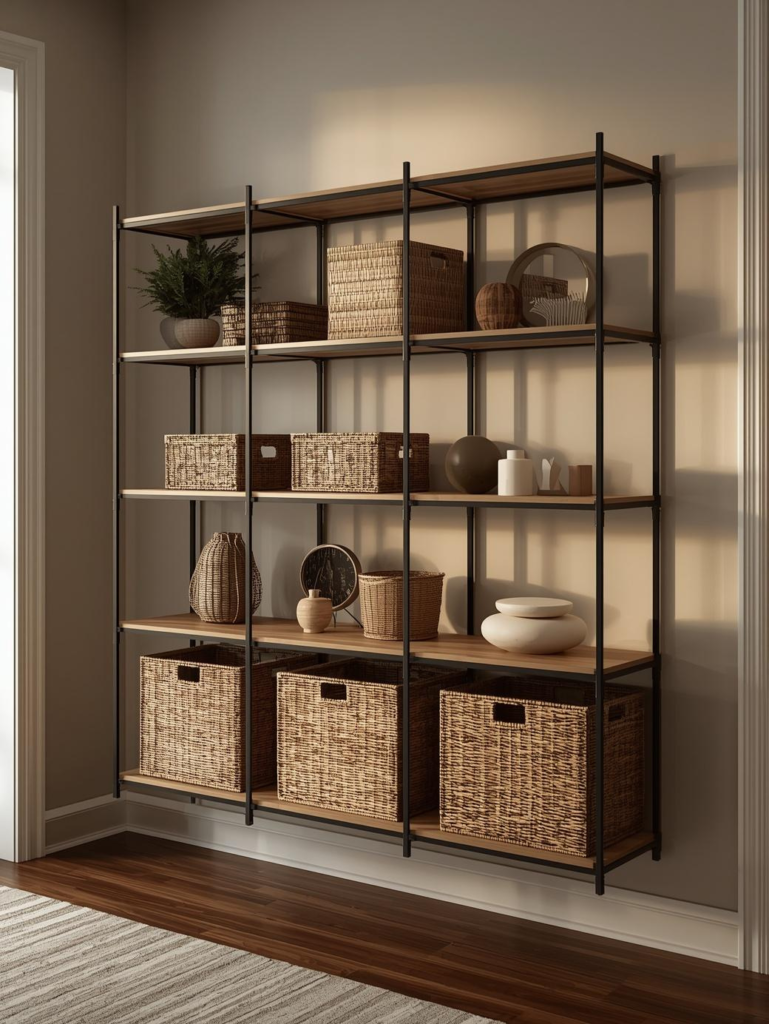
Open shelving in the foyer is gaining significant traction in 2026 as a more flexible and visually interesting alternative to the conventional console-and-mirror combination, particularly in narrow entries where a projecting console table reduces the usable width of the passage. A wall-mounted open shelving unit in natural oak or powder-coated steel provides both a display surface and functional storage within the same footprint as a flat wall, making it one of the most space-efficient entry solutions available. The open structure keeps the shelving from feeling heavy or enclosing while allowing a mix of decorative objects, baskets, and living plants to be displayed at multiple heights simultaneously.
The styling of open foyer shelving requires the same balance of function and aesthetics that makes any open storage composition successful: enough practical storage to handle the everyday demands of the entry zone, and enough decorative intention to make the shelving look designed rather than simply loaded. Woven baskets or fabric bins on the lower shelves contain shoes, scarves, and small accessories out of sight, while the upper shelves carry artwork, ceramics, plants, and mirrors that give the unit its visual character. Keeping a consistent color palette across all objects on the shelves, whether earthy neutrals, warm terracottas, or cool greens, prevents the display from looking chaotic and ensures the open shelving reads as a curated design feature rather than organized clutter.
Idea 17
Create a Monochromatic Color Moment
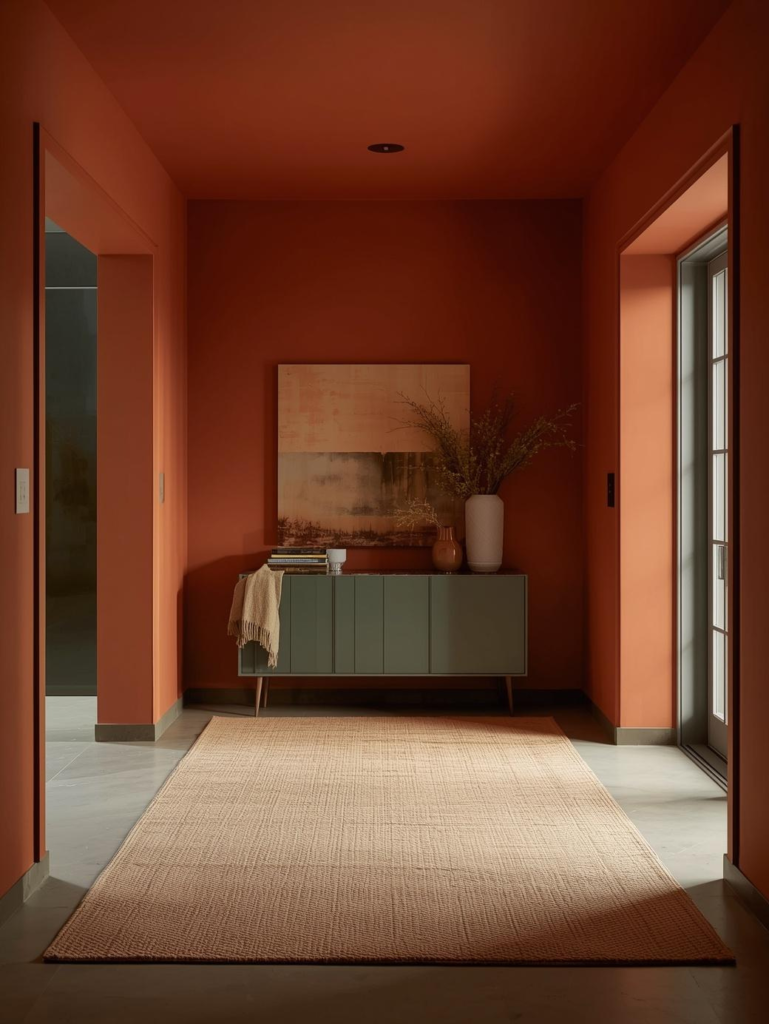
A monochromatic foyer, in which a single color is carried across walls, furniture, accessories, and floor covering in varying tones and textures, is one of the most sophisticated and visually arresting design approaches available in 2026 entryway design. The technique works because the eye, freed from the task of navigating between competing colors, is instead drawn to the subtleties of material and texture within the tonal family, reading the difference between a matte limewash wall, a glossy ceramic vase, a woven rug, and a velvet bench cushion all in the same tone as a deeply layered and considered composition. Rich terracotta, deep sage green, warm charcoal, and dusty mauve are the monochromatic palettes most strongly aligned with 2026 interior design directions.
Executing a monochromatic foyer successfully requires careful attention to the variation of texture and finish within the chosen color family, because a room where every surface shares the same tone and the same texture reads as flat and uninteresting rather than sophisticated. Matte walls paired with a semi-gloss ceiling, a natural fiber rug, a lacquered console surface, and matte ceramic accessories all in the same warm terracotta creates a composition that is unified in color but rich in tactile variation, which is the quality that makes a monochromatic room feel genuinely designed rather than simply color-coordinated. This approach also makes the foyer feel like a complete and intentional design experience in its own right, communicating before a single word is spoken that the home within has been put together with real thought, real taste, and real care.
Final Thoughts
Your Foyer Sets the Tone for Everything
The seventeen ideas in this guide represent the most compelling directions in modern foyer design for 2026, ranging from the architecturally ambitious, like curved archways, wood paneling, and bold geometric tiles, to the quietly transformative, like a sculptural pendant light, a round mirror, and a tall indoor plant. What they share is a conviction that the foyer deserves the same level of design attention as any other room in the home, and that the investment of time and thought in the entry space returns an outsized reward in terms of how the entire home feels to live in and to arrive at.
The foyer does not need to be large to be extraordinary. Some of the most beautifully designed entry spaces in contemporary homes are narrow corridors that measure less than two meters in any direction, yet they create a first impression so strong and so considered that every room that follows benefits from it. The secret is always specificity and intention: choosing one or two ideas from this list that genuinely reflect the aesthetic of the home and the personality of the people who live in it, and executing them with care and attention to detail rather than attempting to incorporate every trend simultaneously.
Begin with the idea that addresses the most immediate gap in your current foyer, whether that is the absence of adequate storage, the lack of a considered lighting scheme, or the absence of any strong visual focal point, and use that first change as the foundation for everything that follows. The modern foyer of 2026 is a room that arrives before the rest of the house, and when it is designed with genuine thought and personality, it makes every arrival home feel like the best part of the day.