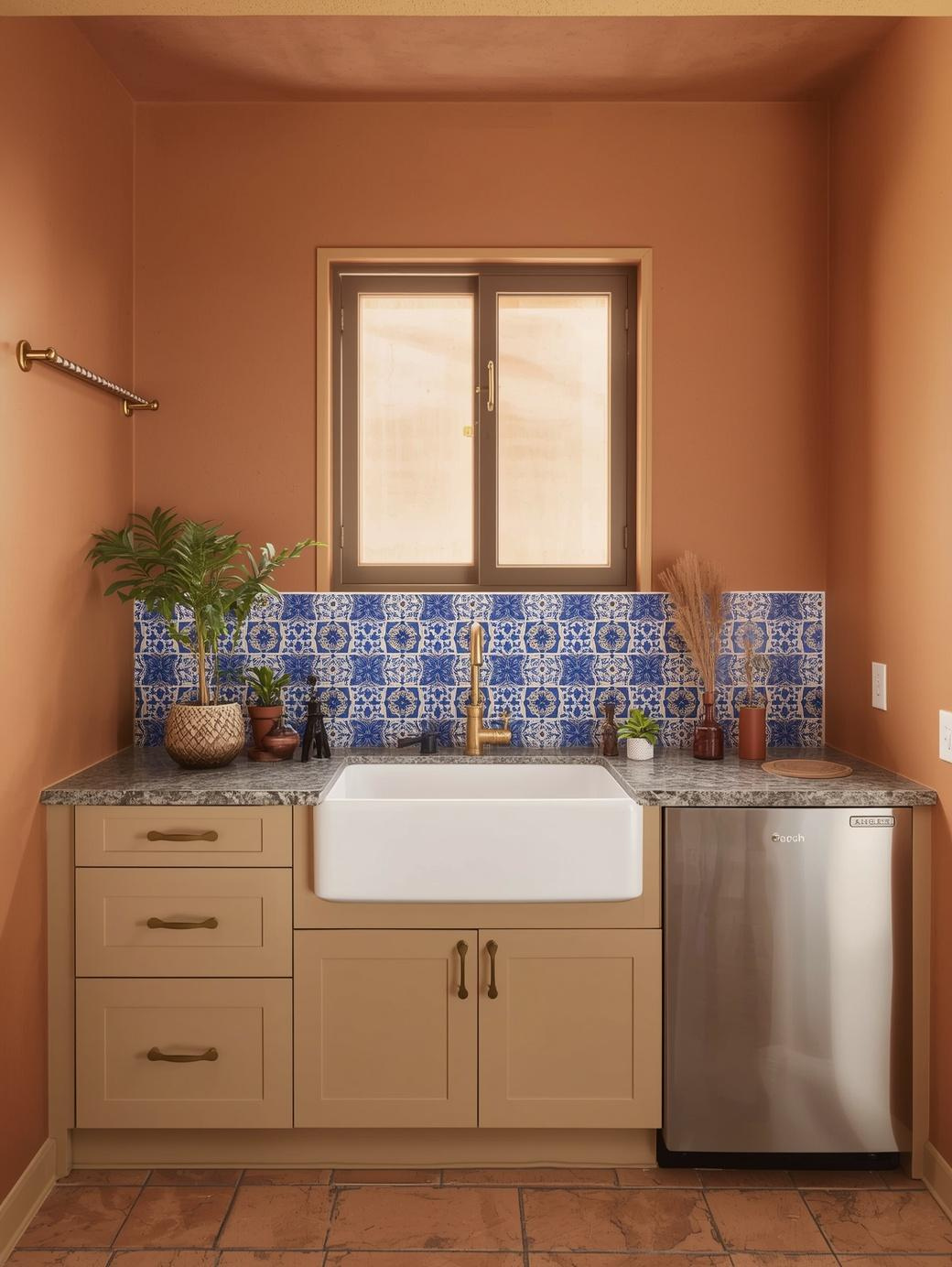
How to Add Mexican Style to Your Kitchen Without a Full Renovation
10 accessible, deposit-safe, and deeply characterful ideas that bring the warmth, color, and artisan soul of Mexican kitchen design into any home without touching a single tile or cabinet
There is a quality to the Mexican kitchen that no other design tradition quite replicates. It is warm in a way that goes beyond color, generous in a way that goes beyond scale, and alive with the kind of handmade detail that takes decades of industrial production to imitate and never quite succeeds. The painted Talavera tile, the hand-thrown clay pot, the woven textile in deep ochre and terracotta, the copper vessel catching afternoon light on an open shelf: these are not decorating accessories in the Mexican kitchen tradition. They are the evidence of a culture that has always understood the kitchen as the most important room in the home and treated it accordingly, filling it with the most beautiful objects available and using every one of them daily.
The assumption that achieving this aesthetic requires gutting a kitchen and starting over with custom tilework and handmade cabinetry is understandable but entirely incorrect. The Mexican kitchen style is, at its core, an accumulation of beautiful, handmade, and meaningful objects arranged with generosity and warmth. It is an aesthetic built from the surface inward rather than from the structure outward, which means it is one of the most accessible and renter-friendly design approaches available to anyone who wants their kitchen to feel dramatically different without changing a single permanent element. The ten ideas below demonstrate exactly how that transformation is achieved, one deliberate and affordable decision at a time.
Idea 01Tile Update
Apply Peel-and-Stick Talavera-Style Tiles to Your Backsplash
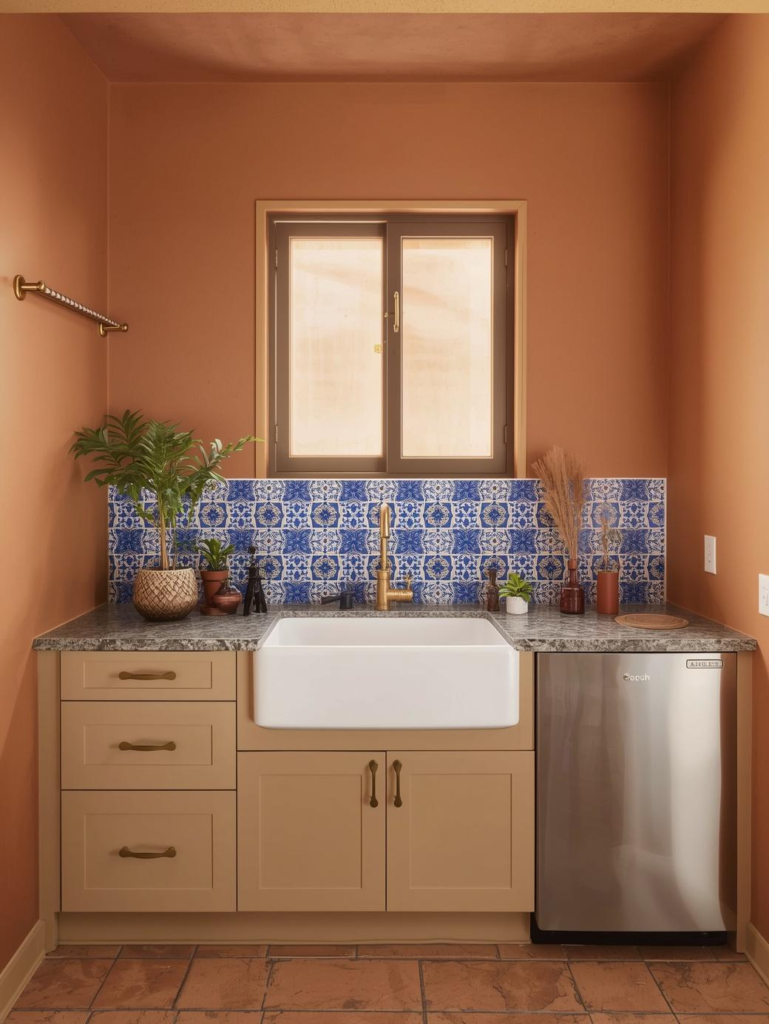
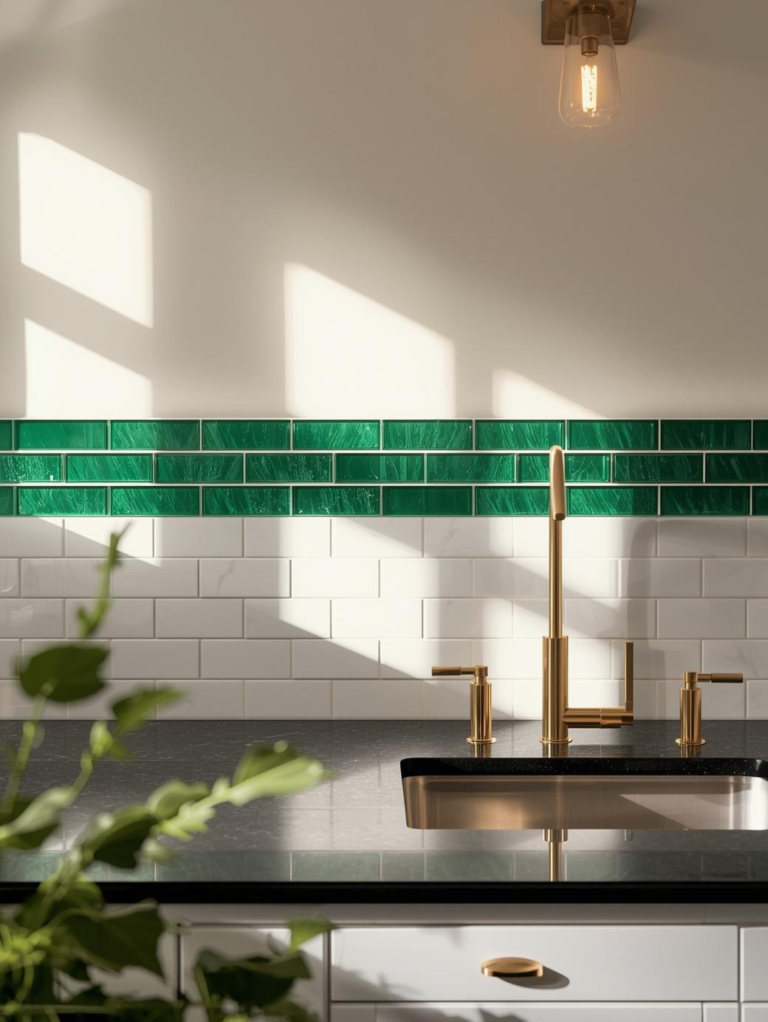
The Talavera tile is the single most recognizable element of the Mexican kitchen aesthetic and it is also, thanks to the development of high-quality peel-and-stick tile alternatives, the most accessible. Peel-and-stick backsplash tiles printed with authentic Talavera patterns in cobalt blue, terracotta, and warm white are available from numerous suppliers and apply directly over existing backsplash surfaces without adhesive, grout, or any tools beyond a clean cloth and a credit card for smoothing edges. The visual transformation they produce is immediate and dramatic, shifting a builder-grade kitchen into something with genuine character and cultural reference in an afternoon.
The key to making peel-and-stick Talavera tiles read as authentic rather than obviously printed is in the selection of the pattern and the surface preparation. Choosing tiles with genuinely hand-drawn-looking pattern irregularities, where no two tiles in the sheet are identical, produces a more convincing result than perfectly repeated geometric prints. Cleaning and degreasing the existing backsplash surface thoroughly before application ensures the adhesive holds reliably over time without lifting at the edges. When leaving a rental, these tiles remove cleanly from most standard backsplash surfaces without damage, making them the ideal first investment for any renter wanting to bring Mexican kitchen character into their space.
Idea 02Pottery Display
Build an Open Shelf Display of Hand-Thrown Mexican Pottery and Ceramics
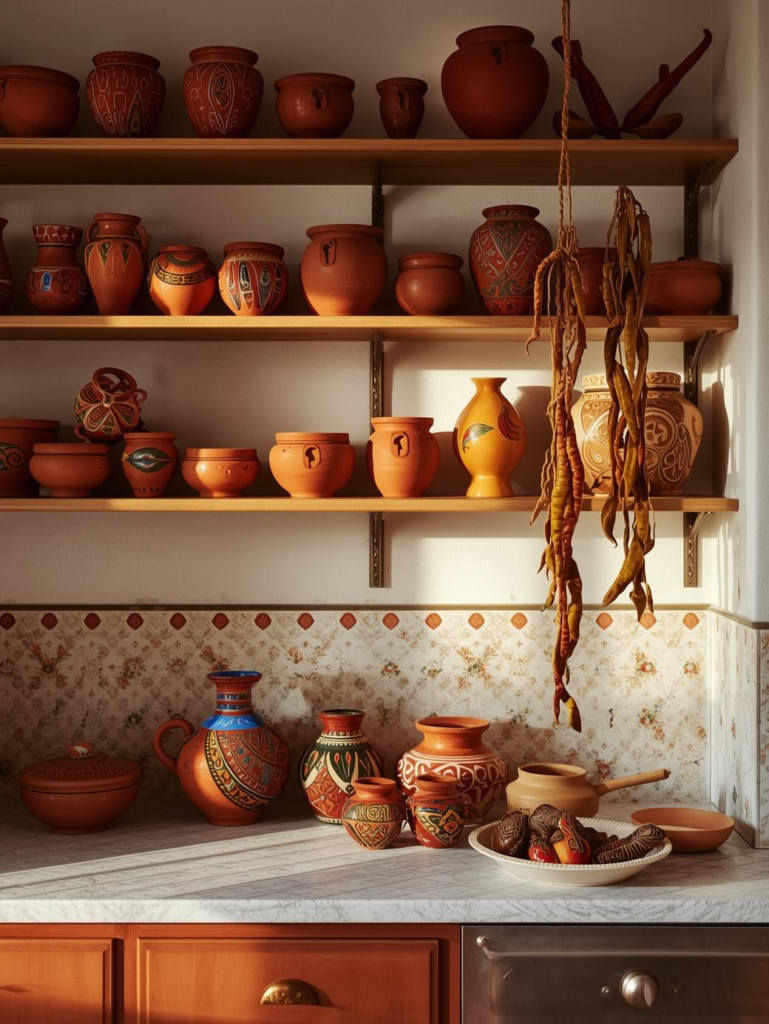
Mexican pottery is among the most beautiful and most widely available artisan craft tradition in the world, encompassing everything from the black clay barro negro of Oaxaca to the brightly painted Talavera-influenced ceramics of Puebla to the simple unglazed terracotta of everyday Mexican kitchen use. A collection of these pieces displayed on open shelving introduces the material warmth, the handmade quality, and the cultural reference of the Mexican kitchen more powerfully than almost any other single addition. Each piece tells its own story through its shape, its glaze, its painted motif, or its deliberate asymmetry, and the accumulated effect of several together is one of genuine visual richness.
Open shelving already present in most kitchens can be restyled entirely with a Mexican pottery collection that costs considerably less than most people assume. Oaxacan black clay pieces, unglazed terracotta bowls and pitchers, and hand-painted ceramic plates and cups are widely available online through artisan marketplace platforms and at import stores at very accessible price points. Arranging them with a mix of functional pieces used daily and purely decorative ones displayed at the back of the shelf creates the lived-in, generous quality that characterizes the authentic Mexican kitchen. Adding dried chiles, ears of dried corn, or bundles of dried herbs between the pottery pieces reinforces the agricultural and culinary identity of the Mexican kitchen tradition.
Idea 03Color Update
Paint One Wall or Cabinet in a Deep Mexican Ochre, Terracotta, or Cobalt
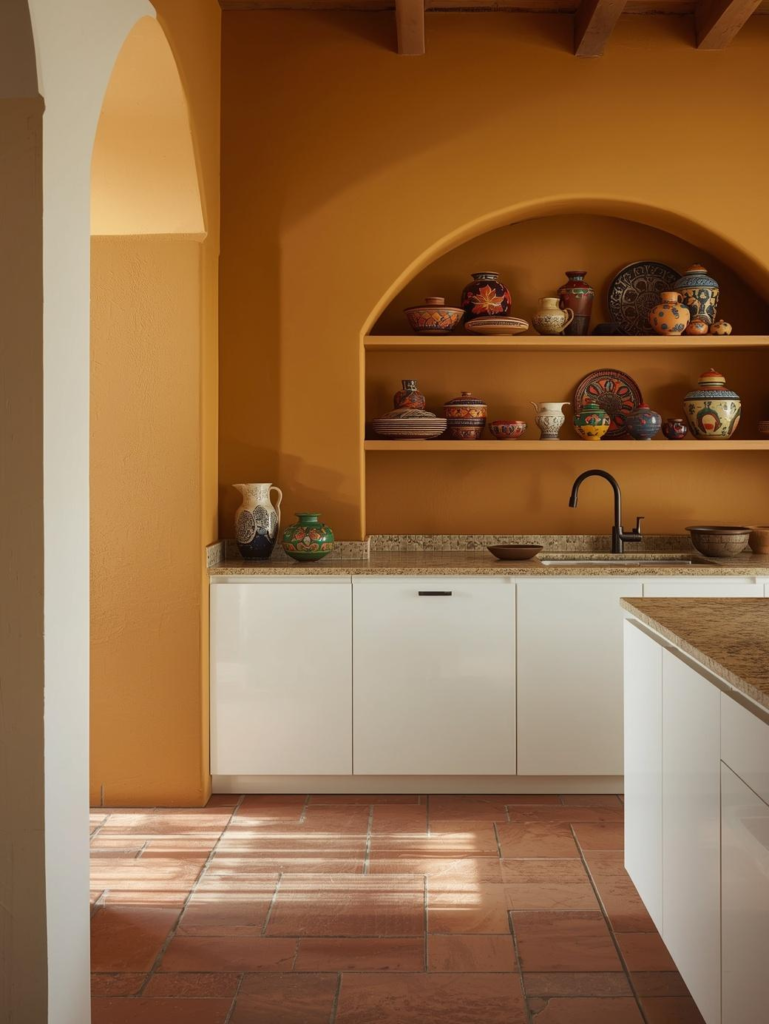
Color is the most immediate and most affordable tool available for shifting a kitchen toward the Mexican aesthetic, and the specific colors of that tradition, deep ochre yellow, warm terracotta, cobalt blue, forest green, and rich burnt sienna, are so strongly associated with Mexican design that even a single wall painted in one of these tones begins to shift the entire kitchen’s character. A single accent wall behind open shelving, painted in deep ochre or warm terracotta, creates a backdrop against which pottery, copper vessels, and woven textiles read with the kind of vibrancy that neutral walls cannot provide. The investment is minimal and the transformation is significant.
For renters or homeowners who are not ready to commit to a full wall, painting the interior of open cabinets or the back panel of open shelving units in a deep Mexican color achieves a similar effect at a fraction of the wall area and with considerably less commitment. This approach creates a colored backdrop visible through the objects displayed on the shelves, framing the pottery and ceramics in a way that makes both the color and the objects appear more intentional and more beautiful. The painted interior of a shelf unit in cobalt blue behind a collection of white and terracotta pottery produces a vignette that photographs with the richness and warmth of a fully renovated Mexican-inspired kitchen.
Idea 04Textile Addition
Hang Hand-Woven Otomi or Serape Textiles as Kitchen Wall Art
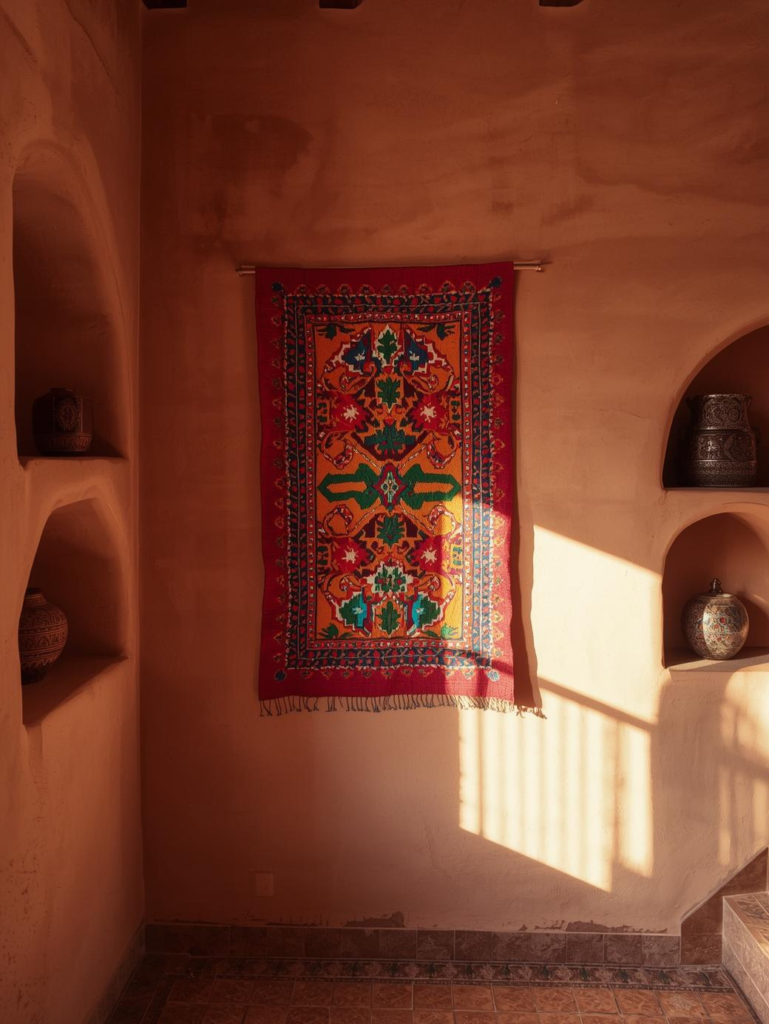
Textiles occupy a central role in Mexican visual culture and the kitchen is no exception to this tradition. Otomi embroidered cloth, with its densely stitched animal and botanical motifs on cream or colored cotton, and serape weaving, with its bold horizontal stripe patterns in saturated color combinations, are two of the most recognizable and most beautiful Mexican textile traditions and both translate powerfully into kitchen wall art. A single piece of Otomi embroidery hung on the wall above a counter or beside a window introduces a level of handmade detail and cultural specificity that mass-produced art prints cannot replicate regardless of their subject matter.
Hanging a textile on a kitchen wall requires only a wooden dowel or a slim curtain rod mounted with adhesive brackets, making this a completely renter-friendly addition that leaves no permanent trace. The textile can be changed seasonally or when the mood calls for something different, giving the kitchen a flexibility that fixed wall art cannot offer. Authentic Otomi and serape textiles are available from Mexican artisan cooperatives and import retailers at a wide range of price points, with smaller pieces accessible for under fifty dollars and larger statement pieces available for more significant investments. Each piece supports the artisan tradition that produces it, which adds a layer of meaning to the kitchen display beyond its purely decorative contribution.
Idea 05Copper Accents
Introduce Handmade Copper Vessels, Pots, and Utensils as Functional Decor
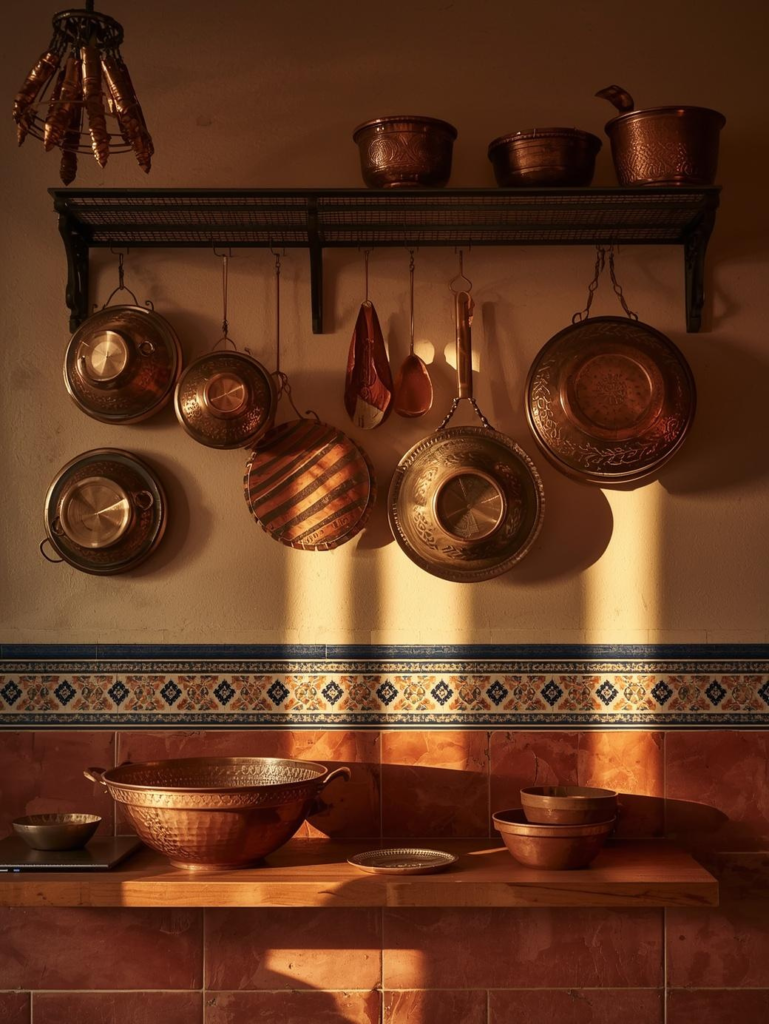
Copper is to the Mexican kitchen what cast iron is to the French one: a material so deeply embedded in the culinary and domestic culture that its presence in a kitchen communicates an entire tradition without requiring any further explanation. Hand-hammered copper from the town of Santa Clara del Cobre in Michoacan, characterized by its irregular dimpled surface and warm reddish-gold tone that deepens with age and use, is the authentic reference point for this element. Copper serving bowls, pitchers, ladles, and pots displayed on open shelving or hung from a simple wall-mounted rack introduce a warmth and a light-reflective quality that no other metal can replicate.
The functional nature of copper in the Mexican kitchen tradition means that displaying it as decor and using it as cookware are not separate activities. A copper pot used weekly for cooking develops a patina and a warmth of surface that an unused decorative piece never achieves, and that authentic wear is precisely what makes the display read as genuinely lived-in rather than staged. Hanging copper pots from a simple iron rod mounted above the cooking area, or arranging copper vessels in a cluster on a shelf where they can catch the light from a nearby window, produces one of the most photographically beautiful kitchen vignettes available within the Mexican style and one that improves in beauty as the copper ages.
Idea 06Plant Styling
Fill the Kitchen With Potted Herbs, Cacti, and Trailing Plants in Clay Pots
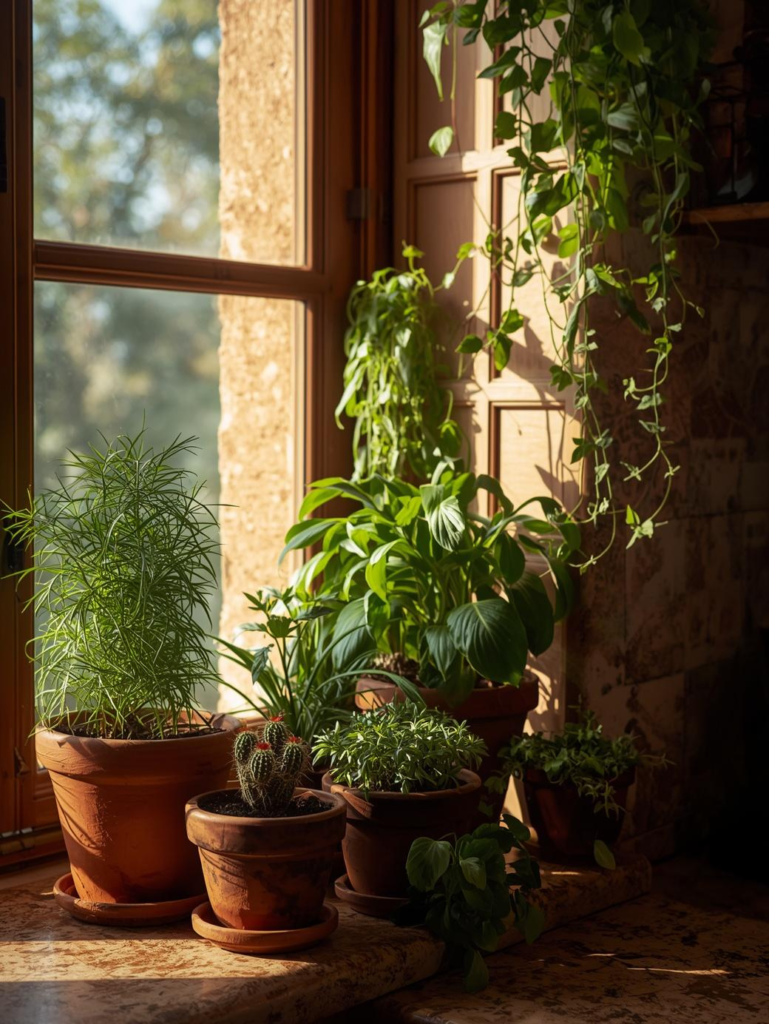
The Mexican kitchen has always had a strong relationship with the garden and the land, expressed in the kitchen through the presence of fresh herbs used daily in cooking, flowering plants on windowsills, and the cacti and succulents that are native to the Mexican landscape and require almost no care beyond the warmth and light that a kitchen window naturally provides. Grouping these plants in simple unglazed terracotta pots, the same clay vessels used throughout the Mexican domestic tradition for centuries, creates a kitchen plant display that is both authentically referential and genuinely practical, with the herbs serving their function in cooking and the cacti and succulents providing sculptural interest with minimal maintenance demands.
A cluster of terracotta-potted plants on a kitchen windowsill, graduated in height from small succulents at the front to taller herb plants at the back, creates a layered botanical display that filters the incoming light through its foliage and fills the kitchen with a warm, organic quality that no inanimate object can replicate. Extending this approach to the countertop nearest the window, where a larger clay-potted plant or a cactus can anchor a corner, completes the indoor garden quality of the Mexican kitchen. The unglazed terracotta of the pots reinforces the earthy, handmade palette of the overall aesthetic and ensures that even a modest plant collection reads as an intentional part of the kitchen’s design rather than an afterthought.
Idea 07Tableware
Switch to Hand-Painted Mexican Tableware for Everyday Use and Display
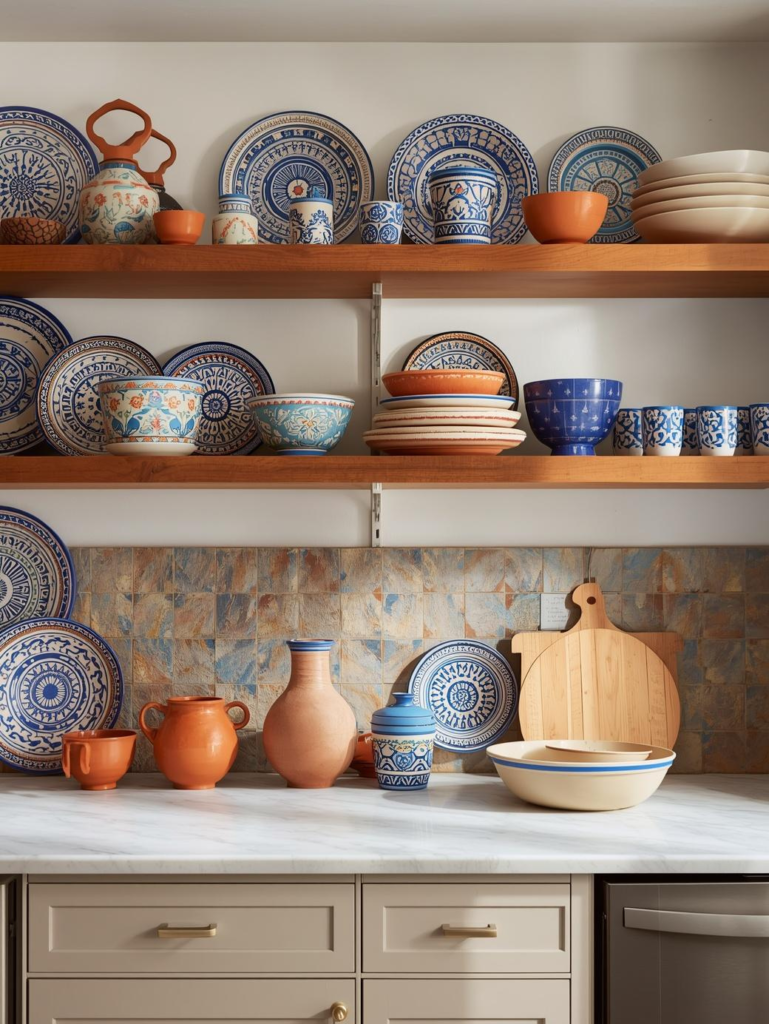
Switching the everyday tableware in a kitchen from generic white or plain-colored pieces to hand-painted Mexican ceramics is one of the most impactful and most enjoyable Mexican kitchen updates available because it changes not only the appearance of the open shelves and table settings but the daily experience of using the kitchen. Hand-painted plates, bowls, and cups in Talavera-inspired patterns, featuring the characteristic cobalt blue, terracotta, sage green, and warm cream color combinations of Mexican ceramic tradition, make every meal feel slightly more celebratory and every shelf display significantly more interesting than the same space occupied by a matching set from a mass-market retailer.
The beauty of investing in Mexican tableware rather than purely decorative ceramics is that the pieces earn their shelf space through function as well as appearance, being used and washed and returned to the shelf daily in a cycle that keeps the display feeling alive rather than static. Mixing pieces from different Mexican ceramic traditions, a Oaxacan painted bowl beside a Puebla Talavera plate beside a simple unglazed terracotta pitcher, creates the collected-over-time quality that makes the Mexican kitchen feel genuinely personal. Building the collection gradually, adding a piece or two at a time from artisan markets, import stores, or online platforms, produces a result that no single purchased set could replicate regardless of its quality.
Idea 08Lighting
Hang a Punched Tin or Woven Pendant Light Over the Kitchen Island or Table
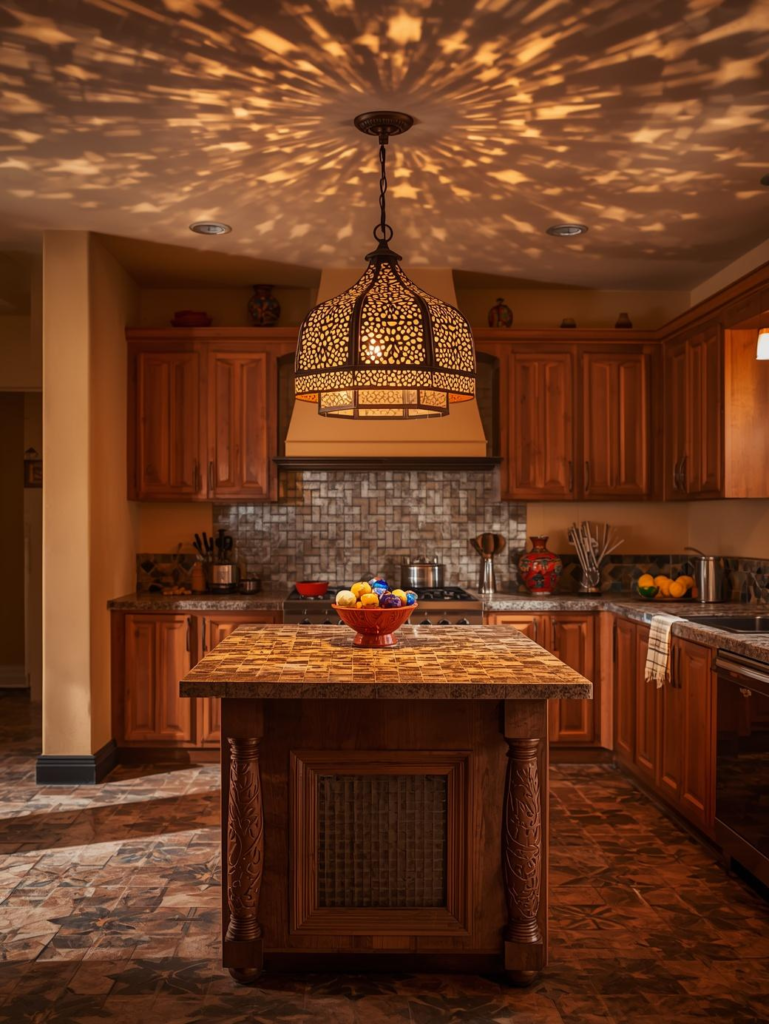
Lighting is the element of the Mexican kitchen aesthetic that is most frequently overlooked in budget update guides and that delivers one of the most dramatic transformations when addressed correctly. A hand-punched tin pendant light, characterized by its pattern of small holes through which warm light escapes in intricate patterns across the surrounding ceiling and walls, is one of the most distinctively Mexican light fixtures available and one of the most beautiful. The warm amber glow it produces after dark, combined with the projected pattern of light it creates on every surface around it, shifts the kitchen into a completely different atmosphere and makes it feel genuinely enchanting in a way that standard overhead lighting never achieves.
Plug-in pendant light versions of punched tin and woven natural fiber fixtures eliminate the need for an electrician and allow the fixture to be hung from a ceiling hook using an adhesive mounting system, making this a completely renter-accessible update. The cord runs along the ceiling in a managed route held by adhesive clips and the fixture hangs at the desired height above the island, table, or countertop. When leaving the property, the fixture comes with you and the adhesive hook and clips remove cleanly without damage. The warm, patterned light that a punched tin pendant produces in a kitchen even partially styled with Mexican elements completes the aesthetic in a way that no amount of additional objects and textiles can compensate for without it.
Idea 09Food Display
Style the Counter With Dried Chiles, Corn, and Seasonal Produce as Living Decor
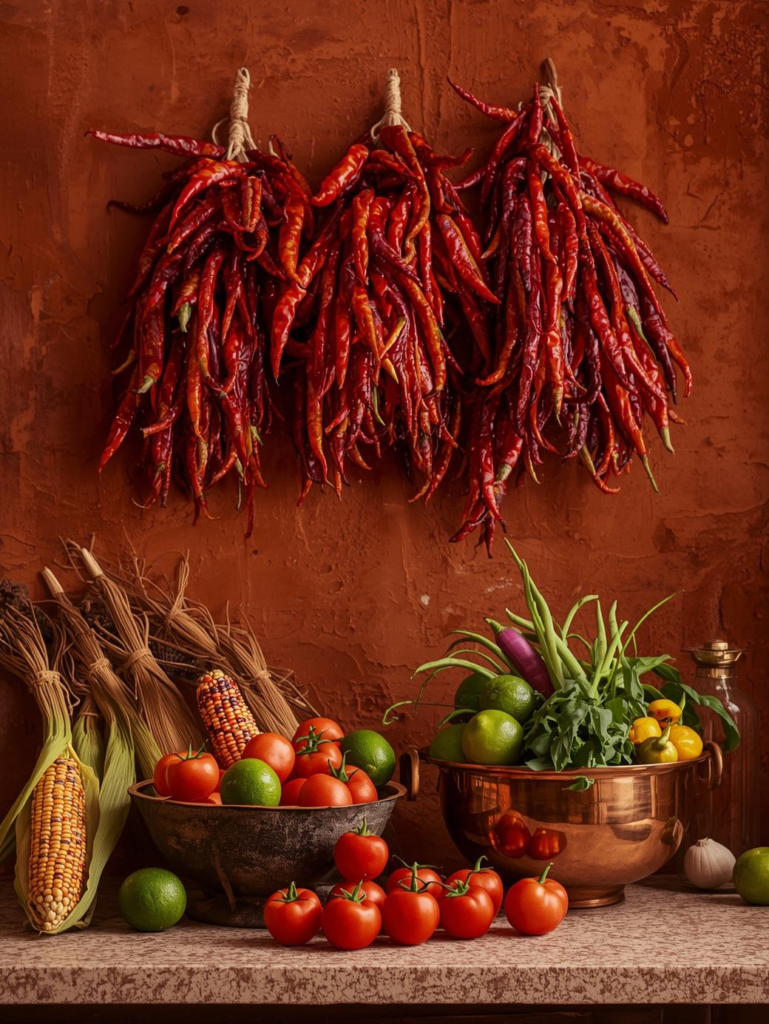
The Mexican kitchen has always displayed its ingredients as proudly as its pottery, treating the produce, dried chiles, corn, fresh citrus, and seasonal vegetables not as things to be hidden in pantries and refrigerators but as the beautiful, colorful evidence of a kitchen that cooks seriously and eats well. A ristra of dried red chiles hung on the wall beside the cooking area, a wooden bowl filled with limes and tomatoes on the counter, a cluster of dried corn cobs arranged beside the pottery collection on an open shelf: these are styling decisions that cost nothing beyond the ingredients themselves and that introduce a vibrancy and authenticity into the kitchen display that no purchased decorative object can replicate.
This approach to kitchen styling treats the kitchen as a working space that wears its function as decoration rather than hiding it, which is one of the most distinctively Mexican and one of the most deeply appealing qualities of this design tradition. A counter styled with a terracotta bowl of seasonal citrus, a small clay dish of dried herbs, a bundle of dried chiles, and a copper pitcher of fresh water communicates abundance, warmth, and culinary seriousness simultaneously. It makes the kitchen feel inhabited and generative rather than merely decorative, which is the quality that separates a Mexican-inspired kitchen from every other styled space and the reason this aesthetic resonates so strongly with people who love both cooking and beautiful rooms.
Idea 10Floor Treatment
Lay a Woven Mexican Rug or Tiled-Pattern Vinyl Mat on the Kitchen Floor
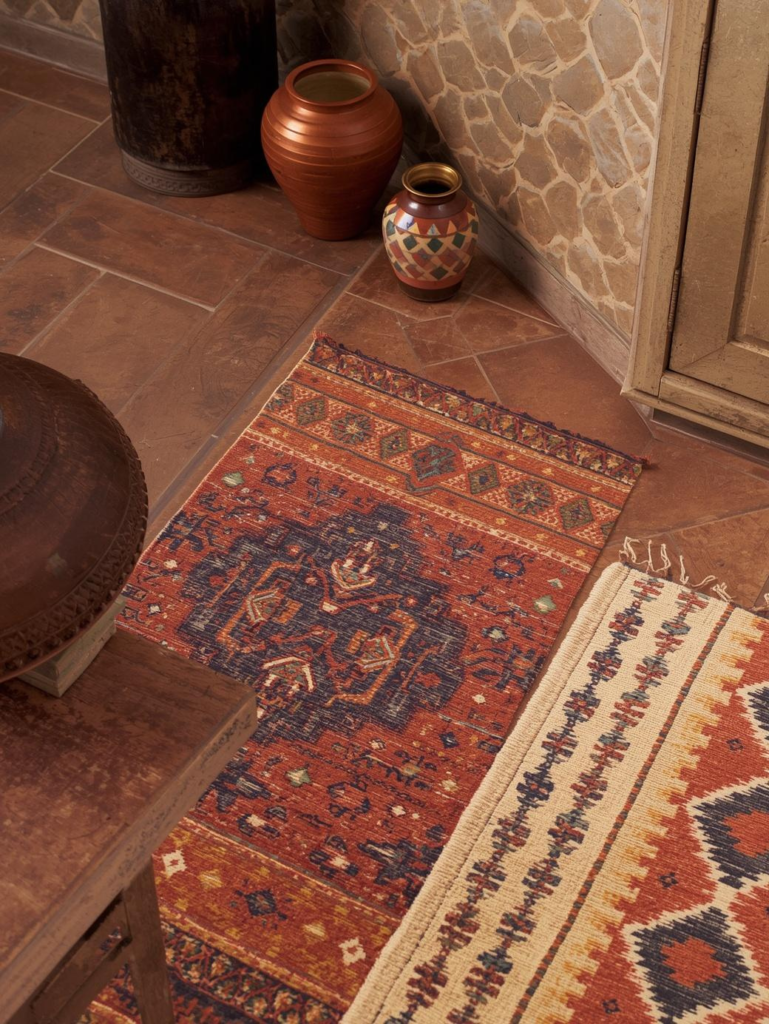
The floor of a kitchen is one of the most visually significant surfaces in the space and one of the most difficult to address without permanent alteration in a rental context. A woven Mexican rug or a high-quality vinyl floor mat printed with a geometric or tile-inspired pattern introduces color, pattern, and cultural reference at the floor level of the kitchen without touching the existing floor surface in any way. Zapotec woven rugs from Oaxaca, characterized by their bold geometric patterns in earthy, saturated color combinations, are among the most beautiful and most durable handmade textile options available for kitchen floor use and their natural wool fiber construction makes them surprisingly resilient in a light-traffic kitchen context.
For kitchens where a woven rug would be impractical due to moisture or heavy traffic, a vinyl kitchen mat printed with an authentic Talavera or encaustic cement tile pattern in Mexican colors achieves a very similar visual effect at a fraction of the cost and with far greater practical durability. These mats are available in runner and area rug formats and require no adhesive or installation, simply being placed on the existing floor and weighted naturally by the kitchen furniture and foot traffic above them. Placed in front of the sink, the cooking range, or across the center of the kitchen floor, a patterned Mexican-inspired mat changes the floor plane of the kitchen in a way that reinforces every other element of the Mexican aesthetic installed above it.
Conclusion
The Mexican kitchen aesthetic is, at its most fundamental level, an expression of the belief that the kitchen deserves the most beautiful things a home contains and that those beautiful things should be used rather than preserved. The hand-painted plate is for eating from. The copper pot is for cooking in. The woven textile is for looking at while the meal is being made and for drying hands between tasks. This integration of beauty and function, of the decorative and the practical, is what gives the Mexican kitchen its particular aliveness and what distinguishes it most clearly from design traditions where beautiful objects are kept separate from the daily life of the space they inhabit.
Every one of the ten ideas in this article honors that integration. None of them requires a renovation, a significant budget, or a permanent alteration to the kitchen. What they require is the willingness to accumulate beautiful, meaningful objects with patience and genuine curiosity, to display them generously rather than sparingly, and to use them daily in the cooking and eating and living that the kitchen exists to support. Begin with one or two of the ideas that feel most accessible and most aligned with what you already love about this aesthetic. Allow the collection to grow over time. The Mexican kitchen is never finished and it is always exactly right.